


Raising a Dog & Mastering Calm Assertive Energy | Cesar Millan


Cesar Millan is a world-renowned dog behavior expert. We discuss how to adjust your energy and behavior to ensure your dog is calm and happy and always follows your lead. Cesar shares specific tools for: returning home to your dog each day, structuring their walks, and eliminating aggressive behaviors and anxiety. We discuss how to determine if your dog is front, middle, or back of the pack order—a hardwired feature that determines much of their needs and personality. And we explore how human-human interactions are based on balances in energy, too. Both dog owners and non-owners will gain extremely valuable insights and tools from this episode.
Books
Other Resources
- Chimp Empire (documentary)
- The Jetsons (tv series)
People Mentioned
- Jane Goodall: English primatologist, anthropologist
- Rick Rubin: American record producer
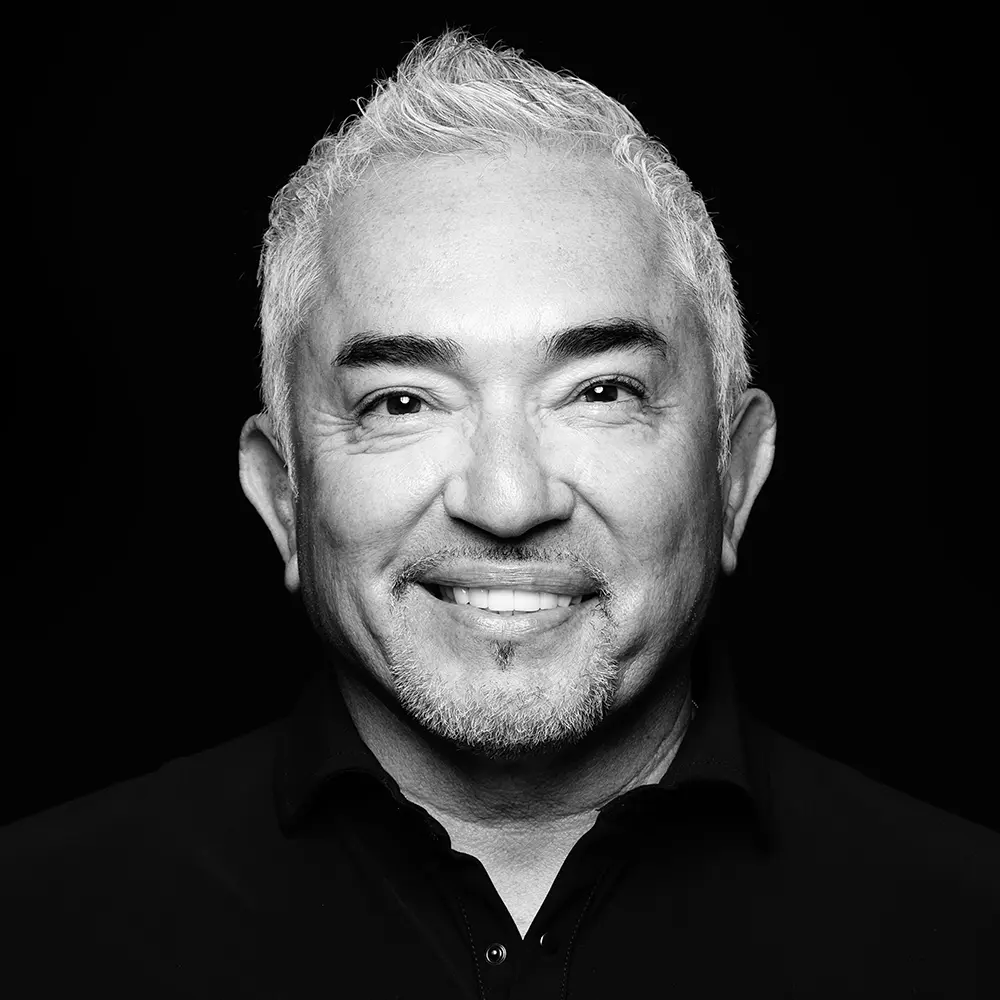
About this Guest
Cesar Millan
Cesar Millan is a world-renowned dog behavior expert.
This transcript is currently under human review and may contain errors. The fully reviewed version will be posted as soon as it is available.
Cesar Millan:
I'm not saying not to give affection. I'm just saying give affection to patience and calmness and open mind, right? Because when your dog misbehaves, you want him to go back there, go back to your good state of mind. Right? You don't want the dog to do fight, flight, avoidance. Those are the bad state of mind. The good state of mind is patience, calm, surrender, or happy-go-lucky. Those are good state of mind.
Andrew Huberman:
Welcome to the Huberman Lab podcast, where we discuss science and science-based tools for everyday life. I'm Andrew Huberman, and I'm a professor of neurobiology and ophthalmology at Stanford School of Medicine. My guest today is Cesar Millan, better known as The Dog Whisperer and the preeminent dog trainer in the world. Today's episode is truly for everyone, not just dog owners. You're going to learn a lot about human psychology and behavior, and it will help you better interact with other humans in every type of relationship. For instance, you will learn a simple tool that allows you to move through the world with a clear, calm state of mind that will allow you to interact with others more effectively, to listen and act with more clarity and intention. And not incidentally, that clear, calm state of mind is also what dogs respond to best and what makes them feel safe and healthy. Today, we talk about the critical importance about understanding dog biology and psychology, and the fact that they are pack animals, and that we have to remove our human sense about these animals as our pets. And of course, they are our pets, and they're extremely cute. They are family members. But understand the hardwired aspects of their brain and biology that allow us to be the best leaders for them. I have to warn you, a lot of what you hear today may sound counterintuitive at first. Until you understand the biology of dogs and the fact that they respond to people's energy and actions, not words. I know they can listen to commands. They can learn words and commands, but they're responding to the energy and the actions associated with those commands. Only then can you be the most effective dog owner, and by effective, I mean making your dog as healthy and feeling safe as possible. I should point out that one of the reasons I'm so excited Cesar came on this podcast is that I had an amazingly positive experience with his methods years ago when I got my first puppy, Costello, who was a bulldog mastiff. I read his book, "Be the Pack Leader," and the principles within that book were critical for developing an incredible relationship with Costello, who lived 11 years. You could bring him into any environment. I would bring him to class. I would bring him into different people's homes. I could take him essentially anywhere. He loved kids, he loved people, and he was extremely well-behaved. Exceedingly lazy, too, but exceedingly well-behaved, and I credit that to the methods that I learned from Cesar's book. So if you have a dog or you're considering getting a dog, or you want to better understand how to regulate your energy and behavior in all types of interactions with dogs, with cats, and with other humans, today's episode will teach you those extremely valuable tools. And I'm extremely pleased to announce the newest member of the Huberman Lab podcast team, Strummer. He's also a bulldog mastiff mutt. He's similar to Costello in breed, but I should say not a pure English bulldog, so not a lot of snoring and the other stuff that go along with English bulldogs. I love the English bulldog breed, but when they're mutted with other breeds like this one, they breathe a lot easier, and he's just the sweetest thing. So you'll be seeing and perhaps hearing more from Strummer. I am applying all of Cesar's methods to training Strummer. You can see he's a very calm, relaxed dog. He gets two walks a day and a bunch of other things you'll learn about during today's episode that will benefit you if you have or you're thinking about getting a dog. Before we begin, I'd like to emphasize that this podcast is separate from my teaching and research roles at Stanford. It is, however, part of my desire and effort to bring zero cost to consumer information about science and science-related tools to the general public. In keeping with that theme, today's episode does include sponsors. And now for my discussion with Cesar Millan. Cesar Millan.
Cesar Millan:
Yes, sir.
Andrew Huberman:
Welcome. I'm a huge fan.
Cesar Millan:
Thank you.
Andrew Huberman:
Your book-
Cesar Millan:
Same here.
Andrew Huberman:
Thank you.
Cesar Millan:
Mm-hmm.
Andrew Huberman:
Thank you. I'm honored to hear that. But I will say, your book, "Be the Pack Leader"-
Cesar Millan:
Mm-hmm
Andrew Huberman:
... I read the hard copy-
Cesar Millan:
Thank you
Andrew Huberman:
... to raise my first puppy. We never had a dog in my home growing up.
Cesar Millan:
Yeah.
Andrew Huberman:
To raise Costello.
Cesar Millan:
Yeah.
Andrew Huberman:
Bulldog mix, stubborn dog. We went 11 years together, he and I, and that book and your other teachings were tremendously impactful for my relationship with him.
Cesar Millan:
Yeah.
Andrew Huberman:
But also in my work life, in my entire life. We're going to talk about some of the themes from that book and beyond today-
Cesar Millan:
Mm-hmm
Andrew Huberman:
... but I just want to extend my gratitude.
Cesar Millan:
Thank you.
Andrew Huberman:
It's a true honor and pleasure to have you here.
Cesar Millan:
That's very kind.
Andrew Huberman:
Yeah. In modern parlance, they say you're the man.
Cesar Millan:
Ah.
Andrew Huberman:
Yeah. You're the man.
Cesar Millan:
The pack leader.
Andrew Huberman:
That's right. Many, many people want dogs, have dogs-
Cesar Millan:
Yeah
Andrew Huberman:
... have these concepts of dogs-
Cesar Millan:
Mm-hmm
Andrew Huberman:
... that lead them to think they're a great dog owner.
Cesar Millan:
Mm-hmm.
Andrew Huberman:
But a lot of dog behavioral issues, emotional issues, we know probably reflects something in the human as well.
Cesar Millan:
Not probably.
Andrew Huberman:
So certainly.
Cesar Millan:
Yeah, because there is no knowledge behind instinct. It's all reaction, so you can never blame an animal for doing the wrong thing. You see it? So you can guarantee for a dog to do the right thing. Right? And so how? Well, that means the human has good energy.
Andrew Huberman:
Mm-hmm.
Cesar Millan:
And what's good energy? Well, if you understand the power of silence, which that gives you patience. The power of calmness, which that gives you trust. And calmness is you just learn how to breathe. Right?
Andrew Huberman:
Mm-hmm.
Cesar Millan:
The power of confidence, that's knowledge. Right? And the power of love, when to give love, because a lot of times people give love at the wrong time, so you end up nurturing the wrong behavior.
Andrew Huberman:
Hmm.
Cesar Millan:
Right? So that's what happened to my clients. And then the power of joy. That's the celebration. Right? We're going to FIFA right now. We're going to World Cup. Nobody celebrates unless they make a goal. You see what I'm saying? But they have to be patient, calm, confident, love what they're doing, and celebrate afterward. See, they follow that formula. It's the silence, it's the calm. Before anybody's going to go to something so powerful, such as winning, right? Or being in a team or being in a group, the energies of silence, calmness, confidence, love, joy is what makes them Become a great team, because that's what connects your spirit, your instinct, your heart, and your mind. And it's the same way we have to connect with a dog. It's not just emotional. It's not just intellectual.
Andrew Huberman:
Mm-hmm.
Cesar Millan:
When people just want to train the dog. What you train is the mind. What you connect is the spirit, the instinct, and the heart. That's what you connect. And that's why I say, "Trust, respect, love." Trust the spirit, respect instinct, love with the heart, create with your mind.
Andrew Huberman:
For many people, especially in the United States, they're not familiar with feeling energy and exchanging energy with a dog.
Cesar Millan:
Right.
Andrew Huberman:
I'll give an example of when Costello, my previous bulldog-
Cesar Millan:
Yeah
Andrew Huberman:
... some probably bulldog mastiff, who knows what he was.
Cesar Millan:
Yeah, whatever breed.
Andrew Huberman:
Whatever he was, he was Costello. But I learned something very important from you. Before he's Costello, he's an animal.
Cesar Millan:
That's right.
Andrew Huberman:
Spirit.
Cesar Millan:
Ah, spirit.
Andrew Huberman:
Mm-hmm.
Cesar Millan:
Animal, specie.
Andrew Huberman:
Mm-hmm.
Cesar Millan:
Breed, name. You see it? So the last thing they are is the breed and the name.
Andrew Huberman:
Mm-hmm.
Cesar Millan:
So when I rehabilitate a dog, what I'm doing is bringing back the happy spirit, bringing back the healthy instinct, and bringing back the rules, boundaries, limitations mind, because that's what makes them well-behaved, when they understand rules, boundaries, limitations, no matter what breed they are.
Andrew Huberman:
Mm-hmm.
Cesar Millan:
So it really doesn't matter if you have a pit bull, a Rottweiler, a German shepherd, or I'm Mexican and you're white, and African American. It really doesn't matter the race of the human. What matter is, is that person has a happy spirit, a healthy instinct, and a well-educated mind. Right? So you want to be a good human, right? And you want to be part of the pack of the good humans.
Andrew Huberman:
Mm-hmm.
Cesar Millan:
And those humans are good, right?
Andrew Huberman:
Mm-hmm.
Cesar Millan:
Those are the humans that help other humans, or they create well-behaved dogs because they're following in that path.
Andrew Huberman:
Mm-hmm.
Cesar Millan:
There are some people who are born to... I mean, I'm part of the pack where it's better humans, better planet, but I know a lot of people who are not-
Andrew Huberman:
Right
Cesar Millan:
... part of that path. So it's that.
Andrew Huberman:
Yeah. Certainly, raising and living with Costello taught me a lot about how to sense people's energy.
Cesar Millan:
Mm-hmm.
Andrew Huberman:
I had an amazing experience with him that I just want to-
Cesar Millan:
Yeah
Andrew Huberman:
... share briefly, that I realized now is probably the spirit component. But it was something that I tried on the basis of what I read in your book. So I was walking him, and sometimes he didn't want to walk in a particular direction. And so he was always walking at my side-
Cesar Millan:
Mm-hmm
Andrew Huberman:
... or a little bit behind me. I had that going from a very early point.
Cesar Millan:
Yeah.
Andrew Huberman:
I practiced no look, no touch, no speak in the first-
Cesar Millan:
Yeah
Andrew Huberman:
... minutes of contact-
Cesar Millan:
Yeah
Andrew Huberman:
... or coming home, and we can talk about why that's important. But at one point I decided, based on what you put in your book, to try something that seemed kind of wacky to me-
Cesar Millan:
Mm-hmm
Andrew Huberman:
... at the time, where I was just going to, at some point during the walk, we had a great stride, we're having a good time. He's smelling things, but we're moving on.
Cesar Millan:
Mm-hmm.
Andrew Huberman:
And I decided to just send him approval energy. Like, I'm just going to think it.
Cesar Millan:
Yeah.
Andrew Huberman:
And then feel it.
Cesar Millan:
Yeah.
Andrew Huberman:
I'm just going to send him some energy. And we're just walking around, I'm just doing this. I did not change where I was looking.
Cesar Millan:
Right.
Andrew Huberman:
I did not change, as far as I know, the tension on the leash.
Cesar Millan:
Right.
Andrew Huberman:
Who knows? And he just looks right up at me.
Cesar Millan:
Yeah.
Andrew Huberman:
And I was like, "This is incredible." After a really good day of hiking or at work, he used to come to the lab with me or something, we were sitting, or I was cooking or something. Every once in a while, while I'm doing something else, I would just send him this positive energy.
Cesar Millan:
Yeah.
Andrew Huberman:
And he would look over at me. It was wild.
Cesar Millan:
Yeah.
Andrew Huberman:
And I realized he's sensing things that are beyond my words. In fact, I don't know that he ever really listened to what I said terribly much.
Cesar Millan:
Mm-hmm.
Andrew Huberman:
He could really feel what I was feeling.
Cesar Millan:
Mm-hmm.
Andrew Huberman:
He was probably paying attention a lot more of the time than I was aware.
Cesar Millan:
Mm-hmm.
Andrew Huberman:
But I also had the experience of when he was doing something I didn't like, I could send him disapproval.
Cesar Millan:
Mm-hmm. That's right.
Andrew Huberman:
And he would stop. It was wild.
Cesar Millan:
Mm-hmm.
Andrew Huberman:
We were meters away from each other.
Cesar Millan:
Yeah.
Andrew Huberman:
And I could send him this energy. Now, to you, this is probably like, "Yes, of course."
Cesar Millan:
Yeah.
Andrew Huberman:
But I think for me, and I think for most people that have dogs or are thinking about owning a dog, they're going to think this is crazy, right?
Cesar Millan:
Yeah.
Andrew Huberman:
But I swear on my life that I could do this in a variety of circumstances.
Cesar Millan:
Yeah.
Andrew Huberman:
While driving, anything, and he would react according to the energy that I was sending-
Cesar Millan:
Yeah
Andrew Huberman:
... out. As a neuroscientist, I could make up some story. Okay, well, fish have electric sensing field. I could make up a story-
Cesar Millan:
Yeah
Andrew Huberman:
... in neurology, neuroscience, that would more or less hold together. But I want to know your impression of what is this, and then hopefully that will take us into a discussion more about energy exchange between all sorts of beings.
Cesar Millan:
Well, silence is very powerful. Right? The power of prayer. My mom certainly is always connected. When I crossed the border, I felt my mom. I jumped the border. And so jumping the border is a life and death thing, right? And then so you give yourself to God, and then, of course, your mom is always thinking about you, so you feel this energy that is done by the prayer or by the silence. You are what you believe. And so if you believe you can connect, and you communicate this way, because you're going to be... I mean, the fact that people are not aware of energy, we can feel that a person doesn't feel good, and we don't even know each other.
Andrew Huberman:
Mm-hmm.
Cesar Millan:
So imagine if we humans are sensitive to that. All animals never stop this way of being. Right? The sensitivity of animals, they don't go into the mind. They stay within their instinct because that's how they stay safe and maintain the peace. And so what you did was exactly that. Don't talk. Don't talk with words. Talk with energy, body language, and intention. How do you become the best dog trainer in the world? Because that's all you think about.
Andrew Huberman:
Mm-hmm.
Cesar Millan:
That's all you think about. Even when you go to sleep, even when you're not talking about it. So you create the law of attraction. You create the law of creation. The most difficult law is the law of maintenance, right? Because it's easy to attract, it's easy to create. What's hard is to maintain.
Andrew Huberman:
Mm.
Cesar Millan:
Right? And that's why patience is so important, or silence is so important, yeah? Because this one is infinite. It's an infinite energy. So if you feel that, imagine how powerful you become. And then just to be right here where you are claiming your space, calm, that gives you another power because that gives the animals the capability to trust, and then your intention, right? What is it that you want without words? "I just don't want you to pee over there. I just don't want you to go after that dog. I just want you to stop doing what you're doing." Because think about when cats communicate with a dog, it's a completely different species, but can a cat control a dog? The same way you did. Same. Silence, calm, confident. So that's why a cat can control a Rottweiler and a pit bull.
Andrew Huberman:
Mm-hmm.
Cesar Millan:
When people feel, oh, it's a very dangerous breed. At the moment you think something is dangerous, you give your power away. At the moment you bring silence, calmness, confidence, you regain your power back. And that's the first line of communication before sound. But most people focus on, "I want to train my dog. I want my dog to listen to commands." No, no, no, no. You want your dog to listen to your silence, to your calmness, to what's in your mind without saying a word.
Andrew Huberman:
That's exactly it right there. The relationship with Costello improved in order of magnitude when I understood that. That I could talk to him all day or say whatever, it had a very little potency-
Cesar Millan:
Yep
Andrew Huberman:
... compared to how I would show up. And then it also taught me a lot, of course, about how to arrive home-
Cesar Millan:
Mm-hmm
Andrew Huberman:
... how to walk into a-- I'd bring him to class. I taught a-
Cesar Millan:
Yeah
Andrew Huberman:
... 400-person class. He would walk in. It was very interesting. Everyone, "Oh, dog." Dogs.
Cesar Millan:
Yeah.
Andrew Huberman:
Most professors wouldn't bring their dog to class.
Cesar Millan:
Right.
Andrew Huberman:
And he knew it was all there, typical Costello. He would just kind of walk to the front of the classroom.
Cesar Millan:
Mm-hmm.
Andrew Huberman:
He'd wait a few minutes, not look at anybody, and then he would decide. He'd just glare at all of them.
Cesar Millan:
Yeah.
Andrew Huberman:
He could light up a room. But I understood that I wouldn't let him be too much of a celebrity-
Cesar Millan:
Mm-hmm
Andrew Huberman:
... or else he would start misbehaving.
Cesar Millan:
Mm-hmm.
Andrew Huberman:
I had to remind him like-
Cesar Millan:
Mm-hmm
Andrew Huberman:
... we have a structure and an order.
Cesar Millan:
That's correct.
Andrew Huberman:
And I do think that people would benefit so much from getting in touch with this capacity that they have to sense their own energy and the energy-
Cesar Millan:
Mm-hmm
Andrew Huberman:
... of other people, regardless of if they have a dog.
Cesar Millan:
Well, Americans go to India to be quiet, right? And then to practice not eating, which they call fasting, right, and then to stretch. But that's practically it, is silence, learn how to breathe-
Andrew Huberman:
Mm-hmm
Cesar Millan:
... and then stretch. Gives you a little bit agility into it. And you learn to control hunger, which in a third-world country, that's what we learn. We learn to control hunger. We learn to be quiet. We learn to be calm. Whatever we know, we do really good at it. We become really good farmers, really good animal people, right, and family people, God people. And so we have a good structure, good discipline, and such a basic, simple stuff. And that's what gives us the upper hand of walk a dog off leash. When I started walking dogs in America, I didn't know it was illegal to walk dogs off leash. I was walking 40, 60 dogs at a time. Right? And I was doing it off leash because that's all I knew.
Andrew Huberman:
Mm-hmm.
Cesar Millan:
You see it? And so that energy of silence, calmness, confidence is what now that I understand what I did, is what led me to this event for people to see me from Inglewood to South Central. It's a Mexican guy that walks a pack of dogs from Inglewood to South Central off leash. That's when "The LA Times" came and did a piece on me because they couldn't understand this concept of walking a dog off leash.
Andrew Huberman:
This dog shaman or something. Yeah.
Cesar Millan:
And a dog here in the land of the free, right?
Andrew Huberman:
Yeah.
Cesar Millan:
Because dogs in America have rights, but that doesn't mean they can walk off leash.
Andrew Huberman:
Mm-hmm.
Cesar Millan:
You see, the dog has to be on a leash, and humans have to learn to transmit that energy through the leash, because there's a lot of dogs that react on the leash. When the dog should be the most well-behaved, then a dog is off the leash. You see it? But the leash in the animal world is trust, respect, love. The leash in the animal world is that human understanding, silence, calmness, confidence, love, joy, and that's pack leader, direction, protection, right? That's the only way you can say, "I'm a pack leader." Right? Because you are that energy.
Andrew Huberman:
I'd like to take a quick break and acknowledge one of our sponsors, LMNT. LMNT is an electrolyte drink that has everything you need and nothing you don't. That means the electrolytes, sodium, magnesium, and potassium, all in the correct ratios, but no sugar. Proper hydration is critical for brain and body function. Even a slight degree of dehydration can diminish your cognitive and physical performance. It's also important that you get adequate electrolytes. The electrolytes, sodium, magnesium, and potassium, are vital for the functioning of all cells in your body, especially your neurons or your nerve cells. Drinking LMNT makes it very easy to ensure that you're getting adequate hydration and adequate electrolytes. My days tend to start really fast, meaning I have to jump right into work or right into exercise. So to make sure that I'm hydrated and I have sufficient electrolytes, when I first wake up in the morning, I drink 16 to 32 ounces of water with an LMNT packet dissolved in it. I also drink LMNT dissolved in water during any kind of physical exercise that I'm doing, especially on hot days when I'm sweating a lot and losing water and electrolytes. LMNT has a bunch of great-tasting flavors. In fact, I love them all. I love the watermelon, the raspberry, the citrus, and I really love the lemonade flavor. So if you'd like to try LMNT, you can go to drinklmnt.com/huberman to claim a free LMNT sample pack with any purchase. Again, that's drinklmnt.com/huberman to claim a free sample pack. Today's episode is also brought to us by Joovv. Joovv makes medical-grade red light therapy devices. Now, if there's one thing that I have consistently emphasized on this podcast is the incredible impact that light can have on our biology and our health. Now, in addition to sunlight, which I've talked about a lot on this podcast, red light, near-infrared, and infrared light have been specifically shown to have positive effects on improving numerous aspects of cellular and organ health. These include faster muscle recovery, improved skin health, wound healing, improvements in acne, reduced pain and inflammation, improved mitochondrial function, and even improvements in vision. Nowadays, there are a lot of red light devices out there, but what sets Joovv lights apart, and why they're my preferred red light therapy device, is that they use clinically proven wavelengths, meaning they use the specific wavelengths of red light, near-infrared, and infrared light in combination to trigger the optimal cellular adaptations. Personally, I use the Joovv whole body panel about three to four times a week, usually for about 10 to 20 minutes per session, and I use the Joovv handheld light both at home and when I travel. If you would like to try Joovv, they're offering up to $400 off select products for listeners of this podcast. To learn more, visit Joovv spelled J-O-O-V-V .com/huberman. Again, that's J-O-O-V-V .com/huberman. I'm in a dilemma whether to go down the concepts of what is happening in third world countries, not just today, but always in terms of how people sense energy and use energy-
Cesar Millan:
Yeah
Andrew Huberman:
... versus what we do here. But I think I'm also keen on the fact that many people listening don't know how to walk their dog.
Cesar Millan:
Yeah.
Andrew Huberman:
I'll ask a very simple question first. Should the dog always be next to you or behind you? Is there ever an instance where the dog should walk out in front of you? And as I say this, we both realize many people walk with their dog in front of them.
Cesar Millan:
Yeah.
Andrew Huberman:
So, could you tell us about the concept of where the dog is relative to us?
Cesar Millan:
Well, think about it. Look at it this way, so people can adopt the concept quicker. Because if you learn how to walk a dog, it would eliminate 90% of the problems.
Andrew Huberman:
Mm-hmm.
Cesar Millan:
The other 10% will be rules, boundaries, limitations, right? That's it. So when a dog is a pup, he follows his parents. Right? And then he plays, then he explore. But the first activity he learns is to follow. Follow, play, explore. So play and explore becomes like a reward activities. That's the Chuck E. Cheese time. Right? And so the follow is the one they learn the rules, boundaries, limitations. They learn to stay focused and not get distracted.
Andrew Huberman:
Right.
Cesar Millan:
So naturally, dogs, they need to learn to follow. When they go in front of you, they are in the mind of play or explore. But at the same time, if you do this every day, the dog learn that he has to lead you to places.
Andrew Huberman:
And is that stressful for the dog?
Cesar Millan:
If a dog is middle of the pack and back of the pack, yes. If a dog is front of the pack, no.
Andrew Huberman:
Mm-hmm.
Cesar Millan:
You see it? And so, very important. In order for people to have a front of the pack dog, they need a lot of knowledge. And so most dogs are perfect middles or back. The back should be the easiest one. But when people don't do the right thing with the back, he becomes fearful. The middle of the pack should be the one for the families because they're naturally happy-go-lucky. But if you do too much excitement, they become hyper.
Andrew Huberman:
Hmm.
Cesar Millan:
You see it? And-
Andrew Huberman:
And this is across breeds.
Cesar Millan:
Yeah.
Andrew Huberman:
Yeah. Doesn't matter if it's a bulldog or a dachshund.
Cesar Millan:
No. In every litter, there's front of the pack, middle of the pack, back of the pack. But it's more back of the packs being born, like followers, than it's only one per litter, a litter of the pack. So that's what they call in the breeder world a pick of the litter. See it? So in a litter of German shepherds, only one it can be a police officer. The other one is pet quality, or they call them the run of the litter. Back of the pack, sensitive. Middle of the pack, happy-go-lucky, is the HR of the pack, is the middle of the pack, right?
Andrew Huberman:
Mm-hmm.
Cesar Millan:
And then the front of the pack is the one that gives direction protection.
Andrew Huberman:
Ideally, for a family or for a typical domestic situation, I'm thinking United States, but elsewhere, because this is going everywhere, and this episode will go everywhere, middle or back of the pack?
Cesar Millan:
Middle.
Andrew Huberman:
Middle.
Cesar Millan:
Yeah. A family-
Andrew Huberman:
Mm-hmm
Cesar Millan:
... who has never raised a dog together, yeah, middle.
Andrew Huberman:
How can you assess the litter when you see them so that you pick a middle of the pack dog-
Cesar Millan:
Yeah
Andrew Huberman:
... if that's what's appropriate? Sounds like that's the goal.
Cesar Millan:
The front is going to be very easy to assess because he's going to be the biggest one. He's going to be the one who's moving the sisters and the brothers away from the mom. Right? He's already going to practice dominance. And then the middle is the second to get to the mother. And the back of the pack, they always wait. You see, they're more shy. Naturally. They're just sensitive.
Andrew Huberman:
What if you don't have access to the interaction with the mother? Having gone to pick up puppies a few times, sometimes you just see the puppies. The mom's in another room.
Cesar Millan:
Mm-hmm.
Andrew Huberman:
Should you ask to watch the interaction, and if you-
Cesar Millan:
Yeah
Andrew Huberman:
... and if you can't, how can you assess if you're just looking at the litter?
Cesar Millan:
Well, normally, if you are in a situation, the breeder knows because that's why they put ribbons.
Andrew Huberman:
Mm-hmm.
Cesar Millan:
Color ribbons, so they know, okay, this is middles, this are back.
Andrew Huberman:
Mm-hmm.
Cesar Millan:
Even though they don't call them that way, they just call them run of the litter, pet quality, or front of the pack. The front of the pack is just the obvious one.
Andrew Huberman:
Mm-hmm.
Cesar Millan:
Right? And so just go inside where the puppies are, and there's no mother or nothing. Just stay quiet. And every time you present something new, you're going to see the more confident coming to, and the more happy-go-lucky coming to, and the back of the pack, he doesn't get close.
Andrew Huberman:
Yeah.
Cesar Millan:
Anything new. It just can be a pillow, and that's the first time they're experiencing a pillow, and the front of the pack will go.
Andrew Huberman:
Amazing.
Cesar Millan:
And the middle of the pack will go and play.
Andrew Huberman:
It's hardwired.
Cesar Millan:
It's there. That's why you can guarantee good behavior.
Andrew Huberman:
Mm-hmm.
Cesar Millan:
Right? Because now you, okay, I want a middle of the pack Border Collie. I want a middle of the pack golden retriever. I want a middle of the pack pit bull. You can have it. You see? Because that's going to guarantee to you exactly what you want. It's going to be easier for you to tell him what to do because he was born naturally a follower.
Andrew Huberman:
Mm-hmm.
Cesar Millan:
Versus if you get a front of the pack whatever breed, Chihuahua, I don't care what it is, they're born With the disposition of giving direction protection. So, wherever human wants to live with them needs to have more knowledge, right? So, that's me running a pack of dogs and having different animals. The animals know that I have a big energy. They don't know I have 43 acres. They just know I have a land.
Andrew Huberman:
And that you're in charge of it.
Cesar Millan:
Yeah.
Andrew Huberman:
Yeah.
Cesar Millan:
And all the ups and downs that I went through, and the wars that I go through, right, the divorces and all of that stuff. And I went through, and I find my silence, my calmness, my confidence, my love, my joy, right back. They know my energy is big, right? So, that I can have a front of the pack, but I don't have one. I have middles and back.
Andrew Huberman:
Even you?
Cesar Millan:
Even me.
Andrew Huberman:
Mm-hmm.
Cesar Millan:
Yeah. Because it will require so much. I would need to find him a job. You see what I'm saying?
Andrew Huberman:
Mm-hmm.
Cesar Millan:
Like a border patrol, something like that.
Andrew Huberman:
Mm-hmm.
Cesar Millan:
Looking for the bad guys. That would be a job. It's just one officer and one dog. He doesn't need the pack.
Andrew Huberman:
Fascinating. I'm sure, like many people listening, I'm trying to figure out was Costello front of the pack. I think he was. He was an enormous dog.
Cesar Millan:
Mm-hmm.
Andrew Huberman:
I mean, even within his litter. And when I went to go pick him up, I had met him as a three-week-old puppy.
Cesar Millan:
Mm-hmm.
Andrew Huberman:
He was the one butting all the other ones out-
Cesar Millan:
Yeah
Andrew Huberman:
... eating from their food bowls.
Cesar Millan:
Mm-hmm.
Andrew Huberman:
He was-
Cesar Millan:
They claim.
Andrew Huberman:
Yeah. He didn't yelp, didn't yap at all. He just ate everything-
Cesar Millan:
That's right
Andrew Huberman:
... took everything, peed where he wanted to.
Cesar Millan:
Mm-hmm.
Andrew Huberman:
Did everything.
Cesar Millan:
Mm-hmm.
Andrew Huberman:
So, it was a difficult thing raising him. This new one, Strummer, who's four and a half months, he's definitely middle, maybe even back of the pack, but-
Cesar Millan:
A little sensitive
Andrew Huberman:
... he was second out when he was born.
Cesar Millan:
Mm-hmm.
Andrew Huberman:
And they said, "Oh, he's going to be the pick of the litter." They said it, but definitely not.
Cesar Millan:
Yeah.
Andrew Huberman:
Quickly it was clear that he kind of kept a little bit distance. He is very sensitive.
Cesar Millan:
Okay. That's good.
Andrew Huberman:
Much sweeter.
Cesar Millan:
Yeah, sensitive.
Andrew Huberman:
Yeah, much more playful.
Cesar Millan:
That's better.
Andrew Huberman:
And that's the part that I have to work with-
Cesar Millan:
Yeah
Andrew Huberman:
... because they enchant us. I noticed with Strummer, he just figured out that if he gets into play mode, it lights me up, and then I have to remember to stay in my-
Cesar Millan:
Mm-hmm
Andrew Huberman:
... place.
Cesar Millan:
Yeah.
Andrew Huberman:
My proper place.
Cesar Millan:
Yeah, yeah.
Andrew Huberman:
Because I'm trying to teach him, here, this is the order of things.
Cesar Millan:
Yeah.
Andrew Huberman:
It's very important because I want to be able to bring him anywhere.
Cesar Millan:
Yeah.
Andrew Huberman:
Leave him in a room alone with little kids, and trust completely-
Cesar Millan:
Yeah
Andrew Huberman:
... that he's not going to accidentally do something.
Cesar Millan:
Yeah.
Andrew Huberman:
For people that want to learn to sense their own energy, use their energy field-
Cesar Millan:
Yeah
Andrew Huberman:
... should they also be asking if they are front, middle, or back of pack?
Cesar Millan:
The human? Yeah.
Andrew Huberman:
Yeah. In the human world. This is something that's a little bit of a sensitive topic, right?
Cesar Millan:
I know.
Andrew Huberman:
Because every guy wants to say, "Yeah, I'm an alpha, not a beta." Everyone thinks that way.
Cesar Millan:
Mm-hmm.
Andrew Huberman:
I like to think in different circumstances, people can move up or down the-
Cesar Millan:
The human can
Andrew Huberman:
... hierarchy. I work with a lot of scientists-
Cesar Millan:
Yeah
Andrew Huberman:
... and I can tell you in so many environments, they don't come across as alphas. But you put them in a laboratory or a lecture environment, and they own their space because that's their expertise. So, it can move around. But can you explain what it is to observe oneself, really think honestly about oneself-
Cesar Millan:
Mm-hmm
Andrew Huberman:
... and where one really lies in this, let's call it what it is.
Cesar Millan:
Yeah.
Andrew Huberman:
It's a hierarchy, but that makes it sound like one is better. It just is what it is. You're either-
Cesar Millan:
It is
Andrew Huberman:
... front, middle, or back of pack human.
Cesar Millan:
That's their special magic, right?
Andrew Huberman:
Yeah.
Cesar Millan:
Being back of the pack means they master calm surrender. So, we have to learn to master calm surrender. That's our more sensitive state of mind, right?
Andrew Huberman:
Mm-hmm.
Cesar Millan:
So, when I'm assessing and evaluating a dog, I go into my calm surrender state. So, I go in the back of the pack.
Andrew Huberman:
Hmm.
Cesar Millan:
Right? When it's time for me to give direction and protection, I go to the front of the pack. When I achieve whatever I need to achieve, I go into the middle of the pack.
Andrew Huberman:
Hmm.
Cesar Millan:
You see it? So, the human-
Andrew Huberman:
Mm
Cesar Millan:
... can take advantage of this position, of this state of mind.
Andrew Huberman:
Right.
Cesar Millan:
The dog, the back of the pack dog, is going to tell you, "Listen, I'm here to master calm surrender." It doesn't mean I don't do happy go lucky.
Andrew Huberman:
Mm-hmm.
Cesar Millan:
But it can never do calm confident.
Andrew Huberman:
Back of pack can't do front of pack.
Cesar Millan:
Never, never, never.
Andrew Huberman:
And are we talking humans and dogs now, if we're really transparent?
Cesar Millan:
Well, it's just to have that fine line between what the human can do-
Andrew Huberman:
Mm-hmm
Cesar Millan:
... right? Versus what the dog can't, right? So, it's important to understand that a dog is born with a position, right? And the human can go from whatever position he was born to different positions, right?
Andrew Huberman:
Mm-hmm.
Cesar Millan:
Because like you say, it's a lot of scientist people who are very brilliant on this side, but when it comes to a dog, the dog takes over.
Andrew Huberman:
Oh, yeah. Or even just at a coffee shop, they become a smaller version of themselves.
Cesar Millan:
Yeah.
Andrew Huberman:
Not because they're weak, it's just it's not their domain of expertise, and they feel weak in that environment.
Cesar Millan:
Correct.
Andrew Huberman:
Yeah.
Cesar Millan:
Or they turn on one energy more than the other one.
Andrew Huberman:
Mm-hmm.
Cesar Millan:
And so a lot of these people turn on more the affection energy.
Andrew Huberman:
Mm-hmm.
Cesar Millan:
Right? And affection or love energy in the animal world is not a strong energy.
Andrew Huberman:
Yeah. Tell me more about that, because I practiced on your recommendation, no look, no touch, no speak when I got home.
Cesar Millan:
Mm-hmm.
Andrew Huberman:
Most difficult thing for people to do, I think. They get home, and the dog is like super happy to see them.
Cesar Millan:
Yeah.
Andrew Huberman:
Tail is wagging.
Cesar Millan:
Yeah, yeah.
Andrew Huberman:
They're excited, and I'm like, "I'm going to ignore my dog? This feels like abuse."
Cesar Millan:
Yeah.
Andrew Huberman:
Right?
Cesar Millan:
Right.
Andrew Huberman:
But I come in, do my thing, and then after some period of time, I'd be like, "Hey." And what I realized is every time after that, I'd come home, and he was calm.
Cesar Millan:
Yeah.
Andrew Huberman:
He was excited to see me, but he was calm. Never jumping up and touching me.
Cesar Millan:
That's correct.
Andrew Huberman:
Never jumping up and touching anyone else. But if someone came over and they were super excited, it almost would confuse him.
Cesar Millan:
Yeah.
Andrew Huberman:
Like, "This is not how people enter the space."
Cesar Millan:
Correct.
Andrew Huberman:
Most people, I think, have a very hard time not greeting-
Cesar Millan:
Yes
Andrew Huberman:
... their dog with, men and women, squealing.
Cesar Millan:
That's right.
Andrew Huberman:
My baby! It's great. And it makes the dogs anxious. It causes problems in the relationship.
Cesar Millan:
Yeah.
Andrew Huberman:
Right?
Cesar Millan:
Yeah, absolutely.
Andrew Huberman:
But I think most people don't realize that.
Cesar Millan:
Well, that's exactly, you said it. I don't want to ignore my dog, and I don't want to tell my dog that I don't love him, because then the interpretation, the dog miss me.
Andrew Huberman:
Mm-hmm.
Cesar Millan:
But every time you leave an animal behind walls, the animal is going to go excited or anxious. Right? So not always what you're greeting is a happy dog. Most of the time, what you're greeting is an excited, anxious dog that is confused.
Andrew Huberman:
Mm.
Cesar Millan:
Right? So it's very important, when people see dogs greet another dog, there is no excitement. There is respect.
Andrew Huberman:
Mm-hmm.
Cesar Millan:
And they wait until the front of the pack allows them to come in. They can't just come in into their intimate space. So it's a ritual. So it's three rituals that are very important for people to master with no touch, no talk, no eye contact. One is the meeting. Every time you meet a dog, always remind them about safe, peace, nose, eyes, ears, trust, respect first. And then there's the walk, the dog right next to you, following you, quiet. And then when you feed. So those three activities are very meaningful to dogs, but it all starts with the meeting, with the greeting. So every time you reunite, you have to remind your dog that you are a source of safety and peace, of trust, respect, of nose, eyes, ears. You have to tell them that.
Andrew Huberman:
Dissect nose, eyes, ears for us. Because I think most people, because we're humans, especially in the US and in Northern Europe or wherever-
Cesar Millan:
Yep, England
Andrew Huberman:
... da, da, da, da. It's speaking.
Cesar Millan:
Ears, eyes, nose.
Andrew Huberman:
Yeah. People are just speaking constantly like, "Hi, hi, hiya!" This is not the best way to communicate with a dog who you are and what you're about and what the trust relationship-
Cesar Millan:
Well, it creates excitement.
Andrew Huberman:
Mm-hmm.
Cesar Millan:
Right? It creates a dog that learned to greet people with excitement. So if you greet your dog with excitement, you are the source to other humans, so he's going to greet all the humans excited.
Andrew Huberman:
Mm-hmm.
Cesar Millan:
He's going to jump on people. Not everybody wants a dog that doesn't belong to them to jump on them.
Andrew Huberman:
Mm-hmm.
Cesar Millan:
But because let's say you do that, your dog has learned to welcome humans excited.
Andrew Huberman:
Mm.
Cesar Millan:
You see it? So when a dog is born, he borns with the nose open. 15 days later, they open the eyes. 21 days later, they open the ears. This is scientifically.
Andrew Huberman:
Mm.
Cesar Millan:
This is in all the encyclopedias. So that means the dog met his parents through the nose, then the eyes, then the ears. You see it? But when people wants to do ears, eyes, nose, they want to create a human. They want the dog to understand the way you and I understand.
Andrew Huberman:
Mm-hmm.
Cesar Millan:
"Hey, Andrew, how you doing?" But we can control that excitement, right? At least we should.
Andrew Huberman:
Mm-hmm.
Cesar Millan:
Some people can't.
Andrew Huberman:
Right.
Cesar Millan:
Right? But, so it's a different ritual for us. We believe in parties. We believe in parades. For a horse to go to New York is a very excited place. It takes conditioning because no horse will ever volunteer going to New York. See, it has to be conditioned.
Andrew Huberman:
Mm-hmm.
Cesar Millan:
Right? Because you're bringing him to a very excited environment where his instincts say flight. Excitement-
Andrew Huberman:
Yeah, recently there have been these problems, sorry to cut you off.
Cesar Millan:
Yeah.
Andrew Huberman:
I don't know if you saw a couple of the carriages-
Cesar Millan:
Yeah
Andrew Huberman:
... in Central Park took off. Someone was killed recently.
Cesar Millan:
Yep.
Andrew Huberman:
There's a whole debate going on now whether or-
Cesar Millan:
Yeah
Andrew Huberman:
... not this is good or bad for these horses, but it's just clear, regardless of where one sits on the debate, that you can't take the instinct out of the animal. There are triggers that will send them over an edge.
Cesar Millan:
Or you have to make sure that you keep eye on how is the spirit of the horse, is the instinct of the horse healthy. Is the spirit happy? Because when they just go into the habit of working, working, working, working, even a police dog can crash.
Andrew Huberman:
Mm-hmm.
Cesar Millan:
You see what I mean? Even a police dog can bite a police officer because it's overworked.
Andrew Huberman:
I have a few friends from the special operations community. They work with these dogs that jump out of planes, parachute, do-
Cesar Millan:
Yeah, the Belgian Malinois.
Andrew Huberman:
Yeah. The Malinois. And several of those guys have told me that with those dogs, you cannot ever, ever let up your guard as the leader. In fact, a few guys who got a little soft with them, just a tiny bit, like one anecdote was they decided to invite the dog in to watch a movie with them one night-
Cesar Millan:
Mm-hmm
Andrew Huberman:
... when they're on deployment, or maybe they were training, I don't know. And he let the dog get a little too close to him during the movie, and the next day he got bit.
Cesar Millan:
Mm-hmm.
Andrew Huberman:
And it's like they're constantly trying to move up the hierarchy.
Cesar Millan:
Mm-hmm.
Andrew Huberman:
He's like, "It sucks because you fall in love with these animals."
Cesar Millan:
Yep.
Andrew Huberman:
But you have to constantly keep the relationship in its proper place, or they'll not turn on you, but they'll try and take your position.
Cesar Millan:
They don't try. That's the thing with animals. They don't try. They just do.
Andrew Huberman:
Mm-hmm.
Cesar Millan:
Right? There is no knowledge behind instinct. It's all reaction. So at the moment your energy goes down, bam.
Andrew Huberman:
Amazing.
Cesar Millan:
At the moment. So they keep a eye on your energy.
Andrew Huberman:
Mm-hmm.
Cesar Millan:
But at the same time, this kind of dogs are always in a high level of excitement, and they keep them that way.
Andrew Huberman:
Yeah, they're vigilant.
Cesar Millan:
They're-
Andrew Huberman:
Yeah
Cesar Millan:
... keep them like that.
Andrew Huberman:
Mm-hmm.
Cesar Millan:
They don't know how to turn it off.
Andrew Huberman:
So to create a great home family dog-
Cesar Millan:
Yes
Andrew Huberman:
... or even if somebody lives alone, it's no look, no touch, no speak in the first couple of minutes of contact.
Cesar Millan:
Yeah, until the dog becomes peaceful and calm and open mind. So surrender means the mind is open.
Andrew Huberman:
Mm-hmm.
Cesar Millan:
Right? So once the mind opens up, you can teach whatever you want, such as waiting, such as being calm.
Andrew Huberman:
What if somebody has an anxious dog right now, they haven't been doing this, and the dog is pawing at them and running around? Should the person just stay completely in that calm space, moving about and ignoring them touching them? Or should they be physically giving like get off me type thing?
Cesar Millan:
Well, this also has to do with how much exercise, physical exercise the dog has received.
Andrew Huberman:
Mm-hmm.
Cesar Millan:
Right? How long is his walk? Because most people walk 20, 30 minutes, that's not enough, and the dog end up in the house for 23 and a half hours.
Andrew Huberman:
In my opinion, it borders on abuse. It's really incredibly hard on an animal to have that much energy.
Cesar Millan:
But this is the same people say, "I love my dog."
Andrew Huberman:
Mm.
Cesar Millan:
And my first question is, how long do you walk him?
Andrew Huberman:
What is your recommendation? I realize it varies by breed and by age.
Cesar Millan:
Yeah, and by level of energy.
Andrew Huberman:
Mm-hmm.
Cesar Millan:
Because some are couch potatoes, low level energy.
Andrew Huberman:
Mm-hmm.
Cesar Millan:
Some middle and some high, right? And so it depends on the energy of the dog. So not because a dog is at back of the pack does it mean they don't have high level energy. Okay? Because the sled dogs, there is a lot of guys that go in the back. It's only one in the front, if you notice, right? And even in the back of the pack dogs, because they create a pack from middle back, right? And that's why they stay in that mode. And so even the back of the pack, they have to have the same level of stamina as the one in the front. So not because it's the back of the pack, it's couch potato. So then you have to understand the levels of energy that they're born with. Low, medium, high. Yeah. So a lot of times people say, "Oh, bulldogs are couch potatoes." No. You can have a bulldog that is absolutely athletic. And has that stamina to go, and obviously you have to help him with the breathing part, because they just go into no limits. So you have to help him cool down.
Andrew Huberman:
I can tell you Strummer has a lot of energy, compared to Costello. So two minimum 30 minute walks per day, as much as a couple hours twice a day.
Cesar Millan:
With a backpack on. Obviously, the dog's a little older, because the backpack adds that extra half hour. Because now the dog is carrying something.
Andrew Huberman:
So a weighted backpack?
Cesar Millan:
Yes.
Andrew Huberman:
And how should one assess percentage of body weight of the dog?
Cesar Millan:
At the beginning, you can just put a backpack, because they're psychologically, they don't want to wear anything. Nothing that we put on them, they want to wear it.
Andrew Huberman:
Mm-hmm.
Cesar Millan:
A leash, a collar, a muzzle, boots. Doesn't matter. So psychologically, that drains them. Because they've got to get used to it. So you walk until the dog comes surrendered to it, and then you take it off, and then the mind will become very drained. Once the dog gets used to it and then you start putting weight, you can start with five pounds. Remember, everything you add something, you challenge the mind, and the goal is simply for the mind to surrender. You see it? And then the body is going to become calm because it's wasting energy. So your job literally every day with a dog is to empty the tank. Empty the tank, because a tired dog is never going to give you problems, ever.
Andrew Huberman:
True.
Cesar Millan:
Ever. How? He doesn't have the energy to give you problems. And then on top of that, you create rules, bounds, limitations, such as just put food right here, but you can't touch it. So the mind now has to be disciplined not to touch it. Then the mind has to learn instead of doing this, to do this. And that requires self-discipline.
Andrew Huberman:
Mm-hmm.
Cesar Millan:
If you tell the dog, "Don't touch it," or, "Don't touch the human, don't touch the food, don't touch the cat," they go into a calm surrender state and they wait.
Andrew Huberman:
Yeah. The first thing that I taught Strummer was to suppress action, just as a general theme.
Cesar Millan:
Mm-hmm.
Andrew Huberman:
He learned it right away. At eight weeks, it took about a day, maybe even half a day-
Cesar Millan:
Mm-hmm
Andrew Huberman:
... because I had learned the hard way with Costello-
Cesar Millan:
Yeah
Andrew Huberman:
... who was much more stubborn. I could set food down-
Cesar Millan:
Yep
Andrew Huberman:
... as a eight-week-old puppy, because we went through the training process. He's not touching it until he looks at me. I can walk around the room, I can do whatever I want. He's tracking, and then when I say, "Okay"-
Cesar Millan:
Yeah
Andrew Huberman:
... then he's going to eat. I will just mention there's an inhibition from the forebrain down to the brain regions that control impulses.
Cesar Millan:
Yep.
Andrew Huberman:
And this is what we call top-down inhibition, which is neuroscience speak for what you're describing practically, and I feel like it carries over to other circumstances more easily. But I can put food in front of him now and leave the room. I don't do this for extended periods.
Cesar Millan:
Mm-hmm.
Andrew Huberman:
But I come back, he's not going to touch it.
Cesar Millan:
Yep.
Andrew Huberman:
And then he starts to eat. Now it's a little bit more difficult with things like trying to teach him to not be mouthy on...
Cesar Millan:
Mm-hmm.
Andrew Huberman:
So I have a rule, no skin in dog's mouth.
Cesar Millan:
Okay.
Andrew Huberman:
It's all or none.
Cesar Millan:
Perfect.
Andrew Huberman:
Make it simple, because it's really cute when they're a puppy-
Cesar Millan:
Mm-hmm
Andrew Huberman:
... those teeth are a little sharp, and then you can kind of...
Cesar Millan:
Mm-hmm.
Andrew Huberman:
But it's a thick black line.
Cesar Millan:
Right.
Andrew Huberman:
And my girlfriend knows this too. She's like: "No, but he wants to play." And it's like-
Cesar Millan:
Mm-hmm
Andrew Huberman:
... no skin goes in his mouth. Because that's a simple rule.
Cesar Millan:
Yep.
Andrew Huberman:
And if he does happen to go for skin, I'll do the little yelp thing.
Cesar Millan:
Mm-hmm.
Andrew Huberman:
He understands right away.
Cesar Millan:
Mm-hmm. Yeah.
Andrew Huberman:
So if people hear this, they're going to be like, "This is terrible," right? You're putting food in front of him, and he wants to eat, and you're not letting him, but could you elaborate why this is so important to the dog's happiness and well-being? Because I believe it is, and I could see that in Costello. I see it in Strummer. There's a trust, there's a calmness, there's an availability to go more places.
Cesar Millan:
Mm-hmm.
Andrew Huberman:
But many people, they just like, "He's hungry. She's hungry. They missed me." They didn't know what they were doing.
Cesar Millan:
Or they feel guilty because they didn't walk the dog.
Andrew Huberman:
Mm.
Cesar Millan:
Guilt plays a big role in raising dogs.
Andrew Huberman:
Well, then let's stay on the walk for a moment.
Cesar Millan:
Yeah.
Andrew Huberman:
What is so critical about the structured walk? I've been doing two hours a day or so of structured walk-
Cesar Millan:
Mm-hmm
Andrew Huberman:
... since he was little, and people say that's too much for a puppy. I feel like he's been great with two one-hour walks.
Cesar Millan:
It's because they forget instincts. They forget instinct, that a dog instinctually is going to follow his parents to find food and water.
Andrew Huberman:
Mm-hmm.
Cesar Millan:
Yes. They do it after two months of age, because otherwise they will stay within the den.
Andrew Huberman:
Mm-hmm.
Cesar Millan:
But from two to four, they follow.
Andrew Huberman:
Mm-hmm.
Cesar Millan:
They follow, and somebody's always taking care. You can see it in the African wild dogs. There is always somebody that supervises the litter, but they allow them to follow. And then they go to a certain stance because they're growing. But as soon as the dog gets into six, eight months of age, that guy wants to walk more than 30 minutes, guaranteed. He doesn't want to stay in one place too long.
Andrew Huberman:
So all these people with their dogs home all day, or some people will say, "Well, the dog has the yard, running around the yard." It's not the same. Being able to run around a yard.
Cesar Millan:
With the yard, it becomes like the zoo. It's an animal in the zoo with a yard, but that's not natural.
Andrew Huberman:
Mm-hmm.
Cesar Millan:
That's just practical for the human.
Andrew Huberman:
Mm-hmm.
Cesar Millan:
And the human feels like, "Okay, I have a backyard. That's where the dog does exercise." But the dog is going in circles. So exercise for a bird is going... For a fish. A bird have to fly, a fish have to swim, and a dog has to walk. It's just the nature of each species. So the walk is the most important activity in my eyes. Look at the homeless people with their dogs, why they can walk a dog off leash.
Andrew Huberman:
You were the first person I ever heard say that homeless people are the best dog owners.
Cesar Millan:
And the humans who are blind, the human who are blind, dog is right next to them. A homeless people, dog in the back. So what are they doing right? Well, the dog is following them. Right? They're in a follower state. And so the dog that lives with the blind is not allowed to get distracted, because his purpose is to guide the blind. And the dog that lives with the homeless, he's not allowed to go in front. Consciously or unconsciously, the dog stays in the back. Nine out of 10 homeless people have a pit bull, and the dog is well-behaved, off leash.
Andrew Huberman:
I see a lot of them in my neighborhood. Well, this is Los Angeles. It's incredible.
Cesar Millan:
Incredible, right?
Andrew Huberman:
Incredible.
Cesar Millan:
But in Mexico, every single dog in a third-world country, every single dog is off leash. So in America, the American dream for a lot of people is to have a dog walk off leash. Because people pay a trainer to train their dog to be off leash, when this is the nature of a dog. You see that it doesn't make any sense, once you hear it. You just have to help them by practicing the ritual of no touch, no talk, no eye contact. Let the dog be calm, surrender in front of you. Make sure during the walk, he's also in the same state of mind. And before you feed him. Do this for at least three weeks, so you get into this habit.
Andrew Huberman:
Mm-hmm.
Cesar Millan:
That when you greet, when you walk, and when you feed. So then this dog is going to have this beautiful silence, calm, surrender. And this is the dog you bring into dog parks or dog beaches. And then your job is to make sure that the dog that your dog is going to play with has the same energy as your dog. You have to be selective, just like with kids, right?
Andrew Huberman:
Yeah.
Cesar Millan:
You have to be selective.
Andrew Huberman:
I don't bring my dog to dog parks. I used to.
Cesar Millan:
You don't need to.
Andrew Huberman:
I'd like to take a quick break and acknowledge our sponsor, AG1. AG1 is a vitamin mineral probiotic drink that also includes prebiotics and adaptogens. I discovered AG1 way back in 2012, long before I ever had a podcast, and I've been taking it every day since. The reason I started taking AG1, and the reason I still take it every day, is because AG1 is, to my knowledge, the highest quality and most comprehensive of the foundational nutritional supplements on the market. AG1 is designed to support things like gut health, immune health, and overall energy, and it does so by helping to fill any gaps that you might have in your daily nutrition. I get asked pretty much all the time, "If I could only take one supplement, what should that supplement be?" And my answer is always AG1. It has just been so helpful for supporting all aspects of physical health, mental health, and performance. If you would like to try AG1, you can go to drinkag1.com/huberman to get a special offer. For a limited time, AG1 is giving away a free bottle of their new omega-3 coenzyme Q10 product. Omega-3 and coenzyme Q10 are known to support cardiovascular health, cellular health, and energy generally, brain health, and much more. I personally take them both every day. Again, go to drinkag1.com/huberman to get a free bottle of the new omega-3 coenzyme Q10 with your first AG1 subscription. Today's episode is also brought to us by Eight Sleep. Eight Sleep makes smart mattress covers with cooling, heating, and sleep tracking capacity. One of the best ways to ensure you get a great night's sleep is to make sure that the temperature of your sleeping environment is correct. And that's because in order to fall asleep and stay deeply asleep, your body temperature actually has to drop by about one to three degrees. And in order to wake up feeling refreshed and energized, your body temperature actually has to increase by about one to three degrees. Eight Sleep automatically regulates the temperature of your bed throughout the night according to your unique needs. I've been sleeping on an Eight Sleep mattress cover for nearly five years now, and it has completely transformed and improved the quality of my sleep. The latest Eight Sleep model is the Pod 5. This is what I'm now sleeping on, and I absolutely love it. It has so many incredible features. For instance, the Pod 5 has a feature called Autopilot, which is an AI engine that learns your sleep patterns and then adjusts the temperature of your sleeping environment across different sleep stages. It'll even elevate your head if you're snoring, and it makes other shifts to optimize your sleep. If you'd like to try Eight Sleep, go to eightsleep.com/huberman to get up to $350 off the new Pod 5. Eight Sleep ships to many countries worldwide, including Mexico and the UAE. Again, that's eightsleep.com/huberman to save up to $350. I've followed your recommendation with Costello, and also with Strummer. Exercise, discipline, and then affection.
Cesar Millan:
And affection. Body, mind, heart.
Andrew Huberman:
And for many people, they're going to hear that. It's reflexive for you now-
Cesar Millan:
Yeah
Andrew Huberman:
... of course. This is your domain. But they're going to be like this, "But they don't want to walk first thing in the morning. I want to cuddle with my dog first thing in the morning."
Cesar Millan:
Yeah.
Andrew Huberman:
My household now, I had to be really clear. If we don't follow this, we're damaging the opportunities for Strummer. We're actually hurting his psychological well-being.
Cesar Millan:
Yeah.
Andrew Huberman:
And the only hard part with him is he doesn't necessarily like to wake up early, but sometimes have to walk him early, so it takes a little bit of extra encouragement.
Cesar Millan:
Mm-hmm.
Andrew Huberman:
The day always starts with a walk.
Cesar Millan:
Yeah.
Andrew Huberman:
Then discipline training, and then food.
Cesar Millan:
Yeah.
Andrew Huberman:
And then some affection.
Cesar Millan:
Yeah.
Andrew Huberman:
But it's not hours of cuddling on the couch or anything.
Cesar Millan:
Yeah.
Andrew Huberman:
I love him. I would love to pick him up and-
Cesar Millan:
Right
Andrew Huberman:
... treat him like a little baby-
Cesar Millan:
Right
Andrew Huberman:
... much more often than I do.
Cesar Millan:
Right.
Andrew Huberman:
But I just see the incredible results that come from this exercise, discipline, and then affection.
Cesar Millan:
Well, just living a natural life is love, right?
Andrew Huberman:
Mm-hmm.
Cesar Millan:
Because we want them to live as natural as possible. And so that's love in my eyes. Exercise, discipline. Discipline is not punishment, because that's a word that in the animal... The dog people, when they hear the word discipline on the dog, they put it as punishment.
Andrew Huberman:
Yeah, they're thinking of a teacher hitting them.
Cesar Millan:
Yeah.
Andrew Huberman:
Yeah.
Cesar Millan:
Like you're punishing the dog. And no, you're just making sure the dog follows the rules, boundaries, limitations. The dog follows a structure, and that's what we call discipline. Right? And that's how we achieve becoming well-behaved or achieving success, because we have to be disciplined, right? And so a lot of times, what I end up helping people is understanding the word, so the word doesn't block them from doing the right thing.
Andrew Huberman:
Mm-hmm.
Cesar Millan:
Right? Which is your job as a pet parent, because now the title pet parent, is direction, protection. Then love.
Andrew Huberman:
Mm-hmm.
Cesar Millan:
Yeah, but most dog people want to do affection, affection, affection. And when it should be exercise, discipline, affection, body, mind, heart.
Andrew Huberman:
I think the walking part is so key, obviously.
Cesar Millan:
Yeah.
Andrew Huberman:
And I'll just say it, tell me if you agree or disagree if you want, but I think most people are just lazy.
Cesar Millan:
Yeah.
Andrew Huberman:
They don't want to walk. And if they walk, they don't want to do it without talking on their phone or looking at their phone, and the dog can sense if your energy is on the walk or the energy is someplace else.
Cesar Millan:
Or you're connected or you're disconnected.
Andrew Huberman:
Mm.
Cesar Millan:
Or you're in a flexi-leash with a harness on, and you're on the phone, which those are the worst.
Andrew Huberman:
Yeah.
Cesar Millan:
Right?
Andrew Huberman:
Yeah.
Cesar Millan:
Yeah. It's the moment where you are connected to mother nature and through the dog, right? And people now, they see God as dog backwards. All right, so you're connected to spirit and you're connected to Earth, but you can't be connected to technology. And the phone is the same thing, is the phone is for connection, communication, relationship. So does the dog. Connection, communication, relationship to God, to Earth, to you. And so then you create that triangle, and then the dog is inside that bubble. "Oh, this human is really respecting God. This human is really respecting Earth. This human is really respecting the moment." So you create this vibe, right? And the dog is in a follower state, so he's going to imitate the energy that you're in. Right? And so what is prayer? An imitation of everybody doing the same energy.
Andrew Huberman:
I find it so fascinating that your relationship to dogs has opened up this understanding of human behavior, but not just how we behave, but how we relate to the entire world-
Cesar Millan:
Yeah
Andrew Huberman:
... like the energetics. This keeps coming up in our discussion. I feel I have other practical questions, but I want to touch on something that you mentioned before we started recording, which is that in a third-world country-
Cesar Millan:
Yeah
Andrew Huberman:
... people are aware of death-
Cesar Millan:
Yeah
Andrew Huberman:
... very early on.
Cesar Millan:
Yeah.
Andrew Huberman:
And so the connection to the spiritual-
Cesar Millan:
Hmm
Andrew Huberman:
... comes first, and all the rest follows. The complete inversion of somebody like me who was born in Northern California, it's like Silicon Valley-
Cesar Millan:
Mm-hmm
Andrew Huberman:
... didn't call it that then. And-
Cesar Millan:
Right
Andrew Huberman:
... you learn everything through the logical structures-
Cesar Millan:
Yeah
Andrew Huberman:
... and science and-
Cesar Millan:
Science, yeah
Andrew Huberman:
... my dad's a scientist, and it-- But even if one loves poetry and music and things like that, which I do, the order is through the sort of like bricks on the ground first and-- But there's no concept of death actually until-
Cesar Millan:
Mm-hmm
Andrew Huberman:
... your grandparent dies or-
Cesar Millan:
Mm-hmm
Andrew Huberman:
... an animal dies or something. Tell me about this relationship to death and how it structures the psyche and the energy of people in third-world countries, because it's a direct outgrowth of everything we're talking about.
Cesar Millan:
Yeah.
Andrew Huberman:
Because I think it's going to be extremely useful to people regardless of where they live in the world.
Cesar Millan:
Yeah. I think that's the first step, to learn not to be afraid of death, right? That's the first step, because that's-- In America, they don't want nothing to die, but it's just what it is, right? Birth, life, and death. So it's just-- That's why in the Mexican culture, we have El Dia de los Muertos, the Day of the Death. So we learn to be okay with it. We learn to accept it because, in Mexico or a third-world country, death is everywhere. You can see it everywhere. I'm from the north of Mexico, Sinaloa, and you see people with their chopped heads and then hang up, and you go to school, and people are dead. So what do you end up doing in this moment? Well, you end up believing that God will protect you. That's your spirituality, right? And just like what, I don't want a person to break into my house. You get a dog, right?
Andrew Huberman:
Mm-hmm.
Cesar Millan:
And so that the Mother Nature to protect you. So for us, when we grew up that way, seeing death everywhere, we learned to surrender to this higher power, right? And we are what you believe. So it's really good in our experience to be able to surrender to death, but at the same time, we also surrender that somebody's going to give us direction, protection, love. The same thing. He's the pack leader, right? And we just surrender to that, right? And as well, we surrender to Earth giving us food and taking care of Earth, because it's a combination of spirituality and instincts in a third-world country.
Andrew Huberman:
So it's almost like people in third-world countries place-- So they see the reality of death-
Cesar Millan:
Yeah
Andrew Huberman:
... early, and they place themselves in a sort of hierarchy. They look upward.
Cesar Millan:
Yeah.
Andrew Huberman:
Oftentimes, not always, but oftentimes, these are religious people, right?
Cesar Millan:
Yeah.
Andrew Huberman:
My father's from Argentina-
Cesar Millan:
Yeah
Andrew Huberman:
... and it's a Catholic country-
Cesar Millan:
Yeah
Andrew Huberman:
... and it is a-
Cesar Millan:
Latinos for-
Andrew Huberman:
Mm-hmm
Cesar Millan:
... by design, we are taught to spirit first, and then second is Mother Nature.
Andrew Huberman:
Mm-hmm.
Cesar Millan:
Right? Yeah. It's numbered. It's like an order. And then you have to go to work.
Andrew Huberman:
Mm-hmm.
Cesar Millan:
Right? So a job is number three.
Andrew Huberman:
Mm-hmm.
Cesar Millan:
And then you have to love the family, and then love is at the end, right? But it's God first, Earth second, which, and then it's family or work.
Andrew Huberman:
And well, here in the United States, we're raised very differently, right?
Cesar Millan:
Yeah, self first.
Andrew Huberman:
And it's also this idea that stuff is the portal to happiness.
Cesar Millan:
Happiness. That's right.
Andrew Huberman:
Having the latest phone-
Cesar Millan:
Yeah
Andrew Huberman:
... having access to all the apps.
Cesar Millan:
Shoes, a lot of shoes.
Andrew Huberman:
Shoes, bags.
Cesar Millan:
I grew up with one pair of shoes. One pair of shoes. And so we grew up with very-- Well, nothing. But then, so what-- How do we stay happy? Right? How do we stay happy? So it becomes like a belief system, right? And so that belief system, it has helped a lot of people that I know there to stay happy. It's just a happy people with nothing, which is the key, right? You first have to learn to be happy, healthy, loving, smart with nothing. Then when you have something, and then you're already happy, healthy, loving, smart, right? It just adds into your accomplishments. But animals don't understand money, fame, power. Animals understand natural, simple, profound. So that's the part that I grew up in.
Andrew Huberman:
Natural, simple-
Cesar Millan:
Simple, profound
Andrew Huberman:
... profound.
Cesar Millan:
Natural is your instinct, simple is to love, profound is your spirit Natural, simple, profound. So even if you're not smart, you can still be natural, simple, profound, and have an amazing relationship with animals. Incredible. Even if you don't know how to read, you don't know where Europe is, but you can still have an amazing relationship with God and with mother nature, and with your family. And therefore, if you're good to those three, you're good to you.
Andrew Huberman:
I used to joke because I'd bring Costello to my lab with me, a lab of about 15 people. I'd walk in with him, and he'd go around, and he liked walking into the lab. He'd see all the students and people working. He used to bring his toy around to each of them sitting at their desks to try and get them to play.
Cesar Millan:
Mm-hmm.
Andrew Huberman:
He was part of the lab.
Cesar Millan:
Yeah.
Andrew Huberman:
And people really, I like to think they loved him.
Cesar Millan:
Yeah.
Andrew Huberman:
They told me anyway that.
Cesar Millan:
Yeah.
Andrew Huberman:
But I used to look at him sometimes and think he doesn't care that I'm the professor. He doesn't care. That's the best part about this relationship.
Cesar Millan:
Yeah.
Andrew Huberman:
He doesn't care. He doesn't care even if we go home at night. Sometimes I would sleep-
Cesar Millan:
Yeah
Andrew Huberman:
... in the lab back then. He doesn't care. He just wants us to be together. He wants his walks.
Cesar Millan:
Yeah.
Andrew Huberman:
He likes to be on things.
Cesar Millan:
Yeah.
Andrew Huberman:
And I just realized he just kind of wants to be around-
Cesar Millan:
Mm-hmm
Andrew Huberman:
... the joy of family, a laboratory. He just wants to be part of this. And it really helped me to just remove the concept that he even knew what roles were-
Cesar Millan:
Mm-hmm
Andrew Huberman:
... or jobs were.
Cesar Millan:
Mm-hmm.
Andrew Huberman:
It was just this place we went.
Cesar Millan:
Mm-hmm.
Andrew Huberman:
I think dogs are a wonderful way to look at the world differently-
Cesar Millan:
Yeah
Andrew Huberman:
... and realize both how different we are as a species, but also all these things that we've created. These are just human creations.
Cesar Millan:
Yep.
Andrew Huberman:
And they're important. Jobs are important, obviously.
Cesar Millan:
Yeah.
Andrew Huberman:
But to not project that onto him, but also, it's very useful to not project that onto people in the world. I'm not going to point at any specific colleagues, but I knew people who are very prominent in their field, and the way they go into the world was almost disappointed because people weren't feeding them the adoration that they felt they deserved. But no one cares, right? Because they're in their own experience. And I just mention this because in your book and these teachings that we've been talking about today, they taught me a lot about human energetics.
Cesar Millan:
Mm-hmm.
Andrew Huberman:
We're not dogs, so we can't just transfer that in.
Cesar Millan:
Mm-hmm.
Andrew Huberman:
But it taught me that most of the time when we think we're operating from a place of knowledge and roles and all this stuff, there's something that's been constructed by humans, like a uniform-
Cesar Millan:
Mm-hmm
Andrew Huberman:
... to show this person's in charge. They have all the stuff that reveals their accomplishments.
Cesar Millan:
Mm-hmm.
Andrew Huberman:
The degrees on the wall.
Cesar Millan:
Correct.
Andrew Huberman:
You take that stuff away, and it's a very different kind of interaction. Who's this person? What are they about? What moves them forward or back? Are they a good person or a bad person? Are they scared? I think it's very helpful if people learn to tap into this a little bit.
Cesar Millan:
When I go to people's home, the human tells you the story, and the dog tells you the truth.
Andrew Huberman:
Mm-hmm.
Cesar Millan:
Just by you looking at him. That's it. The dog immediately tells, "This is the energy we feel, this is the philosophy we practice, and this is the actions we do." Immediately. The dog always-- He's the most honest member of your house. They don't know how to lie. See it? They don't know how to do what we humans do. They just don't. So I listen to the human because I need to understand, okay, where is this human stuck? And then through that conversation, I go, okay, what about it if we think of spirit, think about silence. Do you like silence? Okay. Silence is part of the spiritual world. And what about calmness? Calmness. I think I'm calm. Okay. Let's breathe. And then I change the instinctual world just by breathing. And then I start giving the information. So the intellectual world is more simple. It's more clear with the nose, eyes, ears, rules, limitations. I'm just giving this simple information-
Andrew Huberman:
Mm-hmm
Cesar Millan:
... so your mind knows how to execute. And then when do I love? Hold on. Just wait. And then when the dog goes now, that's when you love. Because I want to teach people to love silence, to love calmness, to love an open mind.
Andrew Huberman:
Mm.
Cesar Millan:
Because people have learned to love an excited dog, an anxious dog, a dog that was a victim. So if you rescue a dog, and then that dog was in a bad situation, that person goes and rescue a dog because he feels bad. And then that same person start telling everybody in the family what happened to that dog. So now the whole entire family feels bad for the dog. So when they describe the dog, they describe the past. So they learn to love the past because they feel sorry for this dog. So the dog now is fearful, controlling the house, and doesn't listen to the humans. At the moment, I grab the same dog, and I bring him to the ranch, and I give him silence, calmness, and be part of the pack, that dog changes. They live in the moment. So really, what happened to the past to a dog a month ago, a year ago is irrelevant. What's relevant is how do you treat him now? And the only thing they need to become good is safe, peace, environment, a trust, respect human with exercise, discipline or exercise mental stimulation activities. Then the love comes at the end. Safe, peace, love. Trust, respect, love. Exercise, discipline, affection. See, love is number three. It's a reward. It's a reward. How do you stay happy? Well, and then you are grateful. How do you stay healthy? You learn how to breathe and do exercise. How do you stay smart? Well, you learn, you achieve, and you give it away, or you learn to turn your mind off. And then, so when do I practice love? Well, practice love once you master your spirit, your instinct, and your mind. Then love that thing about you. Love those three things about you. Your silence, your faith, your calmness, your trust to you, and then your confidence, your mind. Love that.
Andrew Huberman:
Can dogs smell stress?
Cesar Millan:
Yeah. Feel stress. It smells. But remember, it's the feeling of the energy that you have inside, your electricity. You're not functioning normal Then that same energy is going to create a chemistry, right? Then you're going to sweat, and it's just going to go into the nose, eyes, ears. But first it's without the nose, eyes, ears, just the animal in them is going to sense. When an earthquake is about to come, they sense it way before it trembles. You see it? So that energy of Mother Nature is shifting at a such a low level of sensitivity, then we see, then we hear things.
Andrew Huberman:
Humans are so obsessed with dog, quote unquote, intelligence that looks like our intelligence. If I see another video of how many words a dog can learn or dogs doing tricks or walking on their hind legs, none of that impresses me. I also like cephalopods, octopuses.
Cesar Millan:
Mm-hmm.
Andrew Huberman:
I have a couple of them, actually, and I'm fascinated by them, and people think they're extremely intelligent, and they may be, but I'm interested in their intelligence. You can find a video of a guy who taught an octopus to play a piano. But if you look at the training process, it was just shaping, right?
Cesar Millan:
Yeah. Repetition.
Andrew Huberman:
Reward this and reward that. That video, I'll go on record saying, totally unimpressive to me. It tells you far more about the trainer's willingness to painstakingly shape an animal than it does about octopuses at all. I'm not saying an ant or a plant could've learned to play the piano, but what he did could be done with a horse if it just had big keys. So there's nothing interesting about this, but humans, we seem obsessed with transferring our, let's keep it to first world, because that seems-
Cesar Millan:
Mm-hmm. Yes
Andrew Huberman:
... aligned here. Our first-world understanding of what intelligence and knowledge is and skill is, and putting that onto other species.
Cesar Millan:
Mm-hmm.
Andrew Huberman:
And it's crazy. It doesn't reveal anything except our own shortsightedness and stubbornness about being unwilling to think about these other ways of communication and moving through the world.
Cesar Millan:
Well, it's that self-oriented first versus pack-oriented. What is what the pack needs versus what is what you want. So that is more like when the human just wants a baby, for example, and they get a dog. Humanizing a dog, is it good for the dog? No. It's not good. It's good for the human. It's good for the human fantasy and fulfillment, emotional fulfillment, or whatever thing they have in their mind. But is it good for the dog to be a human? Why would he want to be a human? Why they're not trying to do the same thing with a cat? Because what they say is, "It's a cat, so you can't humanize a cat." You see what I'm saying? So the cat sends the human to hell, right? Yeah, because the cat only comes whenever he wants to come, so you can't influence anybody who doesn't want to be with you. Right? The dog, you have to teach him to live without you. He has to learn to keep you distant because he's pack-oriented. So you can influence a dog much quicker than you influence a cat. You can't influence anybody who doesn't want to follow you.
Andrew Huberman:
How do you feel about cats?
Cesar Millan:
I love cats. I love all animals. I was going to invite you to the ranch because we have all the species, and we can assess and evaluate your dog better. With the chickens and the ducks and the different species, so we can see the prey drive. And you are going to be able to see, do you have a dog with prey drive, and how do we block it? Or you have a dog with play drive and you just leave it open.
Andrew Huberman:
Mm-hmm.
Cesar Millan:
Yeah.
Andrew Huberman:
Oh, I'd love to bring Strummer out there.
Cesar Millan:
Yeah. It's a good place because your dog gets to interact not just with dogs, but with other species that trigger that prey drive. Very important, because what makes your dog social is that he learns to accept others. See, I don't want a dog that has a protective drive. I'm not interested in that. I just want a dog that accepts everybody. Yeah, and that's a dog that is going to give you zero lawsuits, zero liability. Because he accepts everybody.
Andrew Huberman:
Oh, yeah. I know people in California in particular whose dogs charged other people, lawsuits.
Cesar Millan:
Yeah.
Andrew Huberman:
Even if they didn't bite, that's a whole thing.
Cesar Millan:
And it can be a Lhasa Apso. It can be a dog that was not meant for protection. But because it doesn't have rules, boundaries, limitations, it doesn't walk, and every day the dog is bored, confused, or frustrated, and then he releases that because he's a predator. Dog by nature is a predator. They're going to move forward to release energy. You see it? But you want them to move forward with the right state of mind or when you tell the dog to move forward. That's just discipline. But people don't have that kind of understanding, and the dog end up doing whatever they want, so the dog end up putting people in a lawsuit, which another place where the dog doesn't know you're getting sued about it. So he's not going to, "Oh, my God, we're going to lose money." The dog is not going to understand that concept.
Andrew Huberman:
Yeah. As humans, we project so much onto other species, other people. And in the backdrop of everything we're talking about, I'm hoping that people are seeing the ways in which they can show up into circumstances with more calmness.
Cesar Millan:
Yep.
Andrew Huberman:
Especially if it's not reflexive. Before every episode, I pray. I do. I ask for certain things. I try to open up certain things so that-- I realize not all of this is under our control. That's my belief. And to try and invite certain things in. So it's not reflexive. I do it as a, you call it a discipline. I'm happy to do it, but I think people assume that you're either calm or you're an anxious person. People assume that their dog is either calm or anxious. This is a terrible misconception. I think we can become calmer regardless of where we are in our natural levels of anxiety or calmness.
Cesar Millan:
But animals will never choose anxiety or live an anxious life. We're the only species that follow unstable leaders. So to be the pack leader in the animal world, you have to be the most patient, the most calm, the most confident, the most loving, the more joyful. Everything has to be at 100%. Then you can be a pack leader. Right? And your job is to resolve problems, right?
Andrew Huberman:
Mm-hmm.
Cesar Millan:
That's practically it. So the least that you can do is to bring problems, anxiety, fear, insecurities. All of that stuff is something that you bring back home. You don't want that.
Andrew Huberman:
So before people hit the door coming home, they should do a check-in with self.
Cesar Millan:
They should do a little prayer, too. "God, just let me be silence, calm, confident, love, and joy to my dog." That's it. I want to practice no touch, no talk, no eye contact, and just help my dog to calm down, and then I'm going to give him affection. I'm not saying not to give affection. I'm just saying give affection to patience and calmness and open mind, right? Because when your dog misbehaves, you want him to go back there, go back to your good state of mind. Right? You don't want the dog to do fight, flight, avoidance. Those are the bad state of mind. The good state of mind is patience, calm, surrender, or happy-go-lucky. Those are good state of mind.
Andrew Huberman:
I think here I'm projecting a lot and assuming a lot, but I think a lot of people, deep down, I think they probably like that their dog is so, quote unquote, "happy to see them" at the end of the day.
Cesar Millan:
Excited.
Andrew Huberman:
Because I think many people feel devoid of real love and connection, and the idea that their "fur baby," I really don't like this term. They're not babies. Yes, they have fur.
Cesar Millan:
Yeah.
Andrew Huberman:
But I think out of respect for animals, we have to remember that they're animals first. When I first heard you say they're spirit, animal
Cesar Millan:
Yep
Andrew Huberman:
... species-
Cesar Millan:
Species, yeah
Andrew Huberman:
... and then breed, and then-
Cesar Millan:
The name
Andrew Huberman:
... the name. It was so helpful for me because, I don't want to get into it here because it's not directly relevant, but in science, I've worked with humans, I've worked with animals, and I stopped working with animals because it was really hard on my soul.
Cesar Millan:
Yeah.
Andrew Huberman:
I understand biomedical research. I understand it is a whole other discussion. But even just the way that people would start to talk about animals, like we work on them, not with them. And this is a complicated issue we could get into some time, but I started to realize we start using words to either dehumanize or humanize animals, and both are terrible.
Cesar Millan:
Both.
Andrew Huberman:
So when I heard you give this description of spirit animal, et cetera, I was like, he's saying don't humanize-
Cesar Millan:
Right
Andrew Huberman:
... these animals because it makes them feel unsafe.
Cesar Millan:
Yeah. Or confused.
Andrew Huberman:
Or confused. Yeah. And years later, I realized, again, with all due respect to biomedical research and the need to make discoveries, I do think there's too much animal research that's unnecessary, these kinds of things. Some is essential, but etc. But I realize there, we're dehumanizing animals. And I thought, "Oh my goodness," because I had this incredible contradiction in my mind. It was a real soul dilemma. I love Costello. It was like he was a family member, and I was willing to do all this work on myself and with him, but in my profession, I was observing things where I thought, "This is not okay." And I stopped, and I work with humans. Even saying, "I work on humans," you hear scientists say, it's terrible. And I think words matter to humans, and because they shape how we behave.
Cesar Millan:
That's correct.
Andrew Huberman:
And so I'm noticing a theme throughout today where you have words and simple ways for people to remember. No look, no touch, no speak, right? Exercise, discipline, then affection, et cetera. That's telling people people stuff in people language. But the level that you're really interested in and you're trying to convey is the animal experience and then the spiritual experience. I'm not trying to psychoanalyze you here, but this is the structure that I hear emerging that I think will be very useful to people because we're going high level, low level all the time. So if people could start to think about themselves in this way-
Cesar Millan:
Mm-hmm
Andrew Huberman:
... and think about their animals-
Cesar Millan:
Why not?
Andrew Huberman:
... I think a lot of people are going to say, "Oh, no. I come home, and I want to be loved by my fur babies, and I want them to, 'And I miss you,' and I want to do FaceTime with you." And I think people genuinely, however, want their animal to feel safe. They want their animal to feel secure.
Cesar Millan:
Number one.
Andrew Huberman:
And when I think about real love, it's about safety and security first.
Cesar Millan:
Mm-hmm.
Andrew Huberman:
So for someone that has-- Like the other day, I was in the hospital visiting a friend, and the woman behind the counter, we were talking, and she said, "I have two Frenchies."
Cesar Millan:
Mm-hmm.
Andrew Huberman:
I said, "Well, you work long shifts." She goes, "Yeah, they're home alone. I come home, and they're pooping and peeing. I feel so guilty."
Cesar Millan:
That's right.
Andrew Huberman:
And my first thought was, "You shouldn't own those dogs." But she's in love with the dogs.
Cesar Millan:
Right.
Andrew Huberman:
I thought, "Well, okay." So I passed along a little bit of what I learned. And she just said flat out, "I can't do it. There's no way I could come home and they're going crazy and excited to see me that I couldn't just pick them up-
Cesar Millan:
Correct
Andrew Huberman:
... and just hold them."
Cesar Millan:
Correct.
Andrew Huberman:
But it's making them anxious.
Cesar Millan:
She's nurturing them.
Andrew Huberman:
Yeah.
Cesar Millan:
The same nurse that is helping humans to be healthy, she's helping her dogs to be unhealthy. It's so contrary. That's exactly what you were going through, working with humans versus working on humans, right? So she's helping other species, right? But the species that she's in love with, she is not. But that's because the story she is accepting in her head. She's agreeing with that, right? It's, "I have so much guilt that I can't stop it." Right? Because that's what she's trying to do, to numb her guilt.
Andrew Huberman:
When I was growing up, most people didn't have dogs in our neighborhood. Suburban neighborhood. There were a few dogs. Now everyone's got a dog. It's like having a phone. Everyone's got a dog. This doesn't seem like a good thing.
Cesar Millan:
It's a great thing for me because I love to teach people about energy, philosophy, and actions. I want people to have a trust, respect, love, the most incredible relationship with a dog. Because a dog really makes you a good human if you do things right. And then once you practice that, you can just give it to other humans. Because it makes it tangible. Does energy really work? Yeah. What about if I have a good philosophy? Did that really work? Yeah, it works. Okay, what about if my actions are good? That really works, yes. Now you combine the three, and watch what your dog does. Right? And then you go and do the same thing with other humans. Right? So you create this beautiful trust, respect, love with humans, or connection, communication, relationship. You go and create safe, peace, and love environments. Horse people are really good about safety, right? So, the priority in the horse world is not love. The priority is safety. So a horse person is going to teach a child, don't scream, no touch, no talk, no eye contact, right? So the kid will learn that with a horse, you have to be quiet, calm, and wait until the horse give you the signal. And the same person will go and teach the kid with dogs, ask if you can pet him, right? But because in the horse world, safety is number one, how do you keep a horse calm? And you wait. And then the horse calm. How do they walk a horse? The horse is right next to the human, never in front. Right? So you can see a little kid walking a horse. You see it? And the horse is behind the kid, not in front of the kid. But first is the meeting, and then the third thing is feeding the horse. If the horse is too excited, don't put the hay yet. Wait until the horse calms down, then the hay goes down. The meeting, the walk, and the feeding.
Andrew Huberman:
Incredible. And they're big, so we have this natural respect for them that people don't necessarily have for a dog, but a dog obviously can bite.
Cesar Millan:
But why not have that respect for someone that we say, dog is man best friend? Yeah. The dog has the best titles of all the animals on Earth. Right? The dog. But when it comes to the actions, we don't honor the dog because we want the dog to be a human. We don't respect the dog because we want the dog to be a human. When you honor and respect somebody, you honor who they are. You respect who they are. You learn about how they are, and that's what you love. See it? You love who they are. You don't love what you think. You love who they are.
Andrew Huberman:
And you don't try and project that they're somebody else. I think some people, I'm making assumptions here, but some people will hear some of what we're talking about today, and they'll say, "Oh, well, that's how I should become the pack leader. With people, I should never let anyone walk through a door before me or something." But the point you're trying to make is that human to human is different than animal to human.
Cesar Millan:
Correct.
Andrew Huberman:
You don't just transfer the same things.
Cesar Millan:
Correct.
Andrew Huberman:
Some things transfer, but other things don't.
Cesar Millan:
Yeah.
Andrew Huberman:
I've worked with non-human primates before.
Cesar Millan:
Okay.
Andrew Huberman:
It's interesting. A lot of people go to the zoo. I'm not a big fan of-
Cesar Millan:
Correct
Andrew Huberman:
... putting large carnivores and primates in zoos.
Cesar Millan:
Right.
Andrew Huberman:
I'm not. I want to be clear, I have issues with that. But people will smile at the monkey, or they'll go like, "Ee, ee, ee, ee, ee." For a macaque monkey, baring teeth is aggression. So a friend of mine, she's an animal behaviorist, and she said, "Oh, no, if you want to do an affiliative behavior with a monkey, you lip smack," which sounds kind of cute and funny, and people go, "Oh." But you could tell somebody that 100 times, and they'll still go, "Ee, ee, ee, ee, ee." It's like we want to project our own understanding of what we think is going on, and even in the presence of knowledge, your dog is going to feel more safe and secure and happy if you come in, no look, no touch, no speak.
Cesar Millan:
Yeah.
Andrew Huberman:
There's something about the human brain where we just want to project, "No, but I want my experience."
Cesar Millan:
That's correct.
Andrew Huberman:
And it's an incredibly selfish thing. It was really the realization for me, it's very selfish of me to come home and want a certain kind of interaction with my pet, Costello, but to put the interaction in the terms that work for me. This is the first time I owned a dog. Everyone in my life, for the longest time, I was talking about it since I was a kid, "You're never going to get a dog." I waited until I had the finances, till I had a home. I waited. I am very proud of the fact that I waited. I desperately wanted an animal for so long, since I was a little kid. I had fish and things like that, but I wanted a dog. I knew at the time when I got him that it was the right time.
Cesar Millan:
Yeah.
Andrew Huberman:
But I had to be very careful because I wanted it to go so well that I found myself projecting, what if he doesn't attach?
Cesar Millan:
Hmm.
Andrew Huberman:
And there was all this stuff, and then I read your book, and I realized if I want this to go really well, I have to get out of my understanding of what I need-
Cesar Millan:
Mm-hmm
Andrew Huberman:
... on my terms-
Cesar Millan:
Mm-hmm
Andrew Huberman:
... and start thinking about what he needs, and I need-
Cesar Millan:
Mm-hmm
Andrew Huberman:
... in his language.
Cesar Millan:
Yep.
Andrew Huberman:
And it was like this light bulb went off.
Cesar Millan:
Yep.
Andrew Huberman:
This is really a statement of gratitude that hopefully will be informative for people.
Cesar Millan:
Yeah.
Andrew Huberman:
Because the human brain just is like, "No, I want to be loved, and so I'm going to do this thing that's actually harming the thing that I say is my fur baby."
Cesar Millan:
Yeah.
Andrew Huberman:
No one would ever hurt their fur babies, but they're doing it-
Cesar Millan:
Yeah
Andrew Huberman:
... by projecting human stuff. Anyway, I'm telling you what you already know.
Cesar Millan:
Yeah.
Andrew Huberman:
But I think it's just something that I really want to underscore because people hear affection last, like this is just guys being like, "I'm alpha." No.
Cesar Millan:
No, that's not it.
Andrew Huberman:
It's the complete opposite of it.
Cesar Millan:
Yeah.
Andrew Huberman:
It's about respecting the animal.
Cesar Millan:
Yeah. It's about safe, peace, trust, respect. Once you have those two pillars, then you bring the love because that's what you want to love. You want to love the trust and respect. Not because you love people, you trust them. Not because you love people, you respect them. So love has its own energy, its own identity, but you want to love trust. You want to love respect. That's what you want to love.
Andrew Huberman:
Mm-hmm.
Cesar Millan:
You want to love a place that you feel safe and peace. That's what you want to love. That's the land part, right? And then the relation, trust, respect. Then the way you experience the world, body, mind, heart. Right? So at least those three things, just do it that way. Just put love at the end. It won't hurt you. It will only make you wiser, right? It will only make you more patient, more calm, and you will see the outcome. The reason why I said no touch, no talk, no eye contact is because if you want to touch a back-of-the-pack dog, he's going to run away. If you give eye contact to a front-of-the-pack dog, it's exactly what the monkey's-- It means fight when you're looking at somebody. "I want to touch him," right? And then when you talk to a middle-of-the-pack, you're going to get him very excited So if you practice no touch, no talk, no eye contact to any position of the pack, what you're going to allow is nose, eyes, ears to come to you.
Andrew Huberman:
Mm-hmm.
Cesar Millan:
You see it? So you're going to create the law of attraction. The dog is going to come to your smell, and then he's going to assess and evaluate, can I trust? Can I respect? Do I feel safe? Are you a peaceful human? That's what you want them to know about you.
Andrew Huberman:
Mm-hmm.
Cesar Millan:
That you can be trusted, that you can be respected, that you can be a safe source, a peaceful source. Then, once the dog okay, yeah, you have that, then the dog is going to sit right next to you, he's going to do this, or he's just going to relax. As soon as he gives you that, that's when you give love. So there's nothing wrong if you wait a little bit.
Andrew Huberman:
Mm-hmm.
Cesar Millan:
Right? There's nothing wrong.
Andrew Huberman:
Mm-hmm.
Cesar Millan:
You're just following the steps. You are the one who's being disciplined. You see it? To be a good leader, you have to be a good follower. So you have to understand the power of calm surrender. You have to understand the power of patience. If you don't understand that, you're going to be a terrible leader. So I'm not telling people be a pack leader just because you're the dog owner. No, no, no. I'm telling you what it requires to be a pack leader. The highest level of patience, the highest level of calmness, highest level of confidence, and then knowing when to give love and know when to celebrate.
Andrew Huberman:
Mm-hmm.
Cesar Millan:
Love, joy, it's a celebration energy. This one is direction, protection. What do we want of our pack leaders, like politicians? We want to have an America that feels safe, peace.
Andrew Huberman:
Mm-hmm.
Cesar Millan:
We want to have a Mexico that feels safe, peace. We want to have an Argentina that feels safe, peace. We want to have a Colombia that feels safe, peace. We want to have a Venezuela that feels safe, peace. Otherwise, we can't feel the love. We want to have somebody that we trust and respect so we can love them, right? That's what we want, it's our instinct to want this. It's our spirit to want this.
Andrew Huberman:
I'd like to take a quick break and acknowledge our sponsor, Function. Function provides over 160 advanced lab tests to give you a clear snapshot of your bodily health. This snapshot gives you insights into your heart health, your hormone health, autoimmune function, nutrient levels, and much more. They've also recently added access to advanced MRI and CT scans. Function not only provides testing of over 160 biomarkers key to your physical and mental health, it also analyzes these results and provides recommendations for improving your health from top doctors. For example, in a recent test with Function, I learned that some of my blood lipids were slightly out of range. As a result, I decided to start supplementing with nattokinase, which can naturally help reduce LDL cholesterol. And it did. In a follow-up test, I could confirm that this strategy worked. My blood lipids are now back exactly where I want them. Comprehensive lab testing of the sort that Function offers is just so important for health. I mean, how else are you going to know what's going on under the hood? And while I've been doing blood work for years, it used to be time-consuming, complicated, and expensive. In fact, I used to spend thousands of dollars per year trying to get this kind of data, and the data, frankly, were not all that good. But now with Function, it's extremely easy and affordable. A Function membership is only a dollar a day, $365 a year. And if you think about the information it provides, and the health challenges it helps you avoid, and the proactive things that it can do for you to enhance your health, I truly look at it as a savings. To learn more, visit functionhealth.com/huberman and use the code Huberman for a $50 credit towards your membership. Again, that's functionhealth.com/huberman. These days, most leaders of countries seem to get there by projecting the most confidence that nothing can phase them. That seems to be the competition-
Cesar Millan:
Yeah
Andrew Huberman:
... on both sides of the political aisle.
Cesar Millan:
Yeah, yeah.
Andrew Huberman:
It's like who is more certain of the statement they're making?
Cesar Millan:
Correct.
Andrew Huberman:
And this just seems to be the thing we select for-
Cesar Millan:
Yeah
Andrew Huberman:
... not the traits you're describing.
Cesar Millan:
No.
Andrew Huberman:
Got my theories as to why that's so, but I think we can all look around and see how that's going. I just got back from-
Cesar Millan:
And we can learn a lot from animals, right?
Andrew Huberman:
Mm-hmm.
Cesar Millan:
I think all leaders should show us themselves with a pack of dogs so we can assess and evaluate their energy well. Because they say the philosophy we want to hear, right? They always talk great about the intellectual part people want to hear. But then the energy and then the actions, that's what we end up seeing at the end, right? Look at Mexico. We always, oh, a woman president. Mexico is going to be well taken care of. Same. No safe, no peace, no trust, no respect. It's the same. It's a continuation of the same philosophy, but they all say great things. You see what I mean? I don't lie to dogs. I say, "Listen, I'm going to bring you back your silence, your calmness, your surrender. That's my contribution to you because you humans made you fight flight avoidance." And boom. I don't say nothing to the dog. I just feel it, and I do it. I skip the saying because they don't care about what I say. They care about what I feel and what I do. The human cares about what you say. So you can just brainwash the human all you want, lie to the human, and the human will vote. We're the only species that follow unstable leaders. There is no species that will vote for somebody that has unstable energy to begin with. They can care less what they saying.
Andrew Huberman:
I watched that series on Netflix, "Chimp Empire." It's fascinating. It's very hierarchical-
Cesar Millan:
Yeah
Andrew Huberman:
... troops. And the alpha occasionally will feel like he's losing some control over his troop.
Cesar Millan:
Mm-hmm.
Andrew Huberman:
And he'll go on these displays where he starts breaking trees-
Cesar Millan:
Mm-hmm
Andrew Huberman:
... and beating his chest. And they look a lot more like humans.
Cesar Millan:
Yeah.
Andrew Huberman:
Humans look a lot more like them. But I saw an interview with Jane Goodall.
Cesar Millan:
I do.
Andrew Huberman:
You've probably seen this-
Cesar Millan:
Yes
Andrew Huberman:
... where they said, "What is your favorite thing about them?"
Cesar Millan:
Your favorite species.
Andrew Huberman:
And she says, "No, dogs are my favorite species."
Cesar Millan:
That's right.
Andrew Huberman:
You can really trust them.
Cesar Millan:
All right.
Andrew Huberman:
The chimps-
Cesar Millan:
Are like humans
Andrew Huberman:
... they're way too much like us. They lie, they cheat. If you watch "Chimp Empire," brace yourself for-
Cesar Millan:
Yeah
Andrew Huberman:
... when they decide they're going to ostracize a member of their group.
Cesar Millan:
That's rough.
Andrew Huberman:
They make them suffer an extended ... punishment. It's brutal. And that's the primate brain. Sadly, humans were-
Cesar Millan:
Yeah
Andrew Huberman:
... supposed to move beyond that. That's our role.
Cesar Millan:
Yeah.
Andrew Huberman:
I'm making the assumption that some people either have a dog, or they're thinking about getting one.
Cesar Millan:
Correct.
Andrew Huberman:
Preparing oneself for every interaction sounds like the thing to do until it becomes reflexive. It's a lot of work. You describe a brief prayer at the door-
Cesar Millan:
Mm
Andrew Huberman:
... setting intention. I think that's awesome.
Cesar Millan:
Yeah. Good habit.
Andrew Huberman:
Waking up in the morning.
Cesar Millan:
Mm-hmm.
Andrew Huberman:
I will say hello to Strummer. I take care of myself first.
Cesar Millan:
Mm-hmm.
Andrew Huberman:
Move about. If he has to use the bathroom or something-
Cesar Millan:
Yeah
Andrew Huberman:
... I'd let him out right away, but-
Cesar Millan:
Of course
Andrew Huberman:
... he waits, and then he gets up, and we do our thing. But the temptation to walk over there and just, he's sleepy, he's a bulldog, he's calm, and to just grr, because I love him.
Cesar Millan:
Mm-hmm.
Andrew Huberman:
My heart fills when I walk in the room with him.
Cesar Millan:
Yeah.
Andrew Huberman:
I think this is the thing that a lot of people are challenged with.
Cesar Millan:
Yeah.
Andrew Huberman:
So, for me, temporarily breaking down my notion of cuteness was very important.
Cesar Millan:
Mm-hmm.
Andrew Huberman:
He doesn't understand cute.
Cesar Millan:
Right.
Andrew Huberman:
He has no concept of cute.
Cesar Millan:
Yeah.
Andrew Huberman:
He only understands what he understands.
Cesar Millan:
Mm-hmm.
Andrew Huberman:
I'm the one projecting, but he's like, I want to cuddle him, and I want to play with him. I confess this is easier for me to do now that I've done it with one dog before. It's much harder for my girlfriend to do. She's like, she gets pulled in.
Cesar Millan:
Yeah.
Andrew Huberman:
We joke, "You caved to love," we joke.
Cesar Millan:
Yeah.
Andrew Huberman:
It's like we cave to our own feelings of love.
Cesar Millan:
Correct.
Andrew Huberman:
But it can damage the safety and the general pack order. And then people think, oh, pack order sounds like not love.
Cesar Millan:
Mm-hmm.
Andrew Huberman:
Could you elaborate a little bit on why it's so important to stay in the frame of we're really asking humans to think more like dogs, but to behave in a way that is somewhere in between.
Cesar Millan:
80% of my clients are women. 80%. When I go to their home, because I like to assess and evaluate the dynamics inside the house, the dog is in the front, wife is number two, kids are number three, husband is in the back. Back of the pack.
Andrew Huberman:
This is in the United States.
Cesar Millan:
Yeah. The United States. So, why the dog is in the front? She puts him there. Why? Because she only practice affection. And why the husband is in the back? Because she practice rules, boundaries, limitations with him. You see it? So, look, she is capable to practice leadership, but she practices it with the wrong member in the house. The dog needs the leadership, right? Because why did they call me? Because now the dog doesn't-- the kids can't walk him. The friend's kids can't come to the house. The dog steals food, right? Or the dog barks at the neighbors, right? They don't have the ideal life that they chose, or they thought they were going to have by having this Labradoodle. This should be the easiest one, right? Because those two breeds are practically the epitome of most docile breed.
Andrew Huberman:
I know.
Cesar Millan:
Right?
Andrew Huberman:
I tell the Labradoodle people, try raising a bulldog mastiff-
Cesar Millan:
Right. Yeah
Andrew Huberman:
... from eight weeks on.
Cesar Millan:
Yeah.
Andrew Huberman:
You'll learn a lot about yourself.
Cesar Millan:
It's a different strength.
Andrew Huberman:
Yeah.
Cesar Millan:
Right? So this breed should be easier.
Andrew Huberman:
Mm-hmm.
Cesar Millan:
Because it's designed to be easier. But because they only practice affection first, only affection, the dog end up going in front of the pack.
Andrew Huberman:
Mm-hmm.
Cesar Millan:
So this is what happens when people wants to practice affection first, or when they prioritize affection to the dog. But to the rest of the pack, it's very clear for me that she practice rules, boundaries, limitations to the husband. He has to do whatever she said. But the dog doesn't do whatever she says. You see? So that, we have to change. We have to help people to understand, it's not that love is bad, it's just where are you giving love to?
Andrew Huberman:
I'm so happy you're raising this. I think some people will say, well, she has to treat the husband basically like a child because he's playing video games. I'm making the assumption here that we don't know what the dynamics are between the husband and the wife.
Cesar Millan:
Right.
Andrew Huberman:
And I have a lot of married couple friends where it seems very balanced. I don't know what happens when I'm not there, obviously. But I know some where, yes, indeed, there's some infantilization of the male.
Cesar Millan:
Mm-hmm.
Andrew Huberman:
But he does that to himself, too.
Cesar Millan:
Okay.
Andrew Huberman:
He's behaving like a kid.
Cesar Millan:
Right.
Andrew Huberman:
Or I also have seen very balanced, and I've seen where it's a bit more of the structure I grew up in, at least for the early part of my life. Maybe it's because my father's from South America.
Cesar Millan:
Mm-hmm.
Andrew Huberman:
But until my parents split, it was like my dad was the dad-
Cesar Millan:
Mm-hmm
Andrew Huberman:
... and then it was my mom-
Cesar Millan:
Mm-hmm
Andrew Huberman:
... and then there was the kids-
Cesar Millan:
Yeah
Andrew Huberman:
... and sadly, we didn't have a dog.
Cesar Millan:
Right.
Andrew Huberman:
But things are very different nowadays.
Cesar Millan:
Yeah.
Andrew Huberman:
Right? And so I'm trying to remove any assumptions that the dynamic between the husband and wife are that way solely because of one or the other. There's an agreement there.
Cesar Millan:
Correct.
Andrew Huberman:
There's always an agreement.
Cesar Millan:
Yeah.
Andrew Huberman:
Right?
Cesar Millan:
The agreement is that he surrender.
Andrew Huberman:
Mm-hmm.
Cesar Millan:
Yeah. That's the agreement. At one point, you don't want fight, flight, or avoidance, so the guy end up surrendering. But the dog didn't. The dog took over.
Andrew Huberman:
And you also don't want so domineering that she's in flight, flight surrender either.
Cesar Millan:
Correct.
Andrew Huberman:
Right.
Cesar Millan:
We don't want that.
Andrew Huberman:
Yeah. That exists, too, and that's bad also.
Cesar Millan:
Yeah. My relationship now with a woman is I have a good instinctual relationship. Because my masculine energy is the one who gives direction, protection. When before, I used to follow this concept of happy wife, happy life, and it's how can I make her happy? She has to make herself happy. So I end up surrendering to everything she wanted.
Andrew Huberman:
Mm-hmm.
Cesar Millan:
And so this concept of happy wife, happy life didn't work for me. Right? And so I just went back into, okay, I'm just going to become confident and attract a woman that wants to be surrendered to this ... area, which is the instinctual area. Spiritually, we're the same. Emotionally, we're the same. Financially, we're the same. But instinctually, that's the part that I couldn't just not be masculine, right, or calm, confident. I just couldn't. I just couldn't. And it works beautiful now.
Andrew Huberman:
Oh, it sounds like you've hit the bullseye-
Cesar Millan:
Yeah
Andrew Huberman:
... there. Actually, since we're talking about human relationships, I have a friend, he has a very happy, very successful marriage, in the real sense. That you walk into their home, they have a couple of kids. One of them has some special needs, but they're managing that well. The home is very balanced.
Cesar Millan:
Mm-hmm.
Andrew Huberman:
They seem very, very happy.
Cesar Millan:
Mm-hmm.
Andrew Huberman:
And he was giving advice to some other guys, and he said, "Among the women that would be good partners for you-
Cesar Millan:
Mm-hmm
Andrew Huberman:
... you have to make a decision about how much you want somebody who's going to give you instructions-
Cesar Millan:
Yeah
Andrew Huberman:
... versus leave you alone, versus wants some direction."
Cesar Millan:
Mm-hmm.
Andrew Huberman:
It was a very edgy thing to say at the time.
Cesar Millan:
Yeah.
Andrew Huberman:
Now we can have these kinds of conversations.
Cesar Millan:
Yeah, finally.
Andrew Huberman:
Yeah. And it was very interesting. There were three other guys at the table, none of whom are married, including me, and we each had different answers to that question. One said, "Yeah, I want somebody that I can like really be in, like kind of-
Cesar Millan:
Mm-hmm
Andrew Huberman:
... wants to be led."
Cesar Millan:
Right.
Andrew Huberman:
Not subservient, obviously respect and kindness-
Cesar Millan:
Yeah
Andrew Huberman:
... all that. But the other one, he said, "No, I want someone who's really going to keep me in line."
Cesar Millan:
Mm.
Andrew Huberman:
I was very shocked.
Cesar Millan:
Mm-hmm.
Andrew Huberman:
I was like, "This is incredible." But he was being honest.
Cesar Millan:
Yeah.
Andrew Huberman:
He wanted someone who was basically going to keep him out of his childlike nature-
Cesar Millan:
Okay
Andrew Huberman:
... when the childlike nature wasn't going to help-
Cesar Millan:
Right
Andrew Huberman:
... keep the structure of the home.
Cesar Millan:
Mm.
Andrew Huberman:
I think it's a very important thing, this notion of, we don't have good words for this to keep us off of the barbed wire.
Cesar Millan:
Mm.
Andrew Huberman:
Like we hear dominance, hierarchy-
Cesar Millan:
Mm-hmm
Andrew Huberman:
... and it sounds like control.
Cesar Millan:
Mm-hmm.
Andrew Huberman:
It sounds like subservience.
Cesar Millan:
Yes.
Andrew Huberman:
It gets into notions of all sorts of things. But this is a fundamental aspect of the human spirit.
Cesar Millan:
That's the instinctual part.
Andrew Huberman:
Mm-hmm.
Cesar Millan:
Like I said, we can both love God at the same level, we can love, love at the same level, and we can all develop our intelligence at the same level. But when it comes to instincts, that's the only area in my life that I know that my calm confidence is going to lead my pack, right? Because that's what I do with dogs. That's practically it. I walk a pack of dogs, so they all got to go into a calm surrender state. And so in my house, I wanted the same thing because I want her to feel safe peace. I want her to trust, respect. I wanted her to love that about me.
Andrew Huberman:
Mm-hmm.
Cesar Millan:
But I have to be that man that has a high level of patience, high level of calmness, high level of confidence, high level of love, and I need to earn that position. I don't just want it, I earned it. But I need to have a woman that understands that that's what I'm looking for, right?
Andrew Huberman:
Mm-hmm.
Cesar Millan:
Yeah. Instinctually, not in the mind, not in the heart, so it's temporary.
Andrew Huberman:
Mm-hmm.
Cesar Millan:
No, this is permanently.
Andrew Huberman:
Mm-hmm.
Cesar Millan:
Your instincts. And I will provide safe peace. I will be a peaceful man, a safe man to be with, a trustworthy man, a respectful man, a loving man, right? A smart man. I will always work on having good energy and only follow good philosophy and only doing good actions because I want that position.
Andrew Huberman:
Did you take some time before your current relationship after your divorce to sort of feel into this and think about how you were going to be that? Or, is this something that you decided to evolve as it goes along?
Cesar Millan:
I realized that I was picking the wrong woman, right? I couldn't understand why I can pick a dog and make it the perfect dog. I can pick a perfect dog for you, like I can go pick a... I couldn't pick up the perfect woman for me. I just want the one for me.
Andrew Huberman:
Mm-hmm.
Cesar Millan:
Right? What I think is perfect for me. And so I had trouble because I had the wrong philosophy inside my head, what a man should do or what a woman should do. It was the wrong philosophy, period, right? Once I changed the philosophy, and then I went, "Okay, I need to find a woman with this spirit, with this instinct, with this heart, and with this mind." So I was more clear.
Andrew Huberman:
Mm-hmm.
Cesar Millan:
Right? Okay, now I know what I'm looking for, right? And she's a pack leader, but not in the house. She's a pack leader. She has three restaurants. She has a lot of money, right? But she earned it. She did it on her own, right? And that was it. She came, said, "I just want to give you my calm surrender." I said, "That's all I want from a woman," to have a beautiful relationship.
Andrew Huberman:
So she knew that she wanted to be in the role that she currently is-
Cesar Millan:
Yeah
Andrew Huberman:
... also. There was a-
Cesar Millan:
Yeah
Andrew Huberman:
... a knowledge of self going into it.
Cesar Millan:
Yeah, because when she's doing her business, she has to be a pack leader.
Andrew Huberman:
Mm-hmm.
Cesar Millan:
They get tired of being pack leaders.
Andrew Huberman:
Mm-hmm.
Cesar Millan:
Right? They just get tired of like, "I don't want to give direction and protection 24/7, even at home." So at home, she just wanted somebody to give her safe peace, trust, respect, calm, surrender. She needed to connect to her instincts-
Andrew Huberman:
Mm-hmm
Cesar Millan:
... right? It was important. Because she connects to God, so she's calm surrender to God, right? So she's calm surrender to the business, but she needed to be calm surrender to a man, but it has to be the right man. So I was the right man at that time, right? Because I earned the position.
Andrew Huberman:
Mm-hmm.
Cesar Millan:
Machismo is you're not earning the position. You're just a man and da, da, da. No. When you're a good pack leader, you earn the position. You know who you are. You value who you are, and that's what you love. Self-knowledge, self-value, self-love. So I did my rehabilitation-
Andrew Huberman:
Mm-hmm
Cesar Millan:
... for me because even though my grandparent and my father taught me well about animals, they didn't taught me well about women.
Andrew Huberman:
Mm-hmm.
Cesar Millan:
They say, "You make money, and you get whatever you want." That was it.
Andrew Huberman:
Yeah, that's incomplete.
Cesar Millan:
It's like-
Andrew Huberman:
Incomplete
Cesar Millan:
... how do I assess and evaluate if-
Andrew Huberman:
Mm-hmm
Cesar Millan:
... that's the right woman? How do I do? How do I make sure I do good connection, communication, relationship? Everything I teach with a dog, how can I achieve it with my same species?
Andrew Huberman:
Mm-hmm.
Cesar Millan:
Right? But I didn't receive information. I was just given a project. And I accomplished it. I became money, fame, power, and I just went and grabbed whatever was available.
Andrew Huberman:
Well, I can certainly say, I'll just be direct.
Cesar Millan:
Yeah, please.
Andrew Huberman:
Why Tapped In? I think my parents split because of a power struggle about roles and power. And my father's from a Latin country, my mother's not, but irrespective of that-
Cesar Millan:
Yeah
Andrew Huberman:
... it didn't matter. I used to think that was the reason, but it was... Now, fortunately, they both remarried.
Cesar Millan:
Mm-hmm.
Andrew Huberman:
They've been remarried for a very long time, very happily-
Cesar Millan:
Yeah
Andrew Huberman:
... to their new partner. And my sister and I always say they're like with their perfect fit.
Cesar Millan:
Yeah.
Andrew Huberman:
It just works.
Cesar Millan:
Yep.
Andrew Huberman:
Because of exactly what you're describing, these dynamics.
Cesar Millan:
Yeah.
Andrew Huberman:
I think, I didn't say it, but I saw online at some point, someone said, "The way you destroy a country is to get the men and women to hate each other."
Cesar Millan:
Yeah.
Andrew Huberman:
And we see that a lot now.
Cesar Millan:
Mm-hmm. Yeah.
Andrew Huberman:
I like to think maybe things are improving a little bit, but so much of what we see because of anger at leaders, frustration with social dynamics, and belief about what people can and can't become, all of this stuff has led to this place of a ton of distrust. But the power structure is all messed up.
Cesar Millan:
Yeah. They fight, flight, avoid each other, right?
Andrew Huberman:
Yeah.
Cesar Millan:
But they say they love each other. So-
Andrew Huberman:
And they still, because there's an instinct there, they still de- desire each other, right? Men and women are still seeking to be together, but you hear the, "All the guys are like kids," and you hear the, "All the women are, they want something that can't be achieved in this common thing." And-
Cesar Millan:
Confusion
Andrew Huberman:
Yeah, a lot of confusion. And of course, I know some very happy couples-
Cesar Millan:
Yeah
Andrew Huberman:
... where they've worked it out. But the roles in those couples seem very, it's like they're being themselves-
Cesar Millan:
Mm-hmm
Andrew Huberman:
... and it just works.
Cesar Millan:
Yeah.
Andrew Huberman:
Yeah.
Cesar Millan:
I just don't want to think about it. I just want to feel it. I just want my spirit, my instinct, and my heart, and I know what I got to do anyway. I'm 56. I know what I got to do. But I just don't want to have a fight-flight avoidance at home.
Andrew Huberman:
Mm-hmm.
Cesar Millan:
Right? I just don't want to have that ever. So it's very clear to me that what I'm looking for is exactly what everybody looks for in a relationship, human, dog. Safe, peace, love, trust, respect, love. Body, mind, heart. Exercise, discipline, affection. Follow, play, explore. Everybody wants the same thing. They just do it with a different species. I want to be able to do it with a different species and my own species. And I'm the happiest I ever been, right?
Andrew Huberman:
Yeah. You breathe and exude happiness. I have to say, it's real.
Cesar Millan:
It's-
Andrew Huberman:
It's tangible
Cesar Millan:
... it's amazing because I was already happy with my goal in life. My dream was to become the best dog trainer in the world, and I became the dog whisperer. So I train humans. I don't train dogs. So this dream was bigger than what I thought. But then I couldn't have a good relationship with a woman, which it was fascinating to me at that time why I have fight-flight avoidance, why I don't have calm surrender, happy-go-lucky, calm, confident. Why don't? I'm not saying my woman is not calm confident towards me. If I'm wrong, and then yeah, she can give direction protection, but if I'm not, there's no need. So that makes me a very consistent man with my role. That's it. I keep my peace. I keep my patience, my calmness, my confidence, my love, every single day of my life. I don't miss one day, even if I don't feel good. You see it? Internally, I'm 100.
Andrew Huberman:
Because with people, it only takes once to be on the receiving end of an outburst to just, there's always that little asterisk going forward. I share with you the deep desire, and fortunately, I have it now, to not have fight or flight at home.
Cesar Millan:
Yeah. Or from a dog either.
Andrew Huberman:
Or from a dog either.
Cesar Millan:
That would be scary.
Andrew Huberman:
Exactly. So I'm guessing that the home you grew up in had a fair amount of fight or flight, otherwise maybe that wouldn't be-
Cesar Millan:
It was very machismo. My parents still live married. But that's all. It was this way or that's it. So it was definitely a more like sadness because my mom was not allowed to do her own self. And so that's obviously not healthy for the dream of a woman.
Andrew Huberman:
Mm-hmm.
Cesar Millan:
So she has to just be a mom and stay at home, and it was hard for her. Yeah. But that's all I saw.
Andrew Huberman:
Mm-hmm.
Cesar Millan:
Yeah. When my dad would discipline, would discipline with anger, and when my mom would discipline, would discipline with guilt. And that was it, but it worked a little bit.
Andrew Huberman:
Mm-hmm.
Cesar Millan:
Then I come to America, and there's, "Ah, this is a completely different way of looking at things." You can work on your energy, you can work on your philosophy, you can work on your actions, and then you can become just as good as you are with a dog. Because I have an incredible relationship with dogs. And an incredible relationship with God because he definitely allowed me to become what I dream about. And I came and did it in a different country. I have to learn a different language. And then I went all over the world. That was God. Me following the spirit and the instinct. Now I can tell you how I did it.
Andrew Huberman:
Mm-hmm.
Cesar Millan:
But in the beginning, when I jumped aboard it, it was all spiritual and it was all instinctual. It was all passion. It was not the mind doing it. It was just my spirit and my instinct and my heart just following this dream and adapting. I have to learn this, I have to do this. But then at the same time, I saw a lot of great things in America. Like you can be you. Oh, yeah This is a good philosophy. The stoics, that's a great philosophy, right? And then your actions, okay, just walk, shoulders up, head high, breathe, walk. And that's prac-- Your body language, also exudes what you're thinking and what you're feeling. And because I'm with dogs all day, I just keep that energy 24/7.
Andrew Huberman:
It's beautiful. As a practical tangent, the thing about just shoulders back-
Cesar Millan:
Yeah
Andrew Huberman:
... and walk, I think it's funny to see when people try this, they're like, "I'm going to be the pack leader."
Cesar Millan:
Mm.
Andrew Huberman:
That doesn't work. And I'll tell you, it really doesn't work with a bulldog mastiff.
Cesar Millan:
No. You can't fake it.
Andrew Huberman:
If you get frustrated with them, they feel it, and they pull back. It's wild. They just can feel it. Like if you're frustrated, "Let's go."
Cesar Millan:
Mm.
Andrew Huberman:
It's like, no.
Cesar Millan:
Yeah.
Andrew Huberman:
I'll sometimes give a little bit of a stern... I have one little command that I occasionally use. I keep its potency. But if Costello, or in this case Strummer, is really being stubborn just for stubborn sake-
Cesar Millan:
Mm-hmm
Andrew Huberman:
... I'll do tss, and that's it.
Cesar Millan:
Yeah. Just snap him out of it.
Andrew Huberman:
That's all it takes.
Cesar Millan:
Yeah.
Andrew Huberman:
But if I do that more than three times on a walk, it loses its potency.
Cesar Millan:
Correct.
Andrew Huberman:
It's just my way of saying like, "No."
Cesar Millan:
That's right.
Andrew Huberman:
It's just a no.
Cesar Millan:
Yeah.
Andrew Huberman:
But I don't say no. And if I were-
Cesar Millan:
You feel it.
Andrew Huberman:
Yeah. And if I were to tss, tss. And I'm realizing as I say this, that little tss is probably more of a reminder to myself-
Cesar Millan:
Yeah
Andrew Huberman:
... as much as it is a reminder to him.
Cesar Millan:
Yeah. It happened to both.
Andrew Huberman:
Yeah. I'm just kind of trying to create this thing like, "No, I lead this walk. You need this walk. I need this walk. We're doing this walk."
Cesar Millan:
Yes, sir.
Andrew Huberman:
And he just-
Cesar Millan:
Yeah
Andrew Huberman:
... he goes. Now it's a little bit tougher when my girlfriend walks him. He tests her more. So could we talk about that when a dog is in a very respectful of one person, obeys the boundaries, but then to other people, they're acting out. How should that be remedied? If the three of us walk together, for instance, he'll do whatever she wants. With me, he does whatever I decide.
Cesar Millan:
Done. Yeah.
Andrew Huberman:
Okay. But sometimes with her, she'll say, "He was great." "No, he was really difficult." How does one facilitate that?
Cesar Millan:
I think the first thing women have to realize is how much they are in their emotions and how much they think about things. Right? So, the fact that we go into the silence and the calmness and just we follow through, that's the spirit, the instinct, and the mind. And that's what's walking the dog. But in my experience, women go into the emotional vibration, and then they say, "Costello, vamonos," and they begin to have an intellectual conversation. So the dog knows that that human is only using half of who they are, which is the heart and the mind.
Andrew Huberman:
Mm-hmm.
Cesar Millan:
Right? And so it's very important for women to remember that spirit is a powerful thing. And say, "How am I going to practice silence?" And instinct is a powerful thing. How am I going to practice instinct? Breath. You're calm inside.
Andrew Huberman:
Mm-hmm.
Cesar Millan:
Right? And you just want to go from point A to point B. Very simple, very practical. You're not negotiating. You're not looking at anything else. You're not distracted. You're just going for the task, and then the dog just follows that silence, the calmness, and the confidence.
Andrew Huberman:
Mm.
Cesar Millan:
It's when the human doesn't use that vibration-
Andrew Huberman:
Mm-hmm
Cesar Millan:
... that a dog has an option to get distracted, to do other things, to go away from the routine or from the structure, from whatever you want to do. But at the same time, the same woman can ride a horse, and in order to ride a horse, she has to be quiet, calm, confident.
Andrew Huberman:
Oh, yeah. My first girlfriend, she had horses at home.
Cesar Millan:
Yeah.
Andrew Huberman:
They had a stable below their home.
Cesar Millan:
Yeah.
Andrew Huberman:
They actually weren't that wealthy, but her dad actually had not even a junior high school education.
Cesar Millan:
Yeah.
Andrew Huberman:
He came over from Greece. He became a taxi driver.
Cesar Millan:
Mm.
Andrew Huberman:
And he was going to give his daughters this life, and they had this horse.
Cesar Millan:
Yeah.
Andrew Huberman:
And it was incredible to see her, because she's a very quiet person, actually. Very artistic.
Cesar Millan:
Yep.
Andrew Huberman:
But with her horse, and he was a wild one, he was gelded late.
Cesar Millan:
Mm.
Andrew Huberman:
And so it was a whole thing.
Cesar Millan:
Vamonos.
Andrew Huberman:
But her in the presence of that horse, she just understood, because he was dangerous.
Cesar Millan:
Yeah.
Andrew Huberman:
He was actually a dangerous animal.
Cesar Millan:
Yeah.
Andrew Huberman:
And a totally different side of her came out.
Cesar Millan:
Yeah.
Andrew Huberman:
And that's the first time I realized, I was a teenager, right?
Cesar Millan:
Yeah.
Andrew Huberman:
But I was like, "Oh, she has this immense power."
Cesar Millan:
Correct.
Andrew Huberman:
That's not like the kind of power that we think about. Of course, women have power-
Cesar Millan:
Yeah
Andrew Huberman:
... all this, but it was a completely different landscape.
Cesar Millan:
Yeah.
Andrew Huberman:
And I was like, "Whoa." First of all, I can't do that.
Cesar Millan:
Right.
Andrew Huberman:
I had to learn to be around him.
Cesar Millan:
Correct.
Andrew Huberman:
But just the level of calm and confidence-
Cesar Millan:
Yeah
Andrew Huberman:
... to clean a horse. A horse can kill you.
Cesar Millan:
Yeah.
Andrew Huberman:
Right? But if you walk around going, "Oh my gosh, this horse can kill me," it does not go well.
Cesar Millan:
But exactly. So what we have to remember is the human part before the gender. Right? So just go back to your human. Can a man and a woman ride a horse? Yeah. Why? Because they're using the same energy and the same philosophy, and the same actions. So is it because it's a man or a woman? No. It's because they're using the same energy. So it's a human thing.
Andrew Huberman:
Mm-hmm.
Cesar Millan:
Right? Not a gender thing.
Andrew Huberman:
Mm-hmm.
Cesar Millan:
Right? So I invite my female clients to, don't forget, you also have this calm confidence inside of you that your dog needs.
Andrew Huberman:
Mm-hmm.
Cesar Millan:
Right? Craves. And especially in your-- because most of the time people call me because the dog is in a fight state, right?
Andrew Huberman:
Mm-hmm.
Cesar Millan:
So most of my cases are aggression, and so in your case, you have no choice.
Andrew Huberman:
Mm-hmm.
Cesar Millan:
You have to lead the pack, and the only way you can lead the pack is with calm confidence. You love the pack with love and joy, so you already know how to do that. Right? You have to tap into what people call masculine energy. Right? So can a woman ride a horse? Yes. She has to be in this energy to do it.
Andrew Huberman:
Mm-hmm.
Cesar Millan:
You see it? She has to. So they just have to learn to recognize, okay, I'm not changing me. I'm just using everything about me.
Andrew Huberman:
Mm-hmm.
Cesar Millan:
Right? It's like a man. Can a man use the feminine side? Yes, you can. Of course. You have it. Right? It's your love joy, and your masculine is your calm confidence. Silence is for everybody. It's your patience. So silence is before calm confidence or love joy. And this is what they call feminine, and this is what they call masculine. So however you want to call it, just be the whole human. Use your spirit, use your instinct, use your heart, use your mind. Trust, respect, love, and then do whatever your mind wants to do. It has nothing to do with women or a man.
Andrew Huberman:
Mm-hmm.
Cesar Millan:
But if we divide and we see each other different, or say, "No, it's because I'm a woman, I have to be emotional." Yes, you can be emotional at the right time, just like a man can be emotional at the right time. Nobody's saying not to be loving. What we're saying is how to use this energy for good-
Andrew Huberman:
Mm-hmm
Cesar Millan:
... where you reward good behavior on humans and good behavior on dogs with the energy of love.
Andrew Huberman:
Mm-hmm.
Cesar Millan:
If the energy of love can change bad, it would be no bad men in the world. Because moms normally give you love, but love doesn't change the bad energy. It's the calm confidence that change the bad energy.
Andrew Huberman:
The idea that society is broken, humans are broken. There are a lot of problems in the world right now.
Cesar Millan:
Purposely, by the way.
Andrew Huberman:
Tell me more.
Cesar Millan:
If we get the wrong information, we're going to be no connection communication relationships. So how can we become powerful?
Andrew Huberman:
Mm-hmm.
Cesar Millan:
Because when we unite, and then we become powerful, the pack unites.
Andrew Huberman:
Mm-hmm.
Cesar Millan:
But if the pack is separated, the pack fights, flight, and avoid each other. So purposely, we get the wrong information. That's why my goal is to give people the right information. If you have low money, middle class, rich, it really doesn't matter. We should all know the same thing about dogs. We should all know the same thing about God. We should all know the same thing about Earth. All of us. It has nothing to do with what position in the pack you are economically speaking.
Andrew Huberman:
Mm-hmm.
Cesar Millan:
See it? So what does that world looks like? Well, that world look like all humans around the world, regardless of economical position, they're all going to have an amazing relationship with dogs. How? Because they all have the same information. That's it.
Andrew Huberman:
I love that. I feel like we're drifting further and further away from ourselves as a species, and what I'm hearing is that looking at our interactions with this other species, dogs, and looking at our, practicing our ability to get outside ourselves-
Cesar Millan:
Yeah
Andrew Huberman:
... and tap into other aspects of ourselves. Like the need for calm confidence when we just want to be loving. That's really about wanting to be loved.
Cesar Millan:
Yeah.
Andrew Huberman:
The person coming home, it's not that the dog needs their love.
Cesar Millan:
Yeah.
Andrew Huberman:
They can hear, oh, actually, the dog needs calm confidence.
Cesar Millan:
Mm-hmm.
Andrew Huberman:
But I translate it as, no, that this person just feels so tired at the end of the day.
Cesar Millan:
Yeah.
Andrew Huberman:
What they need is something that just adores them.
Cesar Millan:
Yeah.
Andrew Huberman:
And the whole process of raising Costello was one of reading your book, really, this is why you're here, because I saw and experienced so much value from your teaching, and then realizing that if I really want to get what I want-
Cesar Millan:
Yeah
Andrew Huberman:
... it means building the relationship means not doing this thing in the moment. I'm thinking about the whole relationship.
Cesar Millan:
Yeah.
Andrew Huberman:
Safety first, et cetera.
Cesar Millan:
Yeah.
Andrew Huberman:
And so it's this kind of counterintuitive thing of needing to go against self in the moment to create the sort of picture where you get so much more and everybody wins.
Cesar Millan:
Yeah.
Andrew Huberman:
There is a version of everybody, including the dogs, wins.
Cesar Millan:
Everybody wins.
Andrew Huberman:
But it requires a level of self-discipline, awareness, calmness, breathing that I think many people, and certainly in that time, I felt like there's so much constant pressure to do, do, do.
Cesar Millan:
Yeah.
Andrew Huberman:
So there's a certain amount of slowing down and self-awareness that's required for everything that you're describing.
Cesar Millan:
Yes, sir.
Andrew Huberman:
What is your practice for that on a daily basis? You're a master now.
Cesar Millan:
Yeah.
Andrew Huberman:
You're a virtuoso at this.
Cesar Millan:
Yeah.
Andrew Huberman:
I always say there's unskilled, skilled, master, and virtuosity.
Cesar Millan:
Right.
Andrew Huberman:
You're up here.
Cesar Millan:
Back of the pack, man, or the back of the pack.
Andrew Huberman:
Right. But so for somebody who's trying to move from unskilled to skilled in the domain of slowing down, thinking about what the priority in this interaction is, getting all that working while life is happening in real time, lots happening, and it's coming through the phone and this and that, schedules. How do you recommend, young or old, that people start to cultivate this awareness and this-
Cesar Millan:
I think the quicker we become aware what is life about, because we're all going to die. And so what is life about? And life is about life. Life is to be happy, to be healthy, to be loving, and to be smart. That's life. And then it's time, how you structure, how you manage time. And then it's memories. That's all you take. Once you realize those three things, I think you're going to be able to focus and experience life the way animals do. Because they're very grateful of life. They structure time very wisely. And then by the time they die, they only take good memories.
Andrew Huberman:
Mm-hmm.
Cesar Millan:
Because that's all you take, good memories. And so the quicker we surrender to that concept the quicker we are going to focus in what's valuable.
Andrew Huberman:
Mm-hmm.
Cesar Millan:
And things that we can definitely practice, this concept of love.
Andrew Huberman:
Mm-hmm.
Cesar Millan:
And so that to me is be grateful of life every day, be thankful of life every day. Learn with your mind to learn, to achieve, give it away. It's very important to be at service and make other humans or animals achieve what you just achieved. And of course, the energy of love, to love those three things about it.
Andrew Huberman:
Mm-hmm.
Cesar Millan:
Your spirit, your instinct, and your mind. Learn to love that about you, because that's who you are. So who's Cesar Millan? Cesar Millan is a spirit, he's an instinct, he's a heart, and he's a mind. So and then, oh man, I value that so much. And now once I value that, it's easy to love what you value.
Andrew Huberman:
Mm-hmm.
Cesar Millan:
You see it?
Andrew Huberman:
Mm-hmm.
Cesar Millan:
It's easy to love what you value. And so once you realize this natural, simple, profound self, you want to give it away. I give it away to dogs. And because I do that, I get to rehabilitate dogs that people unconsciously have confused. See? Because dogs in America, dogs in the rural country are skinny, but they don't have psychological problems. Dogs in America are chunky, and I get to have a TV show. So dogs in America should be the happiest, healthiest, loving, smartest dog on Earth, because dogs in America have rights. You understand that concept? But why would a guy from Mexico come to America and National Geographic gives him a TV show?
Andrew Huberman:
Mm-hmm.
Cesar Millan:
Because America created fight-flight avoidance unconsciously. Even though America loves dogs more than any other country I ever seen in my life. Dogs have birthday parties in America. Dogs have Christmas presents in America. Dogs get married in America.
Andrew Huberman:
Dogs get married?
Cesar Millan:
Yeah.
Andrew Huberman:
Wow.
Cesar Millan:
That's-
Andrew Huberman:
Yeah
Cesar Millan:
... taking the humanization to another level.
Andrew Huberman:
Mm-hmm.
Cesar Millan:
But that just shows you the creativity of human.
Andrew Huberman:
Yeah.
Cesar Millan:
But not because the dog has all this money, fame, and power, the dog is happy.
Andrew Huberman:
Mm-hmm.
Cesar Millan:
My goal is for people to understand that happiness and health and having a good heart and having a good creative mind shouldn't take too much.
Andrew Huberman:
Mm-hmm.
Cesar Millan:
Right? It's just about being grateful, right? It's just about being thankful. It's about loving those two things and then make sure that your mind learn, achieve, gives it away, or learn to turn it off. So don't use your mind to think bad things.
Andrew Huberman:
What's your process for turning off your mind? This is a very common challenge for people.
Cesar Millan:
I think the easiest way for people to experience, because they have to see it, right? You can tell-
Andrew Huberman:
Mm-hmm
Cesar Millan:
... people, "Da, da, da, da, da."
Andrew Huberman:
Mm-hmm.
Cesar Millan:
But if they don't see it inside, they're never going to understand what you mean. So what I help people with is I put them in the cold plunge, right? And once they go through the fight-flight avoidance, they want to see, and they get to the calm surrender. What are you thinking? I'm thinking nothing. That's exactly what a clear mind looks like.
Andrew Huberman:
Hmm.
Cesar Millan:
Right? So through that cold plunge experience, the human gets to understand breath-
Andrew Huberman:
Mm-hmm
Cesar Millan:
... patience-
Andrew Huberman:
Mm-hmm
Cesar Millan:
... confidence-
Andrew Huberman:
Mm-hmm
Cesar Millan:
... and not to think anything. Because you're doing this with your spirit and your instinct and your heart. Your mind, you just have to wait for the three minutes.
Andrew Huberman:
Mm-hmm.
Cesar Millan:
That's it. Without anticipation, so there's just nothing there, right? And then, of course, the cold doesn't let you think.
Andrew Huberman:
Mm-hmm.
Cesar Millan:
Right? But the only thing you can do is breathe-
Andrew Huberman:
Right
Cesar Millan:
... and wait. And so then once they see it, okay, that is the meaning of not having nothing in your mind.
Andrew Huberman:
Mm-hmm.
Cesar Millan:
Right? So I make them experience it versus if I just tell them, they can't picture it.
Andrew Huberman:
As somebody who's a real believer, as you probably know, in deliberate cold exposure-
Cesar Millan:
Yeah
Andrew Huberman:
... I think it's zero cost. You use a cold shower.
Cesar Millan:
Yeah.
Andrew Huberman:
It saves on the water bill.
Cesar Millan:
Yeah.
Andrew Huberman:
So this isn't like having to run out and buy something. What it tells me, because the cold plunge immediately, reliably releases adrenaline-
Cesar Millan:
Yep
Andrew Huberman:
... which then wakes up the brain as well.
Cesar Millan:
That's your instinct.
Andrew Huberman:
Shuts down the forebrain. It's fascinating that you're saying this because the forebrain is strategy, et cetera.
Cesar Millan:
Mm-hmm.
Andrew Huberman:
But in the first 20 or 30 seconds of deliberate cold exposure, the prefrontal cortex, which controls all the top-down inhibition of impulse-
Cesar Millan:
Mm-hmm
Andrew Huberman:
... it's not shut off, but it is greatly diminished.
Cesar Millan:
Mm-hmm.
Andrew Huberman:
You can't strategize well. You're just thinking out.
Cesar Millan:
Mm-hmm.
Andrew Huberman:
So you're saying people need to get past the point where they're trying to suppress impulse, but they need to experience adrenaline.
Cesar Millan:
That's right.
Andrew Huberman:
Got it.
Cesar Millan:
Yeah. That's right. And then you can see-
Andrew Huberman:
So they get to peace.
Cesar Millan:
Yeah. Yep.
Andrew Huberman:
And that's the energy to bring-
Cesar Millan:
Yeah
Andrew Huberman:
... to your interaction with your dog.
Cesar Millan:
Yes.
Andrew Huberman:
And ideally, to your spouse and your kids, too.
Cesar Millan:
Everywhere. Everywhere. So a human after a cold plunge brings that energy everywhere. You don't have to talk. Everybody knows your energy feels really good, all because you went to Mother Nature. Right? That was Mother Nature. Cold.
Andrew Huberman:
Mm-hmm.
Cesar Millan:
Right? It's water, cold. That's Mother Nature. Right? So imagine you bring that energy to meeting a dog, to walking with a dog, to feeding a dog. That's it. That's all I want people to experience because everybody wants, "Ah!" They want to do that, right? Or they want to do, "I'm not aware of how I feel. I just want to give affection." You see?
Andrew Huberman:
Mm-hmm.
Cesar Millan:
So that is good for the human, not necessarily good for everybody else, because that human's spreading that energy.
Andrew Huberman:
Mm-hmm.
Cesar Millan:
So my goal is for people to spread silence, calmness, confidence, love, joy, because that's exactly how you feel after a cold plunge.
Andrew Huberman:
Mm-hmm.
Cesar Millan:
Exactly in three minutes, you get into that state.
Andrew Huberman:
Mm-hmm.
Cesar Millan:
You have to learn to love-
Andrew Huberman:
Mm-hmm
Cesar Millan:
... the process of, I'm going to fight flight avoidance, but I'm not going to listen to that part of me.
Andrew Huberman:
Mm-hmm.
Cesar Millan:
I'm going to listen to my calm surrender.
Andrew Huberman:
Mm-hmm.
Cesar Millan:
I'm going to listen to my calm confidence. And then once I finish, I'm going to listen to my happy go lucky. And that's all you want. That's it. Those three state of minds are super powerful.
Andrew Huberman:
I've thought a lot about deliberate cold exposure, adrenaline, and norepinephrine. You get this long arc of dopamine that lasts hours and hours and hours afterwards. And my critics will say, "Well, it's just dopamine in the body, not in the brain." Actually, new findings show it's dopamine in your brain and body. Long arc. Very few things produce this thing of long-lasting dopamine. Drugs will spike and drop.
Cesar Millan:
Right. Well, a good relationship with a dog is long-lasting dopamine. A well-balanced dog is a long-lasting whatever you want. I hope you want the four worlds, your spirit, your instinct, your heart, and your mind, all of them by walking. Just walk with the dog for a long period of time, then you do your play, explore. That's the best medicine any human can get.
Andrew Huberman:
It's the amount of peace that I still get from my relationship with Costello. He's passed now, but he's still-
Cesar Millan:
Yeah, everywhere
Andrew Huberman:
... I believe, in his spirit, is I mean, I would-
Cesar Millan:
Spirit never dies
Andrew Huberman:
... it's worth, it makes me well up, not out of sadness, it's like I can feel the love of the relationship.
Cesar Millan:
Correct.
Andrew Huberman:
I had to ask, and on my list, and I'm going to ask, this is the right time, I believe. So as Costello got to 11 years old-
Cesar Millan:
Mm-hmm
Andrew Huberman:
... it's pretty old for a bulldog.
Cesar Millan:
That's right.
Andrew Huberman:
He had some sort of spinal stroke. He couldn't walk. He was falling over. I was distraught. How can I get this fixed? And-
Cesar Millan:
Right
Andrew Huberman:
... at some point, I realized, you know when people say, "They'll let you know?"
Cesar Millan:
Yes.
Andrew Huberman:
I had a feeling and then a thought, and it went something like this. I made a contract with him to take care of him.
Cesar Millan:
Yeah.
Andrew Huberman:
And in the contract of being a really good dog owner-
Cesar Millan:
Mm-hmm
Andrew Huberman:
... but mostly in the contract of the relationship, I owed him a peaceful exit. Hated going to the vet, so I got someone to come to the house-
Cesar Millan:
That's right
Andrew Huberman:
... and do this thing. Most people, they hate the concept of death, especially in family members or a dog.
Cesar Millan:
Mm-hmm.
Andrew Huberman:
And I think it would've been useful to me to understand the day I got him that someday this is going to end.
Cesar Millan:
Yeah.
Andrew Huberman:
And I think this thing about honoring death as a real thing-
Cesar Millan:
Mm-hmm
Andrew Huberman:
... is so important because that last two weeks was a real struggle between me and myself.
Cesar Millan:
Mm-hmm.
Andrew Huberman:
My desire to just keep it going, and I realized I was being selfish.
Cesar Millan:
Mm-hmm.
Andrew Huberman:
It was about me. And of course, I gave him the best passage I could.
Cesar Millan:
Yeah.
Andrew Huberman:
And people in my life who knew me and knew my relationship to him, they said, "I actually can't believe you did it. I'm surprised you were able to." But the moment I realized, this is the final line-
Cesar Millan:
Mm-hmm
Andrew Huberman:
... in the contract of being a really good dog owner, I was like, "Of course I have to do this."
Cesar Millan:
Yeah.
Andrew Huberman:
So no one likes this topic, but given where you're from, what is your relationship to the concept of death as it relates to dogs? And the question is very specific here. Do people say they know, they'll let you know?
Cesar Millan:
Yeah.
Andrew Huberman:
The question I want to know is, is it okay to show your dog sadness, or does it make the dog that's dying more anxious?
Cesar Millan:
With my kids, because I have two kids, and obviously we have a pack of dogs, and they have experienced dogs passing. We always make a celebration. I always bring them to their favorite place. So I definitely bring more the energy of happiness.
Andrew Huberman:
Mm-hmm.
Cesar Millan:
And I ask my kids, "If you're going to cry or whatever, just do it away from them." Otherwise, you hold them.
Andrew Huberman:
Mm-hmm.
Cesar Millan:
Right? So I want them to go back. That's why it's so good to believe in God, because they're going back to the source. So they're way better with Him than with here on Earth. I did my homework right, too, also. So I feel really good that I gave the best life-
Andrew Huberman:
Mm-hmm
Cesar Millan:
... for that particular dog, right? And so when it's time to go, they tell you. Yeah, they tell you. They can, as many, many signs. But at the same time, when it's the day, is everybody happy? Everybody's happy. We're going to dance. We're going to celebrate. We're going to... It's a ritual. You can make a sad ritual-
Andrew Huberman:
Mm
Cesar Millan:
... or you can make a happy ritual. You see? It's time for him to depart, the time to go. So when I die, I want everybody to be happy. Okay? I don't want no sadness. Listen, my life is beyond what I thought. Right? So I give that same life to a dog. Same. I'm a very dedicated human. Seven days a week, even if I don't feel good, it doesn't matter. I go and walk that pack.
Andrew Huberman:
Mm-hmm.
Cesar Millan:
I'm very committed.
Andrew Huberman:
Mm-hmm.
Cesar Millan:
Right? It's all about honor. It's all about respect. That's my way of showing my heart, and in my mind, I don't have one day that I did wrong by them. So when it's time for them to go, it's time for them to go, but we're going to make happy about it because they're going back to God. That's how I see it. And as you was talking about, the spirit never dies.
Andrew Huberman:
Mm-hmm.
Cesar Millan:
The spirit never dies, and it's an opening for me to help another soul, and another soul, because that's why I'm here, right? I'm here on Earth to, my time can be used wisely to keep helping.
Andrew Huberman:
Mm-hmm.
Cesar Millan:
And that's what I find my inspiration, motivation. That's it.
Andrew Huberman:
Beautiful. Not what I expected, and I'm so pleasantly surprised.
Cesar Millan:
Yeah.
Andrew Huberman:
It challenges me to even say it because he's still so new, but when Strummer dies-
Cesar Millan:
Yeah
Andrew Huberman:
... the last 24 hours of his life will be a celebration-
Cesar Millan:
Yeah
Andrew Huberman:
... with him.
Cesar Millan:
Yeah, a celebration.
Andrew Huberman:
All right.
Cesar Millan:
Yeah.
Andrew Huberman:
All right.
Cesar Millan:
It's happy spirit.
Andrew Huberman:
Yeah.
Cesar Millan:
Sing, laugh, dance. Just happiness, because once you start going like this, they get worried. And then the spirit lingers, and you don't want it. You just want it to go, and for them to give you direction, protection. I have a big pack in heaven.
Andrew Huberman:
You definitely have a big pack waiting for you. Yeah.
Cesar Millan:
When I go home-
Andrew Huberman:
Yeah
Cesar Millan:
... I'm going to have the... How many dogs do I have? I saved my life.
Andrew Huberman:
Man.
Cesar Millan:
So, yeah, I'm going home.
Andrew Huberman:
I love it.
Cesar Millan:
Earth is a beautiful home, but it's temporary.
Andrew Huberman:
Yeah. Well, I believe this, too.
Cesar Millan:
Yeah, it's temporary.
Andrew Huberman:
I've talked a bit about my faith. Now's not the time, but my audience knows I'm very much in agreement that this is an amazing phase of us.
Cesar Millan:
Yeah.
Andrew Huberman:
But it's not the only phase. And so if people are feeling sad, the number of people I know who turn to their dog-
Cesar Millan:
Yeah
Andrew Huberman:
... for emotional support-
Cesar Millan:
Yes
Andrew Huberman:
... around a loss of a loved one-
Cesar Millan:
Yeah
Andrew Huberman:
... or a breakup or loss of a job, just of the world-
Cesar Millan:
Yeah
Andrew Huberman:
... whatever.
Cesar Millan:
Yeah.
Andrew Huberman:
What is your stance on that?
Cesar Millan:
It's bad because they're passing that energy. The dog doesn't know what happened.
Andrew Huberman:
Yeah.
Cesar Millan:
But obviously, they're going to help you absorb the energy, but after you did that, just take him to the beach, so he can let go of the energy. Same thing when you bring a dog to a hospital, right? And the therapy dogs. They go to hospitals, kids with cancer, da, da, da, da, da, depressed people, blah, blah, blah. That dog absorbs that energy.
Andrew Huberman:
Mm.
Cesar Millan:
Okay? Just like you will and absorb people's energy. Your job is to go and let it go. So every time you give bad energy, as help people or help dogs to get rid of that energy that is not healthy for them.
Andrew Huberman:
Mm-hmm.
Cesar Millan:
Yeah. Utilize it, it's available. But again, you can also go and take a cold plunge before you hug the dog, and that way you kill that energy.
Andrew Huberman:
Mm-hmm.
Cesar Millan:
Kill bad energy, just kill it.
Andrew Huberman:
Mm-hmm.
Cesar Millan:
And only give good energy to your family, give good energy to your home. It's discipline.
Andrew Huberman:
Mm-hmm.
Cesar Millan:
It's easier to just to go and ugh, throw that negative energy that you just-
Andrew Huberman:
Sure
Cesar Millan:
... grab. It's easier, but then you spread that whole thing everywhere.
Andrew Huberman:
Oh, man. I saw in so many laboratories where the boss, brilliant scientists, I'm thinking of one in particular, and they would do this, what I would call trickle down anxiety. They'd be stressed and they'd walk through the lab stressing out.
Cesar Millan:
Yeah.
Andrew Huberman:
Graduate school is already hard.
Cesar Millan:
Yeah.
Andrew Huberman:
Especially in the, if I may, in the sciences.
Cesar Millan:
Yeah.
Andrew Huberman:
Very, very hard.
Cesar Millan:
Yeah.
Andrew Huberman:
Very competitive. Post-doc is even more uncertain. You don't get a degree at the end. You're investing five years of your life. And to walk around, the boss walking around making people anxious-
Cesar Millan:
Yeah
Andrew Huberman:
... terrible. The other thing that was terrible was walking around making people feel overly confident. People would do that, too. So everything you're saying, it's like you could see it in these very hierarchical human relationships.
Cesar Millan:
Yeah. Yeah.
Andrew Huberman:
But I think with dogs, I'm just going to say it, I feel like we are so selfish-
Cesar Millan:
Yeah
Andrew Huberman:
... as a species.
Cesar Millan:
Yeah.
Andrew Huberman:
That these animals are here for us and just for us, to give me love when I get home.
Cesar Millan:
Yeah.
Andrew Huberman:
To console me when I'm sad.
Cesar Millan:
Mm-hmm.
Andrew Huberman:
To give me all the things I want.
Cesar Millan:
Yeah.
Andrew Huberman:
That I would be blind to the basic needs of-
Cesar Millan:
Yeah
Andrew Huberman:
... that animal. It really is, it's as selfish in my opinion as saying, "Oh, these are animals that we work on, that just serve our purposes to advance our careers or scientific understanding."
Cesar Millan:
Yeah.
Andrew Huberman:
And again, there's a place for that-
Cesar Millan:
Yeah
Andrew Huberman:
... but we have to be incredibly nuanced-
Cesar Millan:
Yeah
Andrew Huberman:
... about where that's appropriate and where it's inappropriate.
Cesar Millan:
Yeah.
Andrew Huberman:
It's just a selfishness.
Cesar Millan:
The selfish part and the unselfish part. So what I'm saying is don't forget to be at service before somebody's at service to you.
Andrew Huberman:
Mm-hmm.
Cesar Millan:
Right? So the spirit instinct love to be at service. And then the love and the mind loves to be served.
Andrew Huberman:
Mm-hmm.
Cesar Millan:
So this is your selfish part of it.
Andrew Huberman:
Mm-hmm.
Cesar Millan:
And this is your unselfish part of it.
Andrew Huberman:
Mm-hmm.
Cesar Millan:
You see it? So you're here to serve God, and you're here to serve Earth. All right, so don't forget that, to be at service. Because they skip it. So once you go directly to the heart and the mind, this is what I want. I want my dog to love me, da, da, da. Okay, fine, you just skip spirit and instinct.
Andrew Huberman:
Mm-hmm.
Cesar Millan:
Right? Because the spirit will never bring bad energy to the heart.
Andrew Huberman:
Mm-hmm.
Cesar Millan:
And instinct will never bring bad energy to the mind. You see?
Andrew Huberman:
Mm-hmm.
Cesar Millan:
So if you remember that you are four things, and this is what you want to give to your dog, to yourself, to your house, to your family, then you're going to be focusing on making sure that you snap out of it, whatever, like you do on yourself-
Andrew Huberman:
Mm-hmm
Cesar Millan:
... to snap out of it. Right? And then you go bring patience, calmness, confidence, love, and then you go hug the dog.
Andrew Huberman:
Mm-hmm.
Cesar Millan:
So you also have to learn to snap yourself out of it-
Andrew Huberman:
Mm-hmm
Cesar Millan:
... from whatever energy you went and attract.
Andrew Huberman:
Mm-hmm.
Cesar Millan:
It's like stepping on poop. You got to remove your shoe before you walk into the house, otherwise you bring that scent. So energy is the same way. It's like poop on your feet.
Andrew Huberman:
Mm-hmm.
Cesar Millan:
Bad energy, it's the same. You're going to spread it all over the house.
Andrew Huberman:
Absolutely.
Cesar Millan:
Your plants are going to die. Your dogs are going to be like, "Okay, this energy is not good, so we..." Right? And then your family will get it. So you're going to enter into this dark energy.
Andrew Huberman:
These days on social media, there's so much I'm realizing about the low level stuff. Like you should never hug a dog. You should hug a dog. You should never pick up your dog off the ground.
Cesar Millan:
Yeah.
Andrew Huberman:
It's okay to pick up. Your dog should never be in your bed.
Cesar Millan:
Yeah.
Andrew Huberman:
Your dog should be in your bed.
Cesar Millan:
Yeah.
Andrew Huberman:
You see all these contradictions. You see the same thing in the health space.
Cesar Millan:
Yeah.
Andrew Huberman:
Like, you should cold plunge, you shouldn't cold plunge, you should sauna, you should... And it comes down to a basic fact, which is that it's not about the practice-
Cesar Millan:
Right
Andrew Huberman:
... it's the principle behind it, the spirit behind it-
Cesar Millan:
Yep
Andrew Huberman:
... the energy behind it. So I was tempted to ask you-
Cesar Millan:
Yeah
Andrew Huberman:
... is it bad to pick up the dog?
Cesar Millan:
No.
Andrew Huberman:
Actually, Strummer loves being held.
Cesar Millan:
Right.
Andrew Huberman:
Costello hated it.
Cesar Millan:
Yeah.
Andrew Huberman:
Strummer, he's basically happiest-
Cesar Millan:
Mm-hmm
Andrew Huberman:
... just being carried around.
Cesar Millan:
Yeah. Very close.
Andrew Huberman:
I know I don't carry him around too much, but it's funny, he just drapes.
Cesar Millan:
Yeah.
Andrew Huberman:
He's so happy that way.
Cesar Millan:
Yeah.
Andrew Huberman:
He wishes he could go through the world that way-
Cesar Millan:
Yeah
Andrew Huberman:
... frankly. It's not about carry or don't carry.
Cesar Millan:
No.
Andrew Huberman:
It's about what is your energy? Why are you doing this?
Cesar Millan:
Correct.
Andrew Huberman:
Is it for you? Is it for them?
Cesar Millan:
Correct.
Andrew Huberman:
What's... Okay.
Cesar Millan:
And if the dog feels, because you can ask a groomer or a vet, they have to carry that dog.
Andrew Huberman:
Mm-hmm.
Cesar Millan:
But they can't carry a five flight avoidance.
Andrew Huberman:
Right.
Cesar Millan:
They can only carry a happy-go-lucky one or a calm surrender one.
Andrew Huberman:
Mm-hmm.
Cesar Millan:
So it's nothing wrong hugging a dog. It's nothing wrong putting a dog on the bed. It's nothing wrong. It's what state of mind the dog was in when you did this is more important.
Andrew Huberman:
Mm-hmm.
Cesar Millan:
Right? Because what about if a dog is in a flight state and you want to carry him? He's going to feel trapped, and then the dog is going to bite or is going to pee or is going to scream, right? So you could've prevent that just by not focusing on what you wanted to do. Is the dog that you want to do that in a calm surrender state?
Andrew Huberman:
Mm-hmm.
Cesar Millan:
Right? Can the dogs stay on the bed? There's nothing wrong sharing your house with the dog. Think about invading versus inviting.
Andrew Huberman:
Mm-hmm.
Cesar Millan:
Okay? So when the dog goes on his own-
Andrew Huberman:
Mm-hmm
Cesar Millan:
... he's invading.
Andrew Huberman:
Mm-hmm.
Cesar Millan:
When the dog is waiting, and then you tell him to come over, and you tell him where to go, that's being invited. So that mind is going to be calm surrender. The other one is going to get territorial. You know how many times I have rehabilitated dogs who claim people's bed? Where the husband can't come near-
Andrew Huberman:
Oh my goodness
Cesar Millan:
... the bed because the wife and the dog were already there.
Andrew Huberman:
Wow.
Cesar Millan:
I done a rehabilitation where the husband slept in the living room for three years because she wanted the dogs to stay on the bed. And every time the guy came into the bedroom The dogs will go after him.
Andrew Huberman:
I'm sure everyone is thinking: What did he do wrong? We're living in this time now where there's this projection of like-
Cesar Millan:
Yeah
Andrew Huberman:
... well, he must have done something wrong. I can also imagine the situation you just described where no one did anything wrong except give the dog too much power.
Cesar Millan:
Correct.
Andrew Huberman:
Let's assume there's no problem between the couple.
Cesar Millan:
Correct.
Andrew Huberman:
She would like the husband in the bed, perhaps, but the dog is somehow picking up on something.
Cesar Millan:
Yeah. No, she said it clearly to me, "I just don't want him on the bed."
Andrew Huberman:
The husband?
Cesar Millan:
Uh-huh.
Andrew Huberman:
Okay. So there, the dog is basically taking advantage of the open slot.
Cesar Millan:
That's it, and said, "Well, listen, let's say you guys want to spend 20 minutes on the bed, let me show you how to do it."
Andrew Huberman:
Mm-hmm.
Cesar Millan:
And so that's what I taught the dogs just to wait.
Andrew Huberman:
Wow.
Cesar Millan:
Right? But she needed to make sure that she agrees with agreement, commitment, follow through, right? Nothing can happen without agreement. So she needs to be in 100% agreement, otherwise the dog will not do it.
Andrew Huberman:
They really can sense-
Cesar Millan:
Yeah
Andrew Huberman:
... any kind of small fraction of hesitance.
Cesar Millan:
Your energy goes down, they're going to take over. Your energy goes up, they're going to move away.
Andrew Huberman:
Mm-hmm.
Cesar Millan:
Right? Your energy have to be bigger for you to create the follow.
Andrew Huberman:
Mm-hmm.
Cesar Millan:
If your energy goes down, you follow them. Simple as that. You just have to remember energy, right? And then if you want to lead, this is the end. Animals. You can lead humans, lying to them all day long. But with animals, you can't. You have to bring the perfect energy, the right energy, and energy that belongs to all of us, right? Your patient energy, your calm energy, your confident energy, your love energy. We all have that inside of us, right? God gave us all the same thing. Now, it's up to you, do you go from the back of the pack to the front of the pack? That's up to you, right? But you have patience, calmness, confidence, love, joy. Because that's how you're going to deal with life, right? So with animals, it's a perfect way to maintain this within yourself.
Andrew Huberman:
Mm-hmm.
Cesar Millan:
Right? It's like a gym, going to the gym every day, right? But it's just the gym is Mother Nature, the beach, the streets, whatever. You're just walking around with dogs in a natural, simple, profound way, and that's it. And then you go to work. So imagine if people developed this beautiful habit, okay, I'm going to do what Cesar says, silence, calmness, confidence, love, joy for 30, 40 minutes, and then I'm going to feel the silence, the calmness. Then I go to work, right? And when I come back, no touching, no talking, eye contact, send my dog back. And then I can do the greeting. Then I go out for another walk, right? And then you can do the play and explore. No bad behavior will happen in your house with that simple formula.
Andrew Huberman:
I love it. I hope that people start to think about their dog and getting a dog as more of a gym, as opposed to, "We're going to get a fur baby." I have a friend, I have to be very careful here. This is truly not about my household, but I have a friend, she's married. They're going through some struggles. They have two kids, and she told me the other day they never had a dog. She's going to get two husky puppies, and I said, "Do me a favor. Just get one."
Cesar Millan:
Yeah.
Andrew Huberman:
"In six months, if you..." But they want each other, this and that.
Cesar Millan:
Right.
Andrew Huberman:
And the kids are young.
Cesar Millan:
Yeah.
Andrew Huberman:
And I know the struggles that they're having, and it's-
Cesar Millan:
Mm-hmm. Yeah
Andrew Huberman:
... they're both overworked.
Cesar Millan:
Okay.
Andrew Huberman:
They're under-resourced.
Cesar Millan:
Yeah.
Andrew Huberman:
And they love each other very much, but this is a really hard situation.
Cesar Millan:
Right.
Andrew Huberman:
And I'm thinking to myself, I want to be supportive.
Cesar Millan:
Yeah.
Andrew Huberman:
And I said, "Do not get a puppy now. And if you do, do not get two puppies."
Cesar Millan:
Yeah.
Andrew Huberman:
This is insanity.
Cesar Millan:
Yeah.
Andrew Huberman:
It could break your family.
Cesar Millan:
Yeah.
Andrew Huberman:
Or she said, "Well, I promised the kids."
Cesar Millan:
Or break your heart because you have to get rid of the dogs.
Andrew Huberman:
It was a story. It's very interesting. She said, "When I was growing up, my parents would make these promises, and they wouldn't do it. And it broke my heart, and I told my kids they could each get one." And I said, "Well, you have no idea the kind of heartbreak they're going to experience-
Cesar Millan:
Yeah
Andrew Huberman:
... when you have to give them both back-
Cesar Millan:
Yeah
Andrew Huberman:
... because one is biting the kid, or one is..."
Cesar Millan:
Yeah.
Andrew Huberman:
And she's like, "Oh, I wouldn't want that."
Cesar Millan:
Or dragging them.
Andrew Huberman:
And I was thinking to myself, "And you're already under-resourced."
Cesar Millan:
Yeah.
Andrew Huberman:
I share this because I'm realizing throughout today's conversation, our concept of dogs and what they owe us is completely backwards.
Cesar Millan:
Yeah.
Andrew Huberman:
She's a very good person.
Cesar Millan:
Yeah.
Andrew Huberman:
I won't state her profession for sake to-
Cesar Millan:
Yeah
Andrew Huberman:
... but she's in a profession of intense service all day long.
Cesar Millan:
Yeah.
Andrew Huberman:
And has. I've known her for more than two decades.
Cesar Millan:
Yeah.
Andrew Huberman:
But the concept is these puppies are going to come here and rescue us.
Cesar Millan:
Yeah.
Andrew Huberman:
This is like the-
Cesar Millan:
Fulfill-
Andrew Huberman:
Or fulfill
Cesar Millan:
... the dream that I had.
Andrew Huberman:
Yeah.
Cesar Millan:
Right? Prior to with my parents.
Andrew Huberman:
More love. Just more love can't be bad. More love can't be bad.
Cesar Millan:
Yeah. And they're huskies, right?
Andrew Huberman:
And they're huskies.
Cesar Millan:
So this is a breed that love to migrate longer than any other breed in the world, right? So walking is one thing, migration is another.
Andrew Huberman:
This is why I got a bulldog.
Cesar Millan:
You see? It does.
Andrew Huberman:
This is why I got a bulldog breed. I actually didn't get a purebred bulldog because they have issues.
Cesar Millan:
Yeah, they have issues.
Andrew Huberman:
But yeah, a dog that needs to migrate, how much walking do they need per day, ideally?
Cesar Millan:
Hours. And especially a pack. So the bigger the pack, the longer the walk.
Andrew Huberman:
I know. They both work such crazy hours.
Cesar Millan:
You can also let her know, hey, begin with fostering, so that way they get to know themselves as a family. Is everybody in agreement? Does everybody understand what the rules, boundaries, limitations are? Does everybody understand what the responsibilities are?
Andrew Huberman:
Mm-hmm.
Cesar Millan:
Can we all see our good habits and our bad habits?
Andrew Huberman:
Mm-hmm.
Cesar Millan:
Do we all follow through? So with a foster dog, you're not adopting it. You're just temporarily keeping him in the house. So the dog gets a home and a family. It doesn't necessarily have to stay in the house, but the human gets to learn about themselves-
Andrew Huberman:
Mm-hmm
Cesar Millan:
... before they enter into the purchase or the adoption, right? So to have two puppies that are huskies, you got to have to purchase them, right? And so she's going to go in to make a purchase, and then eventually you realize we were not ready as a family. In my mind, I was ready But in the whole pack, we're not ready.
Andrew Huberman:
Mm-hmm.
Cesar Millan:
Right? And the puppyhood is from birth to eight months. So in a matter of six months, you have a dog that is this big, who's an adolescent now. Right? Now you got to think about spay and neuter, because if you don't, then you deal with the hormones, and then they can start fighting with each other.
Andrew Huberman:
What's your take on spay and neuter?
Cesar Millan:
Well, in America it's necessary, because dogs are not going to mate.
Andrew Huberman:
Mm-hmm.
Cesar Millan:
And they spend a lot of time indoor.
Andrew Huberman:
So I neutered Costello.
Cesar Millan:
Yeah.
Andrew Huberman:
I put him on testosterone therapy his final two years. Vets that I knew said, "We would love to be able to do that more, but there are reasons we don't."
Cesar Millan:
Mm-hmm.
Andrew Huberman:
With Strummer, I thought, keep him intact.
Cesar Millan:
Yeah.
Andrew Huberman:
Then people say, "Oh, but then they're going to mate with all the dogs in the neighborhood." You can also give a dog a vasectomy. There's a very easy procedure.
Cesar Millan:
Okay.
Andrew Huberman:
It's funny we don't do that. I learned that in Australia, it's illegal to not neuter your dog.
Cesar Millan:
Mm-hmm.
Andrew Huberman:
In Scandinavia, it's illegal to neuter your dog.
Cesar Millan:
To neuter the dog. Yes, right.
Andrew Huberman:
What in the world is best?
Cesar Millan:
Well, it depends on the place, right? Because in America, without a doubt, since the dogs don't go out as often, they relied on the human. Dogs in a third world country, they're not neutered, but they're not looking for trouble. They mate when the female gets in heat. Otherwise, they're busy looking for food and water. So, as long as you use your energy for survival purposes, you're not going to develop frustration.
Andrew Huberman:
Mm-hmm.
Cesar Millan:
So, what happens when a dog is intact and they don't get to walk enough, and they don't get to be challenged enough, and then it all goes into the arouse, and the whole day, they're excited. And people go, "Oh, baby." The thing comes out, right? And then the dog gets excited. I don't know if you've ever seen it, but I've seen it a lot. Dogs humping their owners or dogs humping furniture in the house.
Andrew Huberman:
Costello tried to hump me once.
Cesar Millan:
Yeah.
Andrew Huberman:
It never happened again.
Cesar Millan:
That's a shit-
Andrew Huberman:
I just made it very clear that was not okay, and I used isolation.
Cesar Millan:
Mm-hmm.
Andrew Huberman:
I just put him back in the thing. I left, came back.
Cesar Millan:
Yeah.
Andrew Huberman:
I sent him the message-
Cesar Millan:
Mm-hmm
Andrew Huberman:
... mentally.
Cesar Millan:
Yeah.
Andrew Huberman:
Energetically.
Cesar Millan:
Yeah.
Andrew Huberman:
That's never happening again.
Cesar Millan:
Uh-huh.
Andrew Huberman:
It was very stern.
Cesar Millan:
Mm-hmm. Well, it has to be clear day one.
Andrew Huberman:
Yeah.
Cesar Millan:
So that happens on day one, but a lot of times people go, "Oh, no." They more celebrate that, right? And so they end up in a celebration, and it end up funny, but the dog end up becoming more and more aroused about the humans. So now he's mounting, which as you know, is a sexual and is dominance-
Andrew Huberman:
Mm-hmm
Cesar Millan:
... behavior towards the human. So, in America, definitely a dog needs to be neutered more often.
Andrew Huberman:
Mm-hmm. Okay.
Cesar Millan:
Plus, we have an overpopulation.
Andrew Huberman:
Right.
Cesar Millan:
Millions of dogs die every year, because there's an overpopulation problem, and that's taxpayer money who pays for the killing of dogs. So it's important that we regulate-
Andrew Huberman:
Mm-hmm
Cesar Millan:
... that through. That's the only way you can regulate that.
Andrew Huberman:
I see these crazy things on Instagram. Someone says, "When you pet your dog, it should be slow. No, when you pet your dog, you should rub." I'm guessing, doesn't matter, it's the energy behind it.
Cesar Millan:
Yeah.
Andrew Huberman:
You obviously don't want to push against the fur, but somebody was saying, "All people are petting their dog too fast. They don't like that." Is this just people making stuff up?
Cesar Millan:
Look, so if a dog is doing agility, and the dog is excited because he's doing agility, pet him hard, pet him fast because you want him like that. But if you want the dog to be in a restaurant, pet himself. So it's dependent what you want the mind to feel. You see what I mean? You don't want to pet fast in a restaurant, and slow in agility. So it's not the action, it's what are you petting.
Andrew Huberman:
Makes total sense. I mean, a soft, slow, calm.
Cesar Millan:
Yeah.
Andrew Huberman:
Calm again.
Cesar Millan:
Restaurant means calm.
Andrew Huberman:
Mm-hmm.
Cesar Millan:
Agility means, "Go for it! Good job. Yeah, go for it!"
Andrew Huberman:
Mm-hmm.
Cesar Millan:
Right?
Andrew Huberman:
Mm-hmm.
Cesar Millan:
It's like what FIFA is doing right now. Everybody's excited.
Andrew Huberman:
Mm-hmm.
Cesar Millan:
Nobody's like... You see this?
Andrew Huberman:
With barking, I learned from your book, when he was a puppy, he could let it out.
Cesar Millan:
Yeah.
Andrew Huberman:
And the temptation is to say, "No," but why would you shout back to a dog that's vocalizing?
Cesar Millan:
Mm-hmm.
Andrew Huberman:
So I would just walk away, and then when he was quiet, I'd come back.
Cesar Millan:
There you go.
Andrew Huberman:
And then pretty soon he realized nobody wants to be around a barking dog. And somehow he knew instinctually-
Cesar Millan:
Yeah
Andrew Huberman:
... that if there was a threat, or he sensed a threat, a bark, he only would bark once. He had this .
Cesar Millan:
Yeah.
Andrew Huberman:
He had this like-
Cesar Millan:
Yeah.
Andrew Huberman:
I mean, man, he was a beautiful specimen-
Cesar Millan:
Yeah
Andrew Huberman:
... I have to say.
Cesar Millan:
Yeah.
Andrew Huberman:
He was just so beautiful. But his barks were like a bass drum.
Cesar Millan:
Mm-hmm.
Andrew Huberman:
But it was one.
Cesar Millan:
Mm-hmm.
Andrew Huberman:
But he would never just sit there and bark.
Cesar Millan:
Mm-hmm.
Andrew Huberman:
I think a lot of people, their dog barks, and they talk to their dog.
Cesar Millan:
Right.
Andrew Huberman:
So presumably-
Cesar Millan:
Right
Andrew Huberman:
... the dog is barking because that's what gets them some sort of feedback, attention.
Cesar Millan:
That's right. Or the dog, it's also his only way to drain energy.
Andrew Huberman:
Mm.
Cesar Millan:
Right? When my dog obsessively bark, how often do you walk? "Once a week. Twice a week." Or whatever. So the barking becomes a way of draining energy.
Andrew Huberman:
Mm.
Cesar Millan:
Or destroying your house. A destructive behavior. Why would a dog destroy where he sleep? Well, because he doesn't do much with his body and his mind, so he has to drain that energy, and that's what we call destructive behavior. But people don't understand that we're, in a way, practicing destructive behavior by not doing what we're supposed to be doing, which is walking the dog every single day.
Andrew Huberman:
Mm-hmm.
Cesar Millan:
The moment they wake up in the morning, they stretch, and the second thing they want to do is walk.
Andrew Huberman:
Should you wait for your dog to get up? What if you have to go to work? Should you force your dog to wake up and walk?
Cesar Millan:
I certainly would.
Andrew Huberman:
Yeah.
Cesar Millan:
They're daytime animals, so the biology is definitely, as soon as the sun comes out-
Andrew Huberman:
Mm-hmm
Cesar Millan:
... they should go.
Andrew Huberman:
Mm-hmm.
Cesar Millan:
They should go.
Andrew Huberman:
This is what we do with Strummer, even though bulldog, they'll sleep till 10:00 AM, but we have to work, so we take them out.
Cesar Millan:
No, take care of it. It's easier. It's actually better, right? Because it's easy, like, "Oh, I got to..." But then you drain the energy quicker.
Andrew Huberman:
Mm-hmm.
Cesar Millan:
Yeah. It's way better because you want them to stay waiting for you in a resting state. So it's five body motions the animals do. They stretch as soon as they wake up, right? Walk, run, rest, sleep. So a lot of times when you don't walk the dog or run the dog, and you want the dog to wait for you, he can't go into a resting state.
Andrew Huberman:
Mm.
Cesar Millan:
You see it? So it's very important that we follow the five body motions, because every single animal, as soon as they wake up, they stretch.
Andrew Huberman:
Mm-hmm.
Cesar Millan:
The bird flies, right? And the dog walks, and the rest of the animals, the water animals, they swim, right? So there is a formula that they have. So if we want them to wait for us, we have to leave them in a resting state.
Andrew Huberman:
Mm-hmm.
Cesar Millan:
And that's the meaning of waiting state. That's it.
Andrew Huberman:
Mm-hmm.
Cesar Millan:
Right? But they can't wait or rest if the body and the mind has not been drained.
Andrew Huberman:
Mm-hmm.
Cesar Millan:
And another reason why the walk is so important, because the walk is the only activity from play and explore that gives them calm surrender.
Andrew Huberman:
Mm-hmm.
Cesar Millan:
Play and explore gives them an excited energy.
Andrew Huberman:
Do you recommend walking them on the same path, novel path, giving them new-
Cesar Millan:
In the beginning, yes, then the same path is important. They create trust to the environment. But once they know it very well, you have to change it.
Andrew Huberman:
Mm-hmm.
Cesar Millan:
Yeah. And you don't have to change, like even going in a different direction. You can just come outside and put food in the floor and tempt the dog to want to smell and correct them. So that creates a challenge.
Andrew Huberman:
Hmm.
Cesar Millan:
You see it? So you learn to ignore food in the floor, and you see it? So you start creating your own universal studios. So your whole house or your whole environment becomes your own dog psychology center, where you're challenging your dog to not get bored. Because they learn a pattern really fast, and once they learn it, there is no growth. So then the mind gets also frustrated, bored, or confused because there's no growth.
Andrew Huberman:
I love it. I trained Strummer to run on the treadmill.
Cesar Millan:
Yeah.
Andrew Huberman:
For little rewards here-
Cesar Millan:
Yeah
Andrew Huberman:
... and there, intermittent reinforcement.
Cesar Millan:
Yeah.
Andrew Huberman:
And he loves it. He runs now. He jumps on. He gets on that thing.
Cesar Millan:
Yeah.
Andrew Huberman:
It never occurred to me to do this, but I realized that we're in California, it doesn't rain too often, but-
Cesar Millan:
Yeah
Andrew Huberman:
... even when it rains, I want to have something where I can-
Cesar Millan:
Correct
Andrew Huberman:
... get his energy out. If there's fires again, and I want to be outside because-
Cesar Millan:
Yeah
Andrew Huberman:
... anyway. So glad to hear that the treadmill is okay.
Cesar Millan:
You know the first treadmill I saw, remember the show "The Jetsons?"
Andrew Huberman:
Yeah. With Astro.
Cesar Millan:
With George Jetson. Yeah.
Andrew Huberman:
Yeah.
Cesar Millan:
That was the first dog I ever seen on a treadmill, and I was a kid. Then I come to America, and I see a whole bunch of treadmills- ... in people's garage. And I say, "Do you ever put your dog on a treadmill?" They say, "No." "Can you put a dog on a treadmill?" I learned that by watching "The Jetsons."
Andrew Huberman:
Oh, very cool.
Cesar Millan:
Then I came-
Andrew Huberman:
Very cool
Cesar Millan:
... and practiced it in America because people just had the treadmill, but they were not using it.
Andrew Huberman:
Wow.
Cesar Millan:
So that's when I started putting dogs on the treadmill. Ba, ba, ba. And people were just fascinated. But I say, "Listen, this is not for you to stay lazy."
Andrew Huberman:
Right.
Cesar Millan:
"This is just for emergencies."
Andrew Huberman:
Mm-hmm.
Cesar Millan:
Okay? And for you to challenge the mind, and that's it. But it's not so you don't walk.
Andrew Huberman:
Yeah. I do a walk with him, then bring him back, and then if he still has a lot of energy and I have to go, I get him going fast on an incline.
Cesar Millan:
Yep.
Andrew Huberman:
Get him right to his threshold, and then play with it a little bit.
Cesar Millan:
That's right. That's correct.
Andrew Huberman:
We're done. I've been trying to share this thing-
Cesar Millan:
Yeah
Andrew Huberman:
... with him, like this is our thing.
Cesar Millan:
Yeah.
Andrew Huberman:
And now he loves the treadmill. He'll be dying to get on the treadmill.
Cesar Millan:
See, people become more like personal trainers-
Andrew Huberman:
Mm-hmm
Cesar Millan:
... that will challenge the dogs a lot more like a personal trainer.
Andrew Huberman:
Mm-hmm.
Cesar Millan:
You see it? So they will be able to challenge the mind and challenge the body, challenge the mind, challenge the body. Da, da, da. It's a personal trainer, right?
Andrew Huberman:
Mm-hmm.
Cesar Millan:
But people don't do it. They don't do these other titles, right? "I just want to be a dog lover," or the mom of this dog, or the father of this dog. Yeah, you can also be a coach. You can also be a religious coach.
Andrew Huberman:
Mm-hmm.
Cesar Millan:
You know what I mean? Or a spiritual coach, intellectual coach. Don't forget there is four worlds. It's not just the emotional world-
Andrew Huberman:
Mm-hmm
Cesar Millan:
... and that's the only one you want to practice, because that's the easiest one.
Andrew Huberman:
Mm-hmm.
Cesar Millan:
Right? To love a dog is so easy. To challenge him spiritually and instinctually and intellectually, that requires creativity.
Andrew Huberman:
Yeah. That's a great relationship with a dog.
Cesar Millan:
Yeah. It's an awesome relationship. It's good for you.
Andrew Huberman:
Yeah.
Cesar Millan:
Because if the dog is doing great, that means you did great. So it's a reflection of you, right? The dog is a reflection of you, your energy, your philosophy, your actions. So every time you work out with a dog, you're working out with yourself.
Andrew Huberman:
Mm-hmm.
Cesar Millan:
It's just in a natural, simple, profound way.
Andrew Huberman:
Mm-hmm.
Cesar Millan:
That's it, which is about trust, respect, love. Faith, peace, love. Body, mind, heart. Just simple stuff, right? And that creates the off leash.
Andrew Huberman:
Mm-hmm.
Cesar Millan:
That is the ultimate we should all accomplish. And you shouldn't pay for it, right? I'm not trying to get my colleagues, the dog trainers, not to get jobs but it's kind of silly that you hire somebody to teach your dog off leash. You earn that. That's something we have to earn. It's good for us-
Andrew Huberman:
Mm-hmm
Cesar Millan:
... to earn that trust, that respect, that love. It's good. It's a good exercise, a good workout. That means you use your spirit, your instinct, your heart, and your mind every single day of life. That's why that dog behaves that way. You see it? They keep you on track. Just to live a natural, simple, profound life. And when you're having a hard time in life, that's where you want to go.
Andrew Huberman:
Mm-hmm.
Cesar Millan:
To your natural, simple, profound. Never let this one go. So to have a good relationship with a dog is automatically let you have a good relationship with God. They're together. We're the only one that separates them. We're the only one that separates everything to create chaos.
Andrew Huberman:
We make a lot of things up. What I'm hearing today over and over is that if you obey the spirit, you obey the instincts, ours and these animals', dogs in this case, and you put that first, then all the other stuff about bad, not bad, pet, not pet, all the other stuff falls into place.
Cesar Millan:
Yeah.
Andrew Huberman:
But it's a moment-to-moment thing. It's a daily thing. There isn't a, "Well, I love my dog. It loves me." That's a story-
Cesar Millan:
Mm-hmm
Andrew Huberman:
... that's partially true, but there's actually, if I'm ... editorialize a little bit, there's actually a fair amount of abuse of the animal in that situation.
Cesar Millan:
Yes.
Andrew Huberman:
It's very self-serving.
Cesar Millan:
Yeah.
Andrew Huberman:
There's abuse of the animal.
Cesar Millan:
Yeah.
Andrew Huberman:
But when we align all those things, and we start from spirit-
Cesar Millan:
Yeah
Andrew Huberman:
... it all kind of falls into place.
Cesar Millan:
Yeah.
Andrew Huberman:
But we have to be vigilant, and we have to basically train ourselves.
Cesar Millan:
Yeah.
Andrew Huberman:
This is all about training ourselves.
Cesar Millan:
That's why I train humans, rehabilitate dogs. That's my job. I train humans, rehabilitate dogs. You don't have to have a dog to talk to me because learning how to be with a dog is learning how to be in life, period.
Andrew Huberman:
Mm-hmm.
Cesar Millan:
Right? It's good for you to be a pack member, a good pack member at home. You need to know what is your position and just contribute to the family, right? And bring good energy, good philosophy, good action, even if you're in the back of the pack, or the middle of the pack, or the front of the pack. It's not only the front of the pack that has to have good energy. It's because he's in that position, he has to be the fittest.
Andrew Huberman:
Mm-hmm.
Cesar Millan:
Right? Fittest not only physically, but spiritually, instinctually, emotionally, and mentally, with the body to take care of all those four energies, right? So otherwise, it doesn't matter what position you are in the pack. Bring good energy, good philosophy, good actions. Right? And one way that you can achieve this every single day is having a great relationship with a dog. It just makes you a good human. Everybody wins that way. It's not about training the dog, it's about training the human to be a good human, right? And then that human is going to have good everything, because that's what his energy and philosophy and actions are all about. So imagine if the world is led by good humans.
Andrew Huberman:
Mm-hmm. Yeah, that's a beautiful image.
Cesar Millan:
Yeah.
Andrew Huberman:
Well, Cesar, I am immensely grateful for you coming here today.
Cesar Millan:
Thank you.
Andrew Huberman:
You are incredibly knowledgeable, incredibly wise. Your energy is tangible from the moment somebody meets you. It's a real thing.
Cesar Millan:
Thank you.
Andrew Huberman:
I can say that, having experienced it in the room. I'm sure people listening are hearing it and feeling it as well. You also have an incredible relationship to the spiritual of animals and humans-
Cesar Millan:
Mm-hmm
Andrew Huberman:
... and a real, what I hear as, a wish for humanity-
Cesar Millan:
Yeah
Andrew Huberman:
... and for animals, and your relationship to the things that are timeless.
Cesar Millan:
Yeah.
Andrew Huberman:
The past, the present, what happens next. It's really incredible. I said it before, I'll say it again, three different ways for the multigenerational purpose of it. You're the man, you're also incredibly wise, and you're a virtuoso of bringing together information in practical ways that people can, not just learn how to take care of their dog and themselves better, but, as you pointed out, be a better human. So-
Cesar Millan:
That's it
Andrew Huberman:
... you're a special one. Thank you so much.
Cesar Millan:
Thank you.
Andrew Huberman:
Thank you for joining me for today's discussion with Cesar Millan. To learn more about his work, please see the links in the show note caption. If you're learning from and/or enjoying this podcast, please subscribe to our YouTube channel. That's a terrific zero-cost way to support us. In addition, please follow the podcast by clicking the follow button on both Spotify and Apple. And on both Spotify and Apple, you can leave us up to a five-star review. And you can now leave us comments at both Spotify and Apple. Please also check out the sponsors mentioned at the beginning and throughout today's episode. That's the best way to support this podcast. If you have questions for me or comments about the podcast or guests or topics that you'd like me to consider for the Huberman Lab Podcast, please put those in the comments section on YouTube. I do read all the comments. For those of you that haven't heard, I have a new book coming out. It's my very first book. It's entitled "Protocols: An Operating Manual for the Human Body." This is a book that I've been working on for more than five years, and that's based on more than 30 years of research and experience. And it covers protocols for everything from sleep, to exercise, to stress control, protocols related to focus and motivation, and of course, I provide the scientific substantiation for the protocols that are included. The book is now available by presale at protocolsbook.com. There you can find links to various vendors. You can pick the one that you like best. Again, the book is called "Protocols: An Operating Manual for the Human Body." And if you're not already following me on social media, I am hubermanlab on all social media platforms. So that's Instagram, X, Threads, Facebook, and LinkedIn. And on all those platforms, I discuss science and science-related tools, some of which overlaps with the content of the Huberman Lab Podcast, but much of which is distinct from the information on the Huberman Lab Podcast. Again, it's hubermanlab on all social media platforms. And if you haven't already subscribed to our Neural Network Newsletter, the Neural Network Newsletter is a zero-cost monthly newsletter that includes podcast summaries as well as what we call protocols in the form of one to three-page PDFs that cover everything from how to optimize your sleep, how to optimize dopamine, deliberate cold exposure. We have a foundational fitness protocol that covers cardiovascular training and resistance training. All of that is available completely zero cost. You simply go to hubermanlab.com, go to the Menu tab in the top right corner, scroll down to Newsletter, and enter your email. And I should emphasize that we do not share your email with anybody. Thank you once again for joining me for today's discussion with Cesar Millan. And last, but certainly not least, thank you for your interest in science.
Speaker 3:
Get business done with the new American Express Graphite Business Cash Unlimited card. With unlimited 2% cashback on all eligible purchases, unlimited 5% cashback on flights and prepaid hotels booked through American Express Travel Online, and a flexible spending capacity that can grow with your business, you'll have the confidence to keep building. Apply today and earn a welcome offer of $1,500 cashback after you spend $50,000 in qualifying purchases on your new card within the first six months of card membership. Terms apply. Learn more at go.amex/graphite.
Become a Huberman Lab Premium member to access full episode transcripts & more
Members also get to submit questions for AMA episodes, plus access to exclusive bonus content. A significant portion of proceeds are donated to fund human scientific research.
Become a Memberor sign in to Huberman Lab Premium

Huberman Lab Essentials are short episodes focused on essential science and protocol takeaways from past full-length Huberman Lab episodes.
Join 1M+ subscribers to get regular emails on neuroscience, health, and science-related tools from Dr. Andrew Huberman.
You'll also get Andrew's exclusive Daily Blueprint. In it, Andrew shares his daily routine. He also shares practical tools and protocols that you can use to stay productive and maximize your health.


