


Cultivating Awe & Emotional Connection in Daily Life | Dr. Dacher Keltner


Dr. Dacher Keltner, PhD, is a professor of psychology at the University of California, Berkeley, and a leading expert on the science of emotions and human connection. We discuss the science of awe—what evokes it and how to access it. Dr. Keltner explains how awe helps us frame our experience of life and who we are both as individuals and collectively. We also discuss the role of humor in social bonding, dispel common myths about the biology of emotions and review the lesser-known factors that strengthen or inhibit relationships and communities.
Articles
- Constants across cultures in the face and emotion (Journal of Personality and Social Psychology)
- Sixteen facial expressions occur in similar contexts worldwide (Nature)
- What the face displays: Mapping 28 emotions conveyed by naturalistic expression (American Psychologist)
- A balanced mind: Awe fosters equanimity via temporal distancing (Journal of Personality and Social Psychology)
- Big smile, small self: Awe walks promote prosocial positive emotions in older adults (Emotion)
- Awe, the Diminished Self, and Collective Engagement: Universals and Cultural Variations in the Small Self (Journal of Personality and Social Psychology)
- Awe as a Pathway to Mental and Physical Health (Perspectives on Psychological Science)
- Awe in nature heals: Evidence from military veterans, at-risk youth, and college students (Emotion)
- Approaching awe, a moral, spiritual, and aesthetic emotion (Cognition & Emotion)
- Flustered and faithful: Embarrassment as a signal of prosociality (Journal of Personality and Social Psychology)
- Teasing in hierarchical and intimate relations (Journal of Personality and Social Psychology)
- The regulatory function of self-conscious emotion: insights from patients with orbitofrontal damage (Journal of Personality and Social Psychology)
Books
- Awe: The New Science of Everyday Wonder and How It Can Transform Your Life
- A World Appears: A Journey into Consciousness
- Wanderlust: A History of Walking
- A Fighter's Heart: One Man's Journey Through the World of Fighting
- How to Change Your Mind: What the New Science of Psychedelics Teaches Us About Consciousness, Dying, Addiction, Depression, and Transcendence
- Bowling Alone: Revised and Updated: The Collapse and Revival of American Community
Other Resources
- Alan Cowen
- Map of 27 Distinct Categories of Emotion
- The Slow Mo Guys
- Take an Awe Walk
- Make-A-Wish
- Gehl Architects
- Inside Out
- Inside Out 2
- A Complete Unknown
- Raging Bull
- Joe Strummer: The Future Is Unwritten
- Our Epidemic of Loneliness and Isolation
Huberman Lab Episodes Mentioned
- How to Expand Your Consciousness | Dr. Christof Koch
- Unlearn Negative Thoughts & Behaviors Patterns | Dr. Alok Kanojia
- Health Effects & Risks of Kratom, Opioids & Other Natural Occurring Medicines | Dr. Chris McCurdy
- Using Red Light to Improve Metabolism & the Harmful Effects of LEDs | Dr. Glen Jeffery
People Mentioned
Academic/Scientific
- Paul Ekman: professor emeritus of psychology, University of California, San Francisco
- Paul Rozin: professor of psychology, University of Pennsylvania
- Jonathan Haidt: professor of business and society, New York University
- Jim Russell: professor of psychology, Boston College
- Lisa Feldman Barrett: professor of psychology, Northeastern University
- Jess Tracy: professor of psychology, University of British Columbia
- Richie Davidson: professor of psychology and psychiatry, University of Wisconsin–Madison
- Alex Grey: psychedelic visual artist
- William James: established Harvard’s psychology department
- Charles Darwin: naturalist
- Jane Goodall: primatologist, conservationist
- Frans de Waal: primatologist, Emory University
- Ralph Waldo Emerson: essayist, philosopher
- David Yaden: professor of psychiatry and behavioral sciences, Johns Hopkins University
- Roland Griffiths: professor of psychiatry and neuroscience, Johns Hopkins University
- Robin Carhart-Harris: professor of neurology and psychiatry, University of California, San Francisco
- Molly Crockett: professor of psychology, Princeton University
- John Cacioppo: professor of psychology, University of Chicago
- Steven Pinker: professor of psychology, Harvard University
- Émile Durkheim: sociologist
- Susan Langer: art philosopher, educator
Arts/Culture
- Pete Docter: Pixar Chief Creative Officer
- Yumi Kendall: cellist
- Matías Tarnopolsky: CEO New York Philharmonic
- Tim Armstrong: punk musician
- Jim Thiebaud: skateboarder, artist
- Rick Rubin: record producer
- Joe Strummer: punk musician
- Steve Kerr: NBA coach
- Jocko Willink: retired US Navy SEAL, podcaster
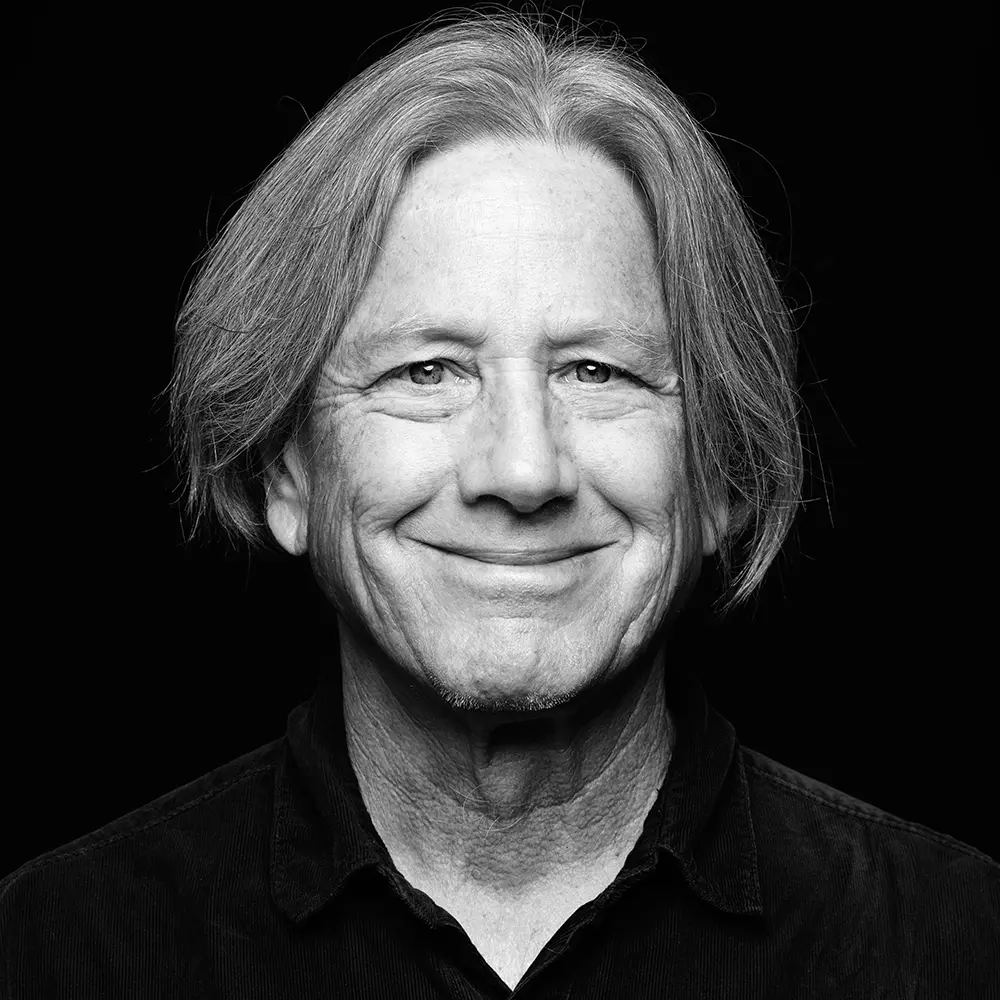
About this Guest
Dr. Dacher Keltner
Dacher Keltner, PhD, is a professor of psychology at the University of California, Berkeley, and a leading expert on the science of emotions and human connection.
This transcript is currently under human review and may contain errors. The fully reviewed version will be posted as soon as it is available.
Dr. Dacher Keltner:
Awe is good for reduced inflammation, elevated vagal tone, reduced long COVID symptoms. We have people with long COVID, just a minute of awe a day reduce long COVID symptoms. It's good news, right? And there's so much science on it that now I think medical doctors are starting to think, "I'm going to prescribe nature. I'll prescribe music through awe as a mechanism."
Andrew Huberman:
Welcome to the Huberman Lab podcast, where we discuss science and science-based tools for everyday life. I'm Andrew Huberman, and I'm a professor of neurobiology and ophthalmology at Stanford School of Medicine. My guest today is Dr. Dacher Keltner. Dr. Dacher Keltner is a professor of psychology and the co-director of the Greater Good Science Center at the University of California, Berkeley. Dacher is an expert in the science of emotions and their role in social dynamics and bonding. Today, we discuss his fascinating work on the science of emotions, including the role of teasing in social bonding, the role of embarrassment in social bonding, and his fascinating work on awe and the things that lead to awe. As he describes, awe is not elusive. It happens when we shift our perception from a very small scale to a very large scale or back again, such as when we suddenly reach a new horizon or visual vista. Today, you'll understand what all of that really means, and more importantly, how you can create this incredible thing that we call awe in everyday life. We also talk about the critical aspect of human bonding in groups and the things that both establish and inhibit deep human bonds. So today is a very practical as well as conceptual conversation that no doubt will change the way that you think about your life every day, and think about opportunities for awe every day. As you'll soon see, Dacher Keltner is a truly special scientist, known for his incredible rigor and creativity in the study of emotions, but also continually offering you, the public, ways to be and feel genuinely better and to get more out of life. It was a true honor and pleasure to host him. Before we begin, I'd like to emphasize that this podcast is separate from my teaching and research roles at Stanford. It is, however, part of my desire and effort to bring zero cost to consumer information about science and science-related tools to the general public. In keeping with that theme, today's episode does include sponsors. And now for my discussion with Dr. Dacher Keltner. Dr. Dacher Keltner, welcome.
Dr. Dacher Keltner:
Good to be with you, Andrew.
Andrew Huberman:
Awe.
Dr. Dacher Keltner:
Yeah.
Andrew Huberman:
I think we all intuitively know what it is, and yet we also don't know how to articulate it.
Dr. Dacher Keltner:
Yeah.
Andrew Huberman:
I want to say the words overwhelmed, excited. I get the physical sensation of a lift. I don't think anyone ever said the word awe and then collapsed-
Dr. Dacher Keltner:
No, that's interesting
Andrew Huberman:
... into a turtle position.
Dr. Dacher Keltner:
That's right.
Andrew Huberman:
Maybe we could explore that and your thoughts about that. But what got you into awe?
Dr. Dacher Keltner:
Yeah. And I love the word lift. That's really interesting. I was a young scholar in the science of emotion that really Paul Ekman was a pioneer in. And that field in the '90s and early 2000s was really focused on negative emotions. And you know the science, right? Anger, fear, fight or flight physiology, amygdala, cortisol, disgust, Paul Rozin and John Haidt, and thinking about emotions from that lens. And as a young scientist, and given the powerful tools of emotion science of Darwin and Ekman and how to just observe phenomena, it didn't make contact with my life and my own experience. I was raised as a wild child in the late '60s in Laurel Canyon, and it was music and social change and protest and beauty, and I was raised by a dad who's a visual artist, and my mom taught Romanticism and Virginia Woolf and awe and the mind and I was like, wow, there's all this stuff that our science, my science, can't speak to. Music and visual patterns and dance and collective movement, and someone like Martin Luther King and why he makes me cry. And I remember feeling this and asking Paul Ekman, I was like, "What should I do with my career?" And he's like, "Study awe." And so that got me going.
Andrew Huberman:
If we could, maybe we could talk about the faces for a moment. I think every psychology and neuroscience student-
Dr. Dacher Keltner:
Yeah
Andrew Huberman:
... sees these faces of disgust-
Dr. Dacher Keltner:
Yeah
Andrew Huberman:
... of pleasure. Darwin talked about this.
Dr. Dacher Keltner:
Yeah.
Andrew Huberman:
Babies are often presented in parallel with those pictures of adults-
Dr. Dacher Keltner:
Yeah
Andrew Huberman:
... where they'll show a baby recoiling from something-
Dr. Dacher Keltner:
Right
Andrew Huberman:
... or wide-eyed and leaning in. There always seems to be a motor component to this that maybe isn't as captured in those two-dimensional photographs.
Dr. Dacher Keltner:
Yeah.
Andrew Huberman:
But what's the story about hardwired facial emotions, and what are the revisions to that story that I'm probably not aware of?
Dr. Dacher Keltner:
Yeah. Thank you for asking that. I've spent 30 years working on that very problem. Paul Ekman came in and, as you've suggested, he did this revolutionary work in New Guinea, showed photos of six emotions, static photographs of anger, fear, sadness, disgust, surprise, and a smile. They kind of interpreted the faces like you or I would, naming it, using the right words to describe those faces. And this is how science occasionally works, which is just by accident, that became the field. And there are a lot of debates about how reliable those faces are, how universal are they in different cultures. Ekman really posited sort of a strong universality that's been contested by Jim Russell, Lisa Feldman Barrett, and others. But since then There are controversies around how hardwired they are. Do they occur reliably in a child's development? Yes and no. Young children show disgust expressions like social mammals do. They wince at bad smells just like you or I would. Anger is a little bit trickier to pin down developmentally. But then our lab and several labs around the world, Jess Tracy at UB, British Columbia, Disa Sauter, and I want to talk about this computational work, started to expand the vocabulary of faces. And now there's a lot of data that suggests there are 20 different facial expressions. Laughter, love, compassion, awe, whoa, embarrassment, shame, pain, and that, in some sense, has broadened the taxonomy of emotions. We used to think of six. Now there are probably 20 distinct states in the mind, and that's where the field is heading, is to really start to think about physiological patterns, brain patterns of these distinct states. And I'll tell you, the hardwiring question, it's hard science to do. Just to imagine videotaping people from five different countries, getting their emotional expressions, and then making sense of them. It used to take one hour to code the facial muscle movements of one minute. So this is slow science, and I would really encourage listeners and viewers to go to alancowan.com. And I had a grad student at Berkeley, Alan Cowan, who he's a computational genius, and he looked at our old science and said, "We can use AI to code the face." And he did it with Google engineers. He coded 2 million videos from 144 cultures and 16 facial expressions, 75% overlap across cultures in how we show awe at fireworks, concentration on a test, laugh at friends. So right now, I would say 50% to 60% is hardwired as part of who we are in our evolutionary history. And then the rest is subject to variation in interesting ways.
Andrew Huberman:
I would like to take a quick break and acknowledge one of our sponsors, Joovv. Joovv makes medical-grade red light therapy devices. Now, if there's one thing that I have consistently emphasized on this podcast is the incredible impact that light can have on our biology and our health. Now, in addition to sunlight, which I've talked about a lot on this podcast, red light, near-infrared, and infrared light have been specifically shown to have positive effects on improving numerous aspects of cellular and organ health. These include faster muscle recovery, improved skin health, wound healing, improvements in acne, reduced pain and inflammation, improved mitochondrial function, and even improvements in vision. Nowadays, there are a lot of red light devices out there, but what sets Joovv lights apart and why they're my preferred red light therapy device is that they use clinically proven wavelengths, meaning they use the specific wavelengths of red light, near-infrared, and infrared light in combination to trigger the optimal cellular adaptations. Personally, I use the Joovv whole body panel about three to four times a week, usually for about 10 to 20 minutes per session, and I use the Joovv handheld light both at home and when I travel. If you would like to try Joovv, they're offering up to $400 off select products for listeners of this podcast. To learn more, visit Joovv, spelled J-O-O-V-V, .com/huberman. Again, that's J-O-O-V-V .com/huberman. Today's episode is also brought to us by Helix Sleep. Helix Sleep makes mattresses and pillows that are customized to your unique sleep needs. Now, I've spoken many times before on this and on other podcasts about the fact that getting a great night's sleep is the foundation of mental health, physical health, and performance. When we aren't getting great sleep on a consistent basis, everything suffers. And when we are sleeping well and enough, our mental health, physical health, and performance in all endeavors improve markedly. Now, the mattress you sleep on makes a huge difference in the quality of sleep that you get each night. How soft it is or how firm it is all play into your comfort and need to be tailored to your unique sleep needs. If you go to the Helix website, you can take a brief two-minute quiz, and it will ask you questions such as, do you sleep on your back, your side, or your stomach? Maybe you know, maybe you don't. Do you tend to run hot or cold during the night? Things of that sort. You answer those questions, and Helix will match you to the ideal mattress for you. For me, that turned out to be the Dusk, D-U-S-K, mattress. I've been sleeping on a Dusk mattress for more than four years now, and it's been far and away the best sleep that I've ever had. If you'd like to try Helix, you can go to helixsleep.com/huberman, take that two-minute sleep quiz, and Helix will match you to a mattress that's customized for you. Right now, Helix is giving up to 27% off their entire site. Helix has also teamed up with TrueMed, which allows you to use your HSA, FSA dollars to shop Helix's award-winning mattresses. Again, that's helixsleep.com/huberman to get up to 27% off. I'm going to ask a question that may or may not be possible to answer.
Dr. Dacher Keltner:
Yeah.
Andrew Huberman:
But if anyone could, it would be you, and it's not a test. Here's what I'm thinking. The relationship between emotions and what we call motor patterns, movement-
Dr. Dacher Keltner:
Yeah
Andrew Huberman:
... is obviously very close. Disgust, a recoil.
Dr. Dacher Keltner:
Yeah.
Andrew Huberman:
We'll explore awe, anger, et cetera, and then there's this other node, which is language. So we have emotions, motor, language.
Dr. Dacher Keltner:
Right.
Andrew Huberman:
Obviously, those can't be dissociated.
Dr. Dacher Keltner:
Yeah.
Andrew Huberman:
But can we imagine somebody, let's just hypothetical person, who can Keep their body very still while they're angry and be very articulate. That includes not moving their hands. We'd probably think perhaps that person's sociopathic, but that's not the picture I'm trying to paint. Then on the other extreme, you can imagine somebody who is very angry and is gesticulating a lot and moving. We can immediately say, "Yeah, that makes sense." And we could do this for any emotion.
Dr. Dacher Keltner:
Yep.
Andrew Huberman:
Right? So how should we think about emotion as an experience and how it's expressed along these three axes?
Dr. Dacher Keltner:
Right.
Andrew Huberman:
Which is motor, language, and then the emotion itself.
Dr. Dacher Keltner:
Yeah.
Andrew Huberman:
I feel like without conceptualizing that, I, as a true novice of this, this isn't my area of understanding or expertise, I can't really understand what an emotion is. But if I understand how those are linked, maybe that's a portal into that.
Dr. Dacher Keltner:
Yeah, no, it's a profound question, Andrew, and it's central to our field. And I appreciate it coming out of your scientific background of studying other mammals and other species. And there are these motor patterns that you see in emotion around the world. When you soothe a child that's crying, you're going to bring it in close and caress and touch and have emotion. When you're fighting a rival or when you see rotten food, that motor pattern will be there. And that's part of our research, that 75% of that is this motor pattern of facial musculature and body and skeletal muscles and how we respond to the emotional events of life. And then we have this massively complicated conceptual system that puts words to experience. And that's mainly what we study in psychological science is just, oh, I'm feeling angry or ashamed or embarrassed or love or compassion. And we know, and your question points to this, very often they're disconnected. The motor pattern and the language we use, and how I would interpret it in another person. On balance, they correlate point two, so they're just weakly. They're kind of these streams of behavior that are just part of who we are. Our motor patterns and language. And there are a lot of ways to think about it. You could think about cultures that value being calm, like a lot of East Asian cultures. Be calm, don't disrupt things, don't blurt out, don't protest. And you'll see this disconnect. You can think about certain people who just are more authentic, and their motor patterns come out in expressions, and they will tell you how they feel. So it's a central problem that we grapple with. And then I love your third part of this equation of emotion science, which is the feeling, the emotion. Michael Pollan is right. This new book on consciousness, the conscious feeling of something. We think we can get to it with words. I don't think so.
Andrew Huberman:
Mm-hmm.
Dr. Dacher Keltner:
You probably wouldn't either, studying the other species you've studied. It's some weird mixture of everything that's happening in your body. And ironically, the emotion or the feeling is still one of the uncharted territories of our field is why, as these complicated motor patterns unfold and words are unfolding and images and memories and visual things that you study, how does that all come together in my feeling of compassion or awe? And we barely know. We don't know.
Andrew Huberman:
Every once in a while, I'll try and think about a concept from way outside of standard science.
Dr. Dacher Keltner:
Yeah.
Andrew Huberman:
Like the chakras or something.
Dr. Dacher Keltner:
Yeah.
Andrew Huberman:
And it's kind of interesting.
Dr. Dacher Keltner:
Yeah.
Andrew Huberman:
Even if one looks at it just purely as a Western scientist, this idea that maybe there is a confluence of nerves and of vasculature and stuff that makes you feel rooted and calm versus up in your head. I've been watching this really interesting Instagram channel. It's a woman who does voices for cartoons, and she has the most incredible understanding of voice. And she's commenting a lot of the time on people in shows that I don't watch, but they have little excerpts of where, I guess there's this doctor on, it's like an "ER" type show. It's like a revisiting of the show "ER." But she talks about how, as he's matured from season to season in his role on the show, and he's mentoring, how she literally talks about how his larynx and pharynx, how he's controlling those differently as he matures. And then when he has a breakdown, how the voice moves further up into his head and what that's about. And so I was thinking about this, I'm like, here's somebody that's a very unique window into all of this, but we sort of know this intuitively. When we're excited, there's this kind of rising from the bottom. And when we're relaxed, everything just kind of sinks down to the diaphragmatic breathing and things.
Dr. Dacher Keltner:
Yeah.
Andrew Huberman:
As a scientist who studies emotion, how do you sort of decide which lens to look at things through? Because a lot of the stuff I'm talking about might sound a little esoteric, but it's actually the stuff that's easiest to measure.
Dr. Dacher Keltner:
Yeah.
Andrew Huberman:
Presumably, you can quantitatively measure breaths per minute when somebody's looking at an awe-inspiring image versus a trivial image.
Dr. Dacher Keltner:
I love your reference to chakras and the older I get, I've been doing emotion science for 34 years or 5 years. It's good to think about the other traditions. We wouldn't have thought about the breath, the power of the breath, without the contemplative meditation traditions that you've imparted and Richie Davidson and others. And lo and behold, the breath Deep exhalation activates the vagus nerve, calms us down. That activation of the vagus nerve gives people a sense of warmth in your chest, which kind of sounds like the heart chakra and all the speculation around how your soul is in your heart. Well, there's a neurophysiological correlate of that. I love the paintings of Alex Grey, the psychedelic artist. If you want an image of what our neurophysiology is as it synchronizes in love, it's pretty close, or it's interesting, right? Mm-hmm. So it's good to find inspiration in that. One of the great things about the science of emotion, and I brought these tools into the study of awe, which is we have learned a lot about how to measure emotion. You can measure it with facial muscles and gaze patterns and coloration of the face and breath patterns and different measures of vagal tone and immune system activation and activation in the gut and, of course, brain activation and the voice, which is one of my favorite modalities. I learned this, in some sense, from Darwin. Darwin's "Expression of Emotion in Man and Animals" is, in my view, and we're just publishing a paper on this, on everything that he said about human emotion. Fifty-three emotions annotated with eight modalities of expressive behavior. I wrote it with Darwin scholar Frank Sulloway, who knows everything about Darwin. And I choose how to study an emotion based on what's happening out in our lives, in the phenomena out there, right? Mm-hmm. So if you're studying awe, you should get people around big trees or in musical concerts or in museums, right? I studied embarrassment early in my career, and modesty, and I'm like, "I got to study young men teasing each other," because we embarrass each other intentionally.
Andrew Huberman:
Oh my goodness. We have to hear about that-
Dr. Dacher Keltner:
Yeah
Andrew Huberman:
... that work again.
Dr. Dacher Keltner:
Yeah.
Andrew Huberman:
It's become very relevant nowadays because of the-
Dr. Dacher Keltner:
Yes, it has
Andrew Huberman:
... I'll just call it what it is. It's not dreaded. It's the dreadful manosphere-
Dr. Dacher Keltner:
Yeah
Andrew Huberman:
... which people use very broadly, but I think now it's being allocated to the worst of the worst. But then there is this phenomenon among males where they'll rib each other and-
Dr. Dacher Keltner:
Oh, yeah
Andrew Huberman:
... and there's a healthy version-
Dr. Dacher Keltner:
Totally
Andrew Huberman:
... of males interacting, too, right?
Dr. Dacher Keltner:
Yeah.
Andrew Huberman:
So we'll get back to that.
Dr. Dacher Keltner:
I base it on what's the phenomenon of interest, right?
Andrew Huberman:
Mm-hmm.
Dr. Dacher Keltner:
That speaks to humanity, and then what are our best measures that we can go after it?
Andrew Huberman:
These days, if you want to measure awe, what's your favorite awe stimulus?
Dr. Dacher Keltner:
First up, and thank you for asking about measurement. It's interesting, people are like, "Oh, you can't study awe. You don't know how to measure it. It's ineffable. It's mysterious. It's spiritual." We can measure awe really well. The vocalization, "Whoa," the facial expression, activation, parts of the brain are deactivated, vagal tone. The goosebumps is a good part of the awe response. As we started to study awe, we did two things, and one is typical science, which is get your most cool awe videos, show them to people. And I had some missteps in this science. I had a woman who was an honor student at Berkeley who was coming back from Burning Man, and she's like, "I'm going to show engineers fractal imagery." And the engineers are like, "Who is this woman?"
Andrew Huberman:
I've never been to Burning Man, but there's the post-Burning Man glow that people come back with that is, for understandable reasons, hard for most people to enter with them. It's like a kid coming back from summer camp.
Dr. Dacher Keltner:
There's great visual imagery. BBC Earth is awesome.
Andrew Huberman:
Mm.
Dr. Dacher Keltner:
And it makes people feel awe. Slow Motion Guys, I don't know if you know these guys. They film wild things in slow motion, like dropping a wine glass, and it's this spectacular photography and just You're like... So it opens you up to-
Andrew Huberman:
Cool. We'll put a link to that.
Dr. Dacher Keltner:
Yeah.
Andrew Huberman:
I love super slow-mo.
Dr. Dacher Keltner:
Yeah.
Andrew Huberman:
Yeah.
Dr. Dacher Keltner:
And that fits our definition, which is you don't understand what's happening. It's vast. It's mysterious. But what I'm really proud of, Andrew, is the work we did out in the field, right? So one of our first studies on the Berkeley campus that you frequented and got your master's degree at and headed into neuroscience was in our paleontology museum. There's a replica of a T-rex skeleton. When I was five years old and I learned about dinosaurs, it changed my life. It was just in the LA Natural History Museum, like, "Wow!" So we studied people standing near the T-rex skeleton, and they became expansive and collective. We studied people near giant eucalyptus trees. We studied people at Yosemite. Yang Bai, a student in my lab, stopped hundreds of travelers from all over the world right when you see Yosemite. And she said, "How do you feel about yourself right now?" And they're like, "I feel small and quiet, but part of something really large," right? Subsequent to that, there are scientists who are studying mosh pits at concerts and surfers and rock climb- backpackers. One of my favorite studies later with Stacy Baer, who's a veteran, who's an amazing human being, an awe pioneer. We studied people rafting down the American River, veterans just like, "Whoa." We've studied people in art museums, Carnegie Hall. One of the joys is when science, just in the spirit of your questions, it's like, well, what should I really do here, right? I could stay in the lab, but it's like, no, we got to go do stuff. My dream study was to have a participant come in And engage a conversation, the other participant is Shaquille O'Neal. Right? And it's like 7'2", 350 pounds. You'd be like, "Whoa." But couldn't do that. So, it's been fun. It's been a wild ride.
Andrew Huberman:
And so many thoughts. First one, I'm lucky I didn't rotate through your lab because I would've never become a neuroscientist, but I'm unlucky-
Dr. Dacher Keltner:
We're glad you missed that opportunity
Andrew Huberman:
But I'm unlucky because it would've been so much fun too, because while I loved the wet lab as they call it, getting into these experiments would just be incredible. Couple things. The Shaquille O'Neal thing.
Dr. Dacher Keltner:
Yeah.
Andrew Huberman:
I think we're all moved by these, I guess they used to call them Make-A-Wish foundation things, where a kid who sadly is dying gets some last wish. And it's a tragic circumstance, but then you get to observe these kids and-
Dr. Dacher Keltner:
Oh, man
Andrew Huberman:
... most importantly, they get to experience something that they never could have imagined happening. Like-
Dr. Dacher Keltner:
Yeah
Andrew Huberman:
... a Shaquille O'Neal walking in.
Dr. Dacher Keltner:
Yeah.
Andrew Huberman:
I feel like that's probably happened or something.
Dr. Dacher Keltner:
Yeah.
Andrew Huberman:
And I think what we're witnessing in those moments has to be awe. They can't believe that this human or this event, whatever it is that they wish for, is happening there. And so it sort of layers upon layers of... There's like a grief component for those of us watching.
Dr. Dacher Keltner:
Well put.
Andrew Huberman:
But a huge aspect of just how touching it is, is the fact that for those moments, they're not thinking about their mortality. And no-
Dr. Dacher Keltner:
Yeah
Andrew Huberman:
... kid should have to think about their mortality, right?
Dr. Dacher Keltner:
Yeah.
Andrew Huberman:
I mean, even as I talk about it, it's like-
Dr. Dacher Keltner:
Yeah, it's profound
Andrew Huberman:
... yeah, it's like there's an overwhelming in the opposite direction, right?
Dr. Dacher Keltner:
Yeah.
Andrew Huberman:
That's a particularly complicated and interesting case where you've got two things colliding, right? Because I feel like awe is so life-affirming.
Dr. Dacher Keltner:
Yeah. It is.
Andrew Huberman:
And anyway, that's just an observation, but horizons are something that have fascinated me for a long time-
Dr. Dacher Keltner:
Yeah
Andrew Huberman:
... as a vision scientist because-
Dr. Dacher Keltner:
Yeah
Andrew Huberman:
... when we see a horizon, our visual angle widens.
Dr. Dacher Keltner:
That's cool.
Andrew Huberman:
We become more parasympathetic.
Dr. Dacher Keltner:
Right.
Andrew Huberman:
There's a whole-
Dr. Dacher Keltner:
Is that right?
Andrew Huberman:
... coming off the accelerator of the sympathetic nervous system.
Dr. Dacher Keltner:
I didn't know that.
Andrew Huberman:
So we relax by virtue of coming off the focusing component.
Dr. Dacher Keltner:
Yeah.
Andrew Huberman:
When we focus in through a tunnel, it's quite the opposite.
Dr. Dacher Keltner:
Nice.
Andrew Huberman:
But I feel like there's something unique to this experience of being in a tunnel, thinking about Yosemite, or in a bunch of trees-
Dr. Dacher Keltner:
Yeah
Andrew Huberman:
... or hike, and then the horizon opens up.
Dr. Dacher Keltner:
Yeah.
Andrew Huberman:
There's this transformation-
Dr. Dacher Keltner:
Yeah
Andrew Huberman:
... of visual space, and those moments, at least for me, are the moments. So I mean, I can hike along a ridge line for a long time and be like, "This is amazing," but there's something distinctly-
Dr. Dacher Keltner:
How? Yeah
Andrew Huberman:
... bigger in the experience of going from confinement-
Dr. Dacher Keltner:
Yeah
Andrew Huberman:
... to openness.
Dr. Dacher Keltner:
Yeah.
Andrew Huberman:
It could be brought to the lab, but do you think that's what's going on in Yosemite or the Grand Canyon, right? Do people who work in Yosemite and the Grand Canyon, do they attenuate? They're like, "Oh, yeah, like another horizon."
Dr. Dacher Keltner:
I don't know. I'm working with rangers right now, and I think the big expansive forms of awe that those places provide is attenuated, but they're still finding it in subtler ways. Yeah, that's really interesting, and it's as interesting as I've been privileged to know Pete Docter at Pixar for 15 years and worked on some of his films, "Inside Out" and "Inside Out 2" and "Soul."
Andrew Huberman:
Yeah, you played a big role in that.
Dr. Dacher Keltner:
Yeah, and through the science of emotion. And in one of our conversations I was like, "Tell me about some techniques for producing awe in children's films, animated films." And he described first just what you said, the film is narrow, like a certain kind of attention, sort of sympathetic, fearful, checking things, and then it comes, suddenly you see the vastness of something. And it's true, it is awe-inspiring. When you think about it neuroscientifically as a very basic form of awe is shifting from small to vast in terms of vision and perception, and then it becomes metaphorical. Right? It's like, God, I'm thinking about... I love one of the wonders of life that makes us feel awe is big ideas and epiphanies. And very often people will be like, "God, I've been working so hard at this. I'm working on a paper, something in technology or some part of my life." And then you suddenly realize it's part of something large, right?
Andrew Huberman:
Mm-hmm.
Dr. Dacher Keltner:
One of the musicians that I interviewed, Yumi Kendall, in the book, in the chapter on musical awe, she's a cellist for the Philadelphia Symphony, said, "I practice for five hours a day. It's hard, man. And it's small and narrow, and where's my finger? And then when I'm on stage, and I feel the notes go out into this space," the vastness you're talking about, "I feel like I'm part of history." Right?
Andrew Huberman:
Mm-hmm.
Dr. Dacher Keltner:
"And I tear up and cry." You got to send me those papers, Andrew, because I think it's fundamental, which is from small to vast.
Andrew Huberman:
Mm-hmm.
Dr. Dacher Keltner:
And in fact, we did this really cool study with Virginia Sturm at UC San Francisco, brain health. Old people go out on an awe walk once a week for eight weeks, 75 years old or older, and all we ask them to do is to go from small to vast in how they looked at things. Look at a tree, look at a leaf, go out to the pattern of leaves. It brought them awe, and less physical pain over eight weeks. And now we're finding six years later, better brain health. Right? So small to vast is a big part of it.
Andrew Huberman:
I'm struck by the awe walk, and I know this comes up in your book and elsewhere, and you've done a lot of research on this. For those listening, what would an awe walk look like, and what are some of the health benefits? You just mentioned a few that have been observed both in the short and the long term.
Dr. Dacher Keltner:
Yeah. Thank you. We are a walking species. It is just in our DNA to walk. We meandered from Africa to all the continents. A lot of people, Rebecca Solnit writes about this, walking is almost sacred. It's a kind of consciousness Like you're saying, like, "Whoa, I'm picking up a vaster view of what's around me." And I decided to just create this awe walk, and I did it for a meditation group or a Mindful Magazine. You just slow down. A lot of people walk. Tens of millions of people have regular walks in the United States. It's good for you. So we just add awe. On your regular walk once a week in our study, go somewhere you wouldn't ordinarily go. Go someplace that may surprise you. I walk around Berkeley a lot, and it's like, well, I'm going to go past the little playground that my daughters played at when they were young and just feel that, Codornices Park.
Andrew Huberman:
Yeah. With the rock slide and the tunnel.
Dr. Dacher Keltner:
Exactly.
Andrew Huberman:
I love that place.
Dr. Dacher Keltner:
Near the Rose Garden.
Andrew Huberman:
And there's a secret... Should we give this away?
Dr. Dacher Keltner:
Yeah.
Andrew Huberman:
There's a secret hiking trail. It's actually through a private property's backyard.
Dr. Dacher Keltner:
Yeah.
Andrew Huberman:
And they allow you to go through if you are quiet and you pick up your trash. And there's an incredible waterfall and place to stand at the top. There's a beam there. You've been there, I'm sure.
Dr. Dacher Keltner:
Yeah, I know.
Andrew Huberman:
Where you can look out over this, what is kind of like a trench of tree... It's a total transformation of one space to the next.
Dr. Dacher Keltner:
It is.
Andrew Huberman:
If you look for it properly, I'm sure now it's on the internet. It's in swinging gates, not locked, and-
Dr. Dacher Keltner:
So hard to find
Andrew Huberman:
... and there's a little monastery maybe nearby.
Dr. Dacher Keltner:
Yep.
Andrew Huberman:
And you might see me. A couple of years ago, you would've seen me and my dog, but you might see me eating a slice of pizza from The Cheese Board sitting on that log. I spent a lot of time there.
Dr. Dacher Keltner:
I'm getting goosebumps, Henry. That is just pure Berkeley. Thank you.
Andrew Huberman:
Yeah.
Dr. Dacher Keltner:
So, yeah. So in this study, awe walk, go on your walk, find a place that's going to be a little surprising, or it may make you feel a little bit of childlike wonder. And it's interesting, no one's asked me this question, your observation about small to vast, and we just said, "Slow down, deepen your breathing, sync it up with your walking," which you've studied empirically, the breath, "and then go from small to vast." Look at clouds. Look at the whole pattern of clouds. Just slow it down. Look at trees. Look at the light on the trees, and look at points of light, and then patterns of light. I love walking past playgrounds. It's one of my favorite sources of awe. Listen to one laugh, and then listen to the whole symphony of laughter of kids. That's all. And they walk through. They do that for half an hour. And what we find in that study is they become more vast in their consciousness. They're more aware in the photographs that they provided of what's around them. They feel more kindness over the eight weeks. They feel more awe over an eight-week period. It rises. And then the finding that was important for people who are elderly is less physical pain. Your body starts to ache when you're 75 or earlier, and awe, I think through the inflammation process, and reducing it, caused less pain. This dovetails with other health benefits. Awe is good for reduced inflammation, elevated vagal tone, reduced long COVID symptoms. We have people with long COVID, just a minute of awe a day reduced long COVID symptoms. It's good news. And there's so much science on it that now, I think medical doctors are starting to think, "I'm going to prescribe nature. I'll prescribe music through awe as a mechanism."
Andrew Huberman:
I have a lot of thoughts about this going from small to large.
Dr. Dacher Keltner:
Yeah, I'd love to hear them.
Andrew Huberman:
But before I do-
Dr. Dacher Keltner:
You've asked me twice
Andrew Huberman:
... I have another question. I have another question. I think for a lot of people, including myself, we assume that awe is this kind of forgetting of ourself.
Dr. Dacher Keltner:
Yeah.
Andrew Huberman:
Like getting outside of ourselves. But I'm starting to think, based on the way you're describing it, that it's about being tethered to the larger picture.
Dr. Dacher Keltner:
Yeah.
Andrew Huberman:
That it's not a... Yes, it's getting out of our heads, quote unquote, but it's actually very much an embodied experience. It's almost full body.
Dr. Dacher Keltner:
Yeah.
Andrew Huberman:
And so now I'll answer your question. This is usually where people start putting in the comments, like, "You talk too much. Let your guest talk." But I'm trying, folks. He asked me.
Dr. Dacher Keltner:
Twice.
Andrew Huberman:
So you asked me a question, I'm going to answer it. Anyone that knows me, if I... Okay, so I've thought about this relationship between visual aperture and time perception for a long time.
Dr. Dacher Keltner:
Cool.
Andrew Huberman:
This is my deepest obsession, and it gets a little bit into the book I'm writing, but it's probably reserved for after there's some experiments. And to the fear of my podcast crew, I actually am considering going back into the lab to do this experiment. So what do we know for certain? We know for certain that when your visual aperture is small, like looking through a soda straw view or watchmaker-type aperture, or you're in a, let's just say, it could be a pleasant or unpleasant text communication that's going back and forth, that your perception of time is different. You're fine slicing.
Dr. Dacher Keltner:
Nice.
Andrew Huberman:
Those dot, dot, dots coming through-
Dr. Dacher Keltner:
Yeah, it's just like this
Andrew Huberman:
... it feels like an eternity.
Dr. Dacher Keltner:
Yeah.
Andrew Huberman:
And it's bidirectional with your, let's just call it, level of alertness. It doesn't even have to be stress, but sympathetic nervous system, right? So if I'm in line at the store and I have some place to be, my visual aperture shrinks, and then it feels like the person in front of me is taking forever.
Dr. Dacher Keltner:
Yeah, because you're in these little micro-
Andrew Huberman:
When I'm relaxed, it feels like I'm slicing time differently. Okay, when we see a horizon and our aperture opens up, as I mentioned, then we relax. But we also are taking Fewer time snapshots. So people might think, oh, fewer, you're in slow motion because there were... No. It's the opposite. Slow motion is high frame rate. This thing about video where you can catch slow motion, you need a high frame rate. This is why when people experience a car crash, they'll often say that things felt like they were slowing down.
Dr. Dacher Keltner:
Totally expand.
Andrew Huberman:
More snapshots.
Dr. Dacher Keltner:
That's cool.
Andrew Huberman:
So when I think about this relationship between visual aperture and time, and it also exists in the auditory domain. So if I'm listening to a specific conversation at a party, I'm fine-slicing my perception of auditory space. Our friend Irv Hafner taught me this. When I listen to everything and I take it in as a whole, it's a more relaxed experience.
Dr. Dacher Keltner:
Yeah.
Andrew Huberman:
But okay.
Dr. Dacher Keltner:
Cool.
Andrew Huberman:
So a long time ago, because I was experiencing stress, I started reading about meditation types and different things, and I came up with this meditation. But it's not a meditation at all, and some of my listeners will be familiar with it. I decided to call it, for lack of a better term, space-time bridging. The meditation's very simple. You close your eyes and you do three breaths, thinking about your skin inward, so interoception. You open your eyes and you look at your hand.
Dr. Dacher Keltner:
Nice.
Andrew Huberman:
You take three breaths. But you're creating a visual tether between you and your hand. Then you look some distance, maybe eight or 10 feet away.
Dr. Dacher Keltner:
Yeah.
Andrew Huberman:
You do the same, then you find a horizon, and then you think about the sort of pale blue dot phenomenon. Like you're just on a planet, it's floating in space, and every single one of these things is a form of meditation or a meme or whatever. And then you get right back to yourself.
Dr. Dacher Keltner:
Yeah.
Andrew Huberman:
And so the idea here is that it helped me a lot because I noticed that meditations where I was completely focused inward made me more focused inward. Going for a run, I could get outside my head, and I started to play with the idea that maybe it's not about having a small aperture or a big aperture per se.
Dr. Dacher Keltner:
Yeah.
Andrew Huberman:
But it's the, like every great thing in biology or psychology, it's the process. It's not an event.
Dr. Dacher Keltner:
Yeah.
Andrew Huberman:
It's the process of going from one aperture to the next.
Dr. Dacher Keltner:
That's cool.
Andrew Huberman:
And that's kind of what life is about.
Dr. Dacher Keltner:
Yeah, absolutely.
Andrew Huberman:
Like when this too shall pass is really about taking a broader time snapshot.
Dr. Dacher Keltner:
Yeah.
Andrew Huberman:
Like eventually this thing-
Dr. Dacher Keltner:
Which is visual as well.
Andrew Huberman:
Which is visual.
Dr. Dacher Keltner:
Yeah.
Andrew Huberman:
And so this is a long answer to your question, but-
Dr. Dacher Keltner:
No, it's really interesting
Andrew Huberman:
... this is why it's so important for me to see a horizon if I can in the morning. But it's also very important to go indoors and just focus on what I'm working on.
Dr. Dacher Keltner:
Yeah.
Andrew Huberman:
There is no place or event in a day or in life that's actually the right way to live. You can go to Big Sur, and if you're lucky enough to go to Esalen, you're like, "This is it." But it's only it because you came from your office, in my opinion.
Dr. Dacher Keltner:
Yeah.
Andrew Huberman:
And then you go back again.
Dr. Dacher Keltner:
Yeah.
Andrew Huberman:
You figure this out. The title of this paper, which you're the senior author, is "A Balanced Mind: Awe Fosters Equanimity via Temporal Distancing."
Dr. Dacher Keltner:
Yeah. No, it's-
Andrew Huberman:
So it's about time-
Dr. Dacher Keltner:
Yeah
Andrew Huberman:
... not about space.
Dr. Dacher Keltner:
It is. That's fascinating.
Andrew Huberman:
Okay. So that's how I think about this. Now, maybe you can tell us about this paper, because I'm getting embarrassed that I've been going way too long.
Dr. Dacher Keltner:
This is why we're in conversation, Andrew, which is you've studied the visual system, and we need more of that knowledge in the science of awe. And I will just make one parenthetical note, which is I was interviewing Matias Tarnopolsky, who was at Berkeley and then went to the Philadelphia Symphony and was a music director there. And he studies the great, and he's a conductor of symphonies. And I was like, music's hard to understand scientifically. It is complicated. I was like, "Why awe and music? Why do we cry? Why do we get goosebumps? I mean, profound." And he's like, "Time."
Andrew Huberman:
Mm.
Dr. Dacher Keltner:
It's all about what it does to our sense of time, and so I think there's a hypothesis there to explore. What awe does to the self, and I'm putting together a couple of your comments is, and Jane Goodall got it most right, and it's so great to study things with science, and then you see someone you really revere say something. And she felt that chimpanzees feel awe. I do too-
Andrew Huberman:
Mm-hmm
Dr. Dacher Keltner:
... believe that. So it's a controversial issue. Chimps show, and Frans de Waal alerted me to this, who recently passed away, and I just want to pay reverence to him or homage to him. A great primatologist. So he said, "You got to look at Jane Goodall and writing about chimps and the waterfall display they show when they are around vast nature." They sit quietly around rivers, like that waterfall at Berkeley. They look at things. They get goosebumps. They touch things like we would out in nature. They rock. And Jane Goodall said, "Why wouldn't they feel awe?" Or the beginnings of spirituality, which is really being amazed at things outside of the self. So with awe, we have a sense of self, interoception, and the like, and then we connect to vast things out there. And that's what our research documented as kind of a central mechanism of awe or transformation is like when you're at Yosemite or when you are standing next to that T-rex skeleton or when you've thought about the passage of time that happens with life, and there are new meditations around that. You're like, "Wow, I am part of something vast. I'm part of evolution. I'm part of nature. I'm part of an ecosystem." And it changes your whole mind. It changes the neurophysiology of the mind, default mode network starts to quiet down, activates vagal tone, and you do feel like you're tethered, as you said, to music or a culture or a political movement or the team you love. And it's transcendent. And if you look at where we are today, we need more of that. We need to get our young people to be connecting to big things.
Andrew Huberman:
As many of you know, I've been taking AG1 for nearly 15 years now. I discovered it way back in 2012, long before I ever had a podcast, and I've been taking it every day since. The reason I started taking it, and the reason I still take it, is because AG1 is, to my knowledge, the highest quality and most comprehensive of the foundational nutritional supplements on the market. It combines vitamins, minerals, prebiotics, probiotics, and adaptogens into a single scoop that's easy to drink, and it tastes great. It's designed to support things like gut health, immune health, and overall energy, and it does so by helping to fill any gaps you might have in your daily nutrition. Now, of course, everyone should strive to eat nutritious whole foods. I certainly do that every day. But I'm often asked, "If you could take just one supplement, what would that supplement be?" And my answer is always AG1, because it has just been oh-so critical to supporting all aspects of my physical health, mental health, and performance. I know this from my own experience with AG1, and I continually hear this from other people who use AG1 daily. If you would like to try AG1, you can go to drinkag1.com/huberman to get a special offer. For a limited time, AG1 is giving away six free travel packs of AG1 and a bottle of vitamin D3+K2 with your subscription. Again, that's drinkag1, with the numeral one, .com/huberman to get six free travel packs and a bottle of vitamin D3+K2 with your subscription. I didn't expect that we would land here, at least not so early in the conversation. But we've had Christof Koch on this podcast- Yeah ... talking about consciousness, incredible neuroscientist and really thinker. Yeah. I've watched his career evolve over the years, and he's continued to evolve his concepts of- Yeah ... how to think about consciousness. And we'll hear nowadays about, oh, maybe consciousness is outside the brain. Yeah. And I think if nothing else, our brains are important components in it. Maybe not. Heck yeah. I don't know. I don't want to do the experiment on myself to find out. Yeah. Like if I was decerebrated or something, which basically means having your cortex removed, folks. Sorry for the nerd speak. But the idea is connecting through time in our own lives- Yeah ... is a very unique form of awe. So if I hear a song and it reminds me of when I was 15, and then all of a sudden, all the, as I call it, the magic library come. That's how the brain works, right? Yeah. It's like Harry Potter. You take out a book, you see a subject, and then all of a sudden the books around it change. And so I'm thinking about the time we did this and the time we did that, and everyone has these notions. But there's very much linked to them. That's one form of linking up through time. Well put. And then there's this other one where you feel something with someone else. You know you're connected in that moment, but there's this idea, forgive me for getting squishy on here, but there's this idea that maybe your past, present, and future is connected to their past and present- Yeah ... and future. Yeah. And if you let yourself go there, no drugs required, if you let yourself go there, you're like, "Oh, we're part of this together." And that we're sort of moving more now as a conscious fleet than as individuals. Yeah. I think that's a very real experience, even for people that are very resistant to even the language of collective consciousness- Yeah ... and things like that. And I think concerts are where we generally feel that. Yeah. Because it requires a sort of shared perceptual experience or emotional experience. Yep. And so when you say getting young people connected that way- Yeah ... it's very different than node to node. It's an openness that comes. First, you have to connect to your past, present, and future, and then you're kind of open to it. I feel like then that window opens, and then if there's one person there or 1,000 people standing there, it's on. Yeah. But if not, and you're just in- Yeah ... your experience, you're the person at the party wondering whether or not you have something between your teeth, which is the lamest way to be at a party, but we've all been there, right? Anyway, I'm getting a little outside the box here. No, I love it. But what are your thoughts about individual awe experiences, like on the awe walk- Yeah ... versus a couple on an awe walk, versus connecting to a whole mess of people, some of whom you've never met? You've highlighted this temporal, this dynamic that you're pointing to with respect to awe and the experience of awe, and we're so limited in how we measure experience. And I think you're right. I think that your first sense of one of the most awesome qualities of awe is connecting in your mind through the layers of consciousness and experience that shifts out of the micro to this expansive narrative about your mind, right? And so I grew up around the UCLA campus because my mom got her PhD there at UCLA in the late '60s, and there were eucalyptus trees. And then I went to Northern California, where there were not as many eucalyptus trees. And first day I was at UC Santa Barbara as an undergrad, I smelled the eucalyptus, and it was awe. It was just like, ah, all of these experiences through the olfactory process. Mm-hmm. I was awestruck by that smell, right? And that's through the connecting through time. I am very persuaded by the new literature on brain synchronization. And I talk about this a bit in "Awe," and there's just new science coming out. We're always syncing up with other people. When a nine-month-old listens to music, they are syncing up to the sounds and rhythms of their culture's music, and they're synced up physiologically with whomever is in their midst. When we go to a concert or we watch a sporting event. If you like sports, your heart rate is syncing up, your brains are synchronizing. And that, in some sense, is the materialistic account of collective consciousness. We're all sharing brain patterns and awareness. And I think that
Dr. Dacher Keltner:
It's part of some of our deepest forms of awe. And music, now the current science of music is like, it is very hard to get people to think collectively in the same way. When you teach a classroom, it's impossible, but music does it within milliseconds. Right? When you talk to people who've been to Taylor Swift shows, who are Swifties, it's serious, right?
Andrew Huberman:
They are instantly bonded.
Dr. Dacher Keltner:
Yeah.
Andrew Huberman:
That's the word. Yeah.
Dr. Dacher Keltner:
United in a moral cause almost, or an identity cause. So that's profound. That's very hard work to do. And when Jonathan Haidt and I wrote about awe early in our careers, we were like, "We need these emotions to make us be part of collectives," because we are a very collective species. It's one of our signature strengths, is to fold into groups and to cooperate and share. It's hard work. It's vulnerable to exploitation, and awe is one of the fastest pathways. It's through what you're talking about, through physical dancing together, chanting together, sporting events together, what Émile Durkheim called collective effervescence, right? Music, just syncing up with each other, feeling like we're part of this vast group, sharing a sense of humanity, a sense that we all suffer in the same way or exalt in the same way, and it's profound. I don't think we'll ever get this with science, but I love, I've had all these conversations about awe and musical awe. I'm like, when's a time, and I could ask you this question, when being at a concert has changed your life?
Andrew Huberman:
Oh. They're some of the most important, not just memorable, but important experiences of my entire life.
Dr. Dacher Keltner:
So tell me about one or two.
Andrew Huberman:
My sister listened to the Grateful Dead and Cat Stevens and all that kind of stuff.
Dr. Dacher Keltner:
Uh-huh.
Andrew Huberman:
And from the first time I heard, people will immediately think bullet belts and Mohawks, but I was a punk rock kid. I'll never forget, my friend who's now well-known in the skateboard community, Jim Thiebaud.
Dr. Dacher Keltner:
I know Jim.
Andrew Huberman:
You know Jim?
Dr. Dacher Keltner:
Yeah.
Andrew Huberman:
He's a close friend of mine.
Dr. Dacher Keltner:
I take saunas with Jim.
Andrew Huberman:
Do you?
Dr. Dacher Keltner:
Yeah.
Andrew Huberman:
I texted with him this morning.
Dr. Dacher Keltner:
Say hi.
Andrew Huberman:
We text each other every morning.
Dr. Dacher Keltner:
Yeah.
Andrew Huberman:
The great Jim Thiebaud. He basically runs skateboarding. He's the dean of skateboarding, the quiet dean of-
Dr. Dacher Keltner:
And good friends with Tommy Guerrero.
Andrew Huberman:
Good friends with Tommy Guerrero. Jim gave me my first cup of black coffee. He was the person who inspired me to start journaling when I was 14. I was put on out of sympathy onto Thunder Trucks, and at the time, he was around the factory, which at that time was over in Third Street, Hunter's Point, on Yosemite. But anyway, Jim gave me a tape, because back then it was tapes, of a band called Crimpshrine-
Dr. Dacher Keltner:
Uh-huh
Andrew Huberman:
... which is from Berkeley.
Dr. Dacher Keltner:
Uh-huh.
Andrew Huberman:
And, they were on Lookout Records, which eventually were first releases of Green Day. I wasn't so much, forgive me, I like those guys, I know some of them, but I heard that tape, it was like, "This is amazing." "This is amazing. I've never heard anything quite like it."
Dr. Dacher Keltner:
Yeah.
Andrew Huberman:
It was super raw. And then I was like, "I need more of this."
Dr. Dacher Keltner:
Yeah.
Andrew Huberman:
It was like a drug.
Dr. Dacher Keltner:
Yeah.
Andrew Huberman:
I was like, "I need more of this."
Dr. Dacher Keltner:
Yeah.
Andrew Huberman:
"Whatever this is."
Dr. Dacher Keltner:
Yeah.
Andrew Huberman:
And so he gave me a Stiff Little Fingers tape.
Dr. Dacher Keltner:
Uh-huh.
Andrew Huberman:
And that was just it. And then it was Stiff Little Fingers, Operation Ivy, Rancid. I could easily do a whole, literally a thesis- ... on that whole kind of era and genre of punk rock.
Dr. Dacher Keltner:
Yeah.
Andrew Huberman:
I'm a huge Joe Strummer fan.
Dr. Dacher Keltner:
Yeah. Heck yeah.
Andrew Huberman:
Mescaleros and-
Dr. Dacher Keltner:
Yeah
Andrew Huberman:
... biggest Rancid fan there ever was. I'm blessed to be good friends with Tim Armstrong these days, but I only-
Dr. Dacher Keltner:
Uh-huh
Andrew Huberman:
... met him later in life. And that still freaks me out, because we're close friends, but whenever I see him, I'm like, "That's Tim Armstrong." Because talk about time travel. That's the 14, 15-year-old version of me. Those guys are a bit older, and they were like gods in the Bay Area-
Dr. Dacher Keltner:
Yeah. Heck yeah
Andrew Huberman:
... for our scene. And then when they made it.
Dr. Dacher Keltner:
Yeah.
Andrew Huberman:
And they're just still so good.
Dr. Dacher Keltner:
Yeah.
Andrew Huberman:
The show that changed everything for me was, this would be summer between '93 and '94, a little club, it was either called The Stage House or The Stagecoach in Santa Barbara-
Dr. Dacher Keltner:
Okay
Andrew Huberman:
... that was near the railroad tracks downtown. And it was Rancid playing with Sick of It All, which was a East Coast hardcore band, and my now good friend Toby Morse was there. And I remember going there and being kind of scared. I'm-
Dr. Dacher Keltner:
Yeah
Andrew Huberman:
... kind of like-
Dr. Dacher Keltner:
Mosh pits and
Andrew Huberman:
... knew my way around it. Those guys were older. It had a kind of violent feel.
Dr. Dacher Keltner:
Yeah.
Andrew Huberman:
They were from Albany and West Oakland and-
Dr. Dacher Keltner:
Yeah
Andrew Huberman:
... there was an edge there. And I remember thinking, "This is exciting. I feel very much a part of this. I love the music."
Dr. Dacher Keltner:
Yeah.
Andrew Huberman:
"I know every lyric, and I'm a little bit frightened, and I love it." And I think it was just that I just got the adrenaline back. And there's a little bit of, you don't know what is going to happen, and it feels a little dangerous, but it's mostly benevolent, and it's an irreplaceable feeling. And I think about it a lot of the time.
Dr. Dacher Keltner:
Yeah. And thank you. And when I was writing this book on awe, some forms of awe, there are eight wonders that give us awe. Some are, you kind of understand them. Nature's pretty straightforward, spirituality, meditation. And music, and your description of it exactly captures how rich it is and complicated, which is, there is something about that sound and the acoustic patterns that come through your eardrums and head into your auditory cortex, and you give it meaning, and suddenly you're remembering things and bonding with people and the Insta friends, like you said. for life. Brothers and sisters almost, and you're like, "This is what life's about." And Susan Langer, a philosopher, really got it right. She's like, "Music is this tonal language of emotion and identity." And awe in music, very fitting with our conversation, is when those sounds come into you, move you, and connect you to something that is what you care about in life. I remember I was very lucky to grow up in Laurel Canyon in the late '60s, and there was more music there than almost anywhere in human history, from The Mamas & Papas and Frank Zappa and-
Andrew Huberman:
Jim Morrison was out there
Dr. Dacher Keltner:
... Jim Morrison was living there, and The Doors, and Bob Dylan was passing through and The Byrds. It was a joke. It was everywhere. And-
Andrew Huberman:
That's wild just to think about how much incredible music was being created.
Dr. Dacher Keltner:
Oh, man.
Andrew Huberman:
Right.
Dr. Dacher Keltner:
The Beach Boys were at-
Andrew Huberman:
I mean, weren't Fleetwood Mac back in-
Dr. Dacher Keltner:
Yeah
Andrew Huberman:
... in Topanga?
Dr. Dacher Keltner:
Yeah. And I was eight and nine, and just to grow up on Bob Dylan, and when I saw about the recent film with Timothée Chalamet, I started crying. I was just like, "This is life." Yeah. And so that's why we study awe. Music is one of our great technologies. There's now research showing it's good for chronic pain. I think it's a frontier in healthcare and just giving people contemplative, meditative approaches to music, and awe is part of the answer. And you and I share yet another thing, Andrew, when I grew up in the foothills of the Sierras as a teenager, Ted Nugent, and it was poor area, Ted Nugent, AC/DC, and that's all fine. And when I first heard the Sex Pistols in... I was lucky to be in England when "Never Mind the Bollocks" came out, and I was in a working-class fighting town. And I heard that, I was like, "That's it." And then that led me to Iggy Pop, who's one of my moral heroes. So-
Andrew Huberman:
Amazing. Who's really into qigong, apparently. I heard him years ago on the radio and someone was asking how does he stay in such good shape?
Dr. Dacher Keltner:
Yeah.
Andrew Huberman:
And he's just tons of qigong breathing.
Dr. Dacher Keltner:
Yeah.
Andrew Huberman:
Wild. It's interesting because a lot of music has lyrics and a lot doesn't.
Dr. Dacher Keltner:
Yeah.
Andrew Huberman:
But there's something that feels kind of divorced from language about-
Dr. Dacher Keltner:
Yeah
Andrew Huberman:
... the experience that we're talking about, even though there's lyrics tied in there. And what brings that to mind is there's a really good book, one that I like anyway, called "A Fighter's Heart" by a guy named Sam Sheridan. His wife actually wrote that movie "Monster," with Charlize Theron-
Dr. Dacher Keltner:
Yeah
Andrew Huberman:
... I think is the actress that played her. And I don't know Sam, but there's this description of all these different martial arts forms, and he explores them all and-
Dr. Dacher Keltner:
Yeah
Andrew Huberman:
... there's this great line in there, because I've done a little bit of boxing- ... and sparred a bit. I don't recommend it. As a neuroscientist, how can I recommend it, right?
Dr. Dacher Keltner:
Yeah. What were you doing?
Andrew Huberman:
You get hit. Well, I was actually in my 30s, but anyway, I was working some stuff out. But do not recommend. The sport, yeah, the training, yeah, but you don't want to get hit in the head. Not good for your brain whatsoever. But he talks about how fighting with someone, sparring-
Dr. Dacher Keltner:
Yeah
Andrew Huberman:
... or fighting with someone is, he said it's one of the most bonding experiences that you'll ever have.
Dr. Dacher Keltner:
Yeah.
Andrew Huberman:
Because you're in this primitive non-language state.
Dr. Dacher Keltner:
Yeah.
Andrew Huberman:
He actually likens it to a one-night stand. He says something like, "Oh, you're sharing bodily fluids with somebody that you barely know, but you feel connected."
Dr. Dacher Keltner:
Yeah.
Andrew Huberman:
So I don't know if that's the best, it's certainly not the most politically correct way to put it. But I understand what he's talking about, right?
Dr. Dacher Keltner:
Definitely.
Andrew Huberman:
You're in this moment of you're both vulnerable.
Dr. Dacher Keltner:
Yeah.
Andrew Huberman:
In the case of the fighting, you're both vulnerable. You're trying to hurt each other. You're also obeying some rules.
Dr. Dacher Keltner:
Yeah.
Andrew Huberman:
Right? It's not anything goes. And he talks about how it transcends language.
Dr. Dacher Keltner:
Yeah.
Andrew Huberman:
And that creates a forever bond. And it's true.
Dr. Dacher Keltner:
Yeah.
Andrew Huberman:
Right? I didn't do a ton of sparring, but you have a respect.
Dr. Dacher Keltner:
Yep.
Andrew Huberman:
You went through something hard together.
Dr. Dacher Keltner:
Yeah.
Andrew Huberman:
Even if it's only three three-minute rounds. It's real, but it's separate from language. And earlier, we were talking about the experience of emotion as this kind of triad of the feeling, the motor component to it-
Dr. Dacher Keltner:
Yeah
Andrew Huberman:
... and language. But I do think that maybe the language piece can go.
Dr. Dacher Keltner:
I'm with you in some sense. Darwin wrote about the motor components, got a lot of it right. William James was about the body and the physiology. And language is what we rely on as social scientists, but I think it's, as William James said when he tried to describe his experience of transcendence, when he took laughing gas and it led him down the path to understand spirituality is like, words are tattered fragments. They barely touch the real thing. Yeah, and I just want to dwell for a moment. Part of awe, and I learned this talking to veterans, and I did work with Stacy Bare, and we did this Sierra Club research getting veterans out on the rivers, and he's one of my heroes in the book of getting tens of thousands of veterans to find their awe in nature. And these are guys who've lost limbs and they're rock climbing. And it's just like there's a lot of awe when you're right at the edge of life, and there's violence and there's a lot of horror, carnage, et cetera, but there's awe. And I love your idea, and I think any teacher of the martial arts would say that's the point, is that we can transcend death or violence by martial arts by performing them and putting them into a contemplative form for the body. One of my favorite movies, if not my favorite movie, is "Raging Bull," man, and Martin Scorsese. Jake LaMotta and Sugar Ray have these epic battles, and they look at each other in one of the great scenes, and they're just like, "We're united. We're way beyond the fight." I think you're right. I think it's part of this transcendent moment of people crashing into each other. Mosh pits.
Andrew Huberman:
Yeah.
Dr. Dacher Keltner:
They are one of my favorite objects of study and awe, and mosh pits have a set of laws to them.
Andrew Huberman:
Yeah, people have studied the-
Dr. Dacher Keltner:
The physics
Andrew Huberman:
... sort of the physics of it.
Dr. Dacher Keltner:
Yeah, no.
Andrew Huberman:
Yeah.
Dr. Dacher Keltner:
And you think you're crashing, and you are. You're bruising yourself. But there's something transcendent there about what we find.
Andrew Huberman:
I could be wrong, but I think "Raging Bull," I think that the soundtrack was Clash inspired.
Dr. Dacher Keltner:
Was it really?
Andrew Huberman:
There's something about it in the documentary, which I highly recommend, called "The Future Is Unwritten"-
Dr. Dacher Keltner:
Uh-huh
Andrew Huberman:
... which is the Joe Strummer thing, where there's some linkup between The Clash. I think Scorsese says, "The Clash inspired the soundtrack to Raging Bull," or something like that.
Dr. Dacher Keltner:
Really?
Andrew Huberman:
Anyway. He's a big Clash fan, so.
Dr. Dacher Keltner:
Nice.
Andrew Huberman:
Or yeah. So-
Dr. Dacher Keltner:
All right, Andrew, I get to ask you one more question.
Andrew Huberman:
Yeah.
Dr. Dacher Keltner:
So why is Joe Strummer a person of moral beauty to you? One of the sources of awe is we're amazed by people's courage and strength and kindness and justice. So why Joe Strummer?
Andrew Huberman:
Oof, man. All right, I'm going to try and keep this brief. Just to give you a sense of what an impact he's had on me, I've always worn these button-down black shirts, even before I was public facing. Because I saw him do a show, a Mescalero show. I wasn't there, but he... By the way, Joe Strummer & The Mescaleros, I actually think is better than The Clash.
Dr. Dacher Keltner:
Wow.
Andrew Huberman:
Clash was a short run. It was only five years.
Dr. Dacher Keltner:
Yeah.
Andrew Huberman:
Only five years.
Dr. Dacher Keltner:
Yeah.
Andrew Huberman:
Pretty much, and then they're done. So it's one of those Clash, and then he came back with The Mescaleros, and just incredible. They're masterpieces.
Dr. Dacher Keltner:
Yeah.
Andrew Huberman:
Produced in part by my friend Tim Armstrong. He went Hellcat Records. He went to a small label. He also sang songs with Johnny Cash with Rick Rubin. I actually know the story of that because I'm friends with Rick, and I insisted on him telling me the story.
Dr. Dacher Keltner:
Yeah.
Andrew Huberman:
Sometime I can tell you that, but masterpieces late in life. And there was a show that Strummer played where he was wearing his black button-down, soaking in sweat, like soaked in sweat, and he just wouldn't take the thing off.
Dr. Dacher Keltner:
Yeah.
Andrew Huberman:
I think he might've rolled up one cuff.
Dr. Dacher Keltner:
Yeah.
Andrew Huberman:
And I was like, "That's punk as fuck." I was like, "That guy is so rad." And he died at 50, where I'm 50 now.
Dr. Dacher Keltner:
Oh, man.
Andrew Huberman:
Died at 50. I go see the mural of him, it's right off Tompkins Square Park, in Alphabet City. Every time I'm in New York-
Dr. Dacher Keltner:
Nice
Andrew Huberman:
... just go see it.
Dr. Dacher Keltner:
Right on.
Andrew Huberman:
There's an aviator, says, "Future is unwritten." You can go there, pay your respects. I've talked to Rick about this a lot, like what was it about him?
Dr. Dacher Keltner:
Yeah.
Andrew Huberman:
Because they were close friends, and I never met Strummer. But I think there's three reasons. One is, he had that Bob Dylan-like ability to write lyrics that you're not, especially with Mescaleros, where you're not really sure what the song's about, but it makes sense, not just because it's beautiful, but you feel like he's tapping into something more fundamental than what the lyrics-
Dr. Dacher Keltner:
Right
Andrew Huberman:
... are actually saying.
Dr. Dacher Keltner:
Beyond language.
Andrew Huberman:
Yeah.
Dr. Dacher Keltner:
The theme of our talk. Yeah.
Andrew Huberman:
A great song, for instance, would be "On the Road to Rock and Roll." That could be about being on tour or something, but-
Dr. Dacher Keltner:
Yeah
Andrew Huberman:
... it transcends something obvious.
Dr. Dacher Keltner:
Nice.
Andrew Huberman:
The other thing is the way he used his breath was, his intonation is unparalleled.
Dr. Dacher Keltner:
Yeah.
Andrew Huberman:
And then Rick was the one who really helped me understand, because during the summer, I go hang out with Rick whenever I can. And winter, too. And we watch documentaries. Including Clash documentaries. And I asked him, I was like, "What was it?" Why does he have this thing? Because he says these incredible things.
Dr. Dacher Keltner:
Yeah.
Andrew Huberman:
He would say things like, "You got to bring humanity back into the center," or thing. And those are really beautiful quotes, but a lot of people give beautiful quotes. And Rick, in very Rick Rubin style, said, "Everything he said, he brought his whole life experience into those statements." And I was like, "Just the statements, like the quotes?"
Dr. Dacher Keltner:
Yeah.
Andrew Huberman:
Like the, "We got to bring the humanity back into the..." And he goes, "No, everything he said." It was like you got the sense that he was bringing all of himself to it, even if he was being kind of quiet.
Dr. Dacher Keltner:
That's cool.
Andrew Huberman:
And I go, okay, so this is clearly on a plane of understanding that I can't put language to, right?
Dr. Dacher Keltner:
Yeah.
Andrew Huberman:
What does that even mean? That's like half the things Rick says, it's like a riddle- ... mixed up in a poem, put out there as-
Dr. Dacher Keltner:
As a principle
Andrew Huberman:
... as a principle, and you're just like-
Dr. Dacher Keltner:
Yeah
Andrew Huberman:
... "What the hell does that mean?" But it feels true. And I think that, and Rick's superpower-
Dr. Dacher Keltner:
Yeah
Andrew Huberman:
... is that Rick knows what a true feeling feels like.
Dr. Dacher Keltner:
Yeah.
Andrew Huberman:
And he knows what a false feeling feels like, and he's only interested in truths, period.
Dr. Dacher Keltner:
And that's the challenge of the science that I'm part of, is exactly that. It's like there are all these layers of meaning and representation, and we try to figure out true moments of awe with all of our measures, and it is this, it's all coming together as a package that tells us it's happened.
Andrew Huberman:
So we can think about things that promote awe. The awe walk, going small to large aperture, maybe back again.
Dr. Dacher Keltner:
Yeah.
Andrew Huberman:
I guess we shouldn't assume that it's unidirectional. Coming back into our home after something big is-
Dr. Dacher Keltner:
Ah
Andrew Huberman:
... there's nothing like that. Right? The dog, the kids, the-
Dr. Dacher Keltner:
Yeah
Andrew Huberman:
... the spouse, the whatever. Those little things. The plants, even. So it runs both ways. It's no fun, but we should probably talk about some of the inhibitors of awe. Because as I step back from what we're talking about today, and I think, okay, language, it can be part of it-
Dr. Dacher Keltner:
Yeah
Andrew Huberman:
... but it can also, in molecular biology or genetics, we call it a dominant negative. It's like a gene that basically suppresses a set of functions.
Dr. Dacher Keltner:
A ton of stuff. Yeah.
Andrew Huberman:
There's a joke around molecular labs and neuroscience labs that you'd be like, "That person's a dominant negative." You know?
Dr. Dacher Keltner:
I now have a new phrase I can use.
Andrew Huberman:
Oh, yeah. Yeah. You don't want to be called a dominant negative. I call people that in my head a lot online. I go, "Oh, man, that person's dominant negative. They're not contributing to the greater good." So language can be that or be neutral, repositive, but it can definitely be that. And then there's something about being over-identified with self. So on the recommendation of Tim Armstrong, someone you wouldn't associate with the Grateful Dead, he was like, "You got to listen to the Grateful Dead." And I was like, "What?" Says Tim, the Tim Armstrong, Transplants, Rancid, Operation Ivy- ... telling me I should listen to Grateful Dead. He's a big-
Dr. Dacher Keltner:
Yeah
Andrew Huberman:
... he's a huge music fan of all sorts of things.
Dr. Dacher Keltner:
Yeah.
Andrew Huberman:
I said, "Why?" And he said, "They're punk rockers." And I said, " What are you talking about?" And he said, "Yeah, they played a different show every night." That's how they're-- I'm not going to keep doing his. I can do a pretty decent Tim for those. But apparently the people that followed them, that was a big part of it. It was all-
Dr. Dacher Keltner:
Oh, yeah
Andrew Huberman:
... all new, right?
Dr. Dacher Keltner:
Every show was unique.
Andrew Huberman:
Started getting really into listening to the Grateful Dead in the last couple of years, and then I started listening to documentaries, biographies of them.
Dr. Dacher Keltner:
Yeah.
Andrew Huberman:
And there's this amazing moment in one of them, I can't remember which, where somebody says, "What killed it? What killed the collective of music?"
Dr. Dacher Keltner:
Yeah.
Andrew Huberman:
Like that feeling. And the answer someone gave was cocaine. And then the question was-
Dr. Dacher Keltner:
Yeah
Andrew Huberman:
... why cocaine?
Dr. Dacher Keltner:
Yep.
Andrew Huberman:
And someone said, "Because cocaine's all about me."
Dr. Dacher Keltner:
Yeah.
Andrew Huberman:
It's the me drug.
Dr. Dacher Keltner:
Yeah.
Andrew Huberman:
So I was like, whoa, I'm a neuroscientist, so I can tack that to you're talking about dopamine-
Dr. Dacher Keltner:
Right
Andrew Huberman:
... and adrenaline. And when dopamine and adrenaline are elevated, amphetamines-
Dr. Dacher Keltner:
Right
Andrew Huberman:
... especially.
Dr. Dacher Keltner:
Yeah.
Andrew Huberman:
It becomes a me thing.
Dr. Dacher Keltner:
Yeah, that's fascinating.
Andrew Huberman:
Every idea that's-
Dr. Dacher Keltner:
Yeah
Andrew Huberman:
... mine-
Dr. Dacher Keltner:
Yeah
Andrew Huberman:
... is the thing that needs to happen.
Dr. Dacher Keltner:
Right.
Andrew Huberman:
It's the important thing. If not out there, it needs to happen. That's the only thing that matters. Very different than cannabis, very different than psychedelics, very different than just the sober experience, the word's kind of a downer, but than the non-intoxicated experience of just being with the music, no substances. So I'd love your thoughts on how certain chemical states, but more broadly, how meanness, self-interested states are a dominant negative for awe.
Dr. Dacher Keltner:
That was the best entrance into that question I've ever encountered. It's amazing, Andrew. I grew up for three years, formative years in Laurel Canyon, '68 to '70, and then we moved to the foothills of the Sierras in Northern California, and it was peak Laurel Canyon, Joni Mitchell and The Byrds and The Beach Boys, and it was just-
Andrew Huberman:
Jealous.
Dr. Dacher Keltner:
Yeah. It was incredible.
Andrew Huberman:
Envious in a positive way.
Dr. Dacher Keltner:
When my brother passed away, and he was my brother of awe, 14 months younger, and I was in this reflective period. I started reading a lot about Laurel Canyon, and they made the same point, which is things shifted in the early '70s. And the historian said it's cocaine. That it moved from marijuana and mushrooms and psychedelics a bit, but really people playing music, Joni Mitchell or Graham Nash or whomever it is, and then suddenly cocaine comes, and the whole spirit changed. Yeah, I think the great enemy of awe is meanness, is what Ralph Waldo Emerson, who was one of our great writers of awe, he has this moment out in nature, cold day in Massachusetts, sees this forest, and he's like, "Standing on the bare ground, my head bathed by there and uplifted into infinite space." And there's that uplift that you described earlier of awe. All mean egotism vanishes. And that's awe. Awe quiets the self. And when you look at where we are, Jean Twenge, longitudinal data, we're more self-focused. We're taking a quarter of the pictures that we take are of the self. It's preposterous.
Andrew Huberman:
It's pretty crazy.
Dr. Dacher Keltner:
Half of the photos we take are of the self or the self with another person or another thing. It's perverse. The world has become more narcissistic. We're led by narcissists. It's just taken as a default, and it's not a default. It's a corruption of our minds because the mind, as you described earlier, is very good at looking at other people, at making eye contact, at seeing their beauty, at hearing their words, at looking at a collective, discerning patterns of nature or collectives, and all of that works against awe, right? That if I am focused on myself, I'll feel less awe. If I am worried about my striving in society or my bottom line in my bank account or thinking about money, it countervails awe. So yeah, I think that's why awe is important for our times. We are in this, for various reasons, this period of too much self-focus. It's costing young people. It makes them anxious. And they got to go dance. They got to hear some music. They got to share stuff and go backpacking or whatever it is and just to get out of the self.
Andrew Huberman:
I'd like to take a quick break and acknowledge our sponsor, Function. Function provides over 160 advanced lab tests to give you a clear snapshot of your bodily health. This snapshot gives insights into your heart health, hormone health, autoimmune function, nutrient levels, and much more. They've also recently added access to advanced MRI and CT scans. Function not only provides testing of over 160 biomarkers key to your physical and mental health, it also analyzes these results and provides recommendations for improving your health from top doctors. For example, in a recent test with Function, I learned that some of my blood lipids were slightly out of range. As a result, I decided to start supplementing with nattokinase, which can naturally help reduce LDL cholesterol, and it did. In a follow-up test, I could confirm that this strategy worked. My blood lipids are now back where I want them, in range. Comprehensive lab testing of the sort that Function offers is so important for health, and while I've been doing it for years, it's always been overly complicated and expensive. But now with Function, it's extremely easy and affordable. To learn more, visit functionhealth.com/huberman and use the code Huberman for a $50 credit towards your membership. The example you gave of sports earlier, I think- Yeah ... is an important one, only because I think some people, not me, but some people will be like, "All right, I don't really want to go camping or backpacking." Yeah. I do. I spend as much time in Yosemite as I can. The dancing, concert, maybe that's not for them. I do think I'm not a big professional sports fan. Yeah. I like a few things, but it is kind of interesting to put this lens on when I see a game. One of our members of our podcast team that's not here today is just obsessively excited about professional football- Yeah ... and Seattle Seahawks. Yeah. So this was a big year for him. And I have to believe that when he goes to see his favorite team play in the Super Bowl and win the Super Bowl, that it's not just about his relationship to the team. It's transcendent. It's about being a kid, and everyone else there in a Seahawks jersey is like, they must feel a connection. Totally. Because they presumably, the super fans know that the other super fans know the history. Yeah. They know how important this is. Yeah. They know all the trials and tribulations of the team, and on and on. And so it's, gosh, it's so different. I'm just realizing, it's the furthest thing from doing a PhD in the sciences. But folks, doing a PhD in the sciences is a lot of fun. It's a hell of a lot of work, and there's nothing else quite like it. It's irreplaceable. It is. I wouldn't redo it for any other way, but it's a very solitary thing. It is. You cross the finish line, your advisor's there, your family comes, but it is a tunnel this big. Going to the Super Bowl to watch your favorite team play is you're going through the tunnel with millions of people. One of the joys of awe science, we gathered stories of awe from 26 countries, and it's one of my favorite parts of this research. And this is India and Brazil and Poland and Chile and Mexico and Japan and South Korea and Russia. I mean, everybody. We brought them in, got these stories. Like, "What is vast and mysterious? What gives you goosebumps? What's amazing or awesome to you?" And when you get stories from Brazil or Argentina, they're going to tell you about football. And when you get stories from parts of the United States, they're going to talk about American football and baseball. You get stories from Boston, there's going to be a Red Sox story. And we have not studied sports in my emotion science because most emotion scientists are not good athletes. They're picked last in grammar school. They're grouchy about sports, and yet it's super emotional. And I will tell you a story that has science and personal wisdom. As I gathered these stories, like, God, part of collective effervescence, just like Taylor Swift or being in a punk mosh pit is also sports. And it is awesome to follow a sports team and be there live. And there's this great obscure sociology paper that said being a fan of the Pittsburgh Steelers is like being in a religion because you have your rituals. They have these towels they swing around. You think of yourself as the Steeler nation. They talk about godlike experiences on the field. They have these spiritual moments where in freezing days, they'll take off their clothes and cheer and cry together. And I was teaching this recently, and there were two Steeler fans in the audience, and they're like, "That's exactly it." But I'll tell you more. Everywhere you go, if you're a fan, a Steeler fan, there are Steeler bars that you can go to. And when the Steelers play, there are going to be Steelers fans, and if you're a kid and the Steelers lose, somebody who's old will tell you, "I remember when we lost in 1983, and we'll recover." We'll have this expansion of time. It was so rich to me. It was like, we love sports. Sports, the Olympics are old. They're 3,000 years old. The ball court games in the Mayan traditions were amazing ways to gather community and become collective, right? So it was really eye-opening for me just to sense the awesomeness of sports. And one of my great joys of writing the book was to talk with Steve Kerr, who was coaching the Warriors at the time. He's a righteous guy. He is a person of truth, and just getting a sense of how awesome it is to, I mean, for him to coach a game, and the Warriors were in this amazing period, and look up into the stands and 10,000 people are dancing because of your coaching. I was like
Dr. Dacher Keltner:
That's pretty good.
Andrew Huberman:
Yeah, he's really tapped in, isn't he?
Dr. Dacher Keltner:
Yeah, he is.
Andrew Huberman:
He's a meditator, and wildlife experience and-
Dr. Dacher Keltner:
Yeah. And trauma early.
Andrew Huberman:
His dad.
Dr. Dacher Keltner:
Losing his dad.
Andrew Huberman:
Yeah.
Dr. Dacher Keltner:
And that orienting him to what really matters.
Andrew Huberman:
I'm thinking about the things that inhibit awe-
Dr. Dacher Keltner:
Yeah
Andrew Huberman:
... but I'm also thinking about solutions.
Dr. Dacher Keltner:
Yeah.
Andrew Huberman:
It sprang to mind that, it's funny. Sometimes I get tacked to ice baths for some- Look, folks, that was Wim. Right? I mean, that was Wim. I mean, sure, I've done some cold plunges. I like-
Dr. Dacher Keltner:
I got to do them.
Andrew Huberman:
I do the cold.
Dr. Dacher Keltner:
They sound good.
Andrew Huberman:
Yeah, it's fun. I mean, it's psychologically painful, and you feel better afterwards. And it'll make anyone mentally stronger because cold is a-
Dr. Dacher Keltner:
Yeah
Andrew Huberman:
... universal stressor. But it gets kind of a bad rap, mostly because people don't like doing it. Everyone loves the sauna. It's kind of funny. Everyone's cool with sauna.
Dr. Dacher Keltner:
I love the saunas. Yeah.
Andrew Huberman:
And the Finns love the sauna-
Dr. Dacher Keltner:
Yeah
Andrew Huberman:
... and it's a social thing for them. And one thing that I think has been overlooked, and it just sprang to mind now-
Dr. Dacher Keltner:
Yeah
Andrew Huberman:
... so I overlooked it as well, is that there's this thing that's wonderful about experiences that we can have with other people, but that we can also do on our own, and when we do them on our own, we know other people are doing it on their own, too. And so it's a different version-
Dr. Dacher Keltner:
That's cool
Andrew Huberman:
... of what we've been talking about. And the, quote-unquote, "health and wellness community," they take some heat. People go, "Oh, it's all about supplements. They're all about cold plunges." And I've got a particular finger I hold up when I hear that, but it's not about that.
Dr. Dacher Keltner:
Yeah.
Andrew Huberman:
There's this deeper layer-
Dr. Dacher Keltner:
Yeah
Andrew Huberman:
... that's much more important that's formed over the last, I would say, five to 10 years. Because it used to be meditation, breathwork.
Dr. Dacher Keltner:
Yeah.
Andrew Huberman:
Eselin grit. Love Eselin.
Dr. Dacher Keltner:
Yeah. Same here.
Andrew Huberman:
Amazing, incredible place.
Dr. Dacher Keltner:
Historic.
Andrew Huberman:
Historic, and many important things actually happened there that people don't even realize in terms of shifting world politics-
Dr. Dacher Keltner:
Oh my God
Andrew Huberman:
... and world peace.
Dr. Dacher Keltner:
Yeah.
Andrew Huberman:
That maybe some-
Dr. Dacher Keltner:
They brought the Russians in there.
Andrew Huberman:
For example, to end the Cold War.
Dr. Dacher Keltner:
Yeah.
Andrew Huberman:
I mean...
Dr. Dacher Keltner:
And Gorbachev. I know.
Andrew Huberman:
Yeah, incredible. Right? But so it used to be these isolated pockets, but now people get together to sauna.
Dr. Dacher Keltner:
Yeah.
Andrew Huberman:
People get together to do breathwork. People get together to cold plunge, and of course, for thousands of years, humans have been doing this. This is not a new thing. And people look at that and they go, "This is wacky," or, "It's about the marketing of this." Actually, I think that there's a connection that's formed among people who want to take good care of their health. They want to have some control over their state, because otherwise the world will take control of it for you.
Dr. Dacher Keltner:
Yep.
Andrew Huberman:
And meditating is a very solitary experience for most people. So there's something pretty nice about going to a banya. I love banyas.
Dr. Dacher Keltner:
Yeah.
Andrew Huberman:
Russian banyas. And then also doing the sauna on your own or cold plunge on your own. And I think that what it builds is a community that is linked on social media. So from now on, when I see people doing things that I go, "Oh, cool. I like a bit of that. I don't maybe do it every day, or I do that every day, too, get to see my morning sunlight." The notion that there's a community being built, that was the original intention of social media.
Dr. Dacher Keltner:
I agree. Yeah.
Andrew Huberman:
And so I think social media can have this dominant negative effect-
Dr. Dacher Keltner:
Yeah
Andrew Huberman:
... on awe and day-to-day experience.
Dr. Dacher Keltner:
Profoundly. So...
Andrew Huberman:
So a question is, are there ways, surely there are, but how could we build more of a sense of this communal feeling, leveraging what people are already doing. They're already on their phones and scrolling. Hopefully, they're also doing things to benefit their health, to make them feel less isolated, because as Jonathan Haidt and others have pointed-
Dr. Dacher Keltner:
Yeah
Andrew Huberman:
... out quite correctly, it can really fracture us into the-
Dr. Dacher Keltner:
Oh, yeah
Andrew Huberman:
... the me, the ego version. But it's kind of the perfect venue-
Dr. Dacher Keltner:
It is
Andrew Huberman:
... to connect people also.
Dr. Dacher Keltner:
I agree.
Andrew Huberman:
So I don't expect you to come up with any answers right on the fly, but I feel like it's not going anywhere. So how could we build or glean a more sense of a community through things that we're doing, actually doing in our daily lives, is I think a question that's worth exploring.
Dr. Dacher Keltner:
It's profoundly important. The preceding question is, what are the enemies of awe? What gets in the way or the barriers? And you just nailed a couple is online life. And I think Jonathan Haidt is right that it's not only anxiety producing, but we don't think about the opportunity costs of, like, it deprives me of awe. And in our study of 2,600 people around the world, what makes them feel awe, no one ever said being on Meta or Facebook or Instagram. There are a couple worries I have about online life, and I'm kind of working on this now. And one is the content itself, which it's been algorithmically designed. I was at Facebook when some of those algorithms, I was advising there, were set in place of making people hate each other and not demonstrate all the wonderful things about human beings, which are ample. And then online life disrupts sharing, and the technologies of today have disrupted sharing. So we don't share music like we used to share. We used to listen to music together. That's down. Going to movies is down 40%, right? That used to be a very important collective cultural experience. "Did you see the latest Scorsese or Pixar or whatever?" Now it's streaming, right? So I really worry about that, and I think the next challenge in the technological world and the social media and the platforms is, like you said, how do you enable the sharing of experience? You are absolutely right. A lot of what we do for our bodies in the wellness space has a massively important community basis to it, where suddenly you're not meditating and breathing, but you're also sharing your mind and your experience. You're not ... listening to music, you're sharing an understanding of the music together and its cultural history. One of my favorite examples is farmers' markets. They were nonexistent in the '90s, right? And they used to be very common in American culture. And now there are 9,000 farmers' markets growing. And yeah, people go to buy kale, and get the honey, and the fresh bread or whatever, but they're also going because it's community. It's profound community. And we derive a lot of benefits from that. Profound benefits. Ten years of life expectancy, community.
Andrew Huberman:
10 years.
Dr. Dacher Keltner:
10 years.
Andrew Huberman:
My goodness, there's so much obsession these days around what sport allows you to live the longest. Turns out it's pole vaulting, which most people aren't going to do. Sprinting, gymnastics, the stuff that involves a lot of jumping and landing.
Dr. Dacher Keltner:
Is that right?
Andrew Huberman:
And-
Dr. Dacher Keltner:
Really?
Andrew Huberman:
... and fast-twitch activity. Yeah.
Dr. Dacher Keltner:
Uh-huh.
Andrew Huberman:
There are a bunch of other features there about who's biased to go into those sports and whatnot, but-
Dr. Dacher Keltner:
Yeah
Andrew Huberman:
... I think it's in keeping with this idea that getting your heart rate way, way up and moving as quickly as you safely can once a week at something-
Dr. Dacher Keltner:
Yeah. Cool
Andrew Huberman:
... is probably a good idea. But the greatest benefit seen there is something like five to eight years.
Dr. Dacher Keltner:
Yeah.
Andrew Huberman:
So you're talking about a 10-year benefit.
Dr. Dacher Keltner:
Ten years. And that's a meta-analysis of 350,000 participants, so you can go to the bank with that. Social community, very good for the body. I think it's the greatest challenge of our social media and our platforms, and I've advised at Facebook 2010 to 2015, Google, Pinterest, little bit of Apple, and I keep telling them, "This is the singular challenge." And it's hard. Technologies are asynchronous. "Hey, I send you a text," and 18 hours later I hear from you. You're not making eye contact. The visual connection is degraded. Steve Pinker observed rightly, so like when I'm on Zoom, I have to look down to see the camera or I look at the screen, so my eye contact is going down.
Andrew Huberman:
Mm-hmm.
Dr. Dacher Keltner:
I'm not making eye contact like we are. It's just the technology works against it, and I think it's the hard problem of the social media platforms is, can they do what you're aspirationally asking for, which is get us to feel connected? Mark Zuckerberg, the original statement about Facebook was open and connected, and I think they failed. And I think it's the challenge of our times.
Andrew Huberman:
I know Mark a bit, and I trust he wants that.
Dr. Dacher Keltner:
I know.
Andrew Huberman:
I really do.
Dr. Dacher Keltner:
Yeah.
Andrew Huberman:
I know some people will push back on that statement, but I actually know that he wants that, and I know some of the folks in the leadership at Instagram, they want that.
Dr. Dacher Keltner:
I know.
Andrew Huberman:
These people actually have very healthy-
Dr. Dacher Keltner:
Yeah
Andrew Huberman:
... personal lives.
Dr. Dacher Keltner:
Yeah.
Andrew Huberman:
They understand the value of connection, both at the level of the family, friendships, but also at large. They want that.
Dr. Dacher Keltner:
Yeah.
Andrew Huberman:
I think that maybe, I'm being optimistic here, but maybe AI will offer an opportunity for that-
Dr. Dacher Keltner:
Yeah
Andrew Huberman:
... as opposed to divorcing us from gathering-
Dr. Dacher Keltner:
Yep
Andrew Huberman:
... and seeing facial expressions and hearing-
Dr. Dacher Keltner:
Right
Andrew Huberman:
... voices together or observing other things. I do think that right now, the way that most social media experiences land is the exact opposite of awe.
Dr. Dacher Keltner:
Yeah.
Andrew Huberman:
I will say that because-
Dr. Dacher Keltner:
Yeah
Andrew Huberman:
... and I can say that with a fair degree of certainty because I spend a good amount of time on social media teaching, learning-
Dr. Dacher Keltner:
Yeah
Andrew Huberman:
... and looking for entertainment, trying not to get-
Dr. Dacher Keltner:
Right
Andrew Huberman:
... rage baited or-
Dr. Dacher Keltner:
Yeah
Andrew Huberman:
... numbing out.
Dr. Dacher Keltner:
Yeah.
Andrew Huberman:
Those are the two things I look out for, rage baiting and numbing out.
Dr. Dacher Keltner:
Well put.
Andrew Huberman:
There's a version of social media that's happening right now where we're going further and further into our silos.
Dr. Dacher Keltner:
Yeah.
Andrew Huberman:
But I don't think it has to be that.
Dr. Dacher Keltner:
Not at all.
Andrew Huberman:
I don't. I think it could be really leverage to connect people.
Dr. Dacher Keltner:
When I started advising at Facebook 2010 to '20, it was like Arab Spring and democracy was spreading, and in many ways we've had this great democratization of things, of people sharing music. Instantaneously I can hear music from any part of the world, which that's profound, and visual art, and knowledge, and podcasts. And we've got to be nuanced about this, but we do need to think intentionally about design. I really worry about the privileging of hate, I forgot what you called it, but that has been privileged. And that's not human nature. We are not all trolls and tracking people, and that is a degradation of who we are, and I think science would guide us in many ways to avoid that. So I think we're in this big reflection period about how to redesign, and I hope they listen to the social science. It has a lot of good things to say.
Andrew Huberman:
I've had this thought that the way social media is now-
Dr. Dacher Keltner:
Yeah
Andrew Huberman:
... it's the direct opposite of awe-
Dr. Dacher Keltner:
Yeah
Andrew Huberman:
... for the following reason.
Dr. Dacher Keltner:
Yeah.
Andrew Huberman:
Awe-inspiring experiences, you never forget them. You never forget them. We could spend 15 hours talking about first concert, second concerts, first love, first kiss, first breakup, which is its own form of awe, like shit.
Dr. Dacher Keltner:
Yeah.
Andrew Huberman:
There's this flip side to this love thing, right? There's all that. I sometimes do the test of myself. I go, "Okay, I spent I don't know how much time on social media yesterday, but do I remember anything specific?"
Dr. Dacher Keltner:
No.
Andrew Huberman:
I don't think I do. I don't think I remember anything specific. But there was tons of sensory input, a fair amount of time. I don't remember a damn thing. And so that's scary.
Dr. Dacher Keltner:
It is scary.
Andrew Huberman:
Because the only thing that resembles that-
Dr. Dacher Keltner:
Yeah
Andrew Huberman:
... is drugs of abuse. And I'm very fortunate that I don't have a drug thing. I never felt drawn to them in a way that I felt like I couldn't escape from them, or same with alcohol. Easy clip for me to not drink, I will say. But my friends who have had real challenges-
Dr. Dacher Keltner:
Yeah
Andrew Huberman:
... with alcohol and substances-
Dr. Dacher Keltner:
Yeah
Andrew Huberman:
... they'll tell you, it's this super compelling thing, but then you don't have anything to say about it or for it. It's just a space-time disintegration, and not the space-time disintegration of psychedelics, which may have some benefits. We'll talk about that. So to me, that's the problem with social media is-
Dr. Dacher Keltner:
Yeah
Andrew Huberman:
... there's nothing memorable about yesterday's social media. And I do think that the people who build it want it to be impactful on the day-to-day scale, but also-
Dr. Dacher Keltner:
Yeah
Andrew Huberman:
... of course, they'd want it to be memorable.
Dr. Dacher Keltner:
Yeah. Let's hope.
Andrew Huberman:
Some kid should be talking about, like you're talking about Laurel Canyon.
Dr. Dacher Keltner:
Yeah. I know.
Andrew Huberman:
But I don't know if they're going to feel that way.
Dr. Dacher Keltner:
Well, one of the things I'm really interested in right now, Andrew, is awe design. Right? And I'm working with GEHL Architecture in Copenhagen. How do you design cities for more awe? It's not hard, and it's good for people, right? A little bit of music, a little bit of green space, a little bit of art. Get people looking at each other and talking and buzzing, right? Easy to do. And I think you've just laid out, and someone could write a manifesto like, maybe my life on the smartphone is the antithesis of awe. It's small. Awe is vast. It's sped up. Awe slows things down. It has a fragmentation to it. Awe integrates. Right? It's about micro things. Awe is about systems. Like, when you feel awe towards music, it's like, I get it all here right now. Its content is not inspiring very often. And it all could be. So-
Andrew Huberman:
Sometimes it is. I think that the-
Dr. Dacher Keltner:
Yeah, I agree
Andrew Huberman:
... that the space-time aperture that we talked about before-
Dr. Dacher Keltner:
Yeah
Andrew Huberman:
... I think the problem with social media is actually its power to bring the whole space time into an aperture this big. I actually think that it has to do, crazy hypothesis, happy to be wrong, I actually think the whole problem with it has to do with the fact that it brings long timescales, past, present, and future, different frame rates into one real-world visual aperture.
Dr. Dacher Keltner:
Right.
Andrew Huberman:
Because I haven't been to The Sphere in Las Vegas.
Dr. Dacher Keltner:
Right.
Andrew Huberman:
But friends of mine who are musicians who love live music-
Dr. Dacher Keltner:
Yeah
Andrew Huberman:
... who are producers, who love live music, tell me it is incredible.
Dr. Dacher Keltner:
Yeah.
Andrew Huberman:
And it's, in some cases, the live band is there.
Dr. Dacher Keltner:
It's the technology. Yeah.
Andrew Huberman:
And in other cases, they're not. And so there's no reason why that technology should be awesome for, again, here we go, no better word for awe than awesome. So just going to stick with it. Going to roll with it. There's no reason why digital can't be awe-inspiring.
Dr. Dacher Keltner:
Yeah, it should, and we just have to take a step back in these conversations, right? There's new work out about AI helping medical doctors, and the writer of this book coming out of UC San Francisco is like, "It's like having the best brain trust about medicine right with you all the time. Who wouldn't want that?" And I think let's remember that, and yeah, I think that's the challenge is to have these AI and the devices that it is manifest on get us to what's awesome. And we'll see. I hope so.
Andrew Huberman:
I'd like to take a quick break and acknowledge our sponsor, Our Place. Surprisingly, toxic compounds such as PFAS, or forever chemicals, are still found in 80% of non-stick pans, as well as utensils, appliances, and countless other kitchen products. As I've discussed before on this podcast, these PFAS, or forever chemicals, like Teflon, have been linked to major health issues such as hormone disruption, gut microbiome disruption, fertility issues, and many other health problems. So it's very important to avoid them. This is why I'm a huge fan of Our Place. Our Place products are made with the highest quality materials and are all PFAS and toxin-free. I particularly love their Titanium Always Pan Pro. It's the first non-stick pan made with zero chemicals and zero coating. Instead, it uses pure titanium. That means it has no harmful forever chemicals, and it does not degrade or lose its non-stick effect over time. I cook my eggs in my Titanium Always Pan Pro almost every morning. The design allows for the eggs to cook perfectly without sticking to the pan. Right now, Our Place is having their biggest sale of the season. You can save up to 40% sitewide now through April 12th. Just head to fromourplace.com/huberman. Again, that's fromourplace.com/huberman to save up to 40%. Can we talk about embarrassment?
Dr. Dacher Keltner:
Yeah.
Andrew Huberman:
And-
Dr. Dacher Keltner:
My other favorite emotion. Where I began my career.
Andrew Huberman:
It was guys, right? Guys-
Dr. Dacher Keltner:
Yeah
Andrew Huberman:
... specifically teasing one another. I definitely experienced that, and I definitely participated in it in a benevolent way. But the teasing that happens in groups of good male friends can be pretty brutal.
Dr. Dacher Keltner:
Oh, yeah.
Andrew Huberman:
But there's a pleasure in it most of the time.
Dr. Dacher Keltner:
Yeah. Yeah.
Andrew Huberman:
So what's that about?
Dr. Dacher Keltner:
I know. Well, it all begins, really, in when I started scientifically to depart from the Ekman canon, if you will, of those six emotions we talked about earlier. And I was doing a project in his lab, and we were startling people and studying the startle response, a seven-muscle movement motor pattern built into the nervous system. And I noticed people got embarrassed after they were startled unexpectedly. You'd blast them with a noise out of the blue in the lab, and they'd be like, "Whoa, I think I spit and peed my pants," or whatever. And they show this response, and I took it to Ekman, and it's the blush, and people avert their gaze, and they look away, and they hide their face. And he's like, "That's a motor pattern of emotion. You should go study it." And I did. And then I started to notice, and there's a really rich literature on that, and Darwin wrote about this, that a person's embarrassment is a sign of their commitment to the collective. Like, "Man, I called you by the wrong name," or, "I farted in the yoga class," or whatever it is, and I'm embarrassed. Like, "I'm sorry, man. I apologize." That really matters. And when you see people get embarrassed, you like them more, and you trust them more, and you give resources to them, and you think they're a good group member. And then I was like... I've played a lot of pickup basketball in my life, thousands of games. And you're banging into-- And there's just a lot of teasing and taunting. And people I admire, great athletes tease and taunt. It's just part of what we do when we're banging into each other. And I started to put it together, the right kind of teasing within a collective, you're kind of provoking people to see if they care about the group. Right? And then the wrong kind of teasing, which we documented in our labs, that's bullying and harassment, and we can pinpoint, that's inappropriate. You're not keeping people in the group. You're excluding them or humiliating them. So we did this study. It was one of my first studies. We brought four fraternity guys in each interaction from this fraternity house at the University of Wisconsin, and we gave them each nicknames, or we gave them each initials, and we had them make up nicknames based on the initials. So two letters of a nickname were AD, and I'm not sure I can say what the nicknames were like, but another drunk, and it gets pretty profane. And so we let them tease each other. And they start teasing each other, and they are really like, this is young men coming out of a fraternity house teasing each other. There are funny stories. People got embarrassed. The stories and the teasing was kind of about like, "I'm going to accuse you of something that you shouldn't do in this group." Like pass out drunk naked in the streets of Wisconsin. Don't do that. And then they get embarrassed, and they say, "Ah, I'm not going to do that." And what we found is the more that they got embarrassed, the better they liked each other because it's turning to this motor pattern of like, wow, I'm showing you that I care about what you're accusing me of, and I get embarrassed. You see that in me. We become closer. The guys who are better teasers and that were more playful and funny and made people aware of the norms that mattered to the group, but not really humiliate people, those guys are more popular in the group. And that's been replicated. Just storytelling and ribbing each other. And it was part of healthy group functioning. It's just embarrassing each other. You think about roasts. It's the end of your career. Someone's going to talk about your career. You're going to get hammered. And it's wonderful.
Andrew Huberman:
I fear that day.
Dr. Dacher Keltner:
Yeah. And that's part of this phenomenon of we make fun of the people we love the most. Siblings, big families with a lot of siblings tease each other like mad, and they joke, and they josh, and they wrestle, and they give each other noogies, and they have nicknames for each other, again, to make sure everybody's aware of what matters and how not to violate those rules. So it was fun research. It meant a lot to me.
Andrew Huberman:
I bet. I grew up in big packs of boys. I mean, on my street growing up-
Dr. Dacher Keltner:
Yeah
Andrew Huberman:
... and the skateboarding thing. And then science, it was a little bit different.
Dr. Dacher Keltner:
Yeah.
Andrew Huberman:
Actually, when I came up, there was more of that. It changed-
Dr. Dacher Keltner:
I know
Andrew Huberman:
... over time-
Dr. Dacher Keltner:
Yeah
Andrew Huberman:
... I think for good reasons.
Dr. Dacher Keltner:
Yeah. Absolutely.
Andrew Huberman:
And then, of course, there's my podcast team, and people keep telling me the reason I get teased a lot is because they like me. But-
Dr. Dacher Keltner:
Exactly.
Andrew Huberman:
I saw an interesting... Well, two things. A former guest on this podcast who's a psychiatrist, who's also very versed in Eastern philosophy, Dr. K, as they call him, said that embarrassment is important because it also signals that you're not a creep.
Dr. Dacher Keltner:
Yeah.
Andrew Huberman:
Especially, he was referring to heterosexual relationships where a guy says something trying to flirt, basically, or pick up on someone, and then the woman says something back, and he gets embarrassed. He realized he said the wrong thing. If he doesn't show embarrassment, he's creepy. If he does, it verifies that he has a certain degree of empathy and self-reflection. So that was his point, but it feels relevant here. So yeah.
Dr. Dacher Keltner:
And he's right. Darwin early on wrote about the blush being a sign of your healthy character, your moral virtue almost. And in non-human species, the facial reddening is associated with physical robustness. And then in humans, we think of it as moral robustness, like, yeah, I care about stuff. We did work early on, Bob Knight at Berkeley, orbitofrontal patients. The orbitofrontal cortex is in part where your ethical consideration takes place, and if you have damage to that region of the brain through brain trauma, you fall off a motorcycle or fall off a ladder, you don't show embarrassment where you should. And they feel creepy, if you will, or just like, hey, they're not playing by the rules. So it's a very subtle thing. Erving Goffman wrote a lot about it, the great sociologist like Our embarrassment is telling people, "I know what the rules are and I care about them. I'm committed to them." So your psychiatrist friend is right.
Andrew Huberman:
Along the lines of teasing-
Dr. Dacher Keltner:
Yeah.
Andrew Huberman:
... someone I'm proud to call a friend who's also public-facing, Jocko Willink. It turns out we're friends for a bunch of reasons, but one of them is that he grew up really into East Coast hardcore music.
Dr. Dacher Keltner:
Yeah.
Andrew Huberman:
Not a genre I gravitated towards, but there's some marginal overlap-
Dr. Dacher Keltner:
Yeah
Andrew Huberman:
... with the types of music I'm into. We've gone to shows together and he put something up. Every once in a while on social media, somebody posts something that-
Dr. Dacher Keltner:
Yeah
Andrew Huberman:
... really lands, Naval or Jocko, and Jocko's a man of few words, so I'm going to put more words to it than he was able to. But the quote was something like, "If you want to understand," and he's a former Navy SEAL-
Dr. Dacher Keltner:
Yeah
Andrew Huberman:
... SEAL Team operator, most people know that. "But if you want to understand males in groups and healthy masculine friendship, guys are going to tease each other relentlessly in front of each other, but they'll never tease behind somebody's back, and they'll back the other person who they were just teasing in person-
Dr. Dacher Keltner:
Yeah
Andrew Huberman:
... they'll buffer them against any kind of criticism." So that's a very interesting kind of contrast there that I think is true.
Dr. Dacher Keltner:
Yeah. Well put.
Andrew Huberman:
It's not like you tease your friend behind his back.
Dr. Dacher Keltner:
Yeah.
Andrew Huberman:
It's the teasing to his face that actually builds the bond.
Dr. Dacher Keltner:
Yeah.
Andrew Huberman:
There's another piece of that, which is that you know that that person would back you if you're out of the room. And a couple of friends, all my friends come to mind, but a couple of people who really think about and talk about this loyalty component Jocko was talking about there, Lex Fridman. It's a critical component to, I'm sure female friendship too, although I only know my own experience, so to male friendship, which is that they can say anything to your face, even harsh criticism, but you know that if you're out of the room, they're not going to cut you down.
Dr. Dacher Keltner:
Yeah.
Andrew Huberman:
They're going to reserve that for when you're standing in front of them, thankfully.
Dr. Dacher Keltner:
We documented that in the fraternity study, that when you tease somebody and you're like, "Hey man, do you see this guy's dance moves?" Or, "You see this guy shoot a free throw?" Whatever it is, you're just making light of human foible and all the funny things that we do. And there's just this really subtle repair work where they're saying, like, "I'm teasing you, but I know you got it, and I'll support you." And I agree. I think that part of what teasing does is it says, "What do we as a collective really care about?" And let's surface those norms in a lighthearted way, and we know together, and if you make mistakes, you should be apologetic about it. But part of it also is just this sort of I got your back repair work that they did, and it's profound. It's interesting, I was kind of this shy kid, and I was very small growing up, and kind of the teasing often crossed lines in high school, just bullying and so forth. And then I started to play basketball, and I realized a lot of it's just men making sure they know the rules of the game, and showing also in those moments of the joys of laughing together, like, "I support you, I'm with you," right?
Andrew Huberman:
Mm-hmm.
Dr. Dacher Keltner:
What a sophisticated thing to do compared to the alternatives.
Andrew Huberman:
I have a sister, so I was always struck by the brothers in my neighborhood.
Dr. Dacher Keltner:
Yeah.
Andrew Huberman:
There were two in particular. I would hear screaming outside, go outside, this older brother, his name was Peter, holding Michael's face in the sprinklers. His brother's just crying and crying, screaming. I mean, relentless older brother torture. Some people will hear this and probably be like, "Oh, call the cops."
Dr. Dacher Keltner:
Yeah.
Andrew Huberman:
I don't know what the reaction is nowadays. I'll try not to be generationally biased. I don't know. Yeah, he was abusing his younger brother. But if anyone said or tried to do anything to either one of them, they would immediately pair up and fight anyone. It was interesting, right?
Dr. Dacher Keltner:
Yeah.
Andrew Huberman:
For a guy who had an older sister, and this is a very different experience, right? She had her own form of older sister kind of hazing to her younger brother. But there really does seem to be something critical about kind of defining the relationship with people one-on-one, in groups, versus when there's an outside threat.
Dr. Dacher Keltner:
Yeah.
Andrew Huberman:
And not that we want outside threat, but-
Dr. Dacher Keltner:
Yeah
Andrew Huberman:
... as long as we're talking about the, I don't want to say disintegration, that's too pessimistic-
Dr. Dacher Keltner:
Yeah
Andrew Huberman:
... the sort of gradual erosion of this collective feeling. Is there less just kind of grouping up together and-
Dr. Dacher Keltner:
Yeah
Andrew Huberman:
... doing things?
Dr. Dacher Keltner:
Yeah. 10 years ago, 15 years ago, 10 years ago, first there was the science of loneliness and isolation, John Cacioppo, and then those who followed, like, whoa, we are fragmenting, and we would spend much too much time alone, isolated. And then COVID hit, lockdown, et cetera, and our former surgeon general, Vivek Murthy, got it right. It's an epidemic of loneliness. And I, as a social psychologist interested in these social emotions, I'm like, you just look at the basic raw facts, like picnics are down by half. We don't go to movies like we used to. We don't listen to music together. The estimate is that 30% of meals in the United States, people eat them by themselves. I eat a lot of my meals by myself. We go on walks by ourselves. We don't go to church. Church is way down. So the broad sociological trends are alarming on that fragmentation, but I think the young generation is putting it back together in really interesting ways. We know from survey data- The 25-year-olds, 30-year-olds are really interested in game nights. Those are coming back. They're interested in living together, cooperative living. They're cooking more with each other. Value-wise, they care more about community than my generation. I was the great explosion of individualism, and they're kind of like, "If I choose a job, I want to make sure I'm working with other people I like." I didn't think about that. I don't know. So I think it's coming back and I love the signs of festivals are reappearing now. The farmers market that I've talked about. The dance groups that are now returning, contact dance. I mean, these yoga studios. One out of eight Americans does yoga. I do yoga two to three times a week.
Andrew Huberman:
That's so wild.
Dr. Dacher Keltner:
It's amazing.
Andrew Huberman:
15 years ago, no one would have predicted that. Also, 15 years ago, no one would have predicted that we're being told that one of the single most important health interventions that women and men should do is like lift weights. The only people who lifted weights when I was growing up were like bodybuilders and preseason football players.
Dr. Dacher Keltner:
Yeah. Is that true? Lifting weights is-
Andrew Huberman:
I mean, you never want to actually live this way, but if you could only pick one form of exercise-
Dr. Dacher Keltner:
Yeah
Andrew Huberman:
... to do once a week, that's what you would do. I mean, just in terms of bone health. If it's done properly, you probably get some cardiovascular benefit, too. But just in terms of brain health, I mean, obviously you want to do both.
Dr. Dacher Keltner:
Yeah.
Andrew Huberman:
But resistance training clearly has a longevity benefit. But for the longest time, I mean, you just didn't see women in gyms.
Dr. Dacher Keltner:
Yeah.
Andrew Huberman:
Very few. Excuse me.
Dr. Dacher Keltner:
And now it's-
Andrew Huberman:
You saw very few
Dr. Dacher Keltner:
... it's a lot.
Andrew Huberman:
And if you did, women are pushing heavy for them, or in some cases, heavier than the guys are lifting. But regardless, that's a huge shift.
Dr. Dacher Keltner:
Yeah.
Andrew Huberman:
So many more people are in gyms, and I wonder whether or not it contributes to some sort of feeling of collective-
Dr. Dacher Keltner:
It does
Andrew Huberman:
... I mean, you're training hard around other people.
Dr. Dacher Keltner:
Yeah.
Andrew Huberman:
So that's cool.
Dr. Dacher Keltner:
I think Vivek Murthy in particular, who I deeply admire and have worked with a bit, he got our health world. Think about it, Surgeon General of the United States, the first one to come out of public health traditions, did work in India, right? And he's like, "There's this social side that you've covered in your show, like to health, to physical health, to the telomerase of your cells, your DNA, and the vagus nerve and so forth, oxytocin, cortisol. It's social." There are social dimensions to our nervous system. And I think that's coming, Andrew, like we're starting to see, why do I go to a farmers market? Because I feel a sense of community. And why do I love yoga? Because I'm doing these postures all synchronized with people I don't know, and I feel a sense of awe and transcendence. Why do I lift weights, right? There's the banter and the discussion and the history and the sense of what this all means culturally. I think that's coming. I think the gyms are appealing to it in some sense, right? A little bit more community activity, and I think it's good news. I love the Japanese onsen. You go for the water and the springs and the heat and so forth. But they, in their wisdom, have built entire community experiences around it.
Andrew Huberman:
Hmm.
Dr. Dacher Keltner:
Where you wash yourself, and you bathe together, and you eat together, and there are sayings up on the walls, and you spend a little time with your kids there, right? So I hope we learn, because I think it's important.
Andrew Huberman:
Yeah. I'm thinking a lot now about how we can bridge between these incredible technologies-
Dr. Dacher Keltner:
Yeah
Andrew Huberman:
... because I am a fan, but also the non-negotiable technology of our nervous system and our-
Dr. Dacher Keltner:
Yeah
Andrew Huberman:
... biology and our psychology, right? Lately, because I have aquarium, I'm really into this thing called aquascaping, which is this Japanese form of like plants and freshwater fish-
Dr. Dacher Keltner:
Nice
Andrew Huberman:
... just obsessed with it. And when the ecosystem is doing well, I'm like, "Oh, like I feel..." It's brought me some awe at times when things are going well in there. I'm like, "Wow, it's just beautiful." And I think there are things that I would never do to my fish. I would never isolate them from one another, but I give them enough places to hide from one another because there's a lot of dominance hierarchy stuff being worked out between these discus.
Dr. Dacher Keltner:
Yeah.
Andrew Huberman:
I make sure they're on a light cycle. I make sure they're fed, but not overfed or underfed, right? And I wouldn't do most of the things that we do to ourselves to my fish. I wouldn't isolate them and give them like little videos of other fish-
Dr. Dacher Keltner:
Yeah
Andrew Huberman:
... to look at. Like I know that wouldn't work. I know that they would die. I know. And so I think we can learn a lot from more simpler organisms and the sort of basic units of care and community.
Dr. Dacher Keltner:
Yeah.
Andrew Huberman:
They're very similar.
Dr. Dacher Keltner:
Yeah.
Andrew Huberman:
I mean, it gets played out differently, but-
Dr. Dacher Keltner:
Yeah
Andrew Huberman:
... but they're very similar, because obviously we evolved similar nervous systems, let alone similar needs. I would like to talk about psychedelics, if you're willing.
Dr. Dacher Keltner:
Yeah.
Andrew Huberman:
I think there are at least two views of psychedelics.
Dr. Dacher Keltner:
Yeah.
Andrew Huberman:
With the caveat that this is not a call for people to just start taking them, that-
Dr. Dacher Keltner:
Yeah
Andrew Huberman:
... these are powerful compounds that people with psychosis or bipolar conditions-
Dr. Dacher Keltner:
Yeah
Andrew Huberman:
... in their family really need to be careful and-
Dr. Dacher Keltner:
Yeah
Andrew Huberman:
... on and on.
Dr. Dacher Keltner:
Absolutely.
Andrew Huberman:
Just be careful. I don't say that to protect myself. I say that to protect whoever's listening and watching, really. It's no small bump. It's a whole thing. So some people will say, "Okay, they just send you inward." And that's the opposite of what we're talking about-
Dr. Dacher Keltner:
Yeah
Andrew Huberman:
... like getting all the awe inside, like okay, that's pretty extreme. Other people will say that their experiences with psychedelics allow them to come out of that experience and really have a felt connection to people, to-
Dr. Dacher Keltner:
Yeah
Andrew Huberman:
... plants, to animals, to life, that is profoundly positive for their feelings of connection.
Dr. Dacher Keltner:
Yeah.
Andrew Huberman:
And seeing awe, perhaps-
Dr. Dacher Keltner:
Yeah
Andrew Huberman:
... even in lots of things. So how should we think about psychedelics? And we should probably constrain the question a little bit. I'm not talking about MDMA, which is not a psychedelic, it's an empathogen. Ketamine is not a psychedelic-
Dr. Dacher Keltner:
Yeah
Andrew Huberman:
... it's a dissociative anesthetic. I'm starting to do this now because people start to lump, and it's actually causing issues for the-
Dr. Dacher Keltner:
Profoundly
Andrew Huberman:
... potential legalization for-
Dr. Dacher Keltner:
Yeah
Andrew Huberman:
... so we need to be splitters, not lumpers here. So I'm talking about LSD, psilocybin, maybe DMT-
Dr. Dacher Keltner:
Yeah
Andrew Huberman:
... ayahuasca, the classic psychedelics. What are your thoughts on these?
Dr. Dacher Keltner:
I'm good friends with Michael Pollan and was kind of walking the Berkeley Hills as he was producing that book and watched as we started a center for psychedelics at Berkeley. And it's a revolution. I mean, psychedelic use is up 40% since his book. It's incredible to watch. And I have a few thoughts. One is make sure to honor the indigenous traditions out of which they come. Those are spirit medicines in their community. They're a part of deep ethical traditions. And to honor that with sharing of resources and knowledge and the right kind of acknowledgement, that's really important. I think in some sense, and David Yaden at Johns Hopkins and others, and some of the early Roland Griffiths work spoke to this, that they are about awe, fundamentally. They open up your mind, and you see all life forms, and time is different, and your sense of self vanishes. Robin Carhart-Harris, and you're just connected to vast things, ecosystems, and sense of humanity. And I think in some sense, when done in the right way, that's good news. Molly Crockett and her team at Princeton, you go to a festival and you have psychedelics, a year later, you're kinder, through awe, right? So I think that's important. I think it's great news what it does for the hard problems of the mind. Death anxiety, addiction, trauma, maybe veterans who are suffering twice the rates of PTSD, they're drawn to this. And the VA is working on this. And the data look pretty good. OCD, right? Hard problems of the mind. Panic, that I've, in part, dealt with. That is good news. I worry about microdosing. I think people are taking these things like coffee, and it's not coffee.
Andrew Huberman:
No, it's not coffee. I drink coffee-
Dr. Dacher Keltner:
Yeah
Andrew Huberman:
... and I know a thing or two about psychedelics-
Dr. Dacher Keltner:
Yeah
Andrew Huberman:
... by experience, and it's definitely not coffee.
Dr. Dacher Keltner:
And the data speak to this, and we've suddenly unleashed the use of it. Tens of millions of people are using it, not in the way that Michael Pollan describes of putting it into a cultural container of inquiry and knowledge and guidance, and someone who knows what they're doing around you. And so-
Andrew Huberman:
Yeah, pure safety, even
Dr. Dacher Keltner:
Safety.
Andrew Huberman:
Yeah.
Dr. Dacher Keltner:
Yeah. So we're seeing that. And they changed my life. I got to them early. In my late teens, 17, 18, 19, I was a very anxious, obsessive kid, and I think they opened up my mind in this perspective way we've been talking about. I don't really do them now. They gave me a lot. That's why they're here. It's funny, Andrew, when I was doing them, we were reading Castaneda, who's been debunked. And we're reading "The Traditions" and thinking about them spiritually, and "The Doors of Perception," and all this good stuff, right? They were embedded in a culture of trying to find mysticism or whatever it is, and I hope people are doing that if they're going to be doing them. Make it a form of inquiry. It's a complicated story.
Andrew Huberman:
Yeah.
Dr. Dacher Keltner:
Like everything. Like technology.
Andrew Huberman:
Well, they're a form of plant technology-
Dr. Dacher Keltner:
Yeah
Andrew Huberman:
... right?
Dr. Dacher Keltner:
Yeah.
Andrew Huberman:
Which, quick vignette on that, we had someone here, Chris McCurdy, who runs a lab out in Florida. He studies kratom and other compounds from plants. The pharma companies, they bioprospect. They send people looking for-
Dr. Dacher Keltner:
Yeah
Andrew Huberman:
... plants that then they can find isolates and everything from aspirin to kratom to anesthetics like cocaine. I'm not suggesting people use it as an anesthetic. They come from plants, but they're isolated and then synthesized and enriched, and that's where the extreme opiate, the extreme stimulant-
Dr. Dacher Keltner:
Right
Andrew Huberman:
... that's where it comes from. But they all come from plant... Many of them come from plant alkaloids, which is interesting in its own right.
Dr. Dacher Keltner:
Yeah.
Andrew Huberman:
But I share your feelings about microdosing.
Dr. Dacher Keltner:
Yeah.
Andrew Huberman:
The data, Robin Carhart-Harris tells me, and he's the real expert, of course, the data say there's no evidence of benefit from microdosing, at least on major depression, as compared to two rounds of psilocybin with a guide-
Dr. Dacher Keltner:
Right
Andrew Huberman:
... therapy before, during, and after-
Dr. Dacher Keltner:
Right. Wow
Andrew Huberman:
... and on and on. So-
Dr. Dacher Keltner:
I hope people hear that.
Andrew Huberman:
Yeah, I hope they hear that. I had the opposite experience as you. I actually regret having done psychedelics when I was younger.
Dr. Dacher Keltner:
Mm.
Andrew Huberman:
They were terrifying.
Dr. Dacher Keltner:
Yeah.
Andrew Huberman:
I didn't have a good experience. I stopped, didn't go anywhere near them. And then later, in a therapeutic setting, had a few experiences with them, not many, but that were immensely beneficial for me. So kind of the opposite direction there. But what we're talking about now, about there's this problem with certain technologies, there's the culture wars, there's the political wars, there's the actual war that's also going on right now. In a lot of ways, this resembles The '70s, '80s. There's not that. I remember a time when you had yuppies and you had hippies and you had punk rockers.
Dr. Dacher Keltner:
Yeah.
Andrew Huberman:
You watch a John Hughes film, and the idea was like- ... "Oh, we're actually similar," right?
Dr. Dacher Keltner:
Yeah.
Andrew Huberman:
The extent to which those films showed people, hey, people were actually similar along certain dimensions as opposed to so different. But I wonder, because I think about the not so recent and recent history of things, everything from breathwork, cold plunges, psychedelics-
Dr. Dacher Keltner:
Yeah
Andrew Huberman:
... awe.
Dr. Dacher Keltner:
Yeah.
Andrew Huberman:
Music, the collective consciousness.
Dr. Dacher Keltner:
Yeah.
Andrew Huberman:
It's going to look different now, the same way that it looked different back then. I'm trying to get outside my Gen X self these days and think, so what would it look like? I'm the old guy now. So what would it look like if these technologies, I just mentioned a few-
Dr. Dacher Keltner:
Yeah
Andrew Huberman:
... but all of them, including social media, what would it look like if those were all used to the greatest benefit? What would that look like? Can we be the open-minded parents of the '80s?
Dr. Dacher Keltner:
Yeah.
Andrew Huberman:
Because I feel like I can scream all day about what I think about the science of this and that to younger people, but the only thing I actually have control over is me. How do we, let's say 40 to 100-year-olds- ... let's really lean it on the 40 to 70-year-olds.
Dr. Dacher Keltner:
Okay.
Andrew Huberman:
How do we create the environment so that younger people can flourish with these technologies, as opposed to being like the parents of the '70s and '80s that are like, "Oh, they got long hair," and like, "What is this punk rock thing?" I don't want to be that person. That sucks.
Dr. Dacher Keltner:
Yeah.
Andrew Huberman:
I also don't want to be the, and I see this a lot, unfortunately, people who are part of those movements, and then they're just towing the party line because they're wholeheartedly adhering to one political group without thinking about whether-
Dr. Dacher Keltner:
Yeah
Andrew Huberman:
... or not there's any hint of rational-
Dr. Dacher Keltner:
Yeah
Andrew Huberman:
... argument on the other side. The whole point is not to be against. The whole idea is to be for what you believe is right. And so I don't know how to do this. You're older than I am by a bit.
Dr. Dacher Keltner:
Yeah.
Andrew Huberman:
You're clearly wiser than I am, seriously. And you have more life experience. So what do we do? Really, what in the-
Dr. Dacher Keltner:
Yeah
Andrew Huberman:
... hell can we do? Because I don't like this, "You guys are all on your phones."
Dr. Dacher Keltner:
No, I know.
Andrew Huberman:
That doesn't feel good to me. Because they were telling us when we were younger, "This is ridiculous."
Dr. Dacher Keltner:
Yeah.
Andrew Huberman:
The older guys were like, small wheels on skateboards. They were right about the small-
Dr. Dacher Keltner:
Yeah
Andrew Huberman:
... wheels things. Turns out the wheels got too small. Jim will understand that joke. But what do we do?
Dr. Dacher Keltner:
I think we're in this moment, with everything going on, with AI and being online and polarization and climate crisis and the things that we worry about, the rise of white supremacy, politics, et cetera. Everybody's asking this question of what, how do we move forward and in light of many of the things that we've talked about in this conversation, I'm most focused on what Robert Putnam started to write about and other people started to write about, just the breakdown of collective life and shared life. And I think that's a defining issue of our times, as well as our relationship to the natural world. And I find awe, as do other people, really refreshing. It provides a roadmap, which is, and I'll give you a very concrete example. I'm working with Gail Architecture on a Cities of Awe initiative, and they do amazing work, hundreds of cities around the world. 70% of human population is in cities. Most of our carbon emissions come out of cities. And this is a place we can redesign and make it better. And awe is a wonderful lens. So you can ask, and you could ask the same of what do you give to a teenager who's suffering suicidal ideation, or what do you give to a veteran who is coming back and feeling alienated from the world? You give them awe. And what does that mean? It's like, well, you give them a little nature, and that's, you rewild part of a city. You give them some public art. We love art. We love visual art. You give them the opportunity to recognize the moral beauty. You found it in Joe Strummer. Just get them to interact with other people from face to face. You give them a little collective stuff. You, "Hey, we're going to have the yoga class in the town square," or the Mexican Zócalo, everybody walks together at a certain hour of the day, and they suddenly feel peaceful. You give them ideas about big ideas and life. You give them a little bit of opportunity for meditation and reflection.
Andrew Huberman:
Mm-hmm.
Dr. Dacher Keltner:
That's easy to do. And when I was writing this book and just teaching social science for 30 years, it's like, man, we used to do this really well, and it used to be temples and church. That's where it all was brought together. And now we don't go there. 55% of Americans go to church. It used to be 90, or temple. I don't. I never did. And I, in some sense, miss it. I see one of my best friends, very religious, he... Few of them, and they have so much. And we're recreating that right now. And we've got to do it in a coherent way. If it's the place where people are lifting weights, there should be music there. There should be visual stuff. There should be some art, nature. There should be some wisdom and some moral beauty. I love Ironworks, where I go climb, because you go there, and it's like People are climbing. But you get to see there's the art exhibit each month of a local artist. There's some music going on. You get to listen to music. So this isn't that hard to do, Andrew, and I think the awe science gives us a roadmap to think about what we share.
Andrew Huberman:
I love that. I was not into CrossFit, but an ex-girlfriend of mine, when I met her, was really into CrossFit, and they would do-
Dr. Dacher Keltner:
Yeah
Andrew Huberman:
... barbecues, and they'd clean the gym.
Dr. Dacher Keltner:
Yeah.
Andrew Huberman:
And they would dress up in costumes and stuff. And I remember this is when I moved to San Diego to start my lab down there before I moved to Stanford, and I remember thinking, "This is kind of crazy." I went to the gym growing up, always since I was in my teens, and I'm like, "Really? You guys like social?" And they had this awesome social community. I know CrossFit has somewhat fallen out of favor now. I think the pandemic brought us into our isolation. You may be pleased to hear, I just thought of this. I can't believe that I didn't remember this earlier. One of the things that Joe Strummer was famous for after The Clash, because he went into the kind of void of like- ... he wasn't doing anything. He wandered for a long time. He went down to Spain.
Dr. Dacher Keltner:
Did he really?
Andrew Huberman:
Oh, he grew out a beard, moved to Spain.
Dr. Dacher Keltner:
Uh-huh. Cool.
Andrew Huberman:
Didn't tell anyone who he was, and they kind of realized who he was eventually. He was really searching. His life had... He lost his brother to suicide, I believe.
Dr. Dacher Keltner:
Mm.
Andrew Huberman:
He ran the Paris Marathon. It was kind of famous, I think, while smoking a cigarette. People always say, and I don't think he did any training. One thing that he was very well known for until his death was he would do campfires.
Dr. Dacher Keltner:
Yeah.
Andrew Huberman:
In Manhattan. He would take people down to the river, and he had some famous friends like Jim Jarmusch and well-known people-
Dr. Dacher Keltner:
Yeah
Andrew Huberman:
... in that world. But he would invite whoever, and there were kids. You got to see this documentary. It's so good. We'll put a link to it-
Dr. Dacher Keltner:
Good
Andrew Huberman:
... for if people want to see it. It's so good. There were kids, there were adults, and they'd stay out till like 2:00 or 3:00 in the morning-
Dr. Dacher Keltner:
Yeah
Andrew Huberman:
... playing music, singing, drumming. People get up and talk, and so he was constantly doing these campfires-
Dr. Dacher Keltner:
Nice
Andrew Huberman:
... his entire life.
Dr. Dacher Keltner:
Yeah.
Andrew Huberman:
Knowing close friends of his, it's like this is actually what he did.
Dr. Dacher Keltner:
Yeah.
Andrew Huberman:
And he wasn't getting... They were able to film a few of these, but that was not the point. And he would bring out a radio because he thought maybe you could make it like a radio show of the thing. But it was not to record and distribute.
Dr. Dacher Keltner:
Yeah.
Andrew Huberman:
It was just... So I don't know. I got this crazy idea in the back of my mind that maybe I'm going to start doing campfires.
Dr. Dacher Keltner:
I have to weigh in on some science.
Andrew Huberman:
Okay. Oh, am I going to destroy the environment?
Dr. Dacher Keltner:
No, not at all.
Andrew Huberman:
Okay.
Dr. Dacher Keltner:
Not at all.
Andrew Huberman:
I was afraid you were going to tell me that, you know.
Dr. Dacher Keltner:
In fact, I think this is a deep idea. There's this new science of campfires, and they're several hundred thousand years old. And also, when you study people in small-scale societies, they gather at night around campfires, and they tell certain kinds of stories. Stories of how they're all connected and helping each other and watching out for what is dangerous in the dark and a lot of stuff happens. It's fundamental to our humanity around campfires. So I think you're onto something really important that we need to return. When I go to the climbing gym, we all take saunas. I do probably four saunas a week.
Andrew Huberman:
Nice.
Dr. Dacher Keltner:
And you get your sweat, and your heart rate goes up, and so good for your body. But then it's like everybody sort of offhandedly notes like, "I love the conversations that happen in the sauna." And it's true. And so yeah, there are all these ways to get back to what we should be doing right now to bring us together, and campfires would be a good start. I'll come to your first one.
Andrew Huberman:
Awesome. Campfire, also great red light therapy. No joke. Long wavelength light only coming out of that fire.
Dr. Dacher Keltner:
Exactly.
Andrew Huberman:
And everyone's obsessed with red light therapy. You can get it from the sun when you don't want to get too much UV, but yeah, you get tons of long wavelength light exposure, which is great-
Dr. Dacher Keltner:
Really?
Andrew Huberman:
... which is known to be great for mitochondria. I mean, don't get me-
Dr. Dacher Keltner:
Wow.
Andrew Huberman:
I don't want to get going on this as too much of a tangent. We've had guests on here from University College London. I mean, the long wavelength light actually goes all the way through your body, even in light clothing, and is absorbed by the water in your mitochondria, which actually improves mitochondrial function-
Dr. Dacher Keltner:
Got it
Andrew Huberman:
... in every single cell that has a mitochondria. So-
Dr. Dacher Keltner:
And where do we get this light from? It's-
Andrew Huberman:
Typically, it's from sunlight.
Dr. Dacher Keltner:
Right.
Andrew Huberman:
When it's low solar angle, so when it's low in the sky because of Rayleigh scattering, you're getting rid of the UV. That's why you can see the orange and red.
Dr. Dacher Keltner:
Right.
Andrew Huberman:
And it's not painful to look at the sun when it's low in the sky. When it's overhead and the UV index is high, it's full spectrum, and you have to be careful of that. You're also... You got some color to you, but something tells me your lineage was kind of like fair-skinned, right?
Dr. Dacher Keltner:
Oh, yeah.
Andrew Huberman:
Okay. But everyone needs to be cautious about that. But that long wavelength light, people buy red light units and things.
Dr. Dacher Keltner:
Right.
Andrew Huberman:
And those can be beneficial. They use them clinically now, but good data on that. But campfires do it.
Dr. Dacher Keltner:
Yeah.
Andrew Huberman:
And-
Dr. Dacher Keltner:
And people love campfires
Andrew Huberman:
... and there is this thing, if you are out in front of a campfire at night-
Dr. Dacher Keltner:
Yeah
Andrew Huberman:
... even if you stay up very late, you wake up feeling pretty darn good.
Dr. Dacher Keltner:
Yeah. That's cool.
Andrew Huberman:
So I'm calling it right now. My team's going to hate me for this, but campfire coming to your town.
Dr. Dacher Keltner:
Yeah.
Andrew Huberman:
I've always dreamed of doing this, like taking a year and just getting a bus and just going from town to town and having science health discussions, but mostly just listening to people and doing campfires. And we probably would film it just because it-
Dr. Dacher Keltner:
You should do it
Andrew Huberman:
... I got to create content.
Dr. Dacher Keltner:
My dream was to take that bus and to go to all the basketball courts of the country. Play pickup.
Andrew Huberman:
That's your thing.
Dr. Dacher Keltner:
Yeah. Pickup basketball is the same thing. It's like people gathering, banging into each other.
Andrew Huberman:
Would you do it?
Dr. Dacher Keltner:
Banging it. Would I?
Andrew Huberman:
You could probably figure out an experiment that goes with it.
Dr. Dacher Keltner:
Well, my knees are the...
Andrew Huberman:
But Stanford just developed this way to regenerate cartilage-
Dr. Dacher Keltner:
Yeah
Andrew Huberman:
... in humans, so.
Dr. Dacher Keltner:
Okay. Well, then I'll look into it. Yeah, I love the idea.
Andrew Huberman:
Do you believe in life after death? I don't ask every guest that, by the way.
Dr. Dacher Keltner:
Yeah.
Andrew Huberman:
You're the only person I've ever asked that. Do you believe that something happens after all this?
Dr. Dacher Keltner:
I do. I do. Yeah. When I write about this in "Awe," when my brother Rolf passed away colon cancer, 55 or so. I watched the whole transition and his battle against it and his acceptance, and then his leaving. And I had this profound experience that night, a transcendent experience. And I'm like you, Andrew, it's like neurons and statistics and cells, and we can figure it all out and characterize everything. And it's like I saw space in a different way. I saw something alive in him. And then afterward, a lot of people had this kind of grief experience of he was around, his voice, his hand was on my back. And I just thought for several years and still to this day of quantum reality and things beyond our three-dimensional, four-dimensional view of time and space and those basic laws. And that there is consciousness, maybe patterns of electromagnetic waves around our minds and bodies that are syncing up with other people that transcend the Newtonian world of the brain. And I believe that. And I don't know how to study it. I sense it in life. I think a lot of other people do too. And so that keeps me open to it. And now I've moved from being as skeptical but open agnostic to like, yeah, there's something there that's beyond what we know. So I believe it.
Andrew Huberman:
Very cool. I hope you're right. I believe it too, but I just hope you're right. I sense you're right. Dacher, thank you so much for making the trip down here to talk with us today and share what you've been up to for all these years. You've had, and continue to have, a magnificent career. It's really hard to do really good science, and it's even harder to do really good science with a purpose. And you're doing that, and you continue to, and you just have a way about you that everyone now has been able to experience firsthand that you really care. That's clear. You put a ton of thought into the work that you're doing. You've raised 25 professors which is no small feat, I'll tell you. That's a monumental feat, which means that the work will continue. And you're still going. And I'm grateful for your book and that you're continuing to do this. And I hope you take that trip to maybe if you can't do it around the entire country, hit some pickup basketball games because I think there's something to be learned there for sure.
Dr. Dacher Keltner:
Yeah.
Andrew Huberman:
I sense it. And thanks for inspiring me, and I know you've inspired a ton of other people. So we'll put links to everything that you discussed and to your book, but you've definitely inspired us to think more deeply about basically what it is to be human and where to take all this technology that we have-
Dr. Dacher Keltner:
Yeah
Andrew Huberman:
... and this opportunity that we have and really do real good with it. So I'm very grateful to you. Thank you.
Dr. Dacher Keltner:
Well, thank you, Andrew. It's been an incredible conversation. Let's do more.
Andrew Huberman:
Definitely do it again.
Dr. Dacher Keltner:
Yeah. Thank you.
Andrew Huberman:
Thank you for joining me for today's discussion with Dr. Dacher Keltner. To learn more about his work and to find links to his books, including his book on awe, please see the links in the show note captions. If you're learning from and/or enjoying this podcast, please subscribe to our YouTube channel. That's a terrific zero-cost way to support us. In addition, please follow the podcast by clicking the follow button on both Spotify and Apple. And on both Spotify and Apple, you can leave us up to a five-star review, and you can now leave us comments at both Spotify and Apple. Please also check out the sponsors mentioned at the beginning and throughout today's episode. That's the best way to support this podcast. If you have questions for me or comments about the podcast or guests or topics that you'd like me to consider for the Huberman Lab podcast, please put those in the comments section on YouTube. I do read all the comments. For those of you that haven't heard, I have a new book coming out. It's my very first book. It's entitled "Protocols: An Operating Manual for the Human Body." This is a book that I've been working on for more than five years, and that's based on more than 30 years of research and experience. And it covers protocols for everything from sleep to exercise to stress control, protocols related to focus and motivation, and of course, I provide the scientific substantiation for the protocols that are included. The book is now available by presale at protocolsbook.com. There you can find links to various vendors. You can pick the one that you like best. Again, the book is called "Protocols: An Operating Manual for the Human Body." And if you're not already following me on social media, I am hubermanlab on all social media platforms. So that's Instagram, X, Threads, Facebook, and LinkedIn. And on all those platforms, I discuss science and science-related tools, some of which overlaps with the content of the Huberman Lab podcast, but much of which is distinct from the information on the Huberman Lab podcast. Again, it's hubermanlab on all social media platforms. And if you haven't already subscribed to our Neural Network Newsletter, the Neural Network Newsletter is a zero-cost monthly newsletter that includes podcast summaries as well as what we call protocols in the form of one to three-page PDFs that cover everything from how to optimize your sleep, how to optimize dopamine, deliberate cold exposure. We have a foundational fitness protocol that covers cardiovascular training and resistance training. All of that is available completely zero cost. You simply go to hubermanlab.com, go to the Menu tab in the top right corner, scroll down to Newsletter, and enter your email. And I should emphasize that we do not share your email with anybody. Thank you once again for joining me for today's discussion with Dr. Dacher Keltner. And last but certainly not least, thank you for your interest in science.
Speaker 3:
You matched on Hinge. You're vibing. Then her energy completely changes. What do you do? I'm Raven Smith, and I wrote and read a real love story about this exact sitch. Listen to the free audiobook now.
Become a Huberman Lab Premium member to access full episode transcripts & more
Members also get to submit questions for AMA episodes, plus access to exclusive bonus content. A significant portion of proceeds are donated to fund human scientific research.
Become a Memberor sign in to Huberman Lab Premium

Huberman Lab Essentials are short episodes focused on essential science and protocol takeaways from past full-length Huberman Lab episodes.
Join 1M+ subscribers to get regular emails on neuroscience, health, and science-related tools from Dr. Andrew Huberman.
You'll also get Andrew's exclusive Daily Blueprint. In it, Andrew shares his daily routine. He also shares practical tools and protocols that you can use to stay productive and maximize your health.


