


Dr. Marc Brackett: How to Increase Your Emotional Intelligence


In this episode, my guest is Dr. Marc Brackett, Ph.D., a professor in the Child Study Center at Yale University, director of the Yale Center for Emotional Intelligence, and a world expert on what emotions are, how to interpret them, and how to work with emotions to yield a more impactful, meaningful and healthier life. We explore differences between introverts and extroverts, in-person and text-based emotional communication, and how emotional suppression impacts us.
We discuss emotional intelligence and describe tools to improve emotional regulation and communication in personal and professional relationships. We also explore the role of emotions in learning, resolving conflicts, and decision-making. We also discuss bullying in kids and adults, both in person and online. This episode provides a clear and novel framework for thinking about emotions and data-supported tools to improve emotion regulation, self-awareness, and empathic attunement.
Articles
- Creativity and affect: A person-centered analysis (Learning and Individual Differences)
- Five days at outdoor education camp without screens improves preteen skills with nonverbal emotion cues (Computers in Human Behavior)
- Suppression and expression of emotion in social and interpersonal outcomes: A meta-analysis (Emotion)
- Transforming Students’ Lives with Social and Emotional Learning (International handbook of emotions in education)
Books
Other Resources
- RULER Approach
- Mood Meter
- Mood Meter - Energy & Pleasantness Scale
- Permission to Feel: The Power of Emotional Intelligence to Change Lives
- Teens, Technology and Friendships (Pew Research Center)
- Paul Conti: Narcissism, Sociopathy, Envy, and the Nature of Good and Evil (Lex Fridman Podcast
- Permission to Feel (presentation)
- Born This Way Foundation
- Study: Youth bored and stressed
- The Emotion Revolution
- How We Feel app
Huberman Lab Episodes Mentioned
- Dr. Lisa Feldman Barrett: How to Understand Emotions
- Guest Series | Dr. Paul Conti: How to Understand & Assess Your Mental Health
- The Science of Gratitude & How to Build a Gratitude Practice
People Mentioned
- Edward Zigler: Professorof Psychology, Yale University
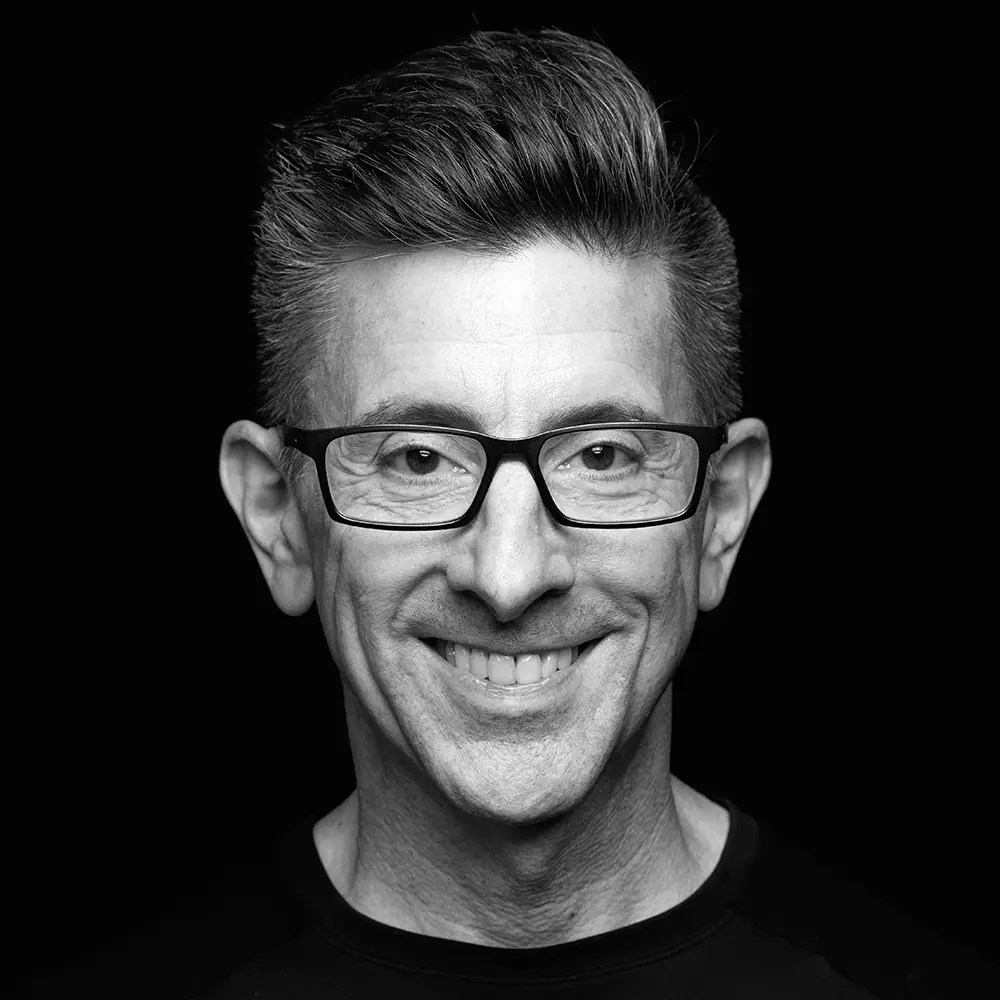
About this Guest
Dr. Marc Brackett
Dr. Marc Brackett, PhD, is founding director of the Yale Center for Emotional Intelligence and a professor in the Child Study Center at Yale University.
This transcript is currently under human review and may contain errors. The fully reviewed version will be posted as soon as it is available.
Andrew Huberman:
Welcome to the Huberman Lab podcast, where we discuss science and science-based tools for everyday life. I'm Andrew Huberman, and I'm a professor of neurobiology and ophthalmology at Stanford School of Medicine. My guest today is Dr. Marc Brackett. Dr. Marc Brackett is a professor of psychology at Yale University and the director of the Yale Center for Emotional Intelligence. He is one of the world's foremost experts on emotions, meaning what emotions are and how they regulate our relationship to ourself and others. Today's discussion gets heavily into how we should think about our emotions and the emotional expressions of others, and when and how we should regulate those emotions. This is a very important aspect of our life because, as we all know, emotions are present with us from the moment we are born until the moment we die. So much like having a body, we need to learn how to work with our emotions in order to have the best quality of life. We all know that we are supposed to pay attention to our emotions, but at the same time, we are often told that we shouldn't take all of our emotions seriously, nor should we react to all of our emotions with behaviors. And indeed, that is true. What's been lacking, however, and what Dr. Marc Brackett finally delivers to us, is a roadmap to think about our emotions in a very structured way, and thereby to engage with our emotions, sometimes shift our emotions, and certainly to understand the emotional expressions of others in ways that best serve our quality of life. So today's discussion centers very heavily on scientific data that plays out in the real world that we can all use. We talk about conflict resolution, we talk about how to think about and work with emotions. We talk about bullying, both in children and in adults, how to deal with that sort of thing effectively. And we talk about emotional intelligence, which it turns out can be increased at any stage of life. So by the end of today's discussion, you'll be armed with a tremendous amount of new knowledge and many new tools, many new protocols that you can immediately apply in your life in order to improve your relationship to yourself and to others. Before we begin, I'd like to emphasize that this podcast is separate from my teaching and research roles at Stanford. It is, however, part of my desire and effort to bring zero cost to consumer information about science and science-related tools to the general public. In keeping with that theme, I'd like to thank the sponsors of today's podcast. Our first sponsor is BetterHelp. BetterHelp offers professional therapy with a licensed therapist carried out entirely online. I've been doing weekly therapy for well over 30 years. I consider doing regular therapy just as important as getting regular exercise. Now, there are essentially three things that great therapy provides. First of all, it provides good rapport with somebody that you can trust and talk to about the issues that are most critical to you. Second of all, it can provide support in the form of emotional support or directed guidance. And third, expert therapy should provide insights, insights that are useful in allowing you not just to feel better in your emotional life and your relationship life, but of course, to be better. To be better in terms of the relationship to yourself, your professional life, and to others, and of course, to things like your career goals. With BetterHelp, they make it very easy for you to find an expert therapist with whom you have these critical components of therapy. Also, because BetterHelp allows for therapy to be done entirely online, it's very time efficient and easy to fit into your busy schedule with no commuting to a therapist's office or looking for parking or sitting in a waiting room. If you'd like to try BetterHelp, go to betterhelp.com/huberman to get 10% off your first month. Again, that's betterhelp.com/huberman. Today's episode is also brought to us by Eight Sleep. Eight Sleep makes smart mattress covers with cooling, heating, and sleep tracking capacity. Now, I've spoken many times before on this podcast about the critical need for us to get adequate amounts of quality sleep each night. One of the best ways to ensure a great night's sleep is to control the temperature of your sleeping environment. And that's because in order to fall and stay deeply asleep, your body temperature actually has to drop by about one to three degrees. And in order to wake up feeling refreshed and energized, your body temperature actually has to increase by about one to three degrees. Eight Sleep makes it incredibly easy to control the temperature of your sleeping environment by allowing you to program the temperature of your mattress cover at the beginning, middle, and end of the night. I've been sleeping on an Eight Sleep mattress cover for well over three years now, and it has completely transformed my sleep for the better. Eight Sleep recently launched their newest generation pod cover, the Pod 4 Ultra. The Pod 4 Ultra has improved cooling and heating capacity, higher fidelity sleep tracking technology, and it also has snoring detection that remarkably will automatically lift your head a few degrees to improve your airflow and stop your snoring. If you'd like to try an Eight Sleep mattress cover, you can go to eightsleep.com/huberman to save $350 off their Pod 4 Ultra. Eight Sleep currently ships to the USA, Canada, UK, select countries in the EU, and Australia. Again, that's eightsleep.com/huberman. I'm excited to share that I'll be speaking at a health summit called Eudemonia, taking place in West Palm Beach, Florida, this November 1st, 2024, through the 3rd of November 2024. Eudemonia is an in-person event that offers science-backed tools, live fitness classes, and a range of treatments and protocols to optimize your physical and your mental health. I'll be giving a keynote talk with none other than Dr. Gabrielle Lyon on Saturday. As some of you may know, she's a former guest on the Huberman Lab podcast and has a terrific podcast of her own. That's going to be on November 2nd, and we will discuss all things neuroscience and neuroplasticity. We'll talk about some of the benefits and protocols related to cognition and mood, and much more. Also presenting at Eudemonia are other excellent scientists and clinicians who've appeared on the Huberman Lab podcast, including Dr. Sarah Gottfried, Dr. Zachary Knight, and Dr. Robin Carhart-Harris, along with nearly 70 other experts. To see the full lineup of speakers and topics and to register, visit eudemonia.net, spelled E-U-D-E-M-O-N-I-A .net. It's sure to be a terrific gathering, and I hope to see you there. And now for my discussion with Dr. Marc Brackett Dr. Marc Brackett, welcome.
Dr. Marc Brackett:
Thank you. Great to be here.
Andrew Huberman:
I'm excited to talk to you today about many things related to emotions. We hear the word emotions, and we have all sorts of ideas about what they are, what they aren't. We also hear about emotional intelligence quite a lot these days, and I have a feeling that the way it's discussed is often not the way it really is. So to just kick things off, could you clarify for me, for everyone, what is emotional intelligence? What does it pertain to? And then maybe we can use that as a way to drill into the deeper question of what are emotions.
Dr. Marc Brackett:
Sure. I think, at the simplest level, it's how we reason with and about our emotions and feelings. That's the simple definition. The way I talk about it is as a set of skills, and we use the acronym RULER to describe those skills. The first is recognizing emotions. So I'm trying to read your facial expression right now. Are you interested, or are you bored already? I'm trying to understand emotions, where they're coming from. Why am I feeling this way? What's the consequence of that feeling? The third is labeling emotions, so being precise with the words that we use to describe our feelings. The fourth is expressing emotions, knowing how and when to express emotions with different people across context and culture. And then the big one is the final R, which is regulating emotions. What are the strategies we use to help us deal with everyday emotions?
Andrew Huberman:
So if I were to take an emotional intelligence test, would it have me looking at pictures of facial expressions? Would it have me reading paragraphs about emotional exchanges and gauging who felt what and why and how, that sort of thing?
Dr. Marc Brackett:
If you were to take a test from 20 years ago, yes. We try to be a little bit more innovative now in our measurement of the skills. So for example, I just finished with a bunch of colleagues publishing a test of emotion perception, but it's not static images. It's video clips that are around three to four seconds that show subtle emotions. It's about vocal tone, it's about body language, and we're trying to get people to accurately label these emotions in faces, body, and voice.
Andrew Huberman:
When I think about most uses of the words emotional intelligence, it seems to correlate, again, in a very non-scientific way, seems to correlate with one's ability to tolerate others' emotions and make sense of the emotions of others. For instance, I've heard it said before, not about me, that so and so has high emotional intelligence, because in the presence of their child or someone else's kid reacting in a certain way, they were able to see, ah, they just feel blank, and therefore, they are screaming. As opposed to defaulting to a broad binning of what they were observing and saying, "Oh my goodness, that kid is a brat," for instance.
Dr. Marc Brackett:
Mm-hmm.
Andrew Huberman:
You're describing emotional intelligence as a self-perception as well.
Dr. Marc Brackett:
Yes.
Andrew Huberman:
And so is our task therefore to do the equivalent of what, in my little anecdote, this other person was doing to be able to parse one's own emotions in a fine enough way to understand the experience in a third-person way that one can regulate their behavior, what they say, how they act. How much is recognition of others' emotions and understanding of those, as opposed to one's recognition and understanding of their own emotions factoring into this thing that we call emotional intelligence?
Dr. Marc Brackett:
So the whole set of skills are intra and interpersonal. That's really important. It's about self and others, always. For example, right now, we are co-regulating each other's emotions. Our facial expressions, our vocal tones, we're influencing how we feel. When you think about the recognition piece, we'll just start there. There's self-awareness. Like, "Marc, how are you feeling right now?" And I'm having mixed emotions. This is a great podcast. I want to be articulate. I'm excited, but I'm a little overwhelmed because I got so much I want to share, but I don't know how much I'm going to share. So there's all that awareness of my emotion. Sometimes I have language for it, sometimes I don't, like any of us. And that's why it starts off with just a general awareness. Am I pleasant? Am I unpleasant? Do I have a lot of energy, or do I feel depleted? And we call that your core affect. And then I can start asking myself questions like, "Well, what are you doing right now, Marc?" "Well, I'm sitting across from Andrew being interviewed." "Oh, okay. What comes up for you with that?" And then I try to label that feeling. So that's the R, the U, and the L of emotional intelligence for the self. And I'm doing the same thing for you. I'm looking at your facial expressions, your body language. I'm listening to you. I'm trying to understand if I say something, do you shift? And I'm trying to put language to it. So it's self and other.
Andrew Huberman:
So given that we're both scientists interested in emotions, you're the expert. I'm also just the student today. I think it's worth pointing out to people that there isn't one location in the brain that governs this complex process that you just described. It's a network-wide phenomenon. But you did mention the body. You mentioned feeling. How is one feeling, both in brain and body? To what extent does somebody who has high emotional intelligence have more or less body awareness or somatic awareness as opposed to somebody who's, quote unquote, "in their head." Put differently, can somebody who's very much in their head, who has very poor body awareness, have high emotional intelligence?
Dr. Marc Brackett:
Well, I think another big deal about emotional intelligence is that we like to think of it as, or people think of it as this construct I don't think that's the best way to look at it. I think it's much more interesting to look at it as a set of discrete skills that come together. They're not that highly correlated, and so I really like to think of them as emotion skills, and that within the R, the U, the L, the E, and the R that I described, there are sub-skills. And so part of what you're talking about is the body awareness. Some people are more cognitive. They're just very language-oriented. Some people, a lot of therapists, talking about somatosensory things, all good. I think at the end, though, this is why I teach this stuff, is that we have to know how we feel. We got to know what we want to do with those feelings, and we have to know how the people we live with and love and work with and teach, how they feel, too. And so we need language in the end.
Andrew Huberman:
Some years ago, I went to this course. It broadly could be described as personal development. It was interesting. It was grounded in science and psychology, and each day would start with going around the circle, as typically is done at these things, and you'd have to say how you feel. But you couldn't use a valuation. You couldn't say good or bad or so-so. And I found it very difficult. I found it difficult for a number of reasons. First of all, I don't think I was ever trained to use specific language for my feelings. In fact, I don't think I was ever trained to understand what feelings were. In fact, I know neuroscientists and psychologists are still trying to figure out what feelings and emotions really are. So, a couple of questions. When it comes to using language to describe our emotions, how important do you feel it is to have a broad buffet of options? A previous guest on this podcast, Lisa Feldman Barrett, and I talked about this a bit, and she mentioned that in some cultures, there's very specific language for specific emotions. In fact, there's even a word to describe the feeling of sadness one has in a particular culture after getting a really bad haircut.
Dr. Marc Brackett:
Yeah. Mm-hmm.
Andrew Huberman:
Which is incredible when one thinks about it.
Dr. Marc Brackett:
We all know what that feels like.
Andrew Huberman:
Right. We know what it feels like, right. But there isn't, to my knowledge-
Dr. Marc Brackett:
We don't have the word
Andrew Huberman:
... a word for that in the English language. I'm sure there's a curse word for it in the English language.
Dr. Marc Brackett:
Exactly.
Andrew Huberman:
But not necessarily for that specific feeling, or unique to that specific feeling. So what is the relationship between language labels and emotion? And I ask that as a way to kind of wedge into the RULER approach, right?
Dr. Marc Brackett:
Sure.
Andrew Huberman:
Because, as you pointed out, that one recognizes, understands labels, but the label is central, literally, to the RULER approach.
Dr. Marc Brackett:
It is. Yeah, so I'm very similar to Lisa in terms of there are emotion concepts or categories. Well, let's use the anger category. If you only have one word for anger, that means all you know is there's one form of anger. But if you start teaching people, well, there are other words that we could use, like peeved, irritated, angry, enraged, livid. And then you have rich conversations, which is what I do in schools with kids and teachers themselves. When you're feeling peeved, what are the things that make you feel peeved versus the things that make you feel enraged? What does it feel like in your body when you're feeling that way? Granted that everybody feels things differently in their bodies. That really doesn't matter. What matters is that we have a common language and a common understanding of what these emotions are, because otherwise we can't communicate. This is a big deal for me in terms of having a common language within a community to talk about emotion. Because right now, we're in a crisis of anxiety. I'm not 100% bought into that. I think that people use the word anxiety improperly. Anxiety is about uncertainty about the future, if we're going to define it. It's different than stress. There's different forms of stress, as you know. But the distress is usually when you have too many demands and not enough resources, which is different than when you're overwhelmed, which is my emotion of the year. Which is, I'm just saturated. I can't even figure out what's going on anymore. Which is also different from fear. And we call that emotion differentiation or granularity, people call it. They're slightly different. The differentiation is between emotions, and the granularity might be within the emotion. But from my work, just to go on about this for a moment, the best example I have is I do a lot of corporate training. And so I'm in a room filled with lawyers or executives, and I ask them how they're feeling. Nobody's really sure how they're feeling, like you were saying. And then I'll do these little quizzes with them. "Tell me the difference. You got three minutes in a group. Anxiety, stress, pressure, fear, overwhelmed." And they come back and the number one response is, "They're all the same." And I'm like, "Really? Take another few minutes. Just try to define them." They can't even define them. They say things like, "One is internal, one is external. One is higher energy and lower energy." I'm like, "I get that, but what do these concepts mean to you? What do they mean to you?" Anyhow, finally, we get to the definitions. And then I say, "Who cares? Why am I asking you to understand these differences? Go back to your groups and talk about it." And then after, this is like a 45-minute... I thought this was going to be a two-minute activity. It turns into a 45-minute to an hour exercise because they finally realize, "Oh, yeah. So if I'm anxious because I'm worrying about the future, maybe the breathing exercise is not going to be as helpful Because maybe I need a cognitive strategy to say, "Marc, stop worrying about the stock market. Marc, stop worrying about the university closed down because of the pandemic. You've got no control over the university's decisions." And so helping people make connections between the feeling and the reason for the feeling, from my perspective, has been very helpful to help them learn how to regulate the emotion.
Andrew Huberman:
So connecting the feeling and the reason for the feeling-
Dr. Marc Brackett:
Correct
Andrew Huberman:
... as opposed to just labeling the feeling.
Dr. Marc Brackett:
Yeah. You need to know why. It's the why that you really have to deal with.
Andrew Huberman:
How do you feel about emojis? From everything you're saying, they seem more than benign to me.
Dr. Marc Brackett:
Yeah. Same.
Andrew Huberman:
I could imagine that the emojification of culture, as I refer to it, I don't think that's a real word.
Dr. Marc Brackett:
It's all right.
Andrew Huberman:
All right. It is now. I'm going to set up a Wikipedia page tomorrow. Emojification is a serious problem because it's what we call in science too much lumping.
Dr. Marc Brackett:
Exactly.
Andrew Huberman:
In science, you have lumpers and splitters.
Dr. Marc Brackett:
Yeah.
Andrew Huberman:
Right? And both can have fabulous careers, but if you lump too much or split too much, you create more confusion, and you often create problems. And I just see emojis as lumping this incredible set of different continuums within us that we call emotions-
Dr. Marc Brackett:
Exactly
Andrew Huberman:
... into literally a small icon. And I can imagine this would lead to all sorts of problems, not just in communication, but in understanding our own emotions. Put differently, do you think that the use of emojis has degraded our level of emotional intelligence and processing?
Dr. Marc Brackett:
I haven't done the research, but from my perspective, it's not helpful because the goal is to get granular. Think about the difference, and I'm not going to quiz you right now, but anger and disappointment. Do you know that 95% of the people that I ask to define those two things cannot do it?
Andrew Huberman:
Yeah. Right off the cuff, I'll just say I'm familiar with both of those feelings. I know they're different. I can sense their difference. But the disappointment piece, yeah, could be directed outward or inward. I'd have to work systematically through until I found a violation of one or the other. So where an example applied to one and not the other, and it would take me a few minutes.
Dr. Marc Brackett:
Yeah.
Andrew Huberman:
Longer than I want this audience to have to wait.
Dr. Marc Brackett:
There you go.
Andrew Huberman:
Yeah.
Dr. Marc Brackett:
So we should just-
Andrew Huberman:
So I got an F.
Dr. Marc Brackett:
But you have a growth mindset, so you're okay.
Andrew Huberman:
There you go. Yeah.
Dr. Marc Brackett:
So disappointment, unmet expectations. Everything was legit, it just didn't work out. Anger, perceived injustice. And that's a really important distinction because if you're a parent or someone at work and someone is yelling and screaming, firstly, we grossly make mistakes in terms of labeling emotion from behavior. We got to just throw that out. There's no correlation really between behavior and emotion. I can stomp my feet as a boy because I'm feeling sad just because it's more culturally acceptable for me to stomp than to cry. And so, "Why are you so angry?" Well, maybe I'm feeling shame, which is my experience. I was yelling and screaming as a kid because I was being bullied so much, and then my mother would be like, "Who do you think you are talking to me that way?" And then my father would say, "Go to your room." And I'd be like, "Is anybody reading my emotions properly or asking me how I'm feeling because you would know that I'm acting out because of fear and shame?" Never happened because of a variety of reasons of triggering my parents, and they didn't have such high emotional intelligence. They loved me, just didn't have high emotional intelligence. And so going back to the anger, disappointment one, unmet expectations versus perceived injustice. And so when you think about it in terms of the strategy, like for example, my other career, Justina, was as a martial arts teacher. So I have a fifth-degree black belt in a Korean martial art called Hapkido. So if this podcast doesn't go so well. Anyhow, I was an awkward kid, very insecure, low self-esteem. I got into the martial arts. I thought, "I'm going to get my yellow belt, and I'm going to feel tough and proud." Failed my freaking yellow belt test. At 13 years old, you couldn't imagine, there's nothing worse for a 13-year-old kid who's feeling shame and being bullied to fail a yellow belt test. So what do I do? I go home. "I hate karate. I'm never going back to karate." Everybody's in an uproar. I'm getting yelled at. "I'm paying for your karate. You're going back to..." Whatever. And the truth was, let's think about that for a minute. So I go to take the test, and I've got to do my blocks and my kicks, my punches. I know there's five kicks, there's five punches. And let's say I do them the best I can, but the sensei just says, "You know, Marc, just not good enough. You're not ready yet." That's legitimate disappointment. I expected to pass. I didn't pass. I'm feeling disappointed. So the strategy for that is what? Tutor. Help. Show me what I have to do better. On the other hand, let's say, which was true for me, that some of the kids who were the bullies in my middle school also took karate. And let's imagine they're watching me take my test, and they're giving me some dirty looks because they're going to threaten me, which did happen. Getting changed, going, "Wait till you see what it's going to be like for you tomorrow on the way to school." Now how am I feeling? Terrorized, fearful. And I failed my test because of that. So you can see how I could show up with a particular behavior. People are attributing emotion to me. They're labeling my emotions for me because they don't have this skill To deactivate as a parent or a teacher or a partner, to be present, to help me understand my experience and then label my experience, understand where it's coming from, and then strategize accordingly.
Andrew Huberman:
I'd like to take a quick break and acknowledge our sponsor, AG1. AG1 is a vitamin mineral probiotic drink that also includes prebiotics and adaptogens. AG1 is designed to cover all of your foundational nutritional needs, and it tastes great. Now, I've been drinking AG1 since 2012, and I started doing that at a time when my budget for supplements was really limited. In fact, I only had enough money back then to purchase one supplement, and I'm so glad that I made that supplement AG1. The reason for that is even though I strive to eat most of my foods from whole foods and minimally processed foods, it's very difficult for me to get enough fruits, vegetables, vitamins and minerals, micronutrients, and adaptogens from food alone. And I need to do that in order to ensure that I have enough energy throughout the day, I sleep well at night, and keep my immune system strong. But when I take AG1 daily, I find that all aspects of my health, my physical health, my mental health, and my performance, both cognitive and physical, are better. I know that because I've had lapses when I didn't take AG1, and I certainly felt the difference. I also notice, and this makes perfect sense given the relationship between the gut microbiome and the brain, that when I regularly take AG1, which for me means a serving in the morning or mid-morning and again later in the afternoon or evening, that I have more mental clarity and more mental energy. If you'd like to try AG1, you can go to drinkag1.com/huberman to claim a special offer. Right now, they're giving away five free travel packs and a year's supply of vitamin D3 K2. Again, that's drinkag1.com/huberman to claim that special offer. You said that disappointment is when one does everything essentially correctly, meaning gave as much effort as they could, et cetera, and it didn't work out.
Dr. Marc Brackett:
Correct.
Andrew Huberman:
Versus anger, which is perceived injustice.
Dr. Marc Brackett:
Yeah.
Andrew Huberman:
Would you say that your response to not getting your yellow belt then, because as a fifth-degree black belt now, clearly, you got that yellow belt eventually. I want to hear that part of the story, too. That you were experiencing anger? In this case, could we even call it inappropriate anger? Simply inappropriate because what you really needed to understand was this notion of disappointment, but no one had taught it to you.
Dr. Marc Brackett:
I think what you're getting at, though, is this not knowing how you're feeling, because I was never taught language, right? And having an experience that could be many feelings at once, which could be disappointment, could be anger, could be embarrassment. But you got to unpack the situation. What was the real event that happened? What really happened in that moment? And so if it were legitimate, legitimate test, and I blocked the punch, and I just didn't have the strength to block it, to really stand firm, it's disappointment. It's like, "Son, you thought your blocks were strong. Unfortunately, you need some work. Let's practice every day after school together. We're going to get these blocks down so you can get that yellow belt test. There's no other reason." If it's because the bullies are staring at me and I'm not capable of dealing with those piercing eyes that are at me, and I'm feeling so anxious and overwhelmed, and I just can't block because I'm just freaked out, that's a whole another story. Do you see how a parent or a teacher would have to really differentiate their support? But you have to really get at the experience, which means we have to have relationships that are trustworthy, loving, caring with all people. Because otherwise, we don't build that connection to really understand how people feel. We just take the kind of behavior, and we're like, "Why are you behaving that way? Go to your room," or, "Just practice." It's like, no, I've been bullied at school, and now the bully is threatening me. That's serious stuff that needs to be taken care of.
Andrew Huberman:
Yeah. Online emojis and downward-facing thumbs versus upward-facing thumbs and this kind of thing and vomit emojis and things like that, a mind blown. I'm starting to realize that these may be doing far more harm than we realize in this-
Dr. Marc Brackett:
Yeah, I think it's fun. And maybe it's just if you want to just use it for fun, not a problem. If we're going to use it to really communicate, not so great.
Andrew Huberman:
I'm thinking of instances where people are just using these with the intention of expressing their dislike of something.
Dr. Marc Brackett:
Yeah.
Andrew Huberman:
But that the people on the receiving end experience a lot of self-criticism as a consequence.
Dr. Marc Brackett:
Mm-hmm.
Andrew Huberman:
Mostly kids, but adults, too.
Dr. Marc Brackett:
Yeah.
Andrew Huberman:
And I know some adults that really can't handle somebody commenting on their Instagram post, like big L or something like that.
Dr. Marc Brackett:
Yeah. It's devastating for people.
Andrew Huberman:
Or nope, or this kind of thing. It's also interesting because I see it even in the academic community, especially on Twitter, X.
Dr. Marc Brackett:
Yeah.
Andrew Huberman:
Where I know that, sure, people reject each other's papers, critique each other's papers, but they do that with a degree of intellectual nuance that transmits a sense of care, right? If scientists really care, then they're going to do a careful review. As much as we would all love the this is a perfect paper, that's it, no critique.
Dr. Marc Brackett:
Exactly.
Andrew Huberman:
When somebody critiques something that we do with an attention to detail, provided it's fair, we feel cared for.
Dr. Marc Brackett:
Totally.
Andrew Huberman:
They care for the work, and we care for the work. And so there's a relationship there, even if it's an anonymous review. But I'm shocked to see how scientific colleagues I've known for decades, really how they comport themselves online. They'll swear.
Dr. Marc Brackett:
Mm-hmm.
Andrew Huberman:
They'll come out, they won't bother to punctuate things. They'll just sort of behave in what seems to be a very activated way. Not all of them, of course. But it's been very interesting. The words that come to mind are, I feel like online, especially on social media, the kids are acting like adults, and the adults are acting like children.
Dr. Marc Brackett:
Yeah.
Andrew Huberman:
And so there seems to be a kind of regression toward what I'm calling the emojification or the kind of high amplitude expression with blunt tools. And I don't know what that is because I know these people. The reason I'm using the academic community as an example, by the way, it's cost some of these people their jobs, chairs of departments, not at Stanford or Yale, fortunately.
Dr. Marc Brackett:
Mm-hmm.
Andrew Huberman:
But it's kind of striking to me the way that when we remove the face-to-face connection, when people will behave that way, and I use the parallel example of anonymous review because there it's anonymous, so in theory, they could behave however they want, but there's an etiquette. So it seems like online etiquette is very deprived of many of the important features that you're starting to lay out for us here.
Dr. Marc Brackett:
Anonymity causes challenges. It's funny because I gave a speech at Twitter, now known as X, about five years ago, and had analyzed quite a lot of data. It was actually the year that Mariah Carey sang, and it got messed up. And it was like the week before. I was going in January, it was like New Year's Eve, and I just was curious because it really was a mess-up. And I said, "How are people going to respond?" And it was 99.99% ripping this amazing diva to shreds.
Andrew Huberman:
I don't recall this incident. So she's obviously phenomenally talented, but-
Dr. Marc Brackett:
Yeah
Andrew Huberman:
... she made an error.
Dr. Marc Brackett:
There was something with the mic.
Andrew Huberman:
God forbid she made an error.
Dr. Marc Brackett:
Yeah, there was something with the mic.
Andrew Huberman:
Or someone else. Oh, goodness
Dr. Marc Brackett:
And she just basically, the mic wasn't working the way she wanted it to work, and she's like, "I'm out of here. I'm not singing." And you should have seen how people just, millions and millions and millions of comments, and I'm not going to repeat what people said because it was really disgusting. And I got really curious, like what about things like, "Gosh, you've won 15 Grammy awards. This must really sting for you." Maybe one post like that. And so it does make you wonder about, A, the type of person who is interested in commenting. We may have a bias there. I do think we have a bias there. People who feel protected by something. If it's a more famous person in politics, obviously people are very clear how they feel.
Andrew Huberman:
Politicians sort of open themselves up to it.
Dr. Marc Brackett:
Yeah, they do.
Andrew Huberman:
Yeah. Public-facing people in general, I've heard, open themselves up to it.
Dr. Marc Brackett:
Yeah.
Andrew Huberman:
But politicians in particular. I think we sort of give the general public a pass to say almost anything about them, but it's not pretty.
Dr. Marc Brackett:
It's not pretty, and it's not emotionally intelligent, to go back to the concept. Right? It's like, what's your goal here? I always ask people that. What are you getting out of being nasty?
Andrew Huberman:
I perceive it as evacutive. I look at that and I think, gosh, what they must feel inside to be able to say those things can't be good. But maybe it feels good to them. I don't know. I don't know.
Dr. Marc Brackett:
It might.
Andrew Huberman:
I don't think I've ever made a negative comment. If I have, someone can call me out on it. Hopefully, it was in sarcasm with a friend-
Dr. Marc Brackett:
Yeah
Andrew Huberman:
... as the target, and they were okay with it or happy with it. But I don't know what internal emotional or psychological state it would take to go say something cruel to somebody online.
Dr. Marc Brackett:
In my earlier research with Facebook, we analyzed millions and millions of posts. And people can be intentionally mean and hurtful. Just people want to rip people to shreds, and they want to instill fear. And it's very hard to disentangle that, too, just to be honest. So what we found in our research was that I could say if you're like, Andrew's wearing a black shirt, you'll see that. I could say, "Nice shirt." And it might mean nice shirt, or it might mean I'm making fun of your shirt. And it's just hard, that's the problem with social media in terms of posts. We don't really know because the person who's receiving it has a story, right? That was one challenge we found around getting posts taken down, was that it was hard to have that objective criterion of what was painful to a person. Which is why what we tried to do was help the person who was receiving the content communicate in a way with the person who posted the content to get them to take it down. And what we found was that it actually worked really well. If you taught a teenager, for example, to say, "Hey, Andrew, that comment you made really was hurtful. Would you please take it down?" We were more likely to get people to take it down. And what we found in experimental research was that if we just let people go on their own devices, it tended to be more retaliatory, like, "Who the F do you think you are?" You want to fight back. And that did not motivate the person to take it down. So even meeting gross behavior with compassion can be helpful.
Andrew Huberman:
Can we provide a counterexample for the anger versus disappointment that's on the positive valence-
Dr. Marc Brackett:
Sure
Andrew Huberman:
... side? What's a positive set of feelings that people often conflate?
Dr. Marc Brackett:
Like happiness and contentment.
Andrew Huberman:
Yeah, that's a tough one for me. I'm getting Fs all around. Good thing I became a biologist.
Dr. Marc Brackett:
Ecstatic and elated.
Andrew Huberman:
Yeah. Okay.
Dr. Marc Brackett:
Yeah. This is why I do what I do.
Andrew Huberman:
Yeah. This is tough. Yeah.
Dr. Marc Brackett:
And so I'm good at this.
Andrew Huberman:
Yeah. Yes, you are.
Dr. Marc Brackett:
When you think about happiness, it's usually about when you're achieving something. Right? I'm going to be happy when, this will bring me happiness. Contentment is the opposite. Contentment is everything is just great as it is. I feel complete. I have enough. And part of my argument against the happiness research ... is that we don't spend enough time helping people strive for contentment, and we push people to strive for happiness, which there's research to show backfires. If you're waking up every day saying, "What am I going to do today to be happy? What am I going to do to be happy?" Chances are, it's not going to work out a lot. And that kind of backfires to create more despair. More-
Andrew Huberman:
Yeah, sorry to interrupt, but as soon as you describe contentment that way, and thank you for parsing those two, very useful to me. As soon as you describe contentment that way, I imagine waking up and rather than thinking about what needs to be done and the things I want to achieve, which I want to achieve, they bring me joy.
Dr. Marc Brackett:
Yeah.
Andrew Huberman:
Throw in a third word there just to confuse myself. This notion of contentment, the way that you described, I could see might lead me to pay attention to how good it feels to have gotten some sleep. To, I sleep well most nights, but what a privilege that is. And to maybe feel the comfort of the comforter and the mattress for a moment before barging into the day -
Dr. Marc Brackett:
Yeah
Andrew Huberman:
... to chase happiness, as it were.
Dr. Marc Brackett:
Exactly. I think, the idea that we have to be happy all the time is also ridiculous. I'm a neurotic professor. I'm never happy. It's tough. And also, I don't know about you, but given that my dispositional affect, another term, is more on the lower energy, kind of contented, little anxiety. When I'm around the people who are high energy and pleasant all the time, I have a difficult time. It's like-
Andrew Huberman:
Because you somehow feel like you're not living up to some standard?
Dr. Marc Brackett:
No, I just feel overwhelmed and smothered by it.
Andrew Huberman:
Oh, interesting.
Dr. Marc Brackett:
It's like, "Stop being so happy all the time."
Andrew Huberman:
Here's where I get to appropriately make a joke about, because before we started, we were talking about East Coast schools versus West Coast schools.
Dr. Marc Brackett:
Yeah.
Andrew Huberman:
I was like, "Maybe you come west, and that'll change. Or maybe you're right where you belong there at the also phenomenal university that is Yale." But anyway, that's kind of inside ball stuff. East Coast University is amazing. Midwest University is amazing. West Coast University is amazing. Different perceived temperaments, but-
Dr. Marc Brackett:
For sure
Andrew Huberman:
... and styles. Just look at the walking speeds, for instance, not just the weather. But yeah, you raise a very important point. We have a member of our podcast team that is always in a great mood.
Dr. Marc Brackett:
Mm-hmm.
Andrew Huberman:
He's always in a great mood. And it is, for me, a reminder to be in a better mood. I'm not somebody that I would say gets... I'm not moody. I don't change moods quickly, but I wouldn't say that my disposition is to be Tigger-like and just happy all the time.
Dr. Marc Brackett:
Right.
Andrew Huberman:
But his energy around that doesn't drain me. But it makes me wish I was him.
Dr. Marc Brackett:
That's good, and that's okay. That's you. You know what I mean? Part of being emotionally intelligent with colleagues, with romantic partners, with children, whoever, is picking up on that. Now that I know that about you, it makes me think differently about you in terms of what your needs are. That's emotional intelligence. And for me, I am like, I wake up every morning having an existential crisis. I'm like, "What am I doing with my life?" And, "What am I doing this today for?" And then I got to publish this paper. I got to finish my book. I got to run my team. Like, "What do I want to do?" And then I'm doing it, and then when I'm doing one thing, I think I should be doing the other thing. That's just who I am. And I've tried everything, and that's my operating system. I'm more aware. I'm working on another book, and, as I was working on it, I'm in a chapter, and all I could think about is the next chapter. And then I started like, "Marc, give yourself permission to be with this freaking chapter. It's okay. You can focus on one thing and not worry about the future." And I had to literally do that for myself. That's how I am. And so knowing that about myself is useful because it helps me find the strategies that work for me. And going back to the happiness thing, it's because I'm also introverted. And so, when I'm around extroverts a lot, I'm drained. After something like this, this is an intense conversation, I'm not going to go to a sports bar, have a beer, and watch the game. I would never do that anyway. But anyway, that's just not my thing. That would make me, my brain would be burnt. My dream would be to leave here, go take a hot yoga class and take a walk, have a glass of wine, maybe by myself or with a friend, and then end the day.
Andrew Huberman:
All those things are readily available within-
Dr. Marc Brackett:
There you go.
Andrew Huberman:
... less than a mile of here. We can point you in the right direction. It sounds lovely. The introversion/extroversion bit is going to prick up people's ears. It certainly did mine. I like time alone. I also like time alone in the presence of many people. In fact, I get my best work done always either alone in nature or in Manhattan, where there are people around me, but I'm completely isolated at the same time.
Dr. Marc Brackett:
I love that, too.
Andrew Huberman:
So, how should we think about introversion and extroversion? These things get thrown around so much in popular culture. Are there some solid scientific studies that support that introversion can best be defined as blank and extroversion as blank? And I'm guessing there's a range there. It's got to be on a continuum. It can't be two bins.
Dr. Marc Brackett:
For some people, it's very clear. They are a clear traited introvert, and for some people, they're just endlessly extroverted, no matter. They wake up wanting to be with people. The end of the day, they want to go out with people more. And so what research shows, for example, with creative people, is they tend to be both. They tend to be high introverts and high extroverts, which is interesting, right? They're introverts when they're doing their art, and then they're extroverts when they're out there selling their art. Which is hard for some artists, because a lot of artists are kind of introspective and they're creative types, but they really struggle with getting out there and being that extroverted, like, "Look at my art." And so you're the lucky artist if you are treated in both directions. I think the easiest way to think about it is just, it's a proclivity. It's a proclivity to how you want to use your energy. And the introvert is more a container, wants to contain their energy. They want to be in small groups. They want less frenetic environments. And the extrovert just has a proclivity for more sensation-seeking, larger social groups. And again, it's a preference. I always say I'm an introvert with pretty good social skills. I can appear to be extroverted. Most people think I'm outgoing, and I always tell, I don't even like people that much.
Andrew Huberman:
You seem very outgoing.
Dr. Marc Brackett:
Yeah, I'm not. If I'm at a party, I struggle with, what am I going to do here?
Andrew Huberman:
When you say you don't necessarily like people-
Dr. Marc Brackett:
I'm joking
Andrew Huberman:
... that much. I realize you're joking. And I was just going to make sure to ask, because I can't presume, that doesn't mean that you dislike people. It's just that being in the presence of a lot of people doesn't draw you out to want to be closer to or get to know all these people simply because they're there. Whereas an extrovert seems to really like forming and engaging in new relationships, old relationships, all relationships, relating.
Dr. Marc Brackett:
Exactly. If you're running a campaign to run for mayor of your town, you want to hire an extroverted PR person. An extroverted person do marketing, because they're going to be out there banging on the doors, not very comfortable talking to people. The introvert is going to be better at doing the accounting and doing the planning. And we've done this research, actually. Even fun with my students, I would have them take measures of their valid measures of introversion and extroversion. I would score them into groups, get the really extroverted group and the really introverted group, and I'd have them plan a party. Just go plan a party. And the group of extroverts, there's bonfires, there's beer, there's loud music on the beach, and the introverts are like, "We have to make sure we have good napkins." "We're going to have four people. It's going to be quiet music." That's just how we're built.
Andrew Huberman:
Interesting. When I think of throwing a great party, and I've thrown a few what I like to think were great parties, it involves inviting a bunch of people over and then being able to stand back from a lot of it and not have to participate in all of it. I just like seeing friends that didn't know each other start to interact.
Dr. Marc Brackett:
That's cool.
Andrew Huberman:
That's fun for me. And then if I have to communicate directly with too many people at the party, I would definitely feel drained. I'm known to retreat to a room and take a nap or disappear-
Dr. Marc Brackett:
Yeah, so maybe you are more introverted
Andrew Huberman:
... in the middle of a party. Yeah. I think so. Rick Rubin, who's world renowned for his creative insights and creativity, and for being Rick, I think once said on a podcast perhaps, or maybe he said this to me, that Tom Petty was the sort of person that basically didn't do anything besides write music and read books and interact with the small number of people in his inner circle, and the idea of leaving the house was just completely overwhelming to him. Now, of course, people were always approaching him, but really, really extreme introvert. Whereas Rick has described, and I won't name names here, other famous people, musicians and otherwise, that go out specifically to try and get the attention of fame.
Dr. Marc Brackett:
Yeah.
Andrew Huberman:
And if they don't, they feel absolutely isolated.
Dr. Marc Brackett:
Makes sense.
Andrew Huberman:
Even though they have people in their private life, it becomes a kind of extroversion requirement. I would imagine life is much harder for the extrovert in the long run because there's so much need there.
Dr. Marc Brackett:
The research shows the extroverts tend to have a little bit more success because they're more willing to get out there and ask for it. They get raises more quickly.
Andrew Huberman:
I see.
Dr. Marc Brackett:
And in my work in schools, I always ask teachers to pay attention to the personality of their students because the introvert has a lot of great ideas. They're just not dying to raise their hand and get the attention. So don't just call on the kids who are raising their hands because you're missing out on getting some great information.
Andrew Huberman:
In that case, do you cold call on people? Whenever I'm teaching, I'm somewhat reluctant to cold call on people because I recall it can be terrifying when suddenly you're sitting there taking notes, trying to organize your thoughts around the material, and then suddenly the whole room's looking at you.
Dr. Marc Brackett:
I set expectations around that. Because I'm really particular about that because it drives me crazy when the talkative extrovert is always getting their thing said. I think there's good instructional practices that can help with that. One thing I'm thinking about, though, is this intersection of personality and emotional intelligence. You just kind of brought that up for me. And people confuse those a lot. So, for example, I even confused it when I was younger before I studied it, because I'm high also in neuroticism, meaning I am more mercurial in terms of I worry about things, and I'm fine, then I worry again. That's who I am. And I just always assumed that someone who is high in neuroticism or more, as I said, kind of volatile emotionally, that was just low emotional intelligence. Because how could you be emotionally intelligent if you're emotionally volatile? And then I did all this research and found there's pretty much no correlation between personality traits and emotional intelligence. And why is that? Well, think about it. If you're someone who is more even-keeled Maybe you don't even have that much of an opportunity to regulate your emotions, right? But then if you get triggered, you've never had experience, so it's actually harder for you. Someone like me, I'm practicing it all the time, right? I'm always like, I'm in a bad mood and I got to give a meeting. I'm irritable. I got to give a presentation. So I'm constantly figuring out how to deal with my emotions. And that's why they're separate concepts. And in addition to it, just to build on this, knowing your personality traits can be extraordinarily helpful for choosing the best strategies to regulate your emotions. Why is that? I was traveling in Australia recently, and I gave this speech to a group of people. The person who was the person in charge of the speech, it was about an hour from Melbourne. And I took the train because I preferred to stay in the city. Took the train I was planning to take. I had bought my train ticket back. The convener said, "You know, Mark, I just really would love to be with you, and can I drive you back to your hotel?" And I'm thinking to myself, that is the worst thing you could ever ask me.
Andrew Huberman:
And on the wrong side of the road.
Dr. Marc Brackett:
Yeah. And I had my train ticket. It was a full day of presentations and stuff. I really wanted to be by myself to decompress, but I felt bad, and I said, "Sure." The guy talked to me for an hour, like he just nonstop talked to me. I got back to my hotel. I was like, I am going to have a nervous breakdown. I need another day to recover. And it annoyed me about myself not practicing what I teach, which was, Mark, know thyself. You're drained. Be polite. It was my insecurity of just saying, "I really appreciate you wanting to drive me back, but I really have a lot to do tomorrow. I need to rest my voice. I need to do some prep." Instead, I just sat there shaking and just went crazy. So do you see what I'm getting at?
Andrew Huberman:
Mm-hmm.
Dr. Marc Brackett:
Really knowing yourself in terms of what drives you and what your personality traits, just introversion, extroversion alone, and how that relates to your selection of strategies is so important.
Andrew Huberman:
Super important, and by the way, my joke about driving on the wrong side of the road, I do realize that we drive on the wrong side-
Dr. Marc Brackett:
There you go
Andrew Huberman:
... of the road for Australians and those in the UK. So, I'll do the touché for you. I'd like to take a brief break to thank one of our sponsors, LMNT. LMNT is an electrolyte drink that has everything you need and nothing you don't. That means the electrolytes, sodium, magnesium, and potassium, in the correct ratios, but no sugar. Now, I and others on the podcast have talked a lot about the critical importance of hydration for proper brain and bodily function. Research shows that even a slight degree of dehydration can really diminish cognitive and physical performance. It's also important that you get adequate electrolytes in order for your body and brain to function at their best. The electrolytes, sodium, magnesium, and potassium, are critical for the functioning of all the cells in your body, especially your neurons or nerve cells. To make sure that I'm getting proper amounts of hydration and electrolytes, I dissolve one packet of LMNT in about 16 to 32 ounces of water when I wake up in the morning, and I drink that basically first thing in the morning. I also drink LMNT dissolved in water during any kind of physical exercise I'm doing, especially on hot days if I'm sweating a lot and losing water and electrolytes. If you'd like to try LMNT, you can go to drinklmnt.com/huberman, spelled drink L-M-N-T .com/huberman, to claim a free LMNT sample pack with the purchase of any LMNT drink mix. Again, that's drinklmnt.com/huberman to claim a free sample pack. Text messaging is an interesting example of communication that nowadays, depending on how many people have access to your phone number, can either feel like a wonderful source of filling the gaps on trains and while in transit and while walking to the car, perhaps, hopefully not while driving, although people seem to do that. And yet for the introvert, I can imagine that it might feel inundating. It might feel kind of overwhelming. How do you feel about text messages? Because it's just yet another-
Dr. Marc Brackett:
Yeah
Andrew Huberman:
... form of communication. I ask this for a very particular reason. I could imagine that extroverts love to text message. They love to receive and send text messages, that they can't stand a moment of downtime before boarding a plane.
Dr. Marc Brackett:
Mm-hmm.
Andrew Huberman:
They're excited that there's yet another form of communication at all hours of the day and night, whereas introverts would be less excited to text message. I also ask this in part because I want to protect the variable latency to respond to text option-
Dr. Marc Brackett:
Yeah
Andrew Huberman:
... that I've tried to exercise in my life, but that doesn't really seem to work. I think most people assume if I walk up to you and I say hello, and you wait 10 minutes to say hello back, I'll first think you're a little bit rude and then think you're a little strange.
Dr. Marc Brackett:
Mm-hmm.
Andrew Huberman:
Whereas if I text you hello and I don't hear back right away, I might think you're busy. There's some wiggle room for interpretation, but I think what I'm really getting at here is do we tend to project the same latency expectation on texts that we ourselves embrace? This seems like an important source of potential miscommunication, misunderstanding, and maybe worse.
Dr. Marc Brackett:
Yeah. Certainly. You could imagine also, though, that the introvert might be more comfortable texting because it's less stimulation. So I think it could work in both directions. I think the problem with text messaging is that it's decreasing emotional intelligence, because you really can't communicate the same way through a text message.
Andrew Huberman:
Thank you. Can you repeat both those things again?
Dr. Marc Brackett:
Yes. I'm happy to say it 100 times.
Andrew Huberman:
No, because I feel this wash of ... relief, and now I'm looking for the appropriate word because I'm talking to you, so I feel like I have to use the exact appropriate word. I feel emancipated.
Dr. Marc Brackett:
There you go.
Andrew Huberman:
Because I also feel that as texting has become more routine and has crossed a number of different lines of formality and informality, right? Not just with family members, but with coworkers, and the people we do and don't know, and just met and have known for ages. The jargon that we use with one group is different than the jargon we use with another.
Dr. Marc Brackett:
Yeah.
Andrew Huberman:
But I feel that texting, in general, has really degraded our ability to communicate verbally and in writing elsewhere.
Dr. Marc Brackett:
There's good research on even teens right now prefer to text than to be face-to-face.
Andrew Huberman:
That's so weird.
Dr. Marc Brackett:
Which is not helpful to building good relationships.
Andrew Huberman:
Sorry, forgive me. I'm going to interrupt you, too. I have no idea what it's like to be a teenager in 2024, so I've caught myself. I have no place saying weird, because there were things that I was doing as a teenager that I'm sure adults were like, "That's weird."
Dr. Marc Brackett:
Of course.
Andrew Huberman:
So I take that back. The other backsie.
Dr. Marc Brackett:
But if you think about how disconnected and alienated and lonely people feel these days, that's not necessarily going to help make things better. I have an example. When my father passed away a number of years ago, I got all these text messages, "I'm so sorry for your loss. I'm so sorry for your loss." From people who I thought were really good friends of mine, like 20, 30-year friends. I'm like, "You're not going to pick up the phone and listen to my voice and ask me, 'What can I do to support you right now?'" It's so strange, and actually, one of my closest friends didn't even text me. She texted my assistant and said, "Please go into Mark's office and tell him that I love him." I'm like, "This is really weird." I picked up the phone. I'm like, "What is happening right now? What is happening right now?" And people have preconceived notions. Maybe she thought I was overwhelmed and devastated and needed space. But at the same time, make a phone call, leave me a voice message, and give me some options. I had one friend, she's like, "Mark, I know you're going through a lot right now. I just want you to know, if you want to talk, anytime you want to call me, call me. If you want to text, text. If you want me to come out and stay with you for a couple of days, I'm there."
Andrew Huberman:
That's an awesome friend.
Dr. Marc Brackett:
Yeah. That was exactly what I needed to hear. I wanted someone to offer, provide options, or just do. But we're so hesitant these days. It's kind of scary to me, and it makes me fearful about the future of our relationships in general.
Andrew Huberman:
Yeah, I think this is such an important topic. I think because texting is so common and has been used to communicate so many different forms of human emotion in this broad bin format, how much can you really put into a text? I have some friends and coworkers who put-
Dr. Marc Brackett:
You can voice text.
Andrew Huberman:
You can voice text.
Dr. Marc Brackett:
Which is like, then it's like ...
Andrew Huberman:
Right. Right. Well, there are issues with that, too. I feel like it's enriched compared to texting, unless the text is carefully written out, punctuated. We can see the care that people put into certain texts or emails that they tip, and most people, including myself, don't, right? Texting is a short form-
Dr. Marc Brackett:
Yeah
Andrew Huberman:
... of communication. Audio notes, voice memos seem like a step up. I think what this has probably done is that it's made the phone call or the, goodness, the handwritten card or letter, it's kind of raised that to the pinnacle of care, of expression.
Dr. Marc Brackett:
Completely. And by the way, text messaging, it's fine. I always, "I'll be home in a little while. Can you please pick this up?" Whatever. Great. Nothing wrong with text messaging. But when it replaces intimacy, and when it replaces building strong bonds, that's where I see the largest problem.
Andrew Huberman:
Yeah. I didn't outright set this rule in my relationships, but I would say with my coworkers, family members, and in other kinds of relationships, there's a rule, which is that we don't argue over text.
Dr. Marc Brackett:
Yeah, it's not cool.
Andrew Huberman:
But people do it a lot.
Dr. Marc Brackett:
It's easier because you don't have to feel the feelings. That's what it is. It's, I can be psychologically distant from that person and say what I want to say, where if I have to say it face-to-face, I'm going to have to face a response, and that response may be very uncomfortable for me, and I probably don't have the strategies to deal with it because I never learned them.
Andrew Huberman:
You and I are both aware that there is neural real estate specifically dedicated to the processing of faces, and specifically to the processing of human faces, and specifically to the processing of the emotions carried in human facial expressions. So this is a hardwired aspect to our species.
Dr. Marc Brackett:
Which is diminishing. There was a study done about kids in camps, and they randomly assigned them to be with their phones, not with their phones, and showed that after a couple of weeks of camp, kids who had their phones decreased in their emotion perception skills. So it makes a difference. We need to give children and adults more face-to-face time.
Andrew Huberman:
Wild. Can we talk about the energy pleasantness axes?
Dr. Marc Brackett:
Sure.
Andrew Huberman:
And create a mental picture for people of what this is. I found this to be incredibly useful. If listeners or viewers have a pen or pencil and paper, you could map this out, but it's very easy to imagine in your mind. So maybe you could just tell us. On the vertical axis-
Dr. Marc Brackett:
Yeah. So we have horizontal, we'll call that pleasantness And this is going back to something else that we talked about earlier. It's called pleasantness, not goodness or badness. It's in this moment, am I feeling highly pleasant, or am I feeling unpleasant? Do I feel like approaching my day, my colleagues? Do I feel like avoiding my colleagues? Do I feel safe and comfortable? Do I feel uncomfortable? That's the X-axis. And the way I like to think about it is that from the moment we wake up in the morning till the time we go to bed, that is activated. You wake up in the morning, and you just, you're all of a sudden have a thought process like, "Yes, I want to get out of bed. No, I want to pull the covers over my head." On the Y-axis is energy or activation.
Andrew Huberman:
Okay, so vertical axis is energy.
Dr. Marc Brackett:
The technical term is arousal or activation, but I think energy is a better term. And so it's either you're highly energized, or you're deactivated or low in energy. That's mental energy. It's physical energy. It's like how much fuel you have. And then we cross those two axes to create what we call, in our work, the mood meter, and there are four quadrants. We got high pleasant, high energy, yellow. So think about emotions there. Happy, excited, elated, ecstatic, optimistic. We got the green, so that's low energy and pleasant still. That's the calm, content, tranquil, peaceful, relaxed quadrant. And then we have the unpleasant side, and I'm going to repeat myself. It's not the bad emotions or the negative emotions. We're going to call them unpleasant because it's not generally pleasant to be sad, or down, or disappointed, or hopeless, or feeling despair, which is the blue or that low energy, unpleasant. And then we got our red quadrant on the mood meter, which we'll call the high energy, highly unpleasant emotions, which are feelings of anger and anxiety. So it's very helpful for people because when you're-- You even said this yourself. You're not really sure how you're feeling. And we know our inner lives are complex. So to be able to have a tool that has four quadrants where you go, "I don't know. Am I pleasant? I guess I'm kind of pleasant, but my energy's low. All right, I'm in the green. All right, now what are my options there? No, I'm feeling quite energized and pleasant. Oh, what are my options there?" Et cetera. We find that for both preschoolers and CEOs, very helpful. Extremely helpful. And then, going back to RULER for a minute, we might talk about the quadrant as being the R for self-awareness, right? Recognizing where am I in emotion space. And then you might ask yourself, "All right, well, what's going on? Why am I thinking that I'm in the yellow or red or blue or green? What just happened? What might be happening? Oh, I'm about to be on a podcast. Oh, I'm about to take a test. Oh, I'm about to go into a difficult meeting with a colleague. Oh, I'm about to go home, and my partner's going to be mad. Hmm. Okay, now I understand why I'm feeling the way I'm feeling. I put a word to it. I'm more precise. I'm not enraged. I'm irritable. I'm not blissful. I'm just content. I'm not depressed. I'm just feeling down. I'm not overwhelmed. I'm just feeling a little uneasy." That's helpful because that helps you go into the E and the R of RULER, which is, all right, is this an emotion I need to express, or do I keep it to myself? Does this emotion need help? Do I need support right now, or am I okay with what I'm feeling? I have a great story about this, actually. We're born to be fixers, I think, especially in my role, like as a teacher or if you're a parent with a kid or a teacher, partners, right? And so I go to visit this school where my program is. It's called RULER also, and we're in about 5,000 schools now across the United States. And I'm visiting this school, kindergarten, and I do this check-in, and the little boy says he's in the blue, which means unpleasant, low in energy. And of course, my little five-year-old is in the blue, I feel terrible. And then my fixer, like, "I want to fix this kid. I don't want this kid to be in the blue." And so I know I can't do that because it's like the rules of RULER. You don't fix people's feelings. You don't fix people's feelings. So I just said to the boy, "I'm just curious. You need a strategy?" And he goes, "No." And I'm like, "No?" I said, "I'm just curious. Why don't you need a strategy?" He goes, "Because I know it's impermanent."
Andrew Huberman:
Wow. Maybe the next generations coming up are far more emotionally intelligent-
Dr. Marc Brackett:
Yeah
Andrew Huberman:
... than ours, if I may.
Dr. Marc Brackett:
If they are, if they get direct instruction. That's my vision for the world, is that everyone gets an emotion education. And the boy says, "No. I know it's going to go away. I'm fine." I'm like, okay. I was bow to this kid, like, "You're my teacher." It was amazing. And to think that that five-year-old had that insight, that he had an unpleasant feeling that didn't need to be fixed, that it was okay, that he just knew he was in a little funk and-- But he has already experienced that emotions are ephemeral, and he can just let it go, and he'll be in the green a little later, or the red, or whatever else. It was really kind of mind-blowing.
Andrew Huberman:
I was going to ask, how do we resolve the contradiction between the message to feel our feelings versus to just recognize that the feelings are moving through us as this five-year-old-
Dr. Marc Brackett:
Mm-hmm
Andrew Huberman:
... gosh, was and is able to do? Because I feel like it gets to the heart of a lot of what we hear in the psychological and wellness space, which is feelings are just feelings. They're transient. They represent all sorts of things, and we can get to the biological underpinnings or the childhood trauma root cause underpinnings, all sorts of things. Genetics, for that matter. Should we feel our feelings in order to best recognize them? I would imagine, yes. Is there any value to suppressing our feelings, or does that tend to just grow the feeling? What is known about this from the research literature? Because you see a lot of different opinions about this, but I'd like to know, have there been any experiments where people are placed into a negative or positive emotion, or are experiencing a negative or positive emotion, and then intentionally try to suppress it? Has there been any brain imaging-
Dr. Marc Brackett:
Yeah, there is
Andrew Huberman:
... any measurement of galvanic skin response? Does the emotion grow or does the emotion shrink?
Dr. Marc Brackett:
It tends to grow. There are cultural differences, just to be frank. But in Western culture, suppression tends not to have great outcomes. Finding ways to reappraise tends to be more helpful. This really gets into, though, for me, the core of my work. Because, for 20 years of my life, I was running a center for emotional intelligence and teaching skills, and I would go around and I would see a lot of resistance. A lot of resistance. Whether it was the hedge fund manager or the superintendent of schools or a parent. I've had fathers come up to me, say things like, "Marc, you're so vulnerable. You shared your whole story about being bullied. I would never in my wildest dream ever share with my own son that I was bullied as a kid." And I'm like, "Tell me more," of course. I'm a psychologist. And in the end, the guy was afraid that his son would think he was weak. And so we have a mindset about feelings that we have to talk about. People have feelings about their feelings. Sometimes we call those meta emotions or meta feelings. Sometimes it's just that happy is good, anger is bad. It's that simple. My whole recent research is focused on something I call permission to feel. You know a little bit about my own story. I had a pretty rough childhood that included abuse. It included a lot of bullying. And I had two parents who loved me, but my mother was a very anxious woman who never had strategies. So, she was always saying, "I'm having a nervous breakdown," and she'd lock herself in her room and she wouldn't come out for a few hours. My father was, as we might call today, the tough guy who was kind of toxically masculine. "Son, you got to toughen up." He even said to me once... He's gone now, and we had a good relationship, but I'll never forget, he said, "Son, I used to beat kids up like you."
Andrew Huberman:
He said that?
Dr. Marc Brackett:
He did. He thought that was the message that I needed to hear to toughen up. Right? He was doing that through love. It was not emotionally intelligent parenting, but that was the way he thought. And he did love me. He just didn't know how to be a parent in that way. And so think about that. Bullied, shame, fear, abused, all kinds of stuff going on in my head. Mom having nervous breakdowns, father, "Toughen up." What happens? You suppress. You deny. You ignore. You eat. You do all kinds of weird behaviors because you have nowhere to go with your feelings. And I fear that way too many people feel that way right now, and I have good research to show that. You've read my book. You know I had an Uncle Marvin. He was a middle school teacher who, by some wave of a magic wand, was staying with my family one summer when I was 12. And he noticed something in my facial expression, my body language. He knew something was off. And he was the first adult who sat with me and said, "Hey, Marc, how are you feeling?" And I don't know if it was his facial expression, his body language, his vocal tone, but that was the opener for me. I'm not doing so well. I don't really like life very much. I'm scared. And he didn't say, "I'm going to have a nervous breakdown," or, "Toughen up." He said, "We're going to get through this. I got you. I'm with you." And it's really interesting to me because I feel like we're so focused on skill building, which is really important, but I want to take a step back and say, are we giving ourselves, are we giving our colleagues, our partners, our children, the permission to feel? And I feel like a lot of people don't have that permission. Now, my research shows, with tens of thousands of people across cultures, that only about a third of adults felt that they had someone when they were young who created the conditions for them to have permission to feel. 70% of the people walking around here right now, in our corporations, in our schools, in our homes, 30% felt like they had that. And then you wonder, what do you think the characteristics are of these people? The characteristics of the Uncle Marvins or Aunt Marias, or the colleague at work, by the way. This also works in the adult workforce. You can have an emotion mentor or a feelings coach at work. There's three characteristics. Do you want to take a guess?
Andrew Huberman:
I'm guessing empathically attuned.
Dr. Marc Brackett:
Okay.
Andrew Huberman:
Although, for those that know, empathy involves a bunch of subcategories, so I want to acknowledge that. Empathically attuned. I'm guessing that they have, themselves, some high emotional intelligence.
Dr. Marc Brackett:
Mm-hmm.
Andrew Huberman:
And the third is, gosh, my hope is that there'd be a high situational awareness.
Dr. Marc Brackett:
Yeah.
Andrew Huberman:
Right? Because your uncle needed to see something subtle in your facial expression, or maybe not so subtle-
Dr. Marc Brackett:
Yeah
Andrew Huberman:
... but everyone else was missing it.
Dr. Marc Brackett:
Yeah.
Andrew Huberman:
But to be able to detect that there was something that really need... It was like a silent cry for help.
Dr. Marc Brackett:
Yeah. You're really nuanced, which is, that's why you're a scientist, too. The three broad characteristics, the first one that shows up cross-culturally, non-judgmental. Like when we think about the people who gave us permission to feel, they just had no judgment. They let me be who I can be or who I am. The second is empathic and kind of coupled with compassionate, which is kind of the different form of empathy. The third, primarily, is active listening. People want to be around people who don't judge them, who listen actively, and show that they care. It's that simple. And I'll tell you, it's really interesting to me because I do a lot of public speaking, and often, my new strategy is I do surveys where I'm going to be presenting, so I can present the audience themselves with their data.
Andrew Huberman:
Mm-hmm.
Dr. Marc Brackett:
And so I'm giving this speech to a bunch of adult parents, high school parents. And I'm showing the data from them. They filled out the survey. Non-judgmental, active listening, empathy, compassion. And I show, just like my national study, a third of you said yes, two thirds of you said no. So this mom, and she just impulsively jumps out of her seat. She's like, "I'm having an epiphany." I'm like, "Okay." And she's like, "I know, I'm certain that my daughter has an Uncle Marvin. I know it. And I'm also certain that my son doesn't. And you know something, Marc? I am leaving your presentation today, and I am finding my son his Uncle Marvin." I'm like, "Lady, it could be you." And it was like-
Andrew Huberman:
Right. It's sort of interesting. It's kind of going right by her that-
Dr. Marc Brackett:
It's like outsourcing.
Andrew Huberman:
Right.
Dr. Marc Brackett:
There's your karate teacher, there's your feelings mentor. And it's interesting to me, and I push on this in my research now. What is the resistance? What are people so afraid of? They're so afraid of feelings, their own and their children's or their partner's. And so I ask, I push on this, and what's really interesting and sad to me is that adults today, the two barriers, now I'm going to push you again. What do you think the two things that get in the way of giving other people permission to feel?
Andrew Huberman:
This is actually where my next question was going, so I'll just ask the question in the form of an answer.
Dr. Marc Brackett:
Okay.
Andrew Huberman:
Is this like Jeopardy!?
Dr. Marc Brackett:
There you go.
Andrew Huberman:
I guess that's how you do... Or no, it's the other way around in Jeopardy!. Sorry. You can see how many episodes of Jeopardy! I've watched. That if people don't have adequate emotional boundaries, and they are maybe even too empathically attuned, that someone they care about experiencing anger or sadness or frustration, maybe even with them, would shift their own emotions, and not make them able to be available with the three qualities that you listed off before, in particular non-judgment.
Dr. Marc Brackett:
Yeah.
Andrew Huberman:
Because now it's personal.
Dr. Marc Brackett:
Mm-hmm.
Andrew Huberman:
And so it would undermine the process.
Dr. Marc Brackett:
You're right there. The first one, though, is just a really interesting one, just time. People, "I don't have the time."
Andrew Huberman:
Hmm.
Dr. Marc Brackett:
You don't have the time to be non-judgmental? Can you talk to me about that one, please?
Andrew Huberman:
It's actually the case that we don't have the time to be judgmental. It's far too energetically costly.
Dr. Marc Brackett:
Yeah. I agree. The second really goes back to the skills. So I've had parents say things like, "I'm afraid to ask my child how they're feeling because I'm not going to be able to handle it." Think about that for a minute. "I'm not going to be able to handle it." So you'd rather your son or daughter suppress their fears or whatever they're feeling because you haven't developed the skills that you need to help co-regulate and support them. This is, again, going back to my mission, vision, is that we need a world where everyone gets an emotion education. Preschool to high school, and it's got to continue in college, and it's got to continue in the workforce, and it's got to continue as we grow older because as a 54-year-old person right now who leads a large group of people, COVID hits, I had a complete meltdown. I didn't know how to lead during COVID. I was trying to figure it out, doing Zoom meetings and crazy stuff. And then my mother-in-law got stuck with me, and that was a real kind of wake-up call in terms of relationship building. It was really rough for me, actually. She came for a wedding. One of my colleagues got married on March 3rd of 2020. Well, my mother-in-law is from Panama, and so just so you know, all flights to Panama got canceled by March 13th, and they didn't open until September. So we had this 81-year-old lovely, lovely woman, but it's a lot for your mother-in-law to live with you for eight months. One little quick side story for this. I think it's relevant. So it was getting really... I'm working from home. My mother-in-law was there. She wants me to make her a cappuccino every morning, which I liked to do for the first week, but after the fourth month, learn how to use the machine. And I don't want to do it myself. I'm afraid of the machine. I'm like-
Andrew Huberman:
Sorry. I didn't mean to laugh out loud.
Dr. Marc Brackett:
That's all right.
Andrew Huberman:
Those cappuccino machines can be scary.
Dr. Marc Brackett:
They can be. But growth mindset, right? "Watch me, I'll help you do it." "No, I want you to make the coffee." I'm like, "You got to make your own coffee. I told you, I don't like people in the morning. You got to make your own coffee." Anyhow, one night we're at dinner, and she looks at me, she speaks Spanish, I speak Spanish, and so she said, in Spanish, "Are you really the director of the Center for Emotional Intelligence?" And I looked at her and I'm like, "Not tonight. Not tonight." We're going down. And it was a mess.
Andrew Huberman:
Oh, I'm sorry. I didn't mean to laugh.
Dr. Marc Brackett:
No, that's all right.
Andrew Huberman:
I laughed before you said it was a mess. Your impression of the question, maybe it drew to mind some experiences of mine.
Dr. Marc Brackett:
Yeah. And there I was, like, yes, my day job is I run a center for emotional intelligence, but I'm a human being who had strong emotions, and I didn't have the strategies. And I needed to cultivate a whole new set of regulation strategies to deal with that new aspect of my life.
Andrew Huberman:
In thinking about people that can really help us by asking us the right questions, or in thinking about how we can ask people the right questions to really help them and us gain an understanding of what they're experiencing. I'm recalling numerous instances in my life where there seemed to be the requirement for an excuse, like an activity excuse.
Dr. Marc Brackett:
Mm-hmm.
Andrew Huberman:
I currently have a very good relationship with my father, but I remember when there was a time where we had to talk about science or watches as an entry point to-
Dr. Marc Brackett:
Sure
Andrew Huberman:
... any conversation, let alone about emotions.
Dr. Marc Brackett:
Yeah.
Andrew Huberman:
Right? And he's done a lot of work. I've done a lot of work. And I like to think we are much further down the road.
Dr. Marc Brackett:
Great.
Andrew Huberman:
We enjoy a very close relationship as a consequence of that work, in part. But I think what you're describing really makes me realize that no matter who anybody is or what their age or what their background, that as human beings, we don't just need permission, but we really should think about just having a conversation about how others feel.
Dr. Marc Brackett:
100%.
Andrew Huberman:
As opposed to making an activity a prerequisite for that conversation. And as I say this, I realize some people are probably thinking, "Oh, boy. Okay, so we're just going to sit around and talk about our feelings." But my short response to that is yes, because when you don't do that, then I can say from experience, then pretty soon you're not participating in those activities with that person.
Dr. Marc Brackett:
Exactly.
Andrew Huberman:
And potentially with anybody. I'm not saying that people become so unpleasant to themselves and others that they don't have any friends. Okay, that's an extreme case. But what I hear in the backdrop of everything you're saying is that it's not just about an education, it's really about a practice of giving ourselves and others permission to simply have a conversation about what one is feeling as an exercise for both people to be able to explore that in the correct way, and there is a correct way.
Dr. Marc Brackett:
Well, yeah.
Andrew Huberman:
And you've described the ruler approach as one correct way.
Dr. Marc Brackett:
Yeah. There are strategies.
Andrew Huberman:
Mm-hmm.
Dr. Marc Brackett:
Correctness is a tricky term. It's a game. No matter what, it's going to be a game because you can't predict how people will respond. But I couldn't agree with you more. I'll give you another example. My father, who, like you, we ended up having an excellent relationship. My mom died when I was young, and he remarried. And he had moved to Upstate New York, and he had this lovely wife. And she called me about two years after they were married, and she's like, "Marc, I can't take it anymore. Your father is driving me out of my mind." I'm like, "What do you mean?" "He's angry all the time. He's just really making me miserable." And she's like, "I think I might have to leave him." And I'm thinking to myself, "Oh, my goodness. He's older, and if she leaves him, he's going to want to move in with me." So, road trip. And so, I went on a road trip, took my father out to the local coffee shop. We're sitting down. "I can't take it anymore." This is what he's telling me. "I can't take it anymore." I'm like, "Dad, tell me more." "I can't take it anymore." I'm like, "That's not enough information, Dad. What can't you take anymore?" In the end, what I learned was that my father has three sons. All of us have doctorates. We're all independent. We're all successful. Her children were having struggles, and she was needing to babysit her grandchildren. My father didn't like that. "My sons are all taking care of themselves." He's not realizing this, but what he's saying is, "I don't like the idea of you spending so much time with these grandkids because I want your attention." Now, why do I tell you that? Because after my father and I spoke for about a half hour about this, I said, "Dad, it sounds like you're jealous." He's like, "What do you mean I'm jealous?" I said, "Well, you're upset that Jane, your wife, wants to spend more time with the grandkids, and that's not time with you." In my emotion lexicon, I didn't use that term, that's jealousy. "I can't believe you're telling me I'm jealous." I'm like, "I'm not telling you you're jealous. You're telling me you're jealous. I'm just giving you the concept." He starts crying, hysterical crying, because he had awareness for the first time of his emotional experience. He was so emotionally illiterate. He just didn't know what he was feeling, and he was just acting out. Once he sat down and understood the experience of wife wants to be with child because they need support. I'm not happy with that because I don't know what to do with myself when she's spending time with the grandkids. It's jealousy. All of a sudden, we had a pathway to helping him regulate. Now, I'll finish the story by saying about two months later, Jane, she calls me. She's like, "Marc, I don't know what you did at that coffee shop, but your father's a changed man." And I don't take all the credit. Take some credit. But it just shows you the power of emotional self-awareness. Once you really know how you're feeling, it can be liberating, and then you can figure out what you need to do with those feelings.
Andrew Huberman:
I'm letting that really sink in because I think these days we hear a lot about therapy, fortunately, in my opinion. I think, and I'm going to get the numbers only crudely right, but they're certainly in the right direction and amplitude. There was a survey done, I believe, at Stanford, asking students how willing they would be to seek therapy if they were dealing with an emotionally trying time, and this was in the, I think, early and mid-'90s, and the numbers that came back were very low, somewhere in the teens or 20% of students polled. Whereas nowadays it's in excess of 80 or 90%.
Dr. Marc Brackett:
Very high.
Andrew Huberman:
Yeah. And I think that's representative of a lot of-
Dr. Marc Brackett:
Actually, can I give you another example of this?
Andrew Huberman:
Please.
Dr. Marc Brackett:
So here I am, a professor at Yale, teaching courses on emotional intelligence. Now, I should just let you know there's resistance oftentimes, and my students are fantastic in general. But there's a resistance to wanting to learn about emotional intelligence. What they want to do, in general, is get an A in my course, and they want to memorize like, "Oh, so the theory was written in 1990 by Mayer and Salovey."
Andrew Huberman:
This is a pre-med course?
Dr. Marc Brackett:
No.
Andrew Huberman:
Okay.
Dr. Marc Brackett:
This is general-
Andrew Huberman:
That was a joke against pre-meds
Dr. Marc Brackett:
... undergrad. Yeah.
Andrew Huberman:
Love the pre-meds, but they-
Dr. Marc Brackett:
Well, I have stories-
Andrew Huberman:
... they're very grade conscious.
Dr. Marc Brackett:
I have stories about that, too. And so I say, "No, this is about you developing the skills. You're going to think really critically about, and part of the essays you're going to write are going to be your action plans for building your own emotional intelligence." "I don't want to do that. I want to get the test and get the A." After a month, I get them bought in. Interestingly, though, because I make my courses into research, and I ask them to fill out surveys, how they're feeling every class. Number one emotion, stressed. Everybody's stressed. I'm thinking to myself, "Stressed out? You've got a good life here." But nevertheless, stressed. I have to have empathy. I get it. But I decided that I really had a hard time. Remember, I defined stress as having too many demands and not enough resources. I didn't feel like that was the actual feeling. Now, who am I to judge? But one way to get better at it was to have my students do journaling. When you're stressed, write about it. What's on your mind? What are you thinking about? Take a guess what the number one emotion was after we did the qualitative analysis.
Andrew Huberman:
Of journaling about stress?
Dr. Marc Brackett:
Yeah. What they were really feeling.
Andrew Huberman:
Fear.
Dr. Marc Brackett:
Okay. Envy.
Andrew Huberman:
Oh, interesting.
Dr. Marc Brackett:
Envy.
Andrew Huberman:
Envy.
Dr. Marc Brackett:
Your father is richer than my father. Your mother is more connected than my mother. You've got better hips. You've got better lips. It was endless social comparisons. Right? And so envy, right, is wanting what someone else has. Anxiety is about uncertainty. Stress is about too many demands, not enough resources. And so here I was having deeper knowledge of what was the underlying feeling or emotion that they were having, which was envy, not stress. And so I had a conversation with the counseling department, and I made a joke about it, and I was like, "What's our university's envy reduction program?" It wasn't the most popular conversation. And I just think it's interesting to think about it in terms of helping people to learn what to do with their emotions. Right now, there's a mindfulness craze. Everyone's doing mindfulness, and I do mindfulness, and I appreciate mindfulness. But let me tell you, when you're feeling chronic envy, doing breathing exercises is not going to decrease the envy. You're going to have to work on your construction in your mind of your relationships with people. And so I just feel so strongly that we help people pause a little bit, reflect a little bit, think about how they're feeling as a pathway to just having wellbeing.
Andrew Huberman:
Your joke about envy reduction is something I take very seriously. We did a four-episode series with Dr. Paul Conti, who's a world expert in psychiatry. He's a psychiatrist.
Dr. Marc Brackett:
Mm-hmm.
Andrew Huberman:
And among the very, very best psychiatrists in the world by many accounts. And he discussed during that series, but also on other podcasts he's appeared in, such as my friend Lex Fridman's podcast, that envy is actually at the root of much of the evil in the world. Small scale evil, large scale evil-
Dr. Marc Brackett:
Yeah
Andrew Huberman:
... and a lot of the despair that people feel. And I think it's a word that isn't discussed enough, because the sound of it is kind of gross, right? Envious, envy.
Dr. Marc Brackett:
Right.
Andrew Huberman:
Nobody wants to be associated with it. But fortunately, Dr. Conti described it as a natural human emotion in some cases. But I had no idea, and I don't know if he knows, but maybe he does through his clinical work, but I'll certainly pass along what you just said to him, that so much of the stress that I have to imagine good people, and these students are, after all, I imagine-
Dr. Marc Brackett:
Yeah. They're amazing
Andrew Huberman:
... good people. They're not evil.
Dr. Marc Brackett:
Very few.
Andrew Huberman:
Not characterologically evil, let's hope, are experiencing envy. The wish to have more of what somebody else has, maybe something specific, which, of course, gets to these more common phrases of people feeling that they are not enough.
Dr. Marc Brackett:
Yeah. Which is going back to contentment.
Andrew Huberman:
Mm-hmm. Right. Actually, how I didn't draw the arrow. Now, I thought I drew the arrow between contentment and envy. Right. So if one wants to combat envy, you can imagine that a program to combat envy might be perceived, if one didn't understand it, as a calling for people to just be content with less. Which is not what we want, right? We want ambitious people in the world. We want people aspiring. We want people to have growth mindset, and yet-
Dr. Marc Brackett:
You can be contented
Andrew Huberman:
... we don't want people to be stressed and have a pervasive feeling of envy inside either. So how would you make inroads into envy?
Dr. Marc Brackett:
Well, I think, again, like all emotions, envy is not a bad emotion. The way I think about emotions as being, and when we need to get help with our emotions is when, if it's an unpleasant one, it's intense and long duration Right, momentary envy. I get envious all the time. I get envy. I watched TED Talks and I'm like, "Oh, that timing was amazing." And I'm like, "I'm going to try that out." So I use that envy of someone else's skill as a way to grow.
Andrew Huberman:
How does that differ, sorry to turn your own work back on you-
Dr. Marc Brackett:
That's okay
Andrew Huberman:
... from admiration or inspiration? Like, wow, they, like the-
Dr. Marc Brackett:
Yeah, that's what I'm getting at.
Andrew Huberman:
Yeah.
Dr. Marc Brackett:
So that's the difference between the envy that leans toward admiration versus the envy, like what you're referring to, that leads to resentment. Right? It's if I hate you because you have what I want. Now we're talking pathological envy, potentially. And so that's the self-awareness piece. That's the part of really getting that differentiation of emotion, that granularity. Because again, it's like anger. It's not a bad emotion. Anger's okay. There's reasons to be angry in the world. When we get treated unfairly, we should be angry. It doesn't mean that we have to be dysregulated, right? There's an assumption that we make that when we experience unpleasant, strong emotions like anxiety or anger, that we're going to be dysregulated. I have a whole new relationship with my anxiety. Very different relationship. I mean, I spent years working on it. I notice it, and I'm like, "Hi, anxiety. How you doing today?" And then it's okay. I can even be here with you or giving a speech or teaching, have that anxiety come in and not allow it to have power over me. Because I can observe it, I can welcome it, and then if it's in the way, I can say, "You know what? Anxiety, you're going to go back there for a little while." Or you know, Mark, sometimes when I give speeches, it's the same speech, right? Redundant. And it's like, "I can't believe I have to talk about this again." And then I'll look at the audience and I'm like, "It's their first time." And it's like all of a sudden, my despair turns into optimism and hope. That's all regulation.
Andrew Huberman:
Conflict resolution is something that I think a lot about in any situation where emotions are discussed. And it brings me back to this earlier situation you were talking about, where this woman said that she was going to find her child somebody to help him, to intervene, and you were thinking, "Well, why not you?"
Dr. Marc Brackett:
His feelings mentor. She was going to go buy his feelings mentor.
Andrew Huberman:
Right. Exactly. And now there's a whole field of feelings mentors cropping up. That actually wouldn't be such a bad thing.
Dr. Marc Brackett:
Hey, that's another one of my goals, so.
Andrew Huberman:
That wouldn't be such a bad thing.
Dr. Marc Brackett:
Say it louder.
Andrew Huberman:
I like that goal. So when we were talking about that, one of the things that surfaced was this notion that some people have a natural empathic attunement, or the emotion that the other person is feeling is a negative one, and it's about us, or about them, and as a consequence, we're not able to really be present to help the person the way that you helped your dad.
Dr. Marc Brackett:
Yeah.
Andrew Huberman:
He was frustrated with his wife.
Dr. Marc Brackett:
Yes.
Andrew Huberman:
Had he been frustrated with you, it might be a little bit more challenging to say, "Hey, well, Dad, maybe what you're experiencing in terms of your frustration with me is actually blank."
Dr. Marc Brackett:
Yeah, for sure.
Andrew Huberman:
Because you're now in a tether with them. So to what extent is empathic attunement a positive trait? Are there people who are better at turning it off or directing it in appropriate ways than others? In a previous podcast that I did recently, somebody sitting right there in that chair told me, and I believe them, that I am codependent. It's the first time anyone's-
Dr. Marc Brackett:
Okay.
Andrew Huberman:
... ever called me that. Codependent. She defined it, she spelled it out, and it, in a very parsimonious way, explained a huge array of challenges that I've experienced, to the point where I've been learning more about codependence.
Dr. Marc Brackett:
All right.
Andrew Huberman:
Okay. Not easy for me to say, even now.
Dr. Marc Brackett:
We're all interdependent. I don't know about you.
Andrew Huberman:
Interdependent, yeah. Certainly depending on others is important, but certain patterns fall well under the umbrella of codependency. So I was like, "Okay," and even now I'm uncomfortable talking about, which is part of the reason I'm trying to desensitize myself-
Dr. Marc Brackett:
Okay
Andrew Huberman:
... to the word itself, let alone drill into the process of getting through it. So the point being that if our emotions are so strongly tethered to others, we see that as empathy, we label that typically as positive, but it really diminishes our ability to be there for people if their emotions are negative and about us.
Dr. Marc Brackett:
I disagree.
Andrew Huberman:
Okay, great. Great. That's fantastic.
Dr. Marc Brackett:
Because that's empathy without emotional intelligence.
Andrew Huberman:
Mm-hmm.
Dr. Marc Brackett:
And so I work with a lot of doctors. I've done quite a bit of work with the cancer hospital at Yale. It's called Smilow. And doctors have been taught from early on, leave your empathy at the door. And I challenge that. When you're a patient with cancer, knowing that you may pass, the last thing you want is an unempathic doctor, right? You want a relationship with someone who's treating you. And the assumption is that you get lost in your empathy. And people have written about that, and it's true. There is overzealous empathy. You can have compassion fatigue. But again, it's in the absence of emotional intelligence. What do I mean? Well, part of emotional intelligence is regulation. And so if I see my work as a cancer doctor, as helping people have the best last few months of their lives, that's a really interesting way to think about it. So as I'm in relationship with my patient, my mindset is, I've come to the understanding that my job, people pass. But I could go down a rabbit hole of despair because everyone potentially may pass, or I can see this as I'm giving someone a gift. I'm giving them a gift of my presence. I'm giving them a gift of them feeling held and cared for And so, to me, it's all about the framing of empathy. Yes, of course, you can lose yourself in someone else's shoes, but that's not emotional intelligence. Emotional intelligence is saying, "You know what? I'm noticing myself. I'm getting lost in your feelings. I need to pull back a little bit."
Andrew Huberman:
Do we know where in the brain empathy resides? We hear so much about mirror neurons, but I think for those of us that have been in neuroscience and psychology long enough, we acknowledge, yes, there are appropriate conversations that include the words mirror neurons, but that they've been made out to be much more than perhaps they are in terms of empathy, and they've become sort of the default description for all forms of empathy and understanding.
Dr. Marc Brackett:
And mirroring.
Andrew Huberman:
It's not just that. So what do we know about the brain science of empathy?
Dr. Marc Brackett:
I don't know much about that, to be honest. What I know more about is the kind of psychological experience of empathy, and that there are multiple forms of it. So, for example, there's the cognitive empathy piece where I've never had your experience, but intellectually, I get that you've suffered, or intellectually, I get your experience. There's the emotional empathy, which is, when I meet other survivors of abuse who have felt shame, I understand what that means, because I've lived there. And not that our experience was the same, but our feeling was the same. We have a shared emotional experience. And then on top of that, that compassionate form of empathy is what I think is what we need much more of in our society, which is, we don't just cognitively understand where someone is or relate to their experience, but we feel compelled to be in relationship with that person and be supportive. I'm thinking about something also that you spoke about earlier, which is this idea that, and this is a misconstrual of my work and others' work, that the goal of this is to talk about feelings all day long. The last thing I want to do is talk about my feelings all day long. That is not helpful, actually. And I've had some experiences in my life where some-- Just to be blunt, shit happens, and I call everybody I know. My best friends, my family. "Can you believe this happened? I mean, I can't take it anymore." And then I hang up the phone, and I did the same thing, and they all listen to me. And then I've spent two hours on the phone telling the same thing over and over again, talking about my feelings, and I feel worse because I've rehearsed it 15 times. That's not emotional intelligence, right? When we're emotionally intelligent, we recognize and we know that just talking about it is actually not helpful. We need to be with someone who's that active listener, who's non-judgmental, who shows compassion. But when you're compassionate, you actually are bringing you back to the person saying, "Is this the right thing right now for you? What else might you think about?" I know when I've had really difficult experiences, the person who says things like, "Maybe, could you just jump in the hot air balloon for a minute, Mark, and look down at your life? And besides this one thing that you feel like is the worst thing that's ever happened to you in your whole life, anything else going right?" "I mean, yeah, my partner loves me. My dogs love me unconditionally. I got great friends." "Oh, yeah." All of a sudden, that little thing that's activating you is not so big anymore. That's emotional intelligence, right? Is not getting lost in the empathy, not just endlessly talking about feelings to the point where there's no strategies. And I think that's really interesting because it goes back to something important, which is the permission to feel characteristics of non-judgment, active listening, and empathy, compassion. Never, and I'm talking I have tens of thousands of people who've done this, does anyone say fixer, problem solver. I don't even get smart or wise. When we think about the people who create the conditions for us to be our true selves, we don't think about the wisest, smartest fixer problem solver. We think about the non-judgmental listener who shows compassion. And I think that has to be reinforced, that some of the fear that we have is that we're going to get lost in all these feelings, but no one's asking you to get lost in their feelings. What they're asking for is support. They're asking you to just listen and to maybe ask me a few questions to help me clarify my experience and then help me on a path towards feeling better.
Andrew Huberman:
Yeah. I keep hearing that the way to do this properly is to ask questions as opposed to telling people what they need to do. Your friend or this person who was an effective source of support in that moment said, "Can you get in the hot air balloon and look down on your life?"
Dr. Marc Brackett:
Yeah.
Andrew Huberman:
I noticed that they didn't say, "Get in the hot air balloon for a second and then do this."
Dr. Marc Brackett:
Exactly.
Andrew Huberman:
As a former partner of mine said, who I'm still on great terms with, "No one likes to be shifted."
Dr. Marc Brackett:
Yeah. No one wants to be told what to do.
Andrew Huberman:
Right. No one wants to be shifted. No one, no matter what state they're in, high or low, wants somebody to come along and try and shift them.
Dr. Marc Brackett:
Or just tell them like, "Go for a walk." Okay, well, why am I... To do what?
Andrew Huberman:
Or meditate.
Dr. Marc Brackett:
Yeah.
Andrew Huberman:
That one's become equally grading when it's probably a great thing to do, but perhaps there's a different way posed in the form of a question that would be more effective. I think the hot air balloon example also brings to mind something. I'll try and keep this as succinct as possible for your sake and for the audience's sake. But having studied stress a bit in my laboratory and experienced a lot of stress, as most people have in their lifetime It's very clear that when we stress our mental aperture, our visual aperture, our auditory aperture, everything shrinks. It contracts. And we know that getting a different spatial perspective gives us a different temporal perspective. We can start thinking-
Dr. Marc Brackett:
Yeah
Andrew Huberman:
... about our life binned in larger pieces and get that perspective of the things that, in life, that are going well. There's a meditation that, I guess it's a meditation, I don't know what to call it, that I started doing years ago when I was a junior professor because life was so stressful-
Dr. Marc Brackett:
Mm-hmm
Andrew Huberman:
... for tenure and-
Dr. Marc Brackett:
Yeah. I know
Andrew Huberman:
... little did I know that it just continues to be stressful, but a pleasure to do the work. That involves basically doing a standard type meditation for a few breaths of closing my eyes and focusing on my body and what's going on internally, but then opening my eyes and focusing on something external, like my hand or the room, and then going to the pale blue dot.
Dr. Marc Brackett:
Sure.
Andrew Huberman:
It's a very wide aperture, so effectively the hot air balloon looking down.
Dr. Marc Brackett:
It's distancing.
Andrew Huberman:
Distancing. Right. And making this a practice, not in a moment of stress, but each morning, as I start the day, as a kind of reminder that our brains, our cognition, and our emotions go through tremendous state differentiation. We're kind of different people under these different space-time references. And that when we're in stress, we tend to get locked-
Dr. Marc Brackett:
Yeah
Andrew Huberman:
... into one space-time reference. And I'm not trying to be cosmic about this, but-
Dr. Marc Brackett:
No, but it's true
Andrew Huberman:
... the nature of stress is to have us anchored to the stressor.
Dr. Marc Brackett:
Correct.
Andrew Huberman:
And to put up mental walls to break out of that, and physical walls. So, it sounds like great supporters, and we can help ourselves through the more unpleasant portions of the emotion scale, if we want to, by taking ourselves into this different perspective. Using spatial tools.
Dr. Marc Brackett:
Yes.
Andrew Huberman:
Hot air balloon, pale blue dot.
Dr. Marc Brackett:
Questions to yourself. Say things like, "Mark..." I travel a lot, and I was just in Washington State for some presentations before this. Flight delays, then my flight got canceled. I missed a dinner. And I used to get really worked up about it. And I would just take a seat at the airport, take a nice long inhale. I'm like, "Mark, is this really going to be something that's going to bother you next week?" I'm working on a book. I'm like, "I got another night in a hotel to work." I actually reframed it as an opportunity to have some space and write. And so you can use these techniques a lot. Going back to my dad. So my dad, as he got older, his anger did come back. I remember this one time where we're at a family dinner, and I had already been in my position for a while, and there was a little bit of resentment with my father because he was a blue collar worker, and a very talented air conditioning repairman, and had a good career. But all of a sudden, went to graduate school and got PhDs, and it was a little bit difficult for my father at some time. And so when I got a job at Yale, in particular, there were some emotions about that. And I remember we were at this one dinner, and basically, I'm not going to repeat what he said because it's really gross, but he said something like, "Mark, you think your blank doesn't stink anymore." And I was like, "Yeesh." And then he just went on and on and on. And I had to make a choice. Do I start crying in the middle of this dinner because I feel so violated by my father? Do I tell him to go blank himself and walk out of the room? And I decided to use a distancing technique. I decided to make him into a movie. I decided that he was now a TV show, and that TV show was something I was observing and not feeling. And that has proven to be one of the most powerful strategies for me, is when I'm in a position with someone who has a lot of negative energy. And as a kid who was bullied, I'm more affected by these things, I think. I create that psychological distance by just putting that picture frame up there, and I just observe it, and I ask myself questions about it. I'm like, "Wow." Or I say things like, "Wow, that's really interesting. I wonder where that..." I get curious about it. Like, "I wonder where that's coming from. What was his childhood like that he's so angry?"
Andrew Huberman:
Mm-hmm.
Dr. Marc Brackett:
And it really is helpful. So these are very powerful techniques.
Andrew Huberman:
That can be used in real-time, as you just described.
Dr. Marc Brackett:
Very real time. I use them all the time. I'm at the grocery store. I'm not going to get into my issues, but I grew up with, I would say lower middle class. We didn't have a lot of money. Everything was on a budget. And I'm fortunate to be in a different circumstance now, but I'm still cheap. And so my partner worries. I'm like, "I don't understand. We're not buying that. That is ridiculous. We're not spending $7 on a bottle of organic almond milk." Like, "I'm not doing it. We're not doing it." And then I have to move away from the aisle, take a little walk. I'm like, "Mark, is this worth your relationship? The almond milk? Really? Is this what you're going to do?" And so I don't know. Maybe I'm just the only one who needs regulation 300 times a day. But I find that different strategies, like the picture frame, works when I'm angry or someone is angry with me. My anxiety, I get into the hot air balloon, and I look down. When I'm irritated with someone, I just take the walk away, and I ask myself, "Is this really that important?" And that's what I hope people will learn, is that there's so many amazing strategies out there, and that we use them interchangeably with different emotions and different contexts.
Andrew Huberman:
While a lot of the stereotypes dating back to the, let's just say in 1930s through to the end of the 1970s, seem to couch people as more stoic-
Dr. Marc Brackett:
Yeah
Andrew Huberman:
... less emotionally expressive, especially in public or with people that they weren't very close with. There was also a tendency, at least in movies about that time, for people who were passionate to be rewarded for expressions of their passion. So it's kind of two ends of the-
Dr. Marc Brackett:
Sure
Andrew Huberman:
... of the spectrum, right? We always think of the real stoic thing, both for male and female phenotypes. Right? You look at movies from the 30s and 40s-
Dr. Marc Brackett:
Mm-hmm
Andrew Huberman:
... you see that, but you also saw intense expression, passionate expression. And now, I suppose we're in a bit of a new place where I think there's an invitation, I like to think there's an invitation for a broader range of emotional expressions and-
Dr. Marc Brackett:
Yeah
Andrew Huberman:
... phenotypes, let's call them. I'm a biologist after all.
Dr. Marc Brackett:
Mm-hmm.
Andrew Huberman:
It's also a safe ... word to use still, I think. You can use the word phenotypes. Stereotypes is a bit loaded. A lot loaded. But emotionality and the notion of people being overly emotional has, unfortunately, a bit of a negative-
Dr. Marc Brackett:
It does
Andrew Huberman:
... tinge to it. Whereas somebody being passionate, that sounds like a pretty good thing.
Dr. Marc Brackett:
Well, emotional is historically like, you're hysterical. It means that you are not in control of your emotions. I don't like to use that term ever. I just find it a useless term. Because oftentimes when people think about emotions, they think of people being emotional, and I just don't even know what that means. It has just connotations from the past that I don't think are helpful.
Andrew Huberman:
Maybe that's why my graduate advisor said, "Instead of telling you to be careful, I'll tell you to be mindful, because the opposite of mindful is mindless, and then you'll remember."
Dr. Marc Brackett:
Yeah. Exactly. And by going back, you'll hear people say, "Why are you so emotional?" And again, that's a place of judgment. What they're saying is that you're experiencing a strong emotion that's making me uncomfortable. I don't know what to do with that feeling. So by me labeling you as emotional, I can alienate you. Where's that going to lead to? Not good communication, right? Not healthy relationships.
Andrew Huberman:
And yet we reward people still for being passionate, even if it's tinged with some anger. Like, if somebody has a cause that they're really passionate about, we don't necessarily say they're being emotional. We say they're really passionate about this.
Dr. Marc Brackett:
Yeah.
Andrew Huberman:
There seems to be a subtle difference there.
Dr. Marc Brackett:
There is.
Andrew Huberman:
That maybe it's rooted in a kind of a trajectory of trying to achieve a specific outcome, whereas just anger or sadness kind of just geysering out of us, it doesn't seem like it's directed towards an endpoint.
Dr. Marc Brackett:
It's less personal.
Andrew Huberman:
Right. It's more reactive.
Dr. Marc Brackett:
The emotional is the judgment, right? When I say, "Andrew, you're so emotional." Right? It also can be a form of gaslighting, right? Which is I'm trying to get you to believe something about yourself that I want you to believe, which may not be a reality at all, which is usually problematic in our society. I think most of our low self-esteem comes from gaslighting in our childhoods, where people-
Andrew Huberman:
People gaslighting each other.
Dr. Marc Brackett:
Yeah. I think that's the beginning of bullying, which is that, "Mark, you're too skinny. Mark, you're too overweight. Mark, your nose is too big. Mark, your nose is too small. Mark, you're too feminine. Mark, you're too masculine." And then all of a sudden, there's no feelings mentors, there's no education, and I just start believing it. And then it becomes my reality. It's like a self-fulfilling prophecy, and it's awful. You see it all the time. We're not born being self-critics. We're born being experience dependent. Right? We depend on relationships. And if those relationships are meaning cruel and people are gaslighters, well, guess what? That's going to end up being how we think about ourselves.
Andrew Huberman:
In your book, you include a number of really wonderful quotes, but one of them that I anchored to very quickly is the following: "All learning has an emotional base." And it was none other than Plato-
Dr. Marc Brackett:
Mm-hmm
Andrew Huberman:
... that said that. What is the relationship between emotions and learning and decision-making?
Dr. Marc Brackett:
Let's think about right now. Our interaction as a teacher. How many of you have ever been, meaning your listeners and you, how many of us have ever been in a situation in a classroom where it's like, "All right, everybody, let's turn to page 357. All right, Mark, you're going to read paragraph one, and Andrew, you're going to read paragraph two." And your brain is immediately gone. So emotions drive our attention. It's so clear. If we're not feeling engaged or curious, we're going to be bored. And again, boredom, not a bad emotion. It just means what's being presented to me and the way it's being presented is not meeting my needs. It's not engaging me, so my brain needs to do something. I'm just going to go doodle. I'm going to go push the kid here. I'm going to get on my phone. It's just where we want to-- Our brains are wanting to do things. When we're in environments where there's a lot of curiosity, where there is high engagement, attention is much better. So that's the simplest thing to think about. In my work, my whole career has been about building curriculum to help educators integrate emotions into their everyday classroom. And part of what we help them understand, going back to that mood meter, think about that for a minute. A lot of us, because of our dispositions, we tend to speak with a certain cadence, we tend to present in a certain way And if you're someone who lives in the green, you're just calm and content and tranquil and peaceful.
Andrew Huberman:
The spa people.
Dr. Marc Brackett:
Right. Some of the yoga teachers. Let's all turn our attentions to ourselves. They're great. I love yoga. But my point is, if you're always in that green quadrant, for me, even though I am living there a lot, it's like, "Give me some energy, please." I have a friend who is a principal of a middle school in San Francisco, and she's a former tennis coach, and she walks into the school, "Team, let's go, go, go," every day. It's like, "Heather, come on. You're overwhelming me." And then you've got people who might be in that blue quadrant. It's like we've done some education work in the past. And let's be real. How much education reform really matters? Mark, you do all this research, but who's reading it? Is anybody really reading it?
Andrew Huberman:
Such a downer.
Dr. Marc Brackett:
Yeah. Or that person who's always in the red. That's activated. It's caustic. And so my point here is that we're going to default in many ways to being in one of these quadrants. Maybe all day long, maybe part of the day. But as someone who is leading, because I consider leadership teaching, someone who's managing a team, as a teacher in a classroom, as a parent, couple, whatever, I've got to be aware of where I live emotionally, and I've got to be aware that not everybody wants to be with me where I'm at. And my job is to create an emotional rollercoaster ride for people, to bring people on an emotional journey, because that's what's going to keep them interested. And believe it or not, from our research and others' research, we know that certain emotions are better for certain things. So for example, if I want my high school students to be really brainstorming ideas, I'm not going to put on a Gregorian chant. It's like, "Ugh." I'm going to put on Lady Gaga. "I'm on the edge of glory," and let's get pumped up, and like, "Everybody, let's get the Post-its out there." And everybody's excited and just brainstorming. But then what's going to be the project? You can't be all hyped up because then your brain is not in a very building consensus kind of model mode. So when we bring our energy level down, it's like, "Oh, let me think about it for a minute." Hmm. You're more thoughtful. You're more careful. You're more like, "I don't know." Then people would say, "Well, why would blue, why would unpleasant low energy be helpful?" Well, believe it or not, oftentimes we can be much more detail-oriented when we're in that low energy, unpleasant place.
Andrew Huberman:
Hmm.
Dr. Marc Brackett:
I do a lot of grant writing. It's like, "I think it's great." Not a great idea. Mark, put on the classical music, zone everybody out, get into that place where you are going to look for every i to dot, every comma that should be a semicolon, every dash that should be this, paragraph matching. You can't do that when you're really super excited. Your brain doesn't operate that way. And then people say, "Red?" Why would red be great? The best story I have for that is, so I actually did a collaboration with Lady Gaga and her foundation, Born This Way Foundation, many years ago. And we did a study of thousands of high school students across America, and we looked at how do they feel when they're in school. And what we found was 77% of the feelings, going to repeat that, 77% of their emotions at school were unpleasant. Tired, bored, and stressed were the top three back then.
Andrew Huberman:
Whew.
Dr. Marc Brackett:
So we did this study. We were working on it as a big project called The Emotion Revolution, and we ended up going to the White House to present our findings. I had to make a decision. I had the Secretary of Education at that time in front of me. I'm presenting this big study on the emotional lives of teenagers. Do I want to go in there like, "I've got an amazing study to share with you"? I'm like, "Hmm, not so great." Do I want to go in there like, "Secretary, let's just take a nice long inhale and an exhale." That's not going to go over so well. Do I want to go in in the blue like, "You know, it's pretty bad out there." No. I decided that red was my quadrant. I wanted the people in the education department to be fired up by this research. I want them to feel the passion that I had and the anger that I had, that it is an injustice for kids to feel that way in our nation's schools. We need to figure out what to do to create a more engaging learning environment. And so I decided to really present that in that way. I didn't present the findings and look at the data. I'm like, "I want you to really take a look at these data, please. 77% of the..." I'm saying 77% of the emotions, tired, bored, and stressed. How is that going to lead to a nation filled with people who are innovative and creative and making a difference in the world? Think about it. We know how emotions drive the way we behave. If you're tired, bored, and stressed all day long, what's the result? And so I presented it that way, and I did the best I could. And I think that's the magic of understanding emotion. Does this resonate? That we're going to be intentional about the emotions that we feel and that the emotions that we create in environments, whether they're at home or at school or in the workplace, because certain emotions work better for certain things.
Andrew Huberman:
Yeah. Your examples bring me back to your earlier mention of this brilliant five-year-old kid who realized that his current emotional state was like the weather.
Dr. Marc Brackett:
Yeah.
Andrew Huberman:
It's going to change. In order to have that perspective, my guess is that he had to have already at some point moved from the blue quadrant, so low energy, low pleasantness, to the green quadrant.
Dr. Marc Brackett:
Correct.
Andrew Huberman:
High pleasantness, low energy to the yellow quadrant, perhaps not in this order. And yes, I'm using this to remind people about the quadrants. Higher energy, higher pleasantness. And then red, high energy, low pleasantness.
Dr. Marc Brackett:
Yes.
Andrew Huberman:
So-
Dr. Marc Brackett:
Well, because he's checking in daily.
Andrew Huberman:
Right.
Dr. Marc Brackett:
Right. So in this school, which we call a ruler school, that's what they do. Kids check in, in the morning and other times throughout the day, and they start to recognize that I can feel this way at one point of the day, and I can feel this way at another point of the day. And if I'm feeling this way and I'm about to do something where that feeling is not great, I can shift out of that feeling, or I can still feel that feeling and still be a good learner. I mean, that's incredible to me that we can do that. And I see it in thousands of schools, and it's done remarkably well.
Andrew Huberman:
And you've developed an app that's freely available.
Dr. Marc Brackett:
Yeah.
Andrew Huberman:
That allows people to essentially press the screen. Is that right?
Dr. Marc Brackett:
Yes.
Andrew Huberman:
And to denote where they are on this energy versus pleasantness-
Dr. Marc Brackett:
That's correct
Andrew Huberman:
... scale at numerous times throughout the day and night, if they choose. We'll provide a link to this app in the show note captions.
Dr. Marc Brackett:
Yeah. It's called How We Feel.
Andrew Huberman:
Yeah, I've used it before. And a previous version, I need to update and get the new version, and I will. I found it to be immensely useful just to start thinking about emotions along this energy versus pleasantness axis.
Dr. Marc Brackett:
Yeah.
Andrew Huberman:
After one does this for a few days or weeks, maybe checking in and touching the app, I don't know, a couple of times a day, maybe again in the evening upon waking, what sort of data or information does one get back that can be informative toward being a healthier, happier person? Ah, excuse me. A healthier person.
Dr. Marc Brackett:
More contented.
Andrew Huberman:
More content.
Dr. Marc Brackett:
Well, what's really cool about the app, and the reason why we have an app, is that technology can be super helpful in this instance for building self-awareness. So if I set reminders, which you can do on the app, to check in in the morning, maybe after lunch or right before I go home, you pick whatever works for you, or you can do it randomly, and then you aggregate your data across time. Right now you have instances of your emotions over time. But what's also cool about it is that you can disaggregate your data by things like who you're with, or where you're at, or what you're doing, and then you can analyze that, so you get your little mood meters that are all different colors because, wow, I thought I was more in the yellow at work, but I'm actually more in the blue at work. Or I thought when I'm with this person, I'm actually feeling calm. Actually, when I look at my data, I'm always anxious with that person.
Andrew Huberman:
So it runs a reverse correlation.
Dr. Marc Brackett:
Yes. Yeah.
Andrew Huberman:
Fantastic.
Dr. Marc Brackett:
And then you can just look at your report, and then it asks you questions to get more insights. And also importantly, we've embedded a lot of the strategies that I've been talking about. So like these distancing strategies or the breathing exercises or the mindfulness exercises or gratitude exercises. Which by the way, I was thinking in the back of my head as we were speaking about the envy reduction program. I think the number one thing is gratitude. That if our brains are just endlessly searching for what's better that's out there than what I have, we're not experiencing any gratitude for what we have. And so I spend a lot of time helping people really understand, take a look, look where you're at as a student. Think about what you have the opportunity to learn. Think about the opportunities you have in life. And all of a sudden, it's like, "Oh yeah, my life is pretty good," as opposed to, "Everyone else's life is better than mine." So gratitude for me, sometimes it feels cliché these days. You've heard so much about it. And I can't talk strongly enough about both the practice and the science that supports it.
Andrew Huberman:
Yeah. Amen to that. When I did an episode about gratitude, now some years ago, I was positively shocked to see the data.
Dr. Marc Brackett:
Yeah.
Andrew Huberman:
The data on gratitude practices are so striking in terms of whether or not one looks at neurotransmitter expression or whether one looks at happiness rating scales, as it were.
Dr. Marc Brackett:
Sure.
Andrew Huberman:
Learning, ability to learn. So many things are improved by even short gratitude practices.
Dr. Marc Brackett:
Exactly.
Andrew Huberman:
And it was interesting for me to realize that not only do effective gratitude practices include thinking about what one has, but also in observing others expressing their own gratitude, either towards us or towards others.
Dr. Marc Brackett:
Yeah.
Andrew Huberman:
So, there's something about the human brain that really thrives on gratitude. And the other thing that I think is worth mentioning, you said these students could, through a gratitude practice, realize the opportunity that they have. I think a lot of people default to the assumption that a gratitude practice will make them complacent-
Dr. Marc Brackett:
Yeah
Andrew Huberman:
... and stop seeking to reach their goals. But actually, the opposite is true. There's smaller research, as far as I understand, maybe it's expanded in recent years, where if people do a regular gratitude practice, even five minutes a day, their achievement actually increases as well. So gratitude and complacency are not in the same bin.
Dr. Marc Brackett:
Yeah, exactly. These are all evidence-based strategies to help us have a better life.
Andrew Huberman:
So clearly you're on a mission, and it's a wonderful, in fact, admirable one at that, to bring more emotional awareness. Can we call it that?
Dr. Marc Brackett:
Sure.
Andrew Huberman:
Emotional awareness to kids and to adults to better the world. I don't think I'm overreaching there. I think that's the goal. I'd like to get back to your origin story a bit to understand a little bit more about the motivation behind the goal. You've written about in your book, and you've spoken a little bit today about the fact that you were bullied pretty viciously.
Dr. Marc Brackett:
Yeah.
Andrew Huberman:
And also, were the target of abuse.
Dr. Marc Brackett:
Yeah.
Andrew Huberman:
When one thinks about bullying in particular, we, I think all, hopefully, naturally default to, okay, how can we stop bullies? But I'm guessing this is a two-sided issue, and I'm not trying to create empathy for bullies here, but I'm guessing that in order to really disintegrate the bullying problem down to zero, which would be the ultimate goal.
Dr. Marc Brackett:
Sounds great to me.
Andrew Huberman:
Yeah. That we need to get into the minds of both the bullied and the bullies.
Dr. Marc Brackett:
Correct.
Andrew Huberman:
And as uncomfortable as that might be, maybe this is an opportunity to embrace some of the very practices that you've been talking about.
Dr. Marc Brackett:
Yeah.
Andrew Huberman:
So if you would, could you tell us a little bit about how, as a kid, how you perceived your bullies? I'm very curious about that. I can say I've never been bullied, but I've also not been a bully.
Dr. Marc Brackett:
Mm-hmm.
Andrew Huberman:
I can easily say, I was thinking about this during our brief break there. I hate bullies. I hate them. I'm right there in the red-
Dr. Marc Brackett:
Yeah
Andrew Huberman:
... no pleasantness, top, top corner there. It activates me physically. It makes me angry.
Dr. Marc Brackett:
Yeah. It should.
Andrew Huberman:
It makes me want to do something about it. But as somebody who was bullied, how did you perceive your bullies? Did you think they were correct, or the authority? And how have you embraced whatever understanding that was and morphed it over time to be able to think about how to solve the bullying problem-
Dr. Marc Brackett:
Mm-hmm
Andrew Huberman:
... both from the perspective of the bullied and the bully?
Dr. Marc Brackett:
Yeah. We're going to have a couple of days together for this.
Andrew Huberman:
Mm-hmm.
Dr. Marc Brackett:
When I think about my eight-year-old self, 10-year-old self, 11-year-old self being bullied. Remember, bullying is about a power imbalance. That's one of the core elements of it. It's about the intent to harm, which is it's not conflict. It's not like sibling rivalry. It's intention to harm, where there's a power imbalance, and how long, and the repetition of it. Those are the three key factors in bullying. It's repeated, it's intended to harm, and there's a power imbalance. And so that puts you in a really powerless position when you think about it. When you have nobody to support you, no upstanders, no one else around you to help you get out of the situation, what happens is that you feel fear. And what I felt, and it's been the emotion that I've struggled with my whole life, is shame. Because what happens when you're bullied often is that you are made to feel like you are not worthy. It's diminished self-worth. Because I've got power over you. I'm going to do whatever the hell I want to you. I'm going to say whatever I want to say. I'm going to spit on you. I'm going to throw you into the locker. I'm going to do crazy stuff, which is what happened to me. And guess what? There's nothing you can do about it. And when you're in an environment where nobody does anything about it, it creates despair. So you can see how there's a lot of emotions there. And I'll tell you right now, one of my hardest memories of being a student when I was around 10 years old, is that I remember being in a classroom in math, and I was wearing a vest, like a down vest as a protection. It was my thing to hold onto, my little vest was going to be protective of me. The only problem was I had two bullies sitting on either side of me, and what they did throughout the entire class was they used pen, and they just wrote things about me on my jacket. And I can still remember, like you're sitting across from me, you being my teacher, and I can still remember locking eyes with my teacher and him just looking away. And that feeling that you have of complete despair. Like, how is it that I'm not being protected by this adult in my community? And so that's the issue that we're trying to solve for. Now, I could make all kinds of excuses about the teacher. Maybe he didn't really notice. I don't buy it because it was repeated over time, and it was happening a lot. I could also say that maybe he misread my facial expression. I'm not buying that either. I think it was either he had a mindset, this is a rite of passage and you got to toughen up, kiddo, or you're not going to survive in your Clifton High School. Or another point is that he just was like, "I have no idea what to do about it, and I'm just going to let it go." None of those are an option for me anymore. It's just not acceptable. And so we need to teach people skills. People need to be emotionally perceptive. Emotions are signals. That's an important point of this conversation. My facial expression, which was probably one of depression, fear, and shame, which is not one of a big smile in general. Obviously, there's variability. But point is that it's pretty clear when you're wearing a jacket and sitting like this in your classroom with a hoodie on, doing your work, and people are writing on you, you're not in a good place. How that perception of my experience, my emotion was not a signal to do something blows my mind. It blows my mind. I'm just saying, I can't imagine an adult being in a situation with a child that is being treated that way and not thinking action. But yet we see it all the time. All the time we see it.
Andrew Huberman:
Even nowadays.
Dr. Marc Brackett:
All the time. By the way, the research shows that bullying has not really decreased in the last 30, 40 years.
Andrew Huberman:
Really?
Dr. Marc Brackett:
No. It has not. It's pretty much about a third of middle school, high school kids get bullied each day in school. And so this is the point of my work, which is that a lot of the programs out there are like, "Let's create school rules All right, who's going to follow these rules? How are rules teaching people skills? It's not working. My whole thinking about this is that we need to teach the things that we've been talking about, empathy, perspective taking, doing role plays, having people understand what it feels like to be in that situation. Like you said, you've never been bullied, right? And never have bullied, which is great for you, which means it might be harder for you to understand that because the empathy for you might be a little tougher.
Andrew Huberman:
Yeah. That's part of the reason I asked the question. I was debating to myself whether or not I'd ask it in that way, because I didn't want to come across as insensitive.
Dr. Marc Brackett:
No. It's not like you care.
Andrew Huberman:
Precisely because I have sat on neither side of the bullying equation, that it's kind of a foreign thing to me. It also makes me realize, and especially now after what you just said, that while I was in high school, I'm guessing there was a lot of bullying going around.
Dr. Marc Brackett:
I'm sure you might have witnessed it.
Andrew Huberman:
And I missed it.
Dr. Marc Brackett:
Yeah.
Andrew Huberman:
I had some friends that could definitely be classified as misfits.
Dr. Marc Brackett:
Yep.
Andrew Huberman:
And I think looking back, they hung out with my group of friends because we were into different things. Me, meaning my peers, grew up in the John Hughes film era where you had the jocks versus-
Dr. Marc Brackett:
Yeah
Andrew Huberman:
... the hippies versus the skateboarders versus the-
Dr. Marc Brackett:
The burnouts.
Andrew Huberman:
Yeah, exactly. And I had my crowd, and was friends with a number of people outside that crowd, but there were these kids that would hang around us that weren't into the same things that we were. And I am looking back and realizing now that they did it because they were definitely safe with us.
Dr. Marc Brackett:
Yeah. Well, that's your fundamental-
Andrew Huberman:
To be fair, we could be a little scary if we wanted to be, but we weren't the type to go out and be scary. So I think they must have sensed some safety with us. And I actually have very fond memories of those kids, and know some of them still now. So yeah, I asked that way in part because I realized I missed a lot. Well, Lord knows I missed a lot of what was going on in high school for other reasons.
Dr. Marc Brackett:
Sure.
Andrew Huberman:
But I just missed a lot of this. And I think even in academic culture as an adult, not now, but I certainly witnessed bullying at meetings, that was more demonstrative, where people would make fun of people in general in a way that I felt suppressed the likelihood that people would ask questions, which is a kind of different form of posturing and bullying, right?
Dr. Marc Brackett:
100%.
Andrew Huberman:
That makes students afraid to raise their hand and ask questions at meetings, for instance.
Dr. Marc Brackett:
It's intimidation.
Andrew Huberman:
Right. Intimidation.
Dr. Marc Brackett:
And I experienced that too. I remember when I was younger in my career, I was giving a speech and people were like, "Oh, he does the field research, like in school. That's soft science." And I was very fortunate, and I was hurt by it because it's like, by the way, doing your experiment in the laboratory with your sophomores in college is a lot easier than trying to randomize 60 schools in Brooklyn and Queens, New York, and trying to find effects of your program. It's hard research. Really difficult.
Andrew Huberman:
Even just working on humans is hard.
Dr. Marc Brackett:
Yeah.
Andrew Huberman:
For those of us that have worked on both animal models, which I no longer do, and humans, which I've done and do, working on humans is that much harder, for all sorts of reasons.
Dr. Marc Brackett:
Yeah.
Andrew Huberman:
They're not on the same genetic background.
Dr. Marc Brackett:
Exactly.
Andrew Huberman:
You can't just put them in their cage, take them out, different light-dark cycles, some slept well, some didn't sleep well. There are issues with animal work as well, but yeah, just even embracing human research at all is an immense challenge. So the idea that it would be viewed as soft is just laughable to me.
Dr. Marc Brackett:
Exactly. But I was very fortunate that there was a very senior professor, his name was Ed Zigler, he was one of the co-founders of Head Start. And he became my adult Uncle Marvin. And I'm giving this speech and all these people are trying to really demolish the presentation and my research. And he was revered because he was this famous developmental psychologist, and he just stood up and he's like, he slams the table, he's like, "I like this research." I'm like, "And I love you," because I needed you to stand up for me because I'm the little postdoc here. I need support. And so my argument is that it's a human right to be protected. Now, I could protect myself now. Of course, I can. But I'll give you another example of this. Gosh, this is a really tough one for me. I would say eight years ago, I was giving a speech at our university to a bunch of funders. And it was me and another professor who I will not name, who is bigger than I am, and bigger personality than I am, and has a kind of rough reputation of being kind of a bully. I went on first. Now, granted, I'm a pretty good presenter. And he was going on after. And I just thank you, I went to the side. He gets on. Now, I actually did a presentation on bullying, as a matter, that's why I'm thinking about it. All right, I get off stage, I'm sitting with everybody else. He gets on stage and changes his presentation and shows a video of a kid being horrifically bullied. Which has nothing to do with his research. And I'm thinking, "What the hell's going on here?" And he plays the video, he's doing that, laughing to himself, and he's like, "I just wanted to let people know that was Mark before he got his black belt." And I'm like-
Andrew Huberman:
What a dick.
Dr. Marc Brackett:
Yeah. It was not cool. And I felt like, firstly, what was really interesting to me as a psychologist is that in that moment, I regressed to 10 years old. It was psychologically all the memories of all the feelings and the bodily reactions. I was like, boom. And then luckily, I do have a fifth degree black belt. Luckily, I have a PhD in psychology. Luckily, I've had 10 years of therapy and I've been teaching emotional intelligence for 25 years. I'm like, "Mark You're 50, you've got a black belt. It took me a lot to recover. And I had to make a choice because I'm still intimidated by that. And it makes me sad to even admit it, because I don't like that I am at this place in my life where I still can be intimidated by the bullies, but it's how I feel, and I have to just accept that. And I decided, though, in that presentation, was like, "Marc, you got to say something. You're going to prove to yourself that you can do it." And so after he was over, I waited a little while, and I just went up to him and I said, "I have no idea what motivated you to show that video. But number one, it was not cool. And number two, it can never happen again. Never." And I can cry now thinking about it, because it was very difficult for me, even as an adult. And of course, then I ran away. I didn't run away. But I took my breaths. I felt proud that I was able to handle myself, which may sound strange to some people. Being an adult who's a psychologist, who has a fifth-degree black belt, I have to reinforce that now to make myself feel strong. But it was such a powerful-- It was a great moment for me. One of having the courage to face the bully. And interestingly enough, the guy never-- He treated me like I was the president of the university after that. And so my point of telling that story is that I was 50. That's old to cultivate the skills that I needed to be able to deal with that very difficult situation. And my dream is that, I tell people I'm so envious of that kindergartner, because I've been lucky enough to be the developer of the curriculum, but I didn't live it. And so talking about neuroscience, I'm not wired like that five-year-old is going to be wired, because they're growing up in an environment where every day they're checking in on their feelings. It reminds me of just another story. I was in a school in Brooklyn, and this one school's been using our program for a decade. And the kids wanted to meet me. And the principal of the school, who's my former student, he said, "You can ask Marc anything." And it's like, "Why do you do this? And what motivates you?" And I was telling these kids the story of my childhood. And this one girl, she must've been in sixth grade, she said to me, "It's really hard for me to understand your experience." I said, "Why?" She's like, "I've been going to this school since I'm in kindergarten, and I can't think of a day that someone didn't ask me how I was feeling." It's powerful. When you think about her neural development, all the pathways that are being built for this person or these children in thousands of schools to be learning their feelings, understanding why they're feeling the way they're feeling, to interact with other kids and see how they're feeling and how they express their feelings and how they deal with their feelings and learning strategies together in a cooperative environment to cultivate and how that gets more complex with development. Because in kindergarten, you're learning about sadness and disappointment, but then you're learning about despair and alienation and exclusion. And that's what makes this work so interesting, is that these concepts evolve throughout our lives. Think about it. What anger meant to me when I was five is not what it meant to me when I was 10 or 15 or 25 or now 55.
Andrew Huberman:
Your description of confronting this bully. I don't even want to call them your colleague because-
Dr. Marc Brackett:
Yeah
Andrew Huberman:
... there's nothing collegial about that.
Dr. Marc Brackett:
I agree. I thought it was an embarrassment for the university.
Andrew Huberman:
But more importantly, the fact that you were able to confront them is, to me, and I think to anybody that hears that story, the definition of courage.
Dr. Marc Brackett:
Yeah.
Andrew Huberman:
Because it's in the moments where we feel like this big and we're collapsed on ourselves and we don't know where the resources are and we don't have somebody sitting there holding our shoulder saying, "Listen, I'm going to go talk to them," or, "Let's go talk to them." That you did that for yourself. You internalized the lessons you'd learned initially from your uncle-
Dr. Marc Brackett:
Yeah
Andrew Huberman:
... and brought that forward. And I think anyone hearing that story, it's obvious to them that is a great act of courage. And it's an inspirational one, too, and a reminder that for people that are being bullied as adults as well, that it's important to calmly but directly-
Dr. Marc Brackett:
Exactly
Andrew Huberman:
... and firmly express. You basically gave him a no. Like a really strong no. Like you would to a puppy that was putting itself in danger or something, except in this case, it's a human being-
Dr. Marc Brackett:
Exactly
Andrew Huberman:
... who had agency, and so he needed a sharp-- He needed to be-
Dr. Marc Brackett:
He needed it
Andrew Huberman:
... punished slightly.
Dr. Marc Brackett:
Yeah. He needed to be educated about boundaries and about how this game of being a colleague is played.
Andrew Huberman:
Well, certainly not rewarded. You're right. Punished isn't the right word. He certainly, whatever dopamine hit he got from that-
Dr. Marc Brackett:
I think part of the-
Andrew Huberman:
... antic was just that needed to be retracted. That needed to be taken away from him.
Dr. Marc Brackett:
Yeah, and I think that we should spend a minute on punishment because it never works. Unless it's consistent, harsh, and nobody wants to be punished because it doesn't feel good and it doesn't teach people anything. Go to your room. What does that teach me? It teaches me to go to my room and ruminate and get angrier. I've been in schools that are not using our model. I'll never forget this one moment where I was in a principal's office. A kid had given the teacher the finger, and he got thrown to the office, and it was a Tuesday And it was Tuesday before, the next week was going to be a holiday break. And it was a two-day suspension for giving the teacher the finger, but that was going to be till Thursday, and then Friday after that, there'd be a week break. And I literally heard the principal say, "Let's just make it three days so I wouldn't have to see this kid for 10 days." And I'm thinking, what is this person learning about empathy, about self-regulation, about emotional awareness? They're learning nothing. They're going to be thrown out with no skills in an environment that's probably not supportive. And so I just think this has to change. And it still does happen, not as often, thank goodness. I'm a prevention scientist, so I don't want to wait until everyone has an anxiety disorder and everyone's been bullied. I want to cultivate a society where people have the skills they need to navigate their emotions and know how to build healthy relationships, and make sound decisions, and have good mental health, and achieve their dreams.
Andrew Huberman:
And it occurred to me just now that you're effectively doing what your uncle did for you, but for millions and millions of people.
Dr. Marc Brackett:
God bless Uncle Marvin. As you know now, the storyteller. But one of the most profound moments of my career was just after I had written my book and I was on my book tour. I'm in Westchester, New York, and I'm giving a speech, and I had never spoken about my uncle in that level of detail, nor my abuse, by the way. I talk about courage. It was not till 48, writing this book, that I decided, people ask me, "Why are you so passionate?" And I would say, I hated school. I was bullied, but I believe I was robbed of my emotional life as a child because of the abuse and my circumstances. And I felt I needed to just share that a little bit. Not the focus, but I needed to be real. So I'm sharing about Uncle Marvin, the sixth grade teacher from Monticello, New York State. And this guy has this, like that woman in the audience, he had an epiphany. He's like, "Are you talking about Marvin Moore, the sixth grade social studies teacher from Monticello, New York?" I'm like, "Yes." He's like, "Marc, you're not going to believe this, but your Uncle Marvin was my Uncle Marvin." I'm like, "Are you kidding me?" He's like, "Your uncle was my sixth grade teacher 45 years ago, and he's the reason why I teach." I was blown away. I was shaking, so excited that I never met one of my uncle's actual students because we worked when I was older. He was older. And so I said to the guy, "I've got to finish my speech, but can I interview you afterwards?" He's like, "Yeah." So I interview this guy, I have it on tape, 45 minutes, what he remembered about his sixth grade social studies class. I have no memories of my social studies class. This guy remembered details of my uncle's facial expression, body language, the way he taught feelings, the way he taught history. It was on and on and on. But here's the kicker. So we're done with this conversation, and he looks at me and he's like, "Marc, it's really clear that your uncle had a profound influence on your life. And so I just have one question for you. For whom are you an Uncle Marvin?" And it just like, "Oh." I'm the professor here. I'm the one who does the teaching. I do the research. You don't ask me questions like that. And it was so eye-opening for me about just my life in terms of how I spend my time with my own family, and am I giving that non-judgment? Am I giving that active listening? Am I showing my empathy and compassion? I'm like, "I'm a workaholic. I write the papers." I'm not living it. And it really has made a profound difference for me. I really try hard to be an Uncle Marvin. And it's tough because time. All the factors that we talked about earlier. But gosh, if we only had more of those in our world.
Andrew Huberman:
Well, it's absolutely clear to me that you're extremely passionate about this mission of teaching people what emotions are and how to work with them, giving them really clear systems to do that, tools that they can do that. And I think it's fair to say that you answered your own question in my opinion, if I may, that through your Uncle Marvin to you, and through the work that you do, and through your public education effort, which includes your graciousness in coming here and sharing with us what you know, what you believe people can benefit from, and it's absolutely clear to me that people can so benefit from these tools and what you put into your book, which does include some very personal things that, I must say, are entirely couched toward the reader understanding and learning how they can make themselves and others and the world a better place. It's really extraordinary.
Dr. Marc Brackett:
I appreciate that.
Andrew Huberman:
The rippling out effect is not a sufficient way to describe it. It's really an enormous amplification of the hard work you've done, and I'm just really, really in awe of the fact that you've taken hard experiences and transmuted those into so much good. And so on behalf of myself and everyone listening and watching, I just want to extend an enormous debt of gratitude. This is truly important work, and I don't say that lightly.
Dr. Marc Brackett:
I really appreciate that. Thank you.
Andrew Huberman:
Thank you for joining me for today's discussion with Dr. Marc Brackett. To learn more about his work and to find links to his book, "Permission to Feel," which by the way, I highly recommend, as well as other links to his laboratory and other resources, please see the links in the show note captions. If you're learning from and/or enjoying this podcast, please subscribe to our YouTube channel. That's a terrific zero-cost way to support us. Another terrific zero-cost way to support us is to follow the podcast on both Spotify and Apple. And on both Spotify and Apple, you can leave us up to a five-star review. Please also check out the sponsors mentioned at the beginning and throughout today's episode. That's the best way to support this podcast. If you have questions for me or comments about the podcast or topics or guests you'd like me to consider for the Huberman Lab Podcast, please put those in the comments section on YouTube. I do read all the comments. For those of you that haven't heard, I have a new book coming out. It's my very first book. It's entitled "Protocols: An Operating Manual for the Human Body." This is a book that I've been working on for more than five years, and that's based on more than 30 years of research and experience, and it covers protocols for everything from sleep to exercise to stress control, protocols related to focus and motivation, and of course, I provide the scientific substantiation for the protocols that are included. The book is now available by presale at protocolsbook.com. There you can find links to various vendors. You can pick the one that you like best. Again, the book is called "Protocols: An Operating Manual for the Human Body." If you're not already following me on social media, I'm Huberman Lab on all social media channels. So that's Instagram, X, formerly known as Twitter, Threads, Facebook, and LinkedIn. And on all those platforms, I discuss science and science-related tools, some of which overlaps with the content of the Huberman Lab podcast, but much of which is distinct from the content of the Huberman Lab podcast. Again, that's Huberman Lab on all social media platforms. And if you haven't already subscribed to our Neural Network Newsletter, the Neural Network Newsletter is a zero-cost monthly newsletter that includes podcast summaries as well as protocols in the form of brief one to three-page PDFs, protocols that cover things like learning and neuroplasticity, how to optimize and regulate your dopamine, how to improve your sleep. Again, all available, completely zero cost. You simply go to hubermanlab.com, go to the Menu tab, scroll down to Newsletter, and provide your email. And I should point out that we do not share your email with anybody. Thank you once again for joining me for today's discussion all about emotions with Dr. Marc Brackett. And last but certainly not least, thank you for your interest in science.
Become a Huberman Lab Premium member to access full episode transcripts & more
Members also get to submit questions for AMA episodes, plus access to exclusive bonus content. A significant portion of proceeds are donated to fund human scientific research.
Become a Memberor sign in to Huberman Lab Premium

Huberman Lab Essentials are short episodes focused on essential science and protocol takeaways from past full-length Huberman Lab episodes.
Join 1M+ subscribers to get regular emails on neuroscience, health, and science-related tools from Dr. Andrew Huberman.
You'll also get Andrew's exclusive Daily Blueprint. In it, Andrew shares his daily routine. He also shares practical tools and protocols that you can use to stay productive and maximize your health.


