


Restore Youthfulness & Vitality to the Aging Brain & Body | Dr. Tony Wyss-Coray


Dr. Tony Wyss-Coray, PhD, is a professor of neurology at Stanford School of Medicine and Director of the Phil and Penny Knight Initiative for Brain Resilience who is discovering factors present in young blood and in exercised blood that can improve brain, heart, and other organ health. We discuss how different organs age at different rates and how to accurately measure biological aging. We also discuss the specific proteins found in blood when we are young and that are increased by things such as exercise, sunlight exposure, short-term fasting, specific foods, and social connection that can significantly increase vitality, restore youthful functioning of the brain and body, and potentially increase lifespan.
Articles
- The ageing systemic milieu negatively regulates neurogenesis and cognitive function (Nature)
- Undulating changes in human plasma proteome profiles across the lifespan (Nature Medicine)
- Classification and prediction of clinical Alzheimer's diagnosis based on plasma signaling proteins (Nature Medicine)
- A randomized, controlled clinical trial of plasma exchange with albumin replacement for Alzheimer's disease: Primary results of the AMBAR Study (Alzheimer's & Dementia)
- Multi-Omics Analysis Reveals Biomarkers That Contribute to Biological Age Rejuvenation in Response to Single-Blinded Randomized Placebo-Controlled Therapeutic Plasma Exchange (Aging Cell)
- Stochastic and genetic factors influence tissue-specific decline in ageing C. elegans (Nature)
- Testing the amount of nicotinamide mononucleotide and urolithin A as compared to the label claim (GeroScience)
- Avoidance of sun exposure as a risk factor for major causes of death: a competing risk analysis of the Melanoma in Southern Sweden cohort (Journal of Internal Medicine)
- A cerebrospinal fluid synaptic protein biomarker for prediction of cognitive resilience versus decline in Alzheimer's disease (Nature Medicine)
- Sport and longevity: an observational study of international athletes (GeroScience)
- An exercise-inducible metabolite that suppresses feeding and obesity (Nature)
- The will to persevere induced by electrical stimulation of the human cingulate gyrus (Neuron)
- Dementia prevention, intervention, and care: 2020 report of the Lancet Commission (The Lancet)
- Day and night light exposure are associated with psychiatric disorders: an objective light study in >85,000 people (Nature Mental Health)
- Cellular Aging Signatures in the Plasma Proteome Record Human Health and Disease (bioRxiv)
Books
- Spark: The Revolutionary New Science of Exercise and the Brain
- The Longevity Diet: Slow Aging, Fight Disease, Optimize Weight
- Why We Sleep: Unlocking the Power of Sleep and Dreams
Other Resources
Huberman Lab Episodes Mentioned
- Using Existing Drugs in New Ways to Treat & Cure Diseases of Brain & Body | Dr. David Fajgenbaum
- Dr. Shanna Swan: How to Safeguard Your Hormone Health & Fertility
People Mentioned
- David Sinclair: Professor of Genetics, Harvard Medical School
- Valter Longo: Professor of Gerontology and Biological Sciences, University of Southern California
- Teo Soleymani: board-certified dermatologist, skin cancer specialist
About this Guest
Dr. Tony Wyss-Coray
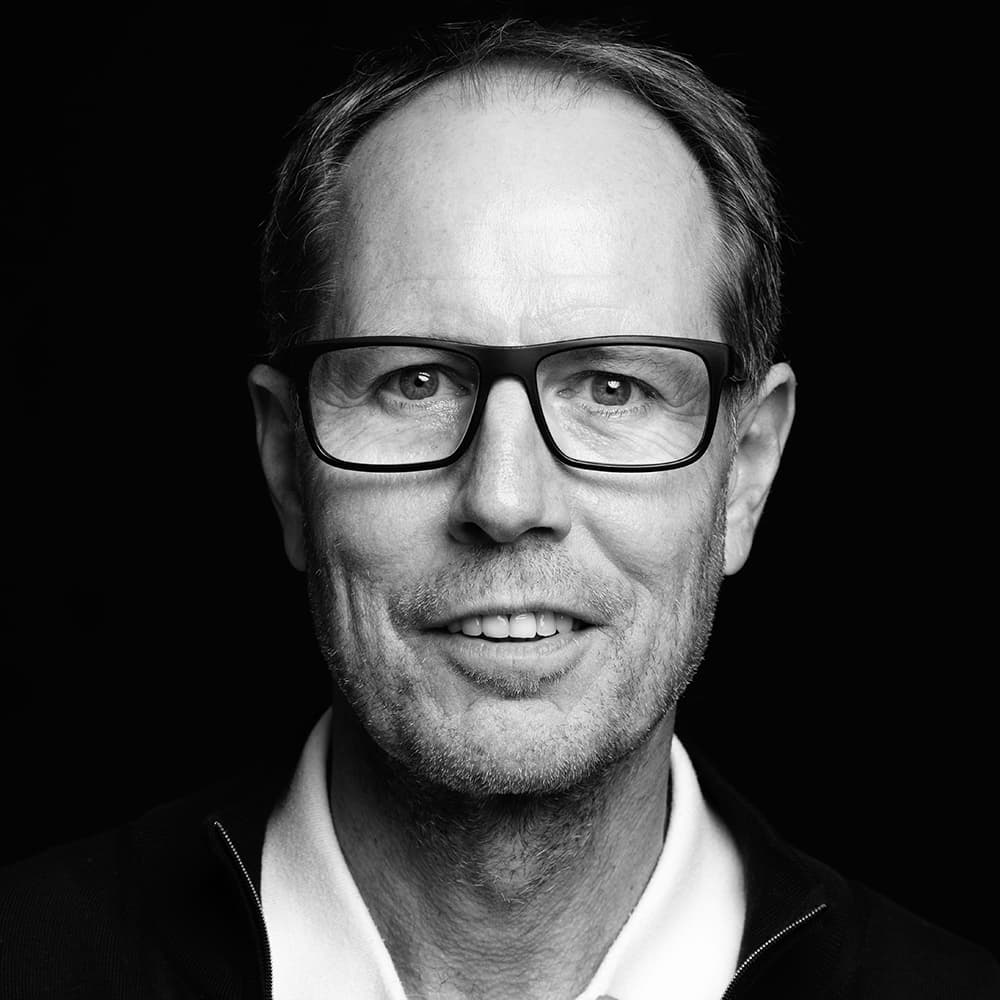
Tony Wyss-Coray, PhD, is a professor of neurology at Stanford School of Medicine, who uses blood-based biomarkers to evaluate organ health and disease risk.
This transcript is currently under human review and may contain errors. The fully reviewed version will be posted as soon as it is available.
Dr. Tony Wyss-Coray:
For the first time, we could take an old brain, and we could give factors from a young organism and ask, "Is that going to change the age of the brain?" And that's indeed what it did. So we saw that there are stem cells in the brain of these mice, that they got reactivated. There was less inflammation, more activity that we can measure in the brain. And then most importantly, we actually saw that their memory function improved.
Andrew Huberman:
Welcome to the Huberman Lab podcast, where we discuss science and science-based tools for everyday life. I'm Andrew Huberman, and I'm a professor of neurobiology and ophthalmology at Stanford School of Medicine. My guest today is Dr. Tony Wyss-Coray. Dr. Tony Wyss-Coray is a professor of neurology at Stanford School of Medicine and an expert in identifying factors that can help prevent and reverse organ degeneration and aging. Today, we discuss the factors that are present in young blood, yes, you heard that right, and the factors that are present in blood after exercise that have been shown to rejuvenate the brain and other tissues in older individuals. Dr. Tony Wyss-Coray's lab has discovered several proteins that are present in high amounts when we are young and that circulate in the blood, and that diminish with age. And if these are supplied to the aged body and brain, can reverse key features of aging, including improved cognition, tissue recovery from stress, damage, and more. We also discuss how aging is nonlinear. It does not progress uniformly across the lifespan. And we discuss the fact that there are certain phases, such as puberty, your early 40s, and your early 60s, when aging is accelerated and then slows again. We also discuss how different organs in your body age at different rates and how you can measure that. Today's discussion is a very important one, because so often these days we hear about anti-aging and longevity. But today you're going to hear about the real science of organ rejuvenation. We also are going to talk about the role of sunlight, fasting, hormones, and the use of specific molecular approaches to improve your vitality and health. We also, of course, discuss exercise and social interactions, but in the context of the specific molecules they release into your blood to promote and enhance health, and how you can leverage that information. Tony Wyss-Coray is a celebrated pioneer in the science of these topics because of the rigor he applies to the work. He's not just talking about some molecule that someday there'll be a drug or some activity that we already know promotes health. He's an avid tool developer for measuring and reversing aging. So today we discuss all of that, and you're sure to come away from the discussion with both tools to improve your immediate and long-term health, as well as a deeper understanding of the biology. Before we begin, I'd like to emphasize that this podcast is separate from my teaching and research roles at Stanford. It is, however, part of my desire and effort to bring zero cost to consumer information about science and science-related tools to the general public. In keeping with that theme, today's episode does include sponsors. And now for my discussion with Dr. Tony Wyss-Coray. Dr. Tony Wyss-Coray, welcome.
Dr. Tony Wyss-Coray:
Thank you.
Andrew Huberman:
Great to see another Stanford colleague here.
Dr. Tony Wyss-Coray:
Yeah.
Andrew Huberman:
You're a true pioneer. Your work is the first work that I heard of where somebody did a serious experiment taking blood from a younger organism, putting it into an older organism, and observing very interesting things. If you would, could you tell us about that experiment and what, if anything, has been done in humans to examine whether young blood, such a loaded term, but young blood can be a rejuvenation factor for the more mature body or brain?
Dr. Tony Wyss-Coray:
Yeah. So we were actually not the first ones.
Andrew Huberman:
Ah, okay.
Dr. Tony Wyss-Coray:
But we collaborated with the person who in sort of more modern times used this model again. It's called parabiosis, where you have a surgical model where an old and a young mouse are paired, and their circulation allows for exchange of blood from the young to the old animal. And my colleague, who recruited me actually to Stanford, Tom Rando, used this model to study aging of stem cells in the muscle. So he discovered that with old age, the muscle sort of deteriorates and doesn't regenerate. And when he used a mouse, an old mouse, and paired it with a young mouse, and now this young circulation infusing, if you will, the old muscle, he regenerated that muscle, and it looked almost like a young muscle.
Andrew Huberman:
Hmm.
Dr. Tony Wyss-Coray:
And at the same time, he also observed effects in other tissues, including in the brain, and that's when we started to collaborate and explored what could the effects of young factors on the brain be. And in part, we were also intrigued by that because we had separate studies in humans where we tried to find blood signatures of Alzheimer's disease. And what we noticed is that we could see proteins that were correlated or even predictive of Alzheimer's disease. But the most striking difference was between younger and older people.
Andrew Huberman:
Hmm.
Dr. Tony Wyss-Coray:
So we saw that the concentration of their proteins was very different in young people and old people. And when you see something like that in biology, you always ask, "Is this cause or effect?" So do the proteins in our body change because they respond to the aging of the brain, for example, or do they actually drive the aging of the brain? And here, Tom had this model that allowed him to ask that question, or that allowed us together to ask that question. Because for the first time, we could take an old brain, and we could give factors from a young organism and ask, "Is that going to change the age of the brain?" And that's indeed what it did. So we saw that there are stem cells in the brain of these mice, that they got reactivated. There was less inflammation, more activity that we can measure in the brain with electrical activity of neurons. And then most importantly, we actually saw that their memory function improved. And so to your question, is that relevant for humans? We actually try to translate that, and we can talk more about this, where the stage of that field is right now to see whether that can be translated.
Andrew Huberman:
Yeah, I would love to hear more about that. I realize in your description that most of us think about blood, of course, delivering oxygen and red blood cells, et cetera. But of blood that's drawn as a good, not the only, but a good window into the health status, the age status of an organism, including us. But what I'm hearing is that it's also delivering nutrients or proteins of some kind that can reverse some sort of clock, and we'll get into later whether or not-
Dr. Tony Wyss-Coray:
Mm-hmm. Yeah
Andrew Huberman:
... it's an organ-specific clock or a body-wide clock. But I think blood-borne factors, generally, I think of as a readout, not as a medicine.
Dr. Tony Wyss-Coray:
Yeah.
Andrew Huberman:
But you're talking about blood-borne factors as medicine.
Dr. Tony Wyss-Coray:
Yeah. I think that's really the fascinating aspect of this work that over the past few years, people started to look at, that many of these proteins and probably other molecules in the blood, they're not just reflecting the status of the body, if you will, but they're actively influencing how it works. And the composition changes dramatically from young to old. We have this picture that I always like to show when I give a talk about our work, where we have several thousand individuals, and we measure 3,000 proteins in them. And then we use colors to show low levels or high levels of proteins, and you see this dramatic change from young people to old people in a way that you can pick one sample, and you can say, "This person must be about that old." And we can talk more about what people call clocks. But to your question, yes, there are factors in the blood that clearly can change the function of cells and organs. And what the field is trying to figure out is what are the key ones, which ones could we use to slow down aging or to keep the body healthy as long as you live.
Andrew Huberman:
So what has been done in humans in terms of an equivalent or pseudo-equivalent experiment to the parabiosis experiment you described?
Dr. Tony Wyss-Coray:
To try to translate that, we started a company, Alkahest, to see whether factors from the blood of individuals could influence, first of all, aging of a mouse brain. So we took blood from young people or old people and injected it into mouse brains, and we could show that young blood could in fact mimic the effects of young mouse blood. So there were similar factors in humans as in mice. And then we went a step further and collaborated very closely with a company called Grifols, who is producing clinical medicines for hospitals based on plasma donations. So they have centers where volunteers donate plasma, and then they pool this, and they isolate, for example, antibodies. So if you're immunodeficient or if you had cancer therapy and you are immunosuppressed, you will get regular infusions of antibodies that are sourced from healthy people, from these volunteers. Also, if you lose a lot of blood, you may get albumin, which is the main protein in our blood. So this company had this manufacturing process where they collect thousands of donations, and they process it into different medicines. And this allowed us to test these different fractions and see which ones have an effect in the mice. And again, we could find some of them that really were more powerful than others. And so we started some clinical trials in patients with Alzheimer's disease and Parkinson's disease and infused them with these fractions that we've shown have effects in mice. And these were small trials, but they looked promising. And they're related to what people have been observing previously, that if you get blood transfusions, often people have sort of feel invigorated, or they say their mind got cleared, or they improved. And this company, actually, Grifols, had also run a clinical study that was blinded, placebo-controlled in patients with Alzheimer's disease, where they first removed their plasma, this is called therapeutic plasma exchange, and then infused them back with a major blood component, this albumin, which also contains other factors. And they saw clear significant benefits, and this was in 500 patients. So the field is trying to figure out next steps and hopefully do really one of these large clinical studies where you can then say, "This actually works and could get FDA approval."
Andrew Huberman:
Have you done one of these?
Dr. Tony Wyss-Coray:
I haven't.
Andrew Huberman:
Are you close with anyone who has?
Dr. Tony Wyss-Coray:
I know people who have done it, yes, and I know people who, as a response, actually then supported the research that we have been doing in this field. There are companies now that offer this, what is called therapeutic plasma exchange, and there was a small trial that was, again, placebo-controlled in 40 individuals, from a company called Circulate Therapeutics. And they then looked in these individuals. These are healthy older people, and they used some of these measures that allow us to assess how old the body is or how old an organ is, called epigenetic clocks. And they could indeed see that some of the organs looked younger or the body overall looked younger. There's some improvements in function. Not dramatic, but suggesting that there might be something there.
Andrew Huberman:
I'd like to take a quick break to acknowledge one of our sponsors, David. David makes protein bars unlike any other. Their newest bar, the Bronze Bar, has 20 grams of protein, only 150 calories, and zero grams of sugar. I have to say, these are the best-tasting protein bars I've ever had, and I've tried a lot of protein bars over the years. These new David bars have a marshmallow base, and they're covered in chocolate coating, and they're absolutely incredible. I, of course, eat regular whole foods. I eat meat, chicken, fish, eggs, fruits, vegetables, et cetera. But I also make it a point to eat one or two David bars per day as a snack, which makes it easy to hit my protein goal of one gram of protein per pound of body weight. And that allows me to take in the protein I need without consuming excess calories. I love all the David Bronze Bar flavors, including Cookie Dough, Caramel Chocolate, Double Chocolate, Peanut Butter Chocolate. They all actually taste like candy bars. Again, they're amazing. But again, they have no sugar, and they have 20 grams of protein with just 150 calories. If you'd like to try David, you can go to davidprotein.com/huberman. Right now, David is offering a deal where if you buy four cartons, you get the fifth carton for free. You can also find David on Amazon or in stores such as Target, Walmart, and Kroger. Again, to get the fifth carton for free, go to davidprotein.com/huberman. Today's episode is also brought to us by LMNT. LMNT is an electrolyte drink that has everything you need and nothing you don't. That means the electrolytes, sodium, magnesium, and potassium, all in the correct ratios, but no sugar. Proper hydration is critical for brain and body function. Even a slight degree of dehydration can diminish your cognitive and physical performance. It's also important that you get adequate electrolytes. The electrolytes, sodium, magnesium, and potassium, are vital for the functioning of all cells in your body, especially your neurons or your nerve cells. Drinking LMNT makes it very easy to ensure that you're getting adequate hydration and adequate electrolytes. My days tend to start really fast, meaning I have to jump right into work or right into exercise. So to make sure that I'm hydrated and I have sufficient electrolytes, when I first wake up in the morning, I drink 16 to 32 ounces of water with an LMNT packet dissolved in it. I also drink LMNT dissolved in water during any kind of physical exercise that I'm doing, especially on hot days when I'm sweating a lot and losing water and electrolytes. LMNT has a bunch of great-tasting flavors. In fact, I love them all. I love the watermelon, the raspberry, the citrus, and I really love the lemonade flavor. So if you'd like to try LMNT, you can go to drinklmnt.com/huberman to claim a free LMNT sample pack with any purchase. Again, that's drinklmnt.com/huberman to claim a free sample pack. I can imagine a situation where there are factors in blood that can damage tissues that arise when there's some sort of injury, let's say a heart attack or even a hip fracture. Pick an injury. I can also imagine a situation where the blood of very healthy, vigorous, younger organisms is devoid of all of that. So when I'm thinking about what could be in young blood that could be rejuvenating, I can imagine that there's sort of a possible double dissociation there, that as we get older, we're having little, let's just call them micro-injuries that we're not aware of all the time, and that infusing young blood into that person would make them feel better. So you're counteracting the bad stuff. But there's another picture where you're supplying something that's pro-youthful. Do you know whether or not the proteins that are contained in young blood are inhibiting the damage-induced bad stuff, or it's supplying something that is really a kind of a youthful factor? Two different things.
Dr. Tony Wyss-Coray:
Yeah.
Andrew Huberman:
Right? And you could see where they'd interact, but the reason I'm getting granular here is because I think ultimately for a therapeutic, you'd want to be able to dissociate between these two.
Dr. Tony Wyss-Coray:
Yeah. No, it totally makes sense. And in a short answer, it's all of the above.
Andrew Huberman:
Mm-hmm.
Dr. Tony Wyss-Coray:
So what we see is with age, there's an increase in many of what we call inflammatory proteins, and we actually identified some, and in mice, if we knock them out or if we neutralize them, then cognition improves-
Andrew Huberman:
Hmm
Dr. Tony Wyss-Coray:
... in the mice, in old mice. So there you have examples of factors and actually natural factors that can inhibit some of these detrimental factors. But then you have also active pro-growth factors, growth factors that stimulate the activity of cells and might maintain stem cells better. So they're truly beneficial factors, right? The challenge in this field has been to figure out which ones are the most important ones, and is there a smallest possible number of factors that you would need to have an effect, right? Sort of a cocktail.
Andrew Huberman:
Mm-hmm.
Dr. Tony Wyss-Coray:
Now, you could say our blood is nature's cocktail, right? It's the elixir of youth. It just sort of... Or it's the fountain of youth that lives in us, but it dries out as we get older. But it also accumulates. There's also an accumulation of bad stuff, so it's not just a loss of that fountain. We have now tools where we can, in mice again, we can look at every cell in the body of a mouse, and we can ask, how do the cells in an old mouse respond to young blood? And what you see is that almost every cell changes their behavior when we measure their transcript, so their gene expression in these cells, but they respond in different ways. And it's expected because they have different, what we call receptors. So one cell may respond to one factor and another cell to another one. And what's also interesting, we see a lot of stem cells seem to be Targets of these young factors, which sort of proves what we originally described, but now in an unbiased way. We look at everything and we ask: What are the major effects? And then what you also see that some organelles, such as mitochondria, these are the energy producer units in inside cells, they are key targets of these rejuvenating effects. So it all makes sense based on what we know from the aging field, what we know from stem cells and maintenance of stem cells. But pinpointing which factor you would need to have this rejuvenating effect or which one you have to block has been extremely challenging because you almost have to go into the organism, and then we call these CRISPR tools, where you can knock out one gene after another and ask which one is the important one. We can't really do this easily in vivo yet, but that's almost what we need to do. So unfortunately, in the past 10 years, there's individual factors that people keep describing, but I think we have not really come up with a good method to integrate multiple different factors that could provide an amplified benefit and mimic what nature is doing.
Andrew Huberman:
Should I be banking my blood?
Dr. Tony Wyss-Coray:
You don't have to. Because what we find, even though there's differences, clear differences from one person to another, overall, if you have the blood of a young person, that blood has, overall, a similar concentration from another young person, and it would still be beneficial to you. So all the blood that we ever used in our studies was always a pool from multiple individuals, and that still has the beneficial effect. So for these type of studies, you would not have to bank your own blood.
Andrew Huberman:
Is the lore around Dracula based on this general logic? And if so, how do you think that lore arose? Meaning, I don't think somebody sat back and thought, "Oh, I can make up this story about this Count Dracula who drank youthful blood."
Dr. Tony Wyss-Coray:
Yeah.
Andrew Huberman:
Does that mean that experiments were being done long ago? I'm not trying to get gruesome here.
Dr. Tony Wyss-Coray:
Yeah .
Andrew Huberman:
But we know, for instance, bloodletting and a bunch of other scientifically dubious things have been used throughout history. But then again, to reduce iron load in the blood, some people will give blood. It's also a nice thing to do for your blood bank. They need blood in hospitals, and too much iron load isn't good. We know that. So what's known about the origins of the Dracula story vis-à-vis the science that we are now aware of?
Dr. Tony Wyss-Coray:
Yeah. Sort of in retrospect, I think where they came from is maybe more that people realized that blood is this essential fluid. If you get a cut and you bleed too much, you're dead, right?
Andrew Huberman:
Mm-hmm.
Dr. Tony Wyss-Coray:
But then maybe also associated it with age or youthfulness. I don't know exactly how. We have not done, and this question came up many times before, we have actually never fed mice young blood. You could try that, right? Because it would have to be absorbed. The factors would have to be absorbed into the body. I wouldn't be surprised if some of them wouldn't have beneficial effects and survive the stomach acid environment of the stomach, but nobody's ever done it. I don't know where it comes from, but yeah. There's a lot of these questions.
Andrew Huberman:
Mm-hmm.
Dr. Tony Wyss-Coray:
And bloodletting too, it's blood thinning also, right?
Andrew Huberman:
Mm-hmm.
Dr. Tony Wyss-Coray:
These leeches release factors into the blood, and they must have done something, otherwise people would probably not have done it.
Andrew Huberman:
It's pretty wild. Again, I'm not trying to be gruesome or medieval here. It's just now and again, something from the historical text shows up in modern science, and we go, "Well, there's sort of a mapping of the past to something that is clearly of a scientific validation."
Dr. Tony Wyss-Coray:
Mm-hmm.
Andrew Huberman:
I'm not promoting drinking blood. I'm interested in organ-specific rates of aging. And then I also want to circle back to organ-specific delivery of nutrients, because what you're talking about is blood infusion. It goes everywhere.
Dr. Tony Wyss-Coray:
Mm-hmm.
Andrew Huberman:
It goes into the general circulation.
Dr. Tony Wyss-Coray:
Right. Yeah. Mm-hmm.
Andrew Huberman:
You've mainly focused on the brain, but it's possible that certain organs are more receptive to these youthful factors than others. Even the brain has a blood-brain barrier. The gonads have a blood-gonad barrier for interesting reasons. What is known about the rates of aging in different organs? Do they happen in parallel or no? And how different organs respond to these youthful factors.
Dr. Tony Wyss-Coray:
Yeah. So it's really interesting that intuitively, you think an organism just ages as a whole in synchrony, we would say, right? But what researchers have discovered, and this was first, I think Monica Driscoll was the first to show in worms that when she looked at the ultra-structural level, that some of these organs in the worm seem to look more aged than others. And over the years now, we have molecular tools where we can look at a single cell level or within an organ. And what we clearly see is that organs and cells within an organism can have slightly different rates of aging. And the way we conclude that is if we look at all these tissues in many different organism, and every period of weeks or months in mice, for example, we harvest tissues from different animals. We can see these trajectories that some of them are relatively stable for a long time, and then they start to decline, where others continue decline from early adulthood. And yet others may maintain almost until the animal expires. So that allows you then, on an individual level, to ask if you compare now one individual to another, do their organs age exactly in the same way, or is maybe there a person whose heart ages a little bit faster than the rest of their body, and in another person, it would be the lung or the brain. And that's indeed what we seem to be seeing.
Andrew Huberman:
Mm.
Dr. Tony Wyss-Coray:
And the way we did this in humans, and maybe we can talk about this now, is again, we look at these proteins, and there are companies now that can look at thousands of proteins in a drop of blood. And this is not Theranos. This is actually real platforms, real science, where in just a drop of blood, there are companies that measure 11,000 proteins now, the concentration of these 11,000 proteins. And there are large population-based cohorts where people follow healthy people over two decades or even longer now, and they collected blood. And so we can profile this blood now and we can ask, are proteins in that blood related to what diseases people develop or how they age? And the way how we make this, what people call a clock for a specific organ is, we look in your blood for proteins, for example, from the brain. So out of these thousands of proteins that we can measure in the blood, some of them originate from your brain. Some originate from the lung, from the liver, from the heart. And we've always used that in clinical medicine, but we measure only a handful of proteins, usually a few liver proteins, a few heart proteins, and we use them to assess injury or loss of function. So if your liver is damaged, that's what we detect. But here we have now an opportunity to look in thousands of people at proteins that come, for example, from the liver, and ask how do they change with age? And that allows us to then estimate the age of the liver in an individual. And what we find is that for most people, the age of your organs is pretty much in sync with your body. But for some individuals, you have more or less of a deviation. So your liver may age faster than that of the rest of the population and the rest of your body. And what is really super exciting, we call this an age gap, so the difference between your actual age and the estimated age of your organ, and that's a very strong predictor of your future risk to develop disease in that organ.
Andrew Huberman:
Mm.
Dr. Tony Wyss-Coray:
So in other words, if your heart shows to age faster, you're more likely to get heart disease or a heart attack. If your kidney ages fast, you're going to get kidney disease. If your brain ages faster, you're more likely going to get Alzheimer's disease.
Andrew Huberman:
Is this a test that anyone can now take? Is it commercially available?
Dr. Tony Wyss-Coray:
Yeah, so that's a great question. We started a company with Paul Coletta called Vero Biosciences.
Andrew Huberman:
Vero?
Dr. Tony Wyss-Coray:
Vero Biosciences. And the mission is really to profile the age of organs to ideally eradicate chronic diseases and to maintain or to predict which organ is going to age, because what we find is that if you have an organ that ages faster, if you can detect that and you can do an intervention, you can potentially delay aging, right, and extend health span. And this is really the mission of Vero. The Vero Compass uses a combination of this biological signature together with clinical and wearable data to create a platform that can predict how you respond, first of all, which organ is the most sensitive, which intervention you can use, and then whether your organ responds or not by repeated testing and sort of creating a continuous loop where I tell you which organ is of concern. You get medical advice based on other data that we can obtain from you, and then you may get an intervention. Could be a classic medical treatment, but it could also be a change in your lifestyle, exercise-
Andrew Huberman:
Type of exercise
Dr. Tony Wyss-Coray:
... change of diet, type of exercise, but have it tailored-
Andrew Huberman:
Mm-hmm
Dr. Tony Wyss-Coray:
... to your specific needs, and then we can test, does that intervention actually change the age of your organ?
Andrew Huberman:
It seems spectacular. I realize in addition, let's say I were going to start a new medication, maybe taking a new drug for ADHD. Not for me, I don't have ADHD, fortunately, but people are doing this all the time now, trying different drugs for different things-
Dr. Tony Wyss-Coray:
Right. Yeah
Andrew Huberman:
... or taking something to lower their ApoB, as it were, and then you could monitor how that impacts, for better or worse, the age of a particular organ or set of organs.
Dr. Tony Wyss-Coray:
Exactly. Absolutely. So in many diseases, complex diseases, Alzheimer's disease in particular, we know that people have probably different forms of Alzheimer's disease, and we know there are risk factors that predispose you to have Alzheimer's disease. But most of the trials now are done in all comers with the disease who already have the diagnosis And so you could imagine that if you have these predictors of change, the predictors of risk, and you get actually more resolution, and we can talk about that in a minute, what the next stage is of this type of research, you may get different profiles in people and say, "Okay, let's test this new drug in this type of Alzheimer's disease who has a very particular risk profile, rather than in everyone," and then the drug fails. I think we may have tested a lot of drugs out there that might actually be beneficial, but because we apply them to everyone and we apply them too late, they fail, and we throw them away.
Andrew Huberman:
Yeah. We had David Fajgenbaum, Dr. David Fajgenbaum, he's an MD, University of Pennsylvania, professor of medicine, who himself was diagnosed with Castleman's disease and took it upon himself to try essentially every approved drug as a last-ditch effort. He was dying, basically. And he came up with a combination, a small kit of already approved medications, and he's now been alive 11 years since his essentially death diagnosis.
Dr. Tony Wyss-Coray:
Wow.
Andrew Huberman:
Or, excuse me, death prognosis. And he has a not-for-profit called EveryCure, where people with diseases that have resisted all other forms of treatment, people can go there, and they use AI to come up with reasonable candidates to try, because as he said exactly what you said, which is that many of the solutions to diseases that are common may already exist, but they've been swamped by the variation in those diseases when looked at in clinical trials.
Dr. Tony Wyss-Coray:
Right. Yeah.
Andrew Huberman:
So the idea that we're already sitting on good treatments and cures that wouldn't have to pass through all the testing is very interesting. There's also very little incentive for drug companies to invest in those because they've passed through their patent window, so there's not a lot of money to be made.
Dr. Tony Wyss-Coray:
Yeah, that's sometimes another problem.
Andrew Huberman:
I have a question that I promise, I'm just going to be-- I've had this podcast long enough to know that I don't tap dance around things anymore. David Sinclair has been very-- I'm not trying to attack David, but I want to know. David has been very vocal about NAD and the NMN pathway, which is upstream of NR. Others have talked about NR. There's Tru Niagen. I'm not trying to go after any one person or company, but for a while, there was a lot of excitement, mainly generated by David, that NAD, which goes down across development into adulthood, might be a pro-longevity treatment. I confess, I take NMN powder. I don't get paid to say this. It doesn't even matter what company I get it from because I buy it like everybody else. I don't have any belief that it's going to increase my lifespan, but it seems to have a pro-energy effect that I like. And for some reason, it makes my hair grow very fast and my nails grow very thick, which is a side effect I wasn't looking for.
Dr. Tony Wyss-Coray:
Okay, maybe I should try it, too.
Andrew Huberman:
My sister experiences the same thing, but this is all anecdata, right?
Dr. Tony Wyss-Coray:
Yeah.
Andrew Huberman:
Again, I make no money for saying this.
Dr. Tony Wyss-Coray:
Yeah.
Andrew Huberman:
But I've seen a lot of criticism of the NAD hypothesis of longevity. And so is there any evidence that increasing NAD levels, either through NMN or through NR or direct infusion or injection of NAD, any of those things, can actually extend the lifespan of humans and/or experimental models?
Dr. Tony Wyss-Coray:
Yeah. This is not my area of expertise, but just as a blank statement, there is no human intervention that can extend lifespan that has been tested or validated. There are many that have shown beneficial effects in animal models, including NMN and all these metabolites. There's actually a clinical study that shows that if you take these supplements, they increase your levels in the blood. That's a good clinical study, but it doesn't show that it has an effect on lifespan or even on frailty or any other tangible outcome. And this is the case with many other medications that might be beneficial, but they have simply not been tested in a clinical trial. They have been tested in disease sometimes, and they are very good drugs to treat a person who is sick, but they have not been tested in healthy elder people and see whether they reduce aging or increase health span. There's really nothing out there except exercise and diets. Those have sort of proven effects. There's a very good study from a researcher in Singapore who tested 10 different preparations of NMN, and she found that many of them actually don't contain what is on the label.
Andrew Huberman:
That doesn't surprise me. Yeah.
Dr. Tony Wyss-Coray:
And that's the case for most supplements. For half the supplements, there's many resources out there you can check, or you can just ask ChatGPT.
Andrew Huberman:
Sure. Mm-hmm.
Dr. Tony Wyss-Coray:
There's not in there what it says. And with NMN, apparently, and according to ChatGPT, it's very unstable, and so it degrades quite quickly. So you want to make sure, I think with any supplement, if you want to try it, make sure it's from a good source. And that it has been-
Andrew Huberman:
Third party tested
Dr. Tony Wyss-Coray:
... that it has been third party tested, yeah. And you use it within the time frame. Yeah.
Andrew Huberman:
Yeah. No, I appreciate you saying that. Like I said, I don't expect to live longer because of taking NAD. I just sort of like the effect that it appears to give me.
Dr. Tony Wyss-Coray:
Mm-hmm. Yeah.
Andrew Huberman:
I'd like to talk about the relationship between things that increase vitality that are abundant in youth versus their possible role in decreasing longevity. I've been fascinated by this for a long time. So bear with me here, and I'll try and set the stage, and then I'll be quiet. Puberty is perhaps the fastest rate of aging that we undergo in our entire lifespan. Within two years, we transform as an organism.
Dr. Tony Wyss-Coray:
Yeah.
Andrew Huberman:
Right? Some people progress through puberty much faster. Other people seem to have a more protracted puberty. And here I'm defining puberty as the acquisition of secondary sex characteristics, facial hair, et cetera, reproductive ability, et cetera. Okay? So puberty is a constellation of things that obviously differs in males and females. It's correlated with hormones like testosterone, estrogen, gonadotropins, et cetera, but really it's a brain thing that switches on that then initiates all of this. So there have been many attempts in the kind of health and wellness space to take the hormones, usually, testosterone, estrogen, and growth hormone being the three primary ones, and then supply those to people in adulthood. Perimenopausal women taking estrogen and/or testosterone nowadays, quite frequently. This happens a lot. Men taking testosterone either because they need to "replace it" or they're just trying to augment what they already have. Growth hormone. Certainly, all of these things dosed appropriately, we know will increase vitality, energy, libido, recovery from exercise, in some cases maybe cognition, et cetera. But it's also been demonstrated that when you increase growth hormone in IGF-1, that you decrease lifespan.
Dr. Tony Wyss-Coray:
Mm-hmm.
Andrew Huberman:
This is seen in large dogs versus small dogs. The reason larger dogs live so much shorter lives than small dogs is because of the dosing of IGF-1. So how do you look at the balance between vitality and longevity, and are there factors that can increase both vitality and longevity? Because to my knowledge, the things that, these hormones mainly, that increase vitality, well, if they allow you to exercise more and perhaps be leaner, then perhaps they buy you some additional time in life. But they also decrease the amount of time you have alive. So it's a very interesting interplay, and most people conflate longevity and vitality.
Dr. Tony Wyss-Coray:
That's an excellent question, and the short answer is we don't know. We don't really know. And in the aging field, this is called antagonistic pleiotropy. So something that is good when you're young can be bad when you're old.
Andrew Huberman:
Mm-hmm.
Dr. Tony Wyss-Coray:
It relates to this concept. And humans are, of course, they're sort of exempt from evolution, if you will, right? So our natural lifespan is probably around 30 to 40. If you look back in history, that's how long people lived.
Andrew Huberman:
Really?
Dr. Tony Wyss-Coray:
There were always individuals who had exceptional lifespan, but most people would die much earlier.
Andrew Huberman:
Of what?
Dr. Tony Wyss-Coray:
Infections and it was probably mostly infectious diseases.
Andrew Huberman:
Hmm.
Dr. Tony Wyss-Coray:
But you could argue from an evolutionary perspective, once you're sexually mature, you reproduced, and you guaranteed your offspring, which is around 30 to 40 years, nature doesn't care about you anymore. And so there's no longer, it's very brutal to hear, but-
Andrew Huberman:
As long as your kids are sufficient enough to raise you.
Dr. Tony Wyss-Coray:
Exactly. Yeah.
Andrew Huberman:
An infant can't raise itself.
Dr. Tony Wyss-Coray:
Yeah. That's right.
Andrew Huberman:
A seven-year-old maybe could-
Dr. Tony Wyss-Coray:
Yeah
Andrew Huberman:
... if they were very industrious.
Dr. Tony Wyss-Coray:
Yeah.
Andrew Huberman:
But kids need us at least until they're in their-
Dr. Tony Wyss-Coray:
They need us, yeah
Andrew Huberman:
... late teens.
Dr. Tony Wyss-Coray:
Yeah.
Andrew Huberman:
Right? Or teens.
Dr. Tony Wyss-Coray:
And then you may have some evolutionary pressure to maintain individuals who have knowledge and wisdom to help the group to survive.
Andrew Huberman:
Mm-hmm.
Dr. Tony Wyss-Coray:
But that's probably a much weaker force of evolution to keep you alive, right?
Andrew Huberman:
Mm-hmm.
Dr. Tony Wyss-Coray:
And so that's why people increasingly see now that there are these inflection points that menopause, but also in men around age 30 to 40, dramatic changes in the composition, again, of the blood. We just looked at this, I mentioned earlier, if you look at the composition of the blood across human lifespan from 20 to 90, we call these waves of aging. The first wave is around 35 years of age. Dramatic changes in concentrations of lots of factors, and not just in women, in men as well.
Andrew Huberman:
35. To degradation?
Dr. Tony Wyss-Coray:
35 to 40.
Andrew Huberman:
Any improvements?
Dr. Tony Wyss-Coray:
Some go up, some go down, and it's speculative, but does that have something to do with this is how long nature needs us, and then it doesn't care. And the fact that we live now 80 or even longer, on average, is really thanks to hygiene and certain medications that blood pressure and heart disease that we have been able-
Andrew Huberman:
Right, antibiotics. I have a friend who called me over the weekend and he's got some-
Dr. Tony Wyss-Coray:
Antibiotics, absolutely. Yeah
Andrew Huberman:
... I mean, he's got a brutal infection that almost took out his vision in one eye. Antibiotics infused, boom.
Dr. Tony Wyss-Coray:
Yeah.
Andrew Huberman:
Done. I know some listeners don't like antibiotics, and they're concerned about it. I'll tell you, if you have a brutal infection that's aggressive and it's near your brain or your eye and you get on systemic antibiotics, and they're the right one, you are one lucky individual.
Dr. Tony Wyss-Coray:
Oh, absolutely. Yeah.
Andrew Huberman:
And if you don't, you could be looking at excavating one or both eyes.
Dr. Tony Wyss-Coray:
Absolutely.
Andrew Huberman:
It's brutal.
Dr. Tony Wyss-Coray:
Yeah.
Andrew Huberman:
Yeah.
Dr. Tony Wyss-Coray:
Yeah.
Andrew Huberman:
Yeah, wonderful tools.
Dr. Tony Wyss-Coray:
I mean, for many different infections, antibiotics are a lifesaver. Absolutely. Yeah, so it's a really good point, and actually my friend, Tom Rando, mentioned earlier, he always makes that point that a lot of the study look at lifespan as an outcome in animal models, but they don't really look at how active or what is sort of the level of that extended lifespan is. Are they just hanging in there, these organisms, or are they still strong and vital, right? Is the vitality still there? And I think we haven't found a magic that would keep everything together for a longer period of time, and certainly not in humans.
Andrew Huberman:
If you're a regular listener of the Huberman Lab podcast, you've no doubt heard me talk about the vitamin mineral probiotic drink AG1. And if you've been on the fence about it, now's an awesome time to give it a try. For the next few weeks, AG1 is giving away a full supplement package with your first subscription to AG1. They're giving away a free bottle of vitamin D3+K2, a bottle of omega-3 fish oil capsules, and a sample pack of the new sleep formula, AGZ, which by the way, is now the only sleep supplement I take. It's fantastic. My sleep on AGZ is out of this world good. AGZ is a drink, so it eliminates the need to take a lot of pills. It tastes great, and like I said, it has me sleeping incredibly well, waking up more refreshed than ever. I absolutely love it. Again, this is a limited time offer, so make sure to go to drinkag1.com/huberman to get started today. Today's episode is also brought to us by ROKA. I'm excited to share that ROKA and I recently teamed up to create a new pair of red lens glasses. These red lens glasses are meant to be worn in the evening after the sun goes down. They filter out short wavelength light that comes from screens and from LED lights, which are the most common indoor lighting nowadays. I want to emphasize ROKA red lens glasses are not traditional blue blockers. They do filter out blue light, but they filter out a lot more than just blue light. In fact, they filter out the full range of short wavelength light that suppresses the hormone melatonin. By the way, you want melatonin high in the evening and at night. Makes it easy to fall and stay asleep. And those short wavelengths trigger increases in cortisol. Increases in cortisol are great in the early part of the day, but you do not want increases in cortisol in the evening and at night. These ROKA red lens glasses ensure normal, healthy increases in melatonin and that your cortisol levels stay low, which is again, what you want in the evening and at night. In doing so, these ROKA red lens glasses really help you calm down and improve your transition to sleep. If you'd like to try ROKA, go to roka.com. That's R-O-K-A.com and enter the code Huberman to save 20% off your first order. Again, that's roka.com and enter the code Huberman at checkout. Lately, I've been somewhat surprised, although not entirely, by some of the data on sunlight exposure and lifespan. There's this really interesting large-scale study out of Sweden where the more sunlight exposure people got, the longer they live. Even smokers who get more sunlight appear to, on average, these are averages, folks-
Dr. Tony Wyss-Coray:
Yeah.
Andrew Huberman:
... seem to, so overlapping distributions-
Dr. Tony Wyss-Coray:
I know, that's interesting
Andrew Huberman:
... but live longer than non-smokers who don't get sufficient sunlight. Now, getting a lot of sunlight is also correlated with outdoor activity, fresh air, a number of things.
Dr. Tony Wyss-Coray:
Yeah.
Andrew Huberman:
It's far from perfect study. But yeah, the interplay between vitality, and I think of sunlight as pro-vitality, and longevity is such an interesting one because the dance that we seem to be playing now with medications and could be supplements, but really medication and lifestyle is what can we do and take to get more life, but also to enjoy that life more. And there are certain things like growth hormone, which will make people feel much more youthful.
Dr. Tony Wyss-Coray:
Mm-hmm.
Andrew Huberman:
Much more youthful. Skin, hair, even cognition, et cetera, ability to maintain or put on muscle, lose fat, and on and on. But higher IGF-1 and growth hormone, broadly speaking, means a shorter life.
Dr. Tony Wyss-Coray:
Yeah. Maybe comes at a price. Yeah.
Andrew Huberman:
Yeah.
Dr. Tony Wyss-Coray:
Yeah.
Andrew Huberman:
So I guess, that can be determined individually whether or not somebody wants to make that trade-off, but what I'm excited about are the things that are possibly in these blood transfusions that come from younger humans, maybe us, but younger humans, you said pooled, that are getting to cellular function in a different way, that are restoring vitality and longevity. And maybe there are a few candidates that you could discuss with us and what pathways they impinge on. I probably won't be familiar with the specific molecules, but are they impacting DNA, the epigenome? Are they impacting mitochondrial function? If you would maybe pick your two or three favorite candidates, if you can. I know some of these are still under study.
Dr. Tony Wyss-Coray:
The factors often are growth factors. GDF11 is one of them that has been described, growth and differentiation factor 11.
Andrew Huberman:
Okay.
Dr. Tony Wyss-Coray:
IGF-1 actually also has been described to be in young blood is higher. There are factors that have been identified through an approach that is similar to transferring young versus old. So what one of my trainees, that's Olvi Laita when he was a graduate student in my lab, he did these parabiosis experiments. And then his lab and my lab independently did an experiment where we exercised mice, young mice. We took their blood, and we injected it in non-exercise mice, and we could show that the beneficial effects of exercise on the brain were transmitted again by blood.
Andrew Huberman:
Were you going young to young? So-
Dr. Tony Wyss-Coray:
We went young to young.
Andrew Huberman:
Mm-hmm.
Dr. Tony Wyss-Coray:
So Olvi went young to old and could show that he can have a stronger effect on these brains than just young blood. If it's exercised young blood, it's even better.
Andrew Huberman:
So surprising to me because I think of exercise as a purposeful stress-
Dr. Tony Wyss-Coray:
Mm-hmm
Andrew Huberman:
... that induces inflammatory molecules that then induce an adaptation.
Dr. Tony Wyss-Coray:
It does, yeah.
Andrew Huberman:
Are there factors that are liberated during exercise, brain-derived neurotrophic factor, et cetera, that are pro-health and vitality, that are not designed to get an adaptation-
Dr. Tony Wyss-Coray:
Mm-hmm
Andrew Huberman:
... that are just good stuff coming out of the cells when we exercise?
Dr. Tony Wyss-Coray:
Yeah. What both actually he and my lab found is that somehow this exercise seemed to trigger the release of factors from the liver That then go to the brain and make the brain function better.
Andrew Huberman:
Mm.
Dr. Tony Wyss-Coray:
In our case, we describe the protein as called clusterin.
Andrew Huberman:
Mm-hmm.
Dr. Tony Wyss-Coray:
It has many different roles. It can bind to lipids. It's also called apolipoprotein J. It's involved in coagulation and complement pathway. Very complicated. We couldn't quite figure out how does it have these effects, but we could show that if we make recombinant synthetic clusterin and inject it into mice, we could mimic some of the effect.
Andrew Huberman:
This is clusterin?
Dr. Tony Wyss-Coray:
Yeah.
Andrew Huberman:
It's in the complement pathway.
Dr. Tony Wyss-Coray:
Yeah.
Andrew Huberman:
Complement, initially identified as part of the immune system, coats cells as a part of the eat me signal in the immune system or the eat me system, but does many other things, too, right, involved in synapse formation and remodeling, and we know from Beth Stevens' work and others. Wild.
Dr. Tony Wyss-Coray:
Wild. Yeah.
Andrew Huberman:
Wild.
Dr. Tony Wyss-Coray:
And then Saul found another factor that's called GPLDH, that, again, he can clearly show has an effect, but how exactly it does that is not clear. Most recently, he did another really creative experiment where he did caloric restriction of mice. And again, that's sort of an accepted beneficial effect and longevity promoting, potentially, and takes the plasma from mice, puts it into other mice, and again, can isolate factors that mimic this effect.
Andrew Huberman:
Because of intermittent fasting?
Dr. Tony Wyss-Coray:
Yeah. What this tells us is that this is physiology, right? We call this physiology, but organs in our body communicate with each other, and there's an orchestration of effects that leads to factors that are released into the blood, and then they go to different organs and have, in this case, beneficial effects. So the exercise effect is not just because you think you're exercising, but there are actually factors released that seem to benefit your brain.
Andrew Huberman:
So interesting. There's this idea that was, at least to me, first put forth in a book called "Spark." Do you know John Ratey's book? It came out some years ago. He's a physician, I believe trained at Harvard Med. And he talked about the essential requirements for movement and brain plasticity. This was early days of understanding neuroplasticity, but he talked about brain-derived neurotrophic factor, other things that are liberated by exercise. But he described some interesting experiments in there of, for instance, there's a sea-dwelling creature that swims around and has a fairly elaborate nervous system, at least for it, but then at some point in its life, settles down on a rock and eats its own nervous system, basically.
Dr. Tony Wyss-Coray:
Wow.
Andrew Huberman:
And there's been some interesting experiments looking at what happens when you get that organism or other organisms, I believe, I think it was that organism, but other organisms to continue moving. It seems like there's feedback from the process of moving the musculature, and it could be neuromuscular in origin, it could be hormonal in origin. I don't think we know that it comes from muscle, but there's something about the requirement for movement that signals to the brain that it needs to continue to exist, and not just the motor portions of the brain, or the portions of the brain controlling motor activity, but that the body may supply chemical or other types of feedback to the brain that if it's moving and continues to move, that the brain needs to continue to be robust.
Dr. Tony Wyss-Coray:
Mm-hmm.
Andrew Huberman:
Which I find very interesting-
Dr. Tony Wyss-Coray:
Yeah
Andrew Huberman:
... because few things, to me, explain how movement to the body would signal vitality of the brain, aside from hormone-
Dr. Tony Wyss-Coray:
Mm-hmm
Andrew Huberman:
... borne factors. But it kind of makes sense, right?
Dr. Tony Wyss-Coray:
Yeah.
Andrew Huberman:
Continuing to move the body-
Dr. Tony Wyss-Coray:
Yeah
Andrew Huberman:
... is essential for keeping the brain healthy.
Dr. Tony Wyss-Coray:
Yeah. And exercise interventions, there's thousands of studies that show that exercise is beneficial, cardiovascular, but also other exercise.
Andrew Huberman:
Yeah. Now it seems everyone's excited about resistance training. I think both is clearly the answer. You look good. You're not in your 80s, but-
Dr. Tony Wyss-Coray:
I might be
Andrew Huberman:
... do you exercise? Right. Yeah, that would be impressive. What is your exercise regimen? People will want to know.
Dr. Tony Wyss-Coray:
Yeah. I run.
Andrew Huberman:
Mm-hmm.
Dr. Tony Wyss-Coray:
I like running outdoors. I like the sun.
Andrew Huberman:
Mm-hmm.
Dr. Tony Wyss-Coray:
I try to get two runs, 5 to 10K.
Andrew Huberman:
Per week?
Dr. Tony Wyss-Coray:
Yeah. That's the main exercise I do. I do some Pilates in the morning.
Andrew Huberman:
I'm struck by how quickly the body degrades after an injury, especially if that injury occurs after age 60.
Dr. Tony Wyss-Coray:
Yeah.
Andrew Huberman:
When we are injured as kids, we heal up
Dr. Tony Wyss-Coray:
Mm-hmm.
Andrew Huberman:
It's amazing, right?
Dr. Tony Wyss-Coray:
Right.
Andrew Huberman:
Kids getting cuts-
Dr. Tony Wyss-Coray:
Yeah
Andrew Huberman:
... and they're just like, "What happened?" It's just they heal right up.
Dr. Tony Wyss-Coray:
Yeah.
Andrew Huberman:
Do we know why we heal more quickly as kids than as adults?
Dr. Tony Wyss-Coray:
We do know that the immune system ages like everything, and it has this bias that it goes from a more specific response to a non-specific response, and that is often associated with inflammation.
Andrew Huberman:
Mm-hmm.
Dr. Tony Wyss-Coray:
So it's possible that part of it is that if you have a wound, there's too much of an inflammatory response and less of a healing response.
Andrew Huberman:
Mm-hmm.
Dr. Tony Wyss-Coray:
But we also know from aging organisms that if you have a cut, there's proteins in the extracellular matrix, like collagens and things like that, that are often overproduced, and they may interfere with a quick healing response. So I think everything is a little bit out of tune, and that might be the reason, but it's not really something I would know the details.
Andrew Huberman:
I've always been fascinated by the fact that if we get a cut on the surface of our body, that it may or may not heal with a scar. But If we get a cut on the inside of our mouth, which is loaded-
Dr. Tony Wyss-Coray:
Mm-hmm
Andrew Huberman:
... with bacteria-
Dr. Tony Wyss-Coray:
Mm-hmm
Andrew Huberman:
... and warm and moist-
Dr. Tony Wyss-Coray:
Mm-hmm
Andrew Huberman:
... and in contact with the outside world-
Dr. Tony Wyss-Coray:
Yeah
Andrew Huberman:
... all day long-
Dr. Tony Wyss-Coray:
Yeah
Andrew Huberman:
... it tends to heal with either zero or much less of a scar.
Dr. Tony Wyss-Coray:
Yeah.
Andrew Huberman:
There has to be something-
Dr. Tony Wyss-Coray:
That's true. Yeah
Andrew Huberman:
... in the mouth-
Dr. Tony Wyss-Coray:
Fascinating. Yeah
Andrew Huberman:
... that's pro-healing. And I believe people are studying this-
Dr. Tony Wyss-Coray:
Yeah
Andrew Huberman:
... but someone's got to figure this out.
Dr. Tony Wyss-Coray:
Yeah. It's true. Yeah.
Andrew Huberman:
It could be saliva.
Dr. Tony Wyss-Coray:
Yeah.
Andrew Huberman:
Wild, right? The rate of healing, I know there's a lot of blood supply, but there's also a lot of blood supply to the nose and to the hands, and there's scars form on the hands and on the nose.
Dr. Tony Wyss-Coray:
Yeah. It's also scarring in babies, right, may not leave, or a cut in a baby may not leave any trace. But-
Andrew Huberman:
Mm-hmm
Dr. Tony Wyss-Coray:
... the same type of wound in an older person may leave a scar for the rest of their life. Yeah.
Andrew Huberman:
So how do we move past correlation and to really understand causative stuff? So we'll get back to lifestyle factors, but it's so very clear from the animal studies and from the human studies that you described that there's something in young blood or things in young blood-
Dr. Tony Wyss-Coray:
Mm-hmm
Andrew Huberman:
... that are pro-rejuvenation for the brain and other tissues. How do we get to a real pro-longevity molecule medication treatment?
Dr. Tony Wyss-Coray:
Or pro-health maybe more, right? I think most people in the field are not really interested in extending lifespan-
Andrew Huberman:
Mm-hmm
Dr. Tony Wyss-Coray:
... which would be longevity, but health span.
Andrew Huberman:
Mm-hmm.
Dr. Tony Wyss-Coray:
And we talked about this before, right? That you try to maintain the function of your organs until you die, so that your brain would still be functioning, you're cognitively intact, all your organs would still be functioned relatively well, and then you fall asleep and that's the end of your life. And not necessarily extending lifespan, as you said, it could be that we extend lifespan and you just have 10 more miserable years. That certainly nobody would want that, right? But I think to get to causation, we need these types of experiments, physiological experiments in animal models first to isolate individual factors and then test them on an individual basis with very rigorous methods, which we can do and say, "Okay, this factor has the capacity to maintain, for example, brain function in the mouse." And then we have to test it in humans and do it in a careful, clinically controlled trial where people are blinded, whether they got the treatment or not, and do a big enough study that we can say, "Okay, this truly works," and then we have a drug.
Andrew Huberman:
How close are we to the clinical trial?
Dr. Tony Wyss-Coray:
There are different molecules. Klotho is actually another one. It's this protein that has been described to have beneficial effects on multiple different organs. The biology, again, not exactly clear.
Andrew Huberman:
K-L-O-T-H-O, Klotho.
Dr. Tony Wyss-Coray:
That's right. Yeah.
Andrew Huberman:
Mm-hmm.
Dr. Tony Wyss-Coray:
And there's companies trying to move this into humans, into human trials. Some of these other factors, I think there are companies are trying or inhibiting detrimental factors. And with individual clinical trials, you could get there in the next five, 10 years. There may be something that has an effect. I think we will not have a factor, an individual factor that just has this miracle effect on everything. This is very clear from the studies of young blood. It's many different factors, and they target different pathways, different cell types in different tissues. So you may have to decide for this organ, we need this treatment, for this organ, we need that treatment to optimize its function and keep it running at full capacity until you're 100 years old.
Andrew Huberman:
I'm not suggesting anyone do this, but I do seem to hear now and again that people are taking Klotho already. Not surprising.
Dr. Tony Wyss-Coray:
Yeah.
Andrew Huberman:
People will-
Dr. Tony Wyss-Coray:
Yeah
Andrew Huberman:
... get ahead of the curve-
Dr. Tony Wyss-Coray:
Mm-hmm. Yeah
Andrew Huberman:
... so to speak.
Dr. Tony Wyss-Coray:
Yeah. I also read people taking this GDF11. I don't know where they get it.
Andrew Huberman:
I'm guessing it's just Mexico and Central and South America, there are a lot of clinics that do this sort of thing. I will put out a true story, cautionary note. A friend who, whenever people say I have a friend-
Dr. Tony Wyss-Coray:
Mm-hmm
Andrew Huberman:
... but this is a medical doctor who had a back pain that was giving him a lot of issues, and he went to a stem cell clinic in Mexico, got an injection of stem cells into a spinal disc, which my neurosurgeon friends tell me is a terrible idea. It turns out the disc cannot accept cellular injections. A chair of neurosurgery-
Dr. Tony Wyss-Coray:
Mm-hmm
Andrew Huberman:
... told me that. So you can come at me if you want, folks, but he's the chair of neurosurgery at a prominent medical school. So the disc cannot accept direct injections of foreign cells. Anyway, this guy, a different guy, different MD, went and got this injection and ended up with an egg-sized infection that left him paralyzed. He was fortunate enough to be airlifted to a certain clinic in the United States, and told he was, "That's it. You're done. We're going to have to just sever your spinal cord." He was taken to another clinic where fortunately they were able to excise this infection, and he's mobile today. He will tell you, and I'll tell you, that you have to be very careful getting injections of cells in anywhere, but the regulations out of country often are not as stringent And I tell that story because a number of people are excited about stem cells, they're excited about these technologies, but it really can be quite dangerous.
Dr. Tony Wyss-Coray:
And again, this is what we discussed earlier, this experience that we have in the medical field that you really need to test something in people in a very controlled fashion, very carefully with the dose, and then test it in a blinded fashion ideally, so that you know it really works and it's safe. And what you mentioned earlier with stem cells, there are no such treatments that have been tested rigorously.
Andrew Huberman:
Mm-hmm.
Dr. Tony Wyss-Coray:
And for many of these other factors, they work in some animal models. There are some mouse studies that showed they might have an effect, but you cannot translate that to humans. It's just a long road.
Andrew Huberman:
Mm-hmm.
Dr. Tony Wyss-Coray:
And I would be extremely cautious to take anything that is not really prescribed to you from a clinician that you trust.
Andrew Huberman:
Thank you. By way of contrast, platelet-rich plasma, PRP-
Dr. Tony Wyss-Coray:
Mm-hmm
Andrew Huberman:
... is approved by the FDA.
Dr. Tony Wyss-Coray:
Yeah.
Andrew Huberman:
People who are undergoing fertility treatments will get it injected into their ovary. People are getting PRP injected into their shoulders, their knees, their whatever. I'm not trying to be disparaging of this. It is FDA approved. To my knowledge, platelet-rich plasma does not contain stem cells.
Dr. Tony Wyss-Coray:
That's correct.
Andrew Huberman:
But it seems to be beneficial enough and safe enough that the FDA has approved it. What is the deal with platelet-rich plasma? What has it been shown to be actually useful for? Because just because something is allowed for one indication and is used broadly for a bunch of things doesn't mean that there's evidence that it works for all those things.
Dr. Tony Wyss-Coray:
That's right.
Andrew Huberman:
Yeah.
Dr. Tony Wyss-Coray:
So platelet-rich plasma has these platelets in there that are full of growth factors. They have these granules that help in wound healing as a primary function, and somehow that seems to be beneficial in sports injuries, it's often given. And as far as I know, I think it's from your own blood.
Andrew Huberman:
Yeah.
Dr. Tony Wyss-Coray:
You concentrate these platelets, and then they release these factors. So you may have a massive load of growth factors that help you heal these various tissues that you mentioned. Yeah.
Andrew Huberman:
Yeah. I haven't tried it, but I know people who have and reported some positive effect. I've heard also a lot about exosomes, and there are some clinics, I believe, where I think exosomes are FDA approved as a treatment. What are exosomes and what have they been shown to be useful for in studies and/or clinical?
Dr. Tony Wyss-Coray:
I don't know in clinical studies how they're used, but cells can release sort of little packages of material that is filled with proteins, but there's also RNA molecules in there, lipids, metabolites. And some cells do this all the time. Cancer cells, for example, do it, but also some immune cells have a very active release of these little packages, vesicles we call them, that are filled with, again, all these different molecules. In the blood, you find large numbers of these exosomes, and that's where they're usually purified from. Different cells have different cargo in these vesicles, and it seems that they function to some extent to deliver information from one cell to another. It's still a very new field, but people explore whether they can be used for treatment purposes, but also for diagnostic purposes. Do they tell you something about a specific organ or a tumor that is developing? So when we measure these proteins that we talked about earlier in the blood, we actually measure what's in the exosomes also. So these exosomes, they float basically like immune cells. They float in the blood, and we open them up and we measure what's inside.
Andrew Huberman:
We should probably talk about some of the things that damage vitality and longevity. Accident and injury aside, we know that smoking, especially nicotine, damages DNA, increases inflammation, and will shorten your life. I don't think there's any debate about that.
Dr. Tony Wyss-Coray:
Yeah.
Andrew Huberman:
Right? But what about some of the other things that might produce low-level DNA damage? In particular, these days I'm very interested in EMFs. I don't actually believe that the low levels of EMFs that are present in most technologies are damaging in the acute way that being near them is going to harm you. But there is the idea that things can be cumulative, right? I get one X-ray every few years when I go to the dentist, but there's a reason the technician runs behind a-
Dr. Tony Wyss-Coray:
Yeah
Andrew Huberman:
... the wall. He or she doesn't want to be exposed to that on a daily basis. So how do we feel about things that at a low dose don't damage DNA, or mutate proteins either, but that if we are exposed to them over a lot of time could very well do that? What are your thoughts on this?
Dr. Tony Wyss-Coray:
A very difficult question. You could ask the same question about any chemical that we invent and we put into food or we get exposed to, right?
Andrew Huberman:
Mm-hmm.
Dr. Tony Wyss-Coray:
The plastic. We drink hot stuff out of a cup that is coated with plastic and we're full of plastic. How is that going to change our lifespan? It hasn't in a measurable way so far, right? But we don't know what's going to happen in 20, 30 years, or if people synthesize a compound that is detrimental, that it doesn't look detrimental, it has been tested and is safe, but as you said, if it accumulates maybe, or in combination with other stuff, it may be detrimental.
Andrew Huberman:
I think about this from time to time, and I wonder about what's in my environment that I can easily control. I try not to drink out of plastic. I try and drink out of cans that don't have BPAs and things like that if I can.
Dr. Tony Wyss-Coray:
Yeah, if you go down that route, it drives you crazy, and you could sort of not do anything anymore or not eat anything.
Andrew Huberman:
Well, it's getting harder nowadays-
Dr. Tony Wyss-Coray:
It gets hard
Andrew Huberman:
... to live a clean life. How long were you in Switzerland before you came to the States?
Dr. Tony Wyss-Coray:
I was 26. Yeah.
Andrew Huberman:
You were weaned in a very clean environment. That's not just a stereotype about-
Dr. Tony Wyss-Coray:
Yeah
Andrew Huberman:
... the Swiss, meaning things are, yes, very tidy and clean.
Dr. Tony Wyss-Coray:
Right. Yeah.
Andrew Huberman:
The streets are remarkably clean. You could drink out of the lake in Zurich, right?
Dr. Tony Wyss-Coray:
That's right. Yeah. Maybe not the lake, but-
Andrew Huberman:
Mm-hmm
Dr. Tony Wyss-Coray:
... there are still fountains with groundwater where you can drink in any village-
Andrew Huberman:
Yeah
Dr. Tony Wyss-Coray:
... basically, yeah.
Andrew Huberman:
Yeah. If you're lucky enough to grow up in a place where the tap water is clean-
Dr. Tony Wyss-Coray:
Mm-hmm
Andrew Huberman:
... the food tends to be pretty devoid of dyes and preservatives, and your home is centered around eating mostly whole foods.
Dr. Tony Wyss-Coray:
Mm-hmm. And fresh.
Andrew Huberman:
Foods that you cook. Yeah.
Dr. Tony Wyss-Coray:
Freshly prepared.
Andrew Huberman:
Fresh fruits and vegetables-
Dr. Tony Wyss-Coray:
Yeah
Andrew Huberman:
... or freshly prepared. Right.
Dr. Tony Wyss-Coray:
Right. Exactly.
Andrew Huberman:
Even desserts that are fresh-
Dr. Tony Wyss-Coray:
Right
Andrew Huberman:
... that are prepared-
Dr. Tony Wyss-Coray:
Right. Yeah
Andrew Huberman:
... as opposed to a lot of packaged foods.
Dr. Tony Wyss-Coray:
Mm-hmm.
Andrew Huberman:
It seems that that's a far and away different experience than most-
Dr. Tony Wyss-Coray:
Mm-hmm
Andrew Huberman:
... certainly Americans-
Dr. Tony Wyss-Coray:
Mm-hmm
Andrew Huberman:
... would get nowadays.
Dr. Tony Wyss-Coray:
Right. Yeah. And you wonder what the effect of that is going to be. We simply don't know.
Andrew Huberman:
Yeah, we don't know. And I know now there's a big attack on food dyes as the thing, and there's no smoking gun data on any of those. But, yeah, I think the cumulative effects of things are worth considering, I think, for most people.
Dr. Tony Wyss-Coray:
I try not to think too much about it. But I also... Growing up in an environment where we had a big vegetable garden. I have a vegetable garden. I have lots of fruit trees and-
Andrew Huberman:
Mm-hmm
Dr. Tony Wyss-Coray:
... try to get stuff out of my own garden. That's a luxury, of course, for a lot of people. But as you said, you can also buy fresh fruit. It's more work, right? It's more work than just buying a ready-made food, but you know what you're cooking and what's in there.
Andrew Huberman:
I'm fascinated these days by the data on organic versus non-organic fruits and vegetables. I spend the extra money on organic, but the more I look into it, the more you find that the differences aren't that great. Now, taste can be different, and ideally, you're sourcing from local farms. But I have a friend-- Actually, he'll be okay with me saying this. He's a physician, Dr. Teo Soleymani. He's a derm oncologist whose son ran an experiment for his school project, looking at the differences between organic and non-organic fruits and vegetables in terms of what contaminants and things are on them, pesticides, et cetera, and found, this is one kid's study, but essentially no significant differences in that particular set of batches of fruits and vegetables. And so that is, I would say, reassuring on the one hand because it means that people who can't afford organic will probably be doing about as well as people who can. But I think if you can grow your own or access from local farms, surely it's cleaner. The highest rates of endocrine disruptors are found in rural areas. I always thought that being in a big city was the most dangerous for your lungs and endocrine health, and we had Shanna Swan on the podcast, serious researcher in this area, and she said, no. If you live in an area where they're spraying crops-
Dr. Tony Wyss-Coray:
Mm-hmm
Andrew Huberman:
... cancer risk-
Dr. Tony Wyss-Coray:
Yeah
Andrew Huberman:
... endocrine disruption.
Dr. Tony Wyss-Coray:
Yeah.
Andrew Huberman:
It's very serious.
Dr. Tony Wyss-Coray:
Also association with Parkinson's disease and-
Andrew Huberman:
Right
Dr. Tony Wyss-Coray:
... yeah.
Andrew Huberman:
Right. I'd like to take a quick break and acknowledge one of our sponsors, Function. Last year, I became a Function member after searching for the most comprehensive approach to lab testing. Function provides over 100 advanced lab tests that give you a key snapshot of your entire bodily health. This snapshot offers you with insights on your heart health, hormone health, immune functioning, nutrient levels, and much more. They've also recently added tests for toxins, such as BPA exposure from harmful plastics, and tests for PFAS or forever chemicals. Function not only provides testing of over 100 biomarkers key to your physical and mental health, but it also analyzes these results and provides insights from top doctors who are expert in the relevant areas. For example, in one of my first tests with Function, I learned that I had elevated levels of mercury in my blood. Function not only helped me detect that but offered insights into how best to reduce my mercury levels, which included limiting my tuna consumption, I'd been eating a lot of tuna, while also making an effort to eat more leafy greens and supplementing with NAC, N-acetylcysteine, both of which can support glutathione production and detoxification. And I should say, by taking a second Function test, that approach worked. Comprehensive blood testing is vitally important. There's so many things related to your mental and physical health that can only be detected in a blood test. The problem is blood testing has always been very expensive and complicated. In contrast, I've been super impressed by Function's simplicity and at the level of cost. It is very affordable. As a consequence, I decided to join their scientific advisory board, and I'm thrilled that they're sponsoring the podcast. If you'd like to try Function, you can go to functionhealth.com/huberman. Function currently has a wait list of over 250,000 people, but they're offering early access to Huberman Podcast listeners. Again, that's functionhealth.com/huberman to get early access to Function. Well, as long as we're talking about food, we should talk about not eating. We should talk about fasting. So many studies now showing in worms, in mice, in monkeys, and perhaps even in humans, that sub-caloric intake for long periods of time or perhaps intermittent fasting, we can talk about how we define that, can extend life. How is that thought to work? Is it the reduction in this mTOR, mammalian target of rapamycin? Is it reduction in inflammation? Is it clearing of senescent cells? Give us the overview and any specifics about intermittent fasting and Perhaps start by saying how you define intermittent fasting. Is it daily or is it two, three days?
Dr. Tony Wyss-Coray:
I think to just answer that-
Andrew Huberman:
Yeah
Dr. Tony Wyss-Coray:
... there is no definition.
Andrew Huberman:
Okay.
Dr. Tony Wyss-Coray:
There is no definition.
Andrew Huberman:
Mm-hmm.
Dr. Tony Wyss-Coray:
And the whole field is also a mess. It's, again, taking studies in mice, for example, and then translating them to humans. Their lifespan, their whole rhythm, their environment is so different from our environment, right? That to translate these is always a stretch. And there's no clinical studies that show a clear benefit of fasting in humans. And some studies in monkeys actually suggest that it's detrimental for monkeys to fast, for example. They had more, I think, worse kidney function and things like that. So overall, from animal studies, it's very clear that you activate sort of beneficial pathways. They're very diverse. Again, we can now use unbiased assessment of many different cell types in an organism at gene expression across thousands of genes, and we see that different cells respond in different ways, and you get functional improvements. But they're very broad. They're, in part, reduced inflammation. Other cells, you get benefits on their energy metabolism, protein turnover, how they handle sort of what we call the garbage that accumulates in cells. Overall, from these animal studies, clearly benefits from reducing calorie intake. Also less, what we call, oxidative damage. So it's like you burn a fire, right? And if that fire is really intense, you may cause more damage. But how you translate this really to tangible benefits in humans, I'm not sure.
Andrew Huberman:
Do you practice intermittent fasting?
Dr. Tony Wyss-Coray:
Rarely.
Andrew Huberman:
You like breakfast.
Dr. Tony Wyss-Coray:
I tried Longo's diet a few times, where I reduce calorie... Valter Longo, do you-
Andrew Huberman:
I'm familiar with him.
Dr. Tony Wyss-Coray:
Yeah.
Andrew Huberman:
What's the contour of the diet?
Dr. Tony Wyss-Coray:
Yeah. So it's mostly you switch to a ketogenic diet, so a fat-rich diet. So your metabolism changes basically from a regular sort of glucose-driven diet to burning fat. And you feel that when you start to starve, that somehow it's almost like your body changes a little bit, and you get a bit more alert almost. And in a way, that makes sense, right?
Andrew Huberman:
Mm-hmm.
Dr. Tony Wyss-Coray:
If you think you're out there in the wild, whether you're an animal or a human being, if you don't have enough food, the last thing you want is that your brain doesn't work well.
Andrew Huberman:
Right. I imagine the catecholamines, dopamine-
Dr. Tony Wyss-Coray:
Yeah
Andrew Huberman:
... norepinephrine and epinephrine increase.
Dr. Tony Wyss-Coray:
Mm-hmm. Yeah.
Andrew Huberman:
Yeah.
Dr. Tony Wyss-Coray:
So you get more alert, right?
Andrew Huberman:
You're a little hangry.
Dr. Tony Wyss-Coray:
Yeah. Hangry, exactly.
Andrew Huberman:
Got it.
Dr. Tony Wyss-Coray:
But I'm not sure how long that lasts and how beneficial this is in the long run.
Andrew Huberman:
Mm-hmm.
Dr. Tony Wyss-Coray:
But yeah, I've done it a few times. You do one week. You lower your calories, I think, down to 1,000 per day. So it's pretty brutal. But only for five days, and then-
Andrew Huberman:
Okay
Dr. Tony Wyss-Coray:
... you go back to normal, yeah.
Andrew Huberman:
I know of a few people who've done long-term fasts, so three or four days with just water and electrolytes, maybe some ketones.
Dr. Tony Wyss-Coray:
Mm-hmm.
Andrew Huberman:
And they were very overweight, carrying a lot of excess body fat, and when they returned to eating, claimed that their appetite was forever changed, in particular, the types of foods they were hungry for. And that's thought to be an effect on the gut microbiome, which then impacts the brain. So there may be a place for those longer fasts, what do they call them? Medically supervised fasts.
Dr. Tony Wyss-Coray:
Yeah, exactly.
Andrew Huberman:
I generally just like caffeine, electrolytes, and water until about 10 or 11:00 a.m.
Dr. Tony Wyss-Coray:
Yeah.
Andrew Huberman:
And then I like to eat no later than-
Dr. Tony Wyss-Coray:
Yeah, I do that also, yeah
Andrew Huberman:
... nowadays, it's 7:00 p.m. because I go to bed a little earlier. So is that intermittent fasting, or is that just being a busy person who wants to still sleep well and exercise?
Dr. Tony Wyss-Coray:
Yeah. It is sort of a fast, right? In English, we call it a break fast, right?
Andrew Huberman:
Mm-hmm.
Dr. Tony Wyss-Coray:
And it is 12 hours maybe where you have no food, and I think that probably triggers some metabolic activity that is different than if you continue to eat.
Andrew Huberman:
Yeah.
Dr. Tony Wyss-Coray:
I think the worst is probably for the body to eat all the time. Like, a lot of people snack the whole day.
Andrew Huberman:
Mm-hmm. Yeah.
Dr. Tony Wyss-Coray:
That's not how we evolved, right?
Andrew Huberman:
Mm-hmm.
Dr. Tony Wyss-Coray:
We evolved being starved on a regular basis, but is that a good thing or a bad thing? For sure, our body is used to it. That's a fair statement. It can handle it.
Andrew Huberman:
I can't do the one meal per day thing because that meal ends up being so large that I get a lot of- ... gastric discomfort, and then it disrupts my sleep. And that's what I'd like to discuss also is sleep. If there's been at least one, there's probably been three in my mind, but at least one major triumph in the public health discussion over the last, let's say, 10 years, and we can really, truly thank the great Matt Walker for this, who wrote "Why We Sleep." He was the first person to really say, "Hey, these are all the terrible things that are going to happen to you if you don't sleep enough."
Dr. Tony Wyss-Coray:
Mm-hmm.
Andrew Huberman:
And everyone needs different amounts. I'm fine on six hours, so I don't believe everyone needs eight.
Dr. Tony Wyss-Coray:
Mm-hmm.
Andrew Huberman:
Seven, I'm great, but I'm fine on six, especially with a little nap here and there. But Matt got people scared, then he got people thinking about how to improve their sleep, and I and others have spent time on this. I think that's one of the great victories of public health communication around The best science. The other would be the importance of exercise, both cardiovascular and resistance training. But during sleep, we know that there's this so-called glymphatic clearance, the clearance of junk from all the tissues, but in particular from the brain, that's facilitated by the glia, hence glymphatic. Have you guys looked at lymph between young and old animals? I'm fascinated by lymph.
Dr. Tony Wyss-Coray:
I have not. Yeah, that would be very interesting to do. We thought about it, but this-
Andrew Huberman:
Because it's the debris from the blood, right?
Dr. Tony Wyss-Coray:
Yeah.
Andrew Huberman:
Well, it's the debris from the extracellular space-
Dr. Tony Wyss-Coray:
Yeah
Andrew Huberman:
... that doesn't get picked up by the blood.
Dr. Tony Wyss-Coray:
Mm-hmm. Yeah.
Andrew Huberman:
It's essentially the extra bad stuff, all the-
Dr. Tony Wyss-Coray:
Mm-hmm. Yeah
Andrew Huberman:
... ammonia and cellular debris and fragments.
Dr. Tony Wyss-Coray:
Mm-hmm. Yeah.
Andrew Huberman:
I would love for you guys to do an experiment looking at lymph-
Dr. Tony Wyss-Coray:
Yeah
Andrew Huberman:
... from young and old-
Dr. Tony Wyss-Coray:
Yeah
Andrew Huberman:
... animals.
Dr. Tony Wyss-Coray:
We looked at the cerebrospinal fluid, but it's of course different, and that, again, differs dramatically with age. The composition changes dramatically. And I had a fellow who was heroic enough or crazy enough to collect young CSF from animals, from mice.
Andrew Huberman:
Tiny, little?
Dr. Tony Wyss-Coray:
Yeah.
Andrew Huberman:
Wow.
Dr. Tony Wyss-Coray:
And then infuse it via a pump over a month into old animals, and she could show that you can regenerate the brain, improve cognitive function in these mice, and oligodendrocytes, these cells that wrap the connections between neurons, it's like they produce the plastic around the wire, if you will, they were the strongest target if we looked in an unbiased way. And so she's studying that now in her own lab. But it shows you, in another way, how a fluid changes from young to old, and the young fluid somehow has beneficial factors that benefit the old brain. And so I wouldn't be surprised that there could be beneficial factor in the glymph or the lymphatics that might benefit an old organism. We thought about it, but I think in mice, it's extremely difficult. There's also the interstitial fluid itself-
Andrew Huberman:
Mm-hmm
Dr. Tony Wyss-Coray:
... that people have collected, but they usually collect it by infusing artificial spinal fluid and then you almost wash out what it's in there. People have used that in the neurotransmitter field, and also more recently to look at Aβ or-
Andrew Huberman:
Mm-hmm
Dr. Tony Wyss-Coray:
... accumulation of protein deposits in the brain.
Andrew Huberman:
Why not just go straight to humans? I feel like-
Dr. Tony Wyss-Coray:
Yeah, that's probably what you would have to do
Andrew Huberman:
... I was at a random mouse lab for a long time.
Dr. Tony Wyss-Coray:
Yes. Yeah.
Andrew Huberman:
I worked on so many different species-
Dr. Tony Wyss-Coray:
Mm-hmm
Andrew Huberman:
... including humans.
Dr. Tony Wyss-Coray:
Yeah. Mm-hmm.
Andrew Huberman:
But it seems like given the relatively equal expense of doing-
Dr. Tony Wyss-Coray:
Mm-hmm
Andrew Huberman:
... exploratory science in mice and humans, that unless there's a question you can only address in mice-
Dr. Tony Wyss-Coray:
Mm-hmm
Andrew Huberman:
... why not just take CSF from young and old humans and-
Dr. Tony Wyss-Coray:
Oh, yeah, that we have done. Yeah.
Andrew Huberman:
Oh, okay. Okay.
Dr. Tony Wyss-Coray:
CSF is no problem. Yeah.
Andrew Huberman:
Okay.
Dr. Tony Wyss-Coray:
Yeah. So we measure proteins in the CSF, and again, thousands of proteins, and we ask, are there proteins that correlate with cognitive function, with resilience or decline? What's really interesting is, so we did this in a completely unbiased way, you find proteins that go up and go down together with cognition, so that positively or negatively correlate, and almost all the top proteins are synaptic proteins. We then use the top two, the one that goes up the most and goes down the most, and made a ratio of the two. And that ratio is a very strong predictor for cognitive resilience or decline. And what's scary is that ratio continues to change from early adulthood. So you get a continuous, basically, degradation of that signal, and we get a very prominent risk prediction between the top and the bottom quartile. And this is based on 3,000 individuals where we had CSF from. And it's independent of pathological markers, so we also had people with Alzheimer's and Alzheimer's disease in there at different stages of disease. So if you look for what is only predictive of cognitive function based on a memory test, we find these synaptic proteins are very strong predictors. So again, suggesting that the composition change, and then you can ask, is this a reflection of the change, or is it actually driving the change? And it seems to be both again.
Andrew Huberman:
It's always tough to get to causality, but anytime I see a study that looks in a correlative way at which athletes live the longest-
Dr. Tony Wyss-Coray:
Mm-hmm
Andrew Huberman:
... it's very interesting, right?
Dr. Tony Wyss-Coray:
Yeah.
Andrew Huberman:
I have no desire to run a marathon.
Dr. Tony Wyss-Coray:
Mm-hmm. Yeah.
Andrew Huberman:
But if I knew that it was going to add 20 years to my life or 15 years, I might start-
Dr. Tony Wyss-Coray:
Mm-hmm
Andrew Huberman:
... becoming a marathoner. But a recent study showed that it's the pole vaulters, I'm not going to get into that- ... and the gymnasts and I think the high jumpers and the sprinters, so the fast-twitch muscle folks, they get a substantial longevity effect-
Dr. Tony Wyss-Coray:
Mm-hmm
Andrew Huberman:
... five to eight years-
Dr. Tony Wyss-Coray:
Yeah
Andrew Huberman:
... on average-
Dr. Tony Wyss-Coray:
Yeah
Andrew Huberman:
... more than their age-matched cohorts.
Dr. Tony Wyss-Coray:
Oh, that's really interesting. Yeah.
Andrew Huberman:
Even compared to other-
Dr. Tony Wyss-Coray:
Yeah
Andrew Huberman:
... highly trained athletes.
Dr. Tony Wyss-Coray:
Mm-hmm. Yeah.
Andrew Huberman:
So I see a result like that, and then, of course, the reductionist scientist in me says, "Okay, so is it the running? Is it the jumping? Is it..." But then you think, like, "Oh, using the Weiss-Corey model, you could essentially look at the blood from-
Dr. Tony Wyss-Coray:
Mm-hmm
Andrew Huberman:
... sprinters versus-
Dr. Tony Wyss-Coray:
Yeah
Andrew Huberman:
... marathoners.
Dr. Tony Wyss-Coray:
I compare it, yeah.
Andrew Huberman:
And of course they're going to differ. These are different people, after all.
Dr. Tony Wyss-Coray:
Mm-hmm.
Andrew Huberman:
Very different lifestyles in a number of different ways. But you have to kind of wonder, again, whether or not the feed-- I wonder whether the feedback signals from the body There's some feedback signal in the form of a chemical that says, okay, this body is moving fast, jumping, and doing explosive activity, essentially, on a regular basis, that supplies the brain with a cocktail of things, presumably, that keeps neurons healthy. Keeps the oligodendrocytes proliferating.
Dr. Tony Wyss-Coray:
Right.
Andrew Huberman:
That make sure that you got plenty of myelin for those fast transmission signals. And to me, that's where the field of health span and lifespan, but especially health span, really needs to go, because otherwise, it's just like, pick the exercise you're going to do regularly. That's great. That's a great first step. But then ultimately, it really does become about quality of life. So the importance of doing these kinds of studies, to me, is immense, because otherwise, it's just sort of like, well, you do a little cardio, you do a little of this, do a little of that, and I don't know. That's like saying, "Oh, you can get the same level of social connection in from social media as you can from in-person connection." They're two totally different landscapes.
Dr. Tony Wyss-Coray:
Yeah.
Andrew Huberman:
So anyway, I'm struck by the idea that exercise is not one thing.
Dr. Tony Wyss-Coray:
Mm-hmm.
Andrew Huberman:
And that there are certain forms of exercise that are much more potent, which it means there are probably molecules associated with certain forms-
Dr. Tony Wyss-Coray:
Yeah
Andrew Huberman:
... of exercise that are much more potent in terms of-
Dr. Tony Wyss-Coray:
Right. Yeah
Andrew Huberman:
... brain function.
Dr. Tony Wyss-Coray:
Yeah, that's very interesting. So John Long at Stanford has a lab, and he looked at metabolites in the blood of sprinter dogs, horses that do races, and then also human sprinters.
Andrew Huberman:
Mm-hmm.
Dr. Tony Wyss-Coray:
And he found this interesting modified amino acid that is conjugated to lactate, Lac-Phe, it's called. And that compound seems to spike with these extreme bursts of muscle activity. And he could then show in animals that it's actually beneficial and mediates some of the beneficial effects. He identified the receptor. So it's a really very exciting direction of research. But it speaks to what you're saying, that there's different ways, different forms of exercise, and they may have different effects, and they may all be beneficial, better than not doing anything, but they may have different effects, and you may be able to harness one or the other. And also, some of us may benefit more from one or the other. It's extremely hard to do a rigorous clinical study on any of this, right? Because obviously, if you exercise, you always know it, so you can't be blinded. And if you hate it or if you love it, your brain is probably going to send very different signals, right? I have friends who just hate exercise, and they never want to do it. So how are you going to tell them, "You should do this or that?"
Andrew Huberman:
Well, if it buys you life. Anyway, I'm fortunate that I've always loved exercise.
Dr. Tony Wyss-Coray:
I always liked it. Me too.
Andrew Huberman:
I've always loved it.
Dr. Tony Wyss-Coray:
Me too.
Andrew Huberman:
I feel great going into it, I feel great during, and I feel after.
Dr. Tony Wyss-Coray:
Yeah.
Andrew Huberman:
Sometimes it's painful, but I always enjoy it. But I realize that not everyone feels that way.
Dr. Tony Wyss-Coray:
Gets that reward, right. Yeah.
Andrew Huberman:
Our colleague, Robert Sapolsky, told me about a study where they have rodents run on a wheel-
Dr. Tony Wyss-Coray:
Mm-hmm
Andrew Huberman:
... regularly, and rodents love to run on wheels-
Dr. Tony Wyss-Coray:
Yeah
Andrew Huberman:
... as you know. And they, of course, experience reductions in blood pressure, blood lipids improve, et cetera, after the exercise. During the exercise and immediately after, there's inflammation, but you get the adaptation, they improve. But if you tether the running of that animal, sort of like your parabiosis experiment. If you tether the running of that animal to another animal that's trapped in a running wheel, it can't leave the running wheel, and it has to run when the other one runs.
Dr. Tony Wyss-Coray:
Yeah.
Andrew Huberman:
They're doing the same exercise, and they're genetically identical animals. And the one that's forced to run experiences long-term increases in blood pressure, markers of stress, and deficits in memory associated with hippocampal, not damage, but rewiring. So you realize that the choice is big in all of this.
Dr. Tony Wyss-Coray:
That's, for me, running on a treadmill-
Andrew Huberman:
Yeah
Dr. Tony Wyss-Coray:
... in a room versus outside.
Andrew Huberman:
I'm exactly the same way. Not to spin off into every study, but a lot of Stanford citations here.
Dr. Tony Wyss-Coray:
Yeah.
Andrew Huberman:
Our colleague, Joe Parvizi-
Dr. Tony Wyss-Coray:
Mm-hmm. Yeah
Andrew Huberman:
... a neurosurgeon, did this amazing experiment where he stimulates, for other reasons, he landed in the anterior midcingulate cortex, and when he stimulates there, people feel as if there's some impending pressure on them, like they're driving into a storm, and they feel motivated. They feel the, subjectively, tenacity. And it turns out that the anterior cingulate cortex grows in people who successfully diet, who push through challenges in exercise-
Dr. Tony Wyss-Coray:
Yeah
Andrew Huberman:
... and cognitive things. So pushing ourselves, you can tell your friends-
Dr. Tony Wyss-Coray:
Yeah
Andrew Huberman:
... that if you enjoy doing something, you actually get less benefit.
Dr. Tony Wyss-Coray:
Yeah, maybe.
Andrew Huberman:
If you hate it, you get more benefit, but not if you're forced to do it. So electing to do things that you hate and doing them anyway-
Dr. Tony Wyss-Coray:
Electing to overcome it
Andrew Huberman:
... is where you get the double benefit.
Dr. Tony Wyss-Coray:
Mm-hmm. Yeah.
Andrew Huberman:
So in any case, this is the brain structure associated with super-agers.
Dr. Tony Wyss-Coray:
If you motivate yourself to do a marathon, right, and you go through the torture.
Andrew Huberman:
That's right. I think I'll sprint instead. I now do this thing where I hop on the AirDyne bike, the one with the handles, and I'll go warm up a minute, and then I'll go hard for 20, 30 seconds, and then rest 10 seconds, and just repeat, and it's over in seven minutes. But it's amazing where the brain goes. You're like, "I hate this. I want to get off this thing." But afterwards, it feels pretty great. Well, I would love for you guys to look at CSF or other factors in, let's just call it high intensity versus long endurance-type exercise. It's also hard to do in animals, but you can do it very easily in humans. I'm trying to think about the ways that we can use lifestyle interventions until you come up with the magic pill.
Dr. Tony Wyss-Coray:
Yeah And it's interesting that you say that. Jill Livingston and others, they have studied how lifestyle influences the development of dementia and Alzheimer's disease, and it's a dramatic component that you can influence, easier or not, right? Some of them are very hard to get out of, but poverty is a risk, of course, childhood obesity, lower education, smoking, excessive alcohol use. Many of these things that we know, they're good or bad. If you optimize everything, your risk for dementia is much lower. There's now countless studies that show that. So there are things that you can do, the lifestyle factors, right? And they're easier to do for some people than for others. But it's clear that there's incredible power in lifestyle and what we do.
Andrew Huberman:
Are you aware of any correlates to the exercise thing we were just talking about, whereby certain cognitive exercises can help us hold on to cognition? For instance, we've heard doing crossword puzzles or reading good books. I think this is becoming increasingly important because it's so easy to have one's time sucked away on the internet or on social media nowadays, which requires essentially no work, right? You just scroll and read. Articles have become very brief. Is there any known benefit of trying to tackle cognitive gymnastics? Is there any data?
Dr. Tony Wyss-Coray:
Not to my knowledge. Unfortunately, the studies that looked in patients who already have cognitive impairment, and you try to give them sort of exercise and mental exercise, they don't do much, unfortunately.
Andrew Huberman:
Mm-hmm.
Dr. Tony Wyss-Coray:
It's probably more complex. And you, of course, also have, again, what we discussed earlier with exercise, right? Some people just love to be stimulated and they want to learn something new. Want to learn a new language or a new instrument, and their mind is already attuned to that, right? They crave for this. And for others, that might be much harder, and they may not benefit from it. But you're the neuroscientist. What could you get out of something like that? And if somebody is really excited about doing any of these mental exercises versus it doesn't speak to them.
Andrew Huberman:
Yeah. I think that we should all find the things that we want to do enough that we would elect to do them, but that are challenging. There are data coming out now showing that handwriting is very important to development of certain brain circuits.
Dr. Tony Wyss-Coray:
Mm-hmm.
Andrew Huberman:
It's kind of a no surprise, but this is important for the younger generation who's no longer handwriting so much. The phrase "use it or lose it" makes perfect sense to me. If you don't walk enough or run enough or cycle enough or do anything with your legs, eventually the neural systems that control your legs will atrophy, as will the muscles. We tend to think about the muscles-
Dr. Tony Wyss-Coray:
Yeah
Andrew Huberman:
... but we don't think about the neural control over the muscles. So I think, since I'm 50 now, I think I make it a point to read at least, it's going to sound so paltry, but at least one page, and ideally one chapter of a book every day. Sometimes it's just one page, but just with a book, with my phone out of the room And I do, and I read papers and things like that. But doing things that feel unnatural, but that I know I will benefit from when they're over. There's such a deep feeling of satisfaction from having done that sort of thing.
Dr. Tony Wyss-Coray:
Yeah.
Andrew Huberman:
And for me, the higher intensity cardio is that I'd much rather jog than sprint, so I make it a point to sprint. So I think maybe we should think about exercise and cognitive stuff the same way. Who knows?
Dr. Tony Wyss-Coray:
Yeah.
Andrew Huberman:
Is there anything in Switzerland that they do that they don't do here in terms of food and exercise and lifestyle? Because the Swiss are very healthy. The Swiss also, as I recall from something in "The Economist" a few years ago when I used to-- I no longer subscribe to them, but the highest caffeine intake in the world is the Swiss.
Dr. Tony Wyss-Coray:
Really?
Andrew Huberman:
They drink so much caffeine.
Dr. Tony Wyss-Coray:
Also chocolate.
Andrew Huberman:
Yeah. They have chocolate.
Dr. Tony Wyss-Coray:
Chocolate and cheese.
Andrew Huberman:
Okay.
Dr. Tony Wyss-Coray:
And people eat a lot of it. Almost every day, I eat chocolate.
Andrew Huberman:
Do you?
Dr. Tony Wyss-Coray:
Yeah.
Andrew Huberman:
You're making some people very happy.
Dr. Tony Wyss-Coray:
It's-- Yeah.
Andrew Huberman:
I eat 100% chocolate.
Dr. Tony Wyss-Coray:
It's part of my diet.
Andrew Huberman:
When? When do you eat it?
Dr. Tony Wyss-Coray:
Usually with a coffee after lunch or so.
Andrew Huberman:
High in polyphenols.
Dr. Tony Wyss-Coray:
Mm-hmm. Yeah.
Andrew Huberman:
And tasty. Yum.
Dr. Tony Wyss-Coray:
Very. And tasty.
Andrew Huberman:
Yeah.
Dr. Tony Wyss-Coray:
Stimulates your brain, makes you happy.
Andrew Huberman:
I eat the raw or roasted cacao beans.
Dr. Tony Wyss-Coray:
Yeah.
Andrew Huberman:
Because I like bitter things.
Dr. Tony Wyss-Coray:
Mm-hmm. Yeah. Those are good, too.
Andrew Huberman:
Yeah. Those are a good punch.
Dr. Tony Wyss-Coray:
Mm-hmm.
Andrew Huberman:
You own a winery.
Dr. Tony Wyss-Coray:
That's right. The Rio Wine.
Andrew Huberman:
Which runs counter to everything I understand about longevity. But it runs-
Dr. Tony Wyss-Coray:
No, it doesn't.
Andrew Huberman:
Okay. All right. Here we go.
Dr. Tony Wyss-Coray:
Yeah.
Andrew Huberman:
Educate me.
Dr. Tony Wyss-Coray:
Alcohol itself is probably not good for our body, right?
Andrew Huberman:
Right.
Dr. Tony Wyss-Coray:
Just pure alcohol.
Andrew Huberman:
Right.
Dr. Tony Wyss-Coray:
But a lot of drinks are part of a social environment. And I think one of the major benefits that people have attributed to wine is the social aspects of it. Some people may drink a bottle of wine by themselves, but I think the majority, they have a meal together, and you share a bottle of wine. And we talked about this earlier, how you dissociate one thing from another.
Andrew Huberman:
Mm-hmm.
Dr. Tony Wyss-Coray:
I think there's this complexity that you see, actually, in almost all studies that look at centenarians, where people lived the longest. One of the most Common aspect is that they're all very social. They're not left alone when they're old. They have a community, and they meet other people, right? And so I think that's part of the wine culture is really being social, being together.
Andrew Huberman:
Mm-hmm.
Dr. Tony Wyss-Coray:
Yeah.
Andrew Huberman:
Yeah. The data on social connection and stress reduction are huge. Yeah, I've gone on record saying that the data say zero alcohol better than any, two drinks per week is probably the upper limit for a non-alcoholic adult, after which I just say, "Make sure you're doing other things correctly." One thing that I want to be really clear on is, since I'm talking to someone originally from Switzerland, although you're a US citizen now, is that the United States has never had a history of healthy food or drinking habits. If you think about classic American cuisine, it's all unhealthy stuff. Apple pie, french fries, hamburgers, hot dogs, pizza, which was originally not ours, right? And on and on, right? There's been a culture of volume and abundance, and kind of amusement park food-
Dr. Tony Wyss-Coray:
Mm-hmm
Andrew Huberman:
... frankly. And the same is true for drinking. Certainly not speaking for everybody, but there's been a culture around alcohol in the United States of drinking a lot of beer or a lot of spirits. Whereas I think in Europe, the food, including the desserts, have a tradition of nourishment, of social connection. And sure, we have bars in the United States, and people drink beer while they watch games and things like that, but I think sometimes that gets lost in the conversation, that the United States has never been a particularly healthy place, except for its level of engagement in sports and exercise until recently. So I totally agree with what you're saying. If you're getting together with friends and having a couple drinks or something like that, that sounds entirely healthy. But the problem is that's usually not how it looks-
Dr. Tony Wyss-Coray:
Yeah
Andrew Huberman:
... certainly not on college campuses, but that's another thing.
Dr. Tony Wyss-Coray:
Well, excess, right? Anything.
Andrew Huberman:
Yeah.
Dr. Tony Wyss-Coray:
Also with food, I eat any food. You can eat any food, but you don't want to just eat one food. I eat french fries-
Andrew Huberman:
Mm-hmm
Dr. Tony Wyss-Coray:
... or a burger. There's nothing wrong with it.
Andrew Huberman:
Sure.
Dr. Tony Wyss-Coray:
But if that's your only diet, that's not good. If you eat no fruit, that's probably not good. If you have no vegetables in your diet. And the same, I think, with drinks. I have drinks, but I try not to get drunk every day, right?
Andrew Huberman:
Mm-hmm.
Dr. Tony Wyss-Coray:
So I think moderation is really, I think, the magic.
Andrew Huberman:
Mm-hmm. I'm going to get a little wacky here. Not woo wacky. There's some really interesting stories about improving health and vitality, maybe lifespan, with things that adjust blood flow. So for instance, in the literature around qigong breathing, right? And there's a lot of different forms of this. But we can distill things down to the fact that vigorous inhales increase the heart rate.
Dr. Tony Wyss-Coray:
Mm-hmm.
Andrew Huberman:
Exhales, deliberate exhales, extended exhales, decrease the heart rate through-
Dr. Tony Wyss-Coray:
Mm-hmm
Andrew Huberman:
... something called respiratory sinus arrhythmia. So in a number of cultures, they'll do qigong, tai chi, which is deliberate breathing, and movement, of course.
Dr. Tony Wyss-Coray:
Yeah.
Andrew Huberman:
And the idea is that you're improving circulation, that it feeds the brain, in the language of these things, that it's feeding the brain nutrients, and it all makes perfect sense, given what you're saying. It's also interesting, I've been looking at how patterns of breathing change as people age and talking to people who work in hospitals, and there's actually a little bit of data around this. As people get older and their cognitive function goes, they tend to become mouth breathers.
Dr. Tony Wyss-Coray:
That's interesting. Yeah. Mm-hmm.
Andrew Huberman:
They're having trouble oxygenating their brain. Now, it could be the mouth breathing is the cause, or it could be reflective of something else. Kind of interesting to think about because the relationship between breathing and blood flow is an obvious and well-established one. So there are all these things about the young blood versus old blood that might be independent of pure biochemistry of aging that could be controlled with-
Dr. Tony Wyss-Coray:
Mm-hmm
Andrew Huberman:
... lifestyle factors. And we say exercise improves health span-
Dr. Tony Wyss-Coray:
Mm-hmm
Andrew Huberman:
... but exercise increases breathing rate. So are you at all interested in, I'm trying to get a bunch of studies going here, you can tell. In people that do some sort of deliberate deep breathing, it doesn't have to be tai chi.
Dr. Tony Wyss-Coray:
Would be super interesting.
Andrew Huberman:
Right?
Dr. Tony Wyss-Coray:
Yeah.
Andrew Huberman:
Because you're changing the chemistry of the blood.
Dr. Tony Wyss-Coray:
What we discussed earlier is this cause and effect, and really the way to show that something has an effect is you have a study where some people, you take their blood, they do an exercise, and then you take their blood again, and you look, does it change something? Very easy to do.
Andrew Huberman:
Can we do this experiment?
Dr. Tony Wyss-Coray:
Absolutely.
Andrew Huberman:
Because I ran a study-
Dr. Tony Wyss-Coray:
It just costs money
Andrew Huberman:
... with David-
Dr. Tony Wyss-Coray:
It just costs money.
Andrew Huberman:
Money we can get. I'm not worried about that. David Spiegel and I ran a study on breathwork, but we didn't look at how different patterns of breathing change-
Dr. Tony Wyss-Coray:
Mm-hmm
Andrew Huberman:
... blood chemistry.
Dr. Tony Wyss-Coray:
Yeah, that would be super interesting. Absolutely.
Andrew Huberman:
Because these are things that people can do-
Dr. Tony Wyss-Coray:
Yeah
Andrew Huberman:
... at any age.
Dr. Tony Wyss-Coray:
Absolutely. Yeah.
Andrew Huberman:
And they're zero cost. But we don't have mechanistic data. We just have, oh, people who do qigong or tai chi live a long time. But then there's so many variables.
Dr. Tony Wyss-Coray:
Yeah.
Andrew Huberman:
They're outdoors, they're moving, it's social. And so the thing that concerns me about the health span longevity space, if you will, is that we keep going around the merry-go-round, and we keep going exercise, sleep, nutrition, social connection, sunlight, and don't smoke, drink in excess, play a contact sport where you hit your-- We just keep going around and around, and we need tools.
Dr. Tony Wyss-Coray:
Right. So I think that's exactly what we recognized at Vero, where we want to have tailored interventions that you give very specific advice based on if your heart is showing accelerated aging, this is the exact exercise that will help you based on studies that we just discussed, right? Where you say, "Okay, here we had 50 people who did this exercise and 50 who didn't or something different, and it had a clear benefit and made their heart younger or made their brain younger." That's really what I think we all want, right? Rather than these broad sort of, oh, live a healthy life.
Andrew Huberman:
Mm-hmm.
Dr. Tony Wyss-Coray:
How is that going to help you? You want really tailored advice and then also validating that it actually does something.
Andrew Huberman:
And this is not a promotional. I just learned about Vero today really. I'd heard of it, but I'm learning in detail. So it's now a company that anyone can access these tools?
Dr. Tony Wyss-Coray:
We are live. It's currently a small number of clinics that we're working with, and we hope to grow and expand it quickly.
Andrew Huberman:
Do you measure your steps or make it a point to walk a lot each day or both?
Dr. Tony Wyss-Coray:
I measure my steps. I have a Garmin. I find it useful. I find also the sleep measurements really useful. Talked about sleep earlier. It tells me how well I slept, how much deep sleep. Yeah, I think that's useful.
Andrew Huberman:
Yeah, it's wild. Nowadays, people just accept, "Oh, yeah, we track our sleep," et cetera. I remember when I was a postdoc at Stanford in 2005 to 2010, people getting into quote unquote "wearables"
Dr. Tony Wyss-Coray:
Mm-hmm. Yeah
Andrew Huberman:
... that's what they called then.
Dr. Tony Wyss-Coray:
And they didn't quite work yet.
Andrew Huberman:
Yeah, there was one graduate student in the neuroscience program, this woman, Rachel, who I think went to go work for a wearable company, and she had seven or eight different-
Dr. Tony Wyss-Coray:
Yeah
Andrew Huberman:
... watches.
Dr. Tony Wyss-Coray:
This is like Mike Snyder.
Andrew Huberman:
She was-
Dr. Tony Wyss-Coray:
At Stanford, yeah.
Andrew Huberman:
And we had him on here, yeah. And way ahead of the curve with all these wearables, and I remember thinking, "Who's going to wear all those watches?" And she said, "No, no. Eventually, it will all be condensed to one watch or maybe even just a small ringer device." And I thought, "All right, whatever." I've always been into health and wellness, but nah, they-- And sure enough, she was right.
Dr. Tony Wyss-Coray:
Yeah.
Andrew Huberman:
But far smarter than me. I think we're going there.
Dr. Tony Wyss-Coray:
Mm-hmm.
Andrew Huberman:
I think we're going to a place where soon many things will be measured. I would love eyeglasses where the frames measure the amount of photons I get during the day to make sure I get sufficient sunlight.
Dr. Tony Wyss-Coray:
Yeah. That's always something that I don't understand. There's a lot of people in this country who have shades, right?
Andrew Huberman:
Mm-hmm.
Dr. Tony Wyss-Coray:
They wear dark glasses all day long. This is so bad for your brain.
Andrew Huberman:
And for your mental health. We know-
Dr. Tony Wyss-Coray:
Yeah, exactly
Andrew Huberman:
... 80,000 plus subjects in this UK study, the brighter your days-
Dr. Tony Wyss-Coray:
Yeah
Andrew Huberman:
... ideally from sunlight, but the brighter your days and the darker your nights, the less susceptible you are to every single mental health condition. And if you have a mental health condition, it gets way better. So you need bright days and dark nights, and artificial lights during the day are not sufficient. And at night, a small amount of artificial light is too much. So these things should be straightforward to measure.
Dr. Tony Wyss-Coray:
Aren't people in the South happier?
Andrew Huberman:
Okay.
Dr. Tony Wyss-Coray:
In Europe, if you look, sort of they enjoy life more. They have more food. They sit together. They have fun. And the more north you go, the more serious and the more depression you find.
Andrew Huberman:
I have Danish relatives. I don't want to insult them. And they're very cheerful. But it's interesting. People vary a great deal in their susceptibility to artificial light at night. So I've long said you need to dim the lights. Some people should even wear short wavelength blocking glasses, maybe even red light. Some people, a small amount of artificial light at night increases their cortisol really substantially and can disrupt their sleep. Other people, less so. So there seems to be some divergence, and it doesn't correlate with light eyes or dark eyes. I am very sensitive to light at night. It will really disrupt my sleep. Some people, not so much. But in terms of temperament, I'm going to inspire some family arguments here, but I don't know.
Dr. Tony Wyss-Coray:
Yeah.
Andrew Huberman:
Yeah.
Dr. Tony Wyss-Coray:
I mean, even growing up in Switzerland, we had very short days in the winter and then often fog.
Andrew Huberman:
Mm-hmm.
Dr. Tony Wyss-Coray:
It's hard to get up in the morning. And then coming to California, it's sunny all day most of the year. It just makes it easier-
Andrew Huberman:
Mm-hmm
Dr. Tony Wyss-Coray:
... to get your day started and-
Andrew Huberman:
Mm-hmm
Dr. Tony Wyss-Coray:
... yeah, I love the sun.
Andrew Huberman:
Yeah. I think if people don't have access to enough sunlight, there are great data that a 10,000 lux artificial light placed in the kitchen or in the bathroom when you wake up in the morning, you don't need a lot of time in front of it. You don't have to stare at it. That can help offset some seasonal affect depression, and some people just need more photons to get that morning spike in cortisol, which is good to get the catecholamines going, dopamine, and so on. I mean, the power of light over our mood and metabolism is huge.
Dr. Tony Wyss-Coray:
Amazing. Yeah. Should do another study on that.
Andrew Huberman:
I mean, listen- ... I'm due for a sabbatical. Can I do a sabbatical in your lab? Tell me, is there anything that you're particularly excited about that I did not ask you about? You've been publishing so well for so long now, and you really put this whole field of looking at bloodborne and other factors correlated with youth as a therapeutic. You really put that on the map in a serious way, and I really want to congratulate you for doing that on a backdrop of Dracula stories and kind of sensationalism around that. You're clearly a serious scientist taking things on seriously and also measuring multiple factors from blood, as you know, has a Kind of a complicated history, but you've really moved this forward in a-
Dr. Tony Wyss-Coray:
Yeah
Andrew Huberman:
... in a very rigorous way. And so-
Dr. Tony Wyss-Coray:
Yeah
Andrew Huberman:
... that's awesome. What are you thinking about these days that-
Dr. Tony Wyss-Coray:
Yeah
Andrew Huberman:
... I wouldn't know about?
Dr. Tony Wyss-Coray:
Yeah. Thanks for the opportunity. Yeah, so one thing that should later this week actually be publicly available on a pre-print server. So we took this idea of looking at organs and getting an estimate of how old is your brain or your heart. We took this to the next level and asked, can we build similar models and estimate how old cells are in your body? So we have many different cell types, right? That's how we have specialized organs. So we were able to, with the current technology that measures these thousands of proteins, we were able to assign proteins to 40 different cell types. And so we can now make estimates of specific cell types in your body. One of the most striking finding was we looked in people with different neurodegenerative diseases and asked how old are all their different cell types. And we find in this rare disease called amyotrophic lateral sclerosis, or ALS, in the US we often call it Lou Gehrig's disease because Lou Gehrig was this baseball player who got this devastating disease. It's a muscle weakness that often progresses extremely quickly, and people die. And what we found is that these individuals had an enrichment in extremely old muscle cells, skeletal muscle cells in particular, and also heart muscle cells, cardiomyocytes. So there was this very strong association, and then we looked in a longitudinal study, cross-sectional, but where we had 20 years follow-up. It's called the UK Biobank. So we had blood samples from people when they entered this study healthy, and then a number of people, about 250, developed ALS over the course of 15 years. And we found a strongly increased risk to develop the disease if they had these extremely old muscle cells.
Andrew Huberman:
Hmm.
Dr. Tony Wyss-Coray:
So here we have now a much finer resolution and granularity where we can get more predictive power, we can get more precise prediction of what type of disease you might get. And of course, at the molecular level and the cellular level, we know where the problem might be, right? It's not just the whole organ, but now we know which cell type. Another one was, there's these cells we call astrocytes in the brain. We find a very strong association of the age of astrocytes and development of Alzheimer's disease, much stronger than just the brain age, so the age of your whole brain. When we look now at these individual cells, they are a very strong predictor of Alzheimer's disease, especially together with a genetic risk factor. So that's something that we have been developing and really excited about. But my ultimate greatest stimulation right now is to build a map of the human proteome across different genetic diseases. So what I'm trying to do is to ask if somebody has a disease that is caused by a single genetic mutation, and there's about 6,000 or 7,000 such, we call them monogenic diseases, where if you have a mutation, you will get a disease, childhood disease or an adult disease. So what I want to do is to look at individuals with these mutations and profile their plasma, basically measure all the proteins and see are they different from healthy people. And if you do that across hundreds of diseases, you basically get a picture of how our body responds to the disruption of specific genes. And the idea is that this will allow us to look at any type of disease where we don't know how it's caused and then say, "This looks like this genetic disease."
Andrew Huberman:
Hmm.
Dr. Tony Wyss-Coray:
Basically what we have been doing in animals with worms, right, where we knock out every gene or in flies, use the human experiment, if you will, and this may be a bit disparaging. These are obviously people who have diseases, but there are repositories where people volunteer to make these samples available for research. And so we have had the opportunity already to look at 25 different genetic diseases, and we find these very specific patterns. So that's what I want to build and then make it publicly available so that any researcher can ask, how does my protein of interest that I want to study, how does it change in these different genetic diseases? And learn about how they're related to each other and which biological pathways they may change. That's what motivates me the most.
Andrew Huberman:
I love it. It's so clear that you're a driven person, and it's learning about what the next vista is, is always exciting. And again, thanks for the incredible work that you've been doing for all these years, bringing a level of rigor and seriousness to something that prior to that was just kind of tossed around as Kind of an observation and something to discuss at parties, young blood and this kind of thing. You're clearly shedding light on real mechanistic knowledge, and the ability to measure aging of different organs now, I think, is a tremendous technology. I'm very curious about that. I know a number of other people will be. We'll put links to the various things and papers, et cetera. And I also want to thank you for coming here, taking time out of your busy schedule, your lab, your family, your vineyard. This is a plural. To educate us on health and on healthspan, and on the relationship between youthfulness and aging, and what we can do to really ameliorate the degradation of healthspan. You're developing the things that change lives for the better. So thank you so much.
Dr. Tony Wyss-Coray:
Thank you.
Andrew Huberman:
I really appreciate you.
Dr. Tony Wyss-Coray:
Thank you so much for having me.
Andrew Huberman:
Yeah. And come back again and talk about all the other discoveries.
Dr. Tony Wyss-Coray:
Yeah.
Andrew Huberman:
And I'll buy a bottle of the wine from your vineyard and I'll gift it to one of the drinkers in my life.
Dr. Tony Wyss-Coray:
Sounds good.
Andrew Huberman:
All right.
Dr. Tony Wyss-Coray:
Thank you very much.
Andrew Huberman:
Thank you for joining me for today's discussion with Dr. Tony Wyss-Coray. To learn more about his work and to find links to the various resources we discussed, please see the show note captions. If you're learning from and/or enjoying this podcast, please subscribe to our YouTube channel. That's a terrific zero-cost way to support us. In addition, please follow the podcast by clicking the follow button on both Spotify and Apple. And on both Spotify and Apple, you can leave us up to a five-star review, and you can now leave us comments at both Spotify and Apple. Please also check out the sponsors mentioned at the beginning and throughout today's episode. That's the best way to support this podcast. If you have questions for me or comments about the podcast or guests or topics that you'd like me to consider for the Huberman Lab podcast, please put those in the comments section on YouTube. I do read all the comments. For those of you that haven't heard, I have a new book coming out. It's my very first book. It's entitled "Protocols: An Operating Manual for the Human Body." This is a book that I've been working on for more than five years, and that's based on more than 30 years of research and experience. And it covers protocols for everything from sleep to exercise to stress control, protocols related to focus and motivation, and of course, I provide the scientific substantiation for the protocols that are included. The book is now available by presale at protocolsbook.com. There you can find links to various vendors. You can pick the one that you like best. Again, the book is called "Protocols: An Operating Manual for the Human Body." And if you're not already following me on social media, I am Huberman Lab on all social media platforms. So that's Instagram, X, Threads, Facebook, and LinkedIn. And on all those platforms, I discuss science and science-related tools, some of which overlaps with the content of the Huberman Lab podcast, but much of which is distinct from the information on the Huberman Lab podcast. Again, it's Huberman Lab on all social media platforms. And if you haven't already subscribed to our Neural Network Newsletter, the Neural Network Newsletter is a zero-cost monthly newsletter that includes podcast summaries as well as what we call protocols in the form of one to three-page PDFs that cover everything from how to optimize your sleep, how to optimize dopamine, deliberate cold exposure. We have a foundational fitness protocol that covers cardiovascular training and resistance training. All of that is available completely zero cost. You simply go to hubermanlab.com, go to the Menu tab in the top right corner, scroll down to Newsletter and enter your email. And I should emphasize that we do not share your email with anybody. Thank you once again for joining me for today's discussion with Dr. Tony Wyss-Coray. And last, but certainly not least, thank you for your interest in science.
Speaker 3:
"I didn't like what you said," Odin pauses, "about the future." This is the love story of real Hinge couple Odin and Edward, written and read by me, Curtis Garner. Listen to the free audiobook now.
Become a Huberman Lab Premium member to access full episode transcripts & more
Members also get to submit questions for AMA episodes, plus access to exclusive bonus content. A significant portion of proceeds are donated to fund human scientific research.
Become a Memberor sign in to Huberman Lab Premium

Huberman Lab Essentials are short episodes focused on essential science and protocol takeaways from past full-length Huberman Lab episodes.
Join 1M+ subscribers to get regular emails on neuroscience, health, and science-related tools from Dr. Andrew Huberman.
You'll also get Andrew's exclusive Daily Blueprint. In it, Andrew shares his daily routine. He also shares practical tools and protocols that you can use to stay productive and maximize your health.


