


Build Muscle & Strength & Forge Your Life Path | Dorian Yates


Dorian Yates is a former professional bodybuilder, six-time Mr. Olympia winner and a pioneer of high-intensity, low-volume training for building muscle size and strength. He explains how anyone can vastly improve their fitness, mindset and appearance by training with weights just two or three days per week for less than an hour. We also discuss how to determine your natural strengths and passions and select which life path is right for you. Dorian also shares his journey and transformation from wayward youth to world champion athlete, his exploration of psychedelics, views on cannabis and on longevity and health optimization more generally. The knowledge and wisdom Dorian shares is valuable to men and women of all ages.
Articles
- Light stimulation of mitochondria reduces blood glucose levels (Journal of Biophotonics)
- Respiratory Symptoms and Lung Function in Habitual Heavy Smokers of Marijuana Alone, Smokers of Marijuana and Tobacco, Smokers of Tobacco Alone, and Nonsmokers (American Review of Respiratory Disease)
- Δ9-Tetrahydrocannabinol induces apoptosis in C6 glioma cells (FEBS Letters)
- Brief structured respiration practices enhance mood and reduce physiological arousal (Cell Reports Medicine)
Books
- Weight Training: One Page, One Dollar
- Nautilus Training Principles Bulletin No. 1 (Nautilus Bulletins)
- High-Intensity Training the Mike Mentzer Way
- 1 Minute Cardio 2.0
- Steve Jobs
- DMT: The Spirit Molecule: A Doctor's Revolutionary Research into the Biology of Near-Death and Mystical Experiences
Other Resources
- Mr. Olympia competition
- DY Nutrition
- DY HIT
- Dorian Yates Nutrition and Training
- New food pyramid (USDA)
- Pumping Iron
- Stay Hungry
- Rocky
- Run from the Cure
- Reefer Madness
Huberman Lab Episodes Mentioned
- The Effects of Cannabis (Marijuana) on the Brain & Body
- How to Set & Achieve Massive Goals | Alex Honnold
- Josh Waitzkin: The Art of Learning & Living Life
- Using Red Light to Improve Metabolism & the Harmful Effects of LEDs | Dr. Glen Jeffery
- Health Effects & Risks of Kratom, Opioids & Other Natural Occurring Medicines | Dr. Chris McCurdy
People Mentioned
- Mike Mentzer: bodybuilder, trainer
- Arthur Jones: founder of Nautilus
- Arnold Schwarzenegger: bodybuilder, actor, politician
- Bruce Lee: martial artist, actor
- Matt Mendenhall: bodybuilder
- Mohammed Benaziza: bodybuilder
- Lee Haney: bodybuilder, Mr. Olympia
- Lee Labrada: bodybuilder, Mr. Olympia
- Ayn Rand: writer, philosopher
- Joe Weider: entrepreneur, co-founder of the International Federation of BodyBuilders
- Rumi: mystic, poet
- Stanislav Grof: psychiatrist, holotropic breathwork
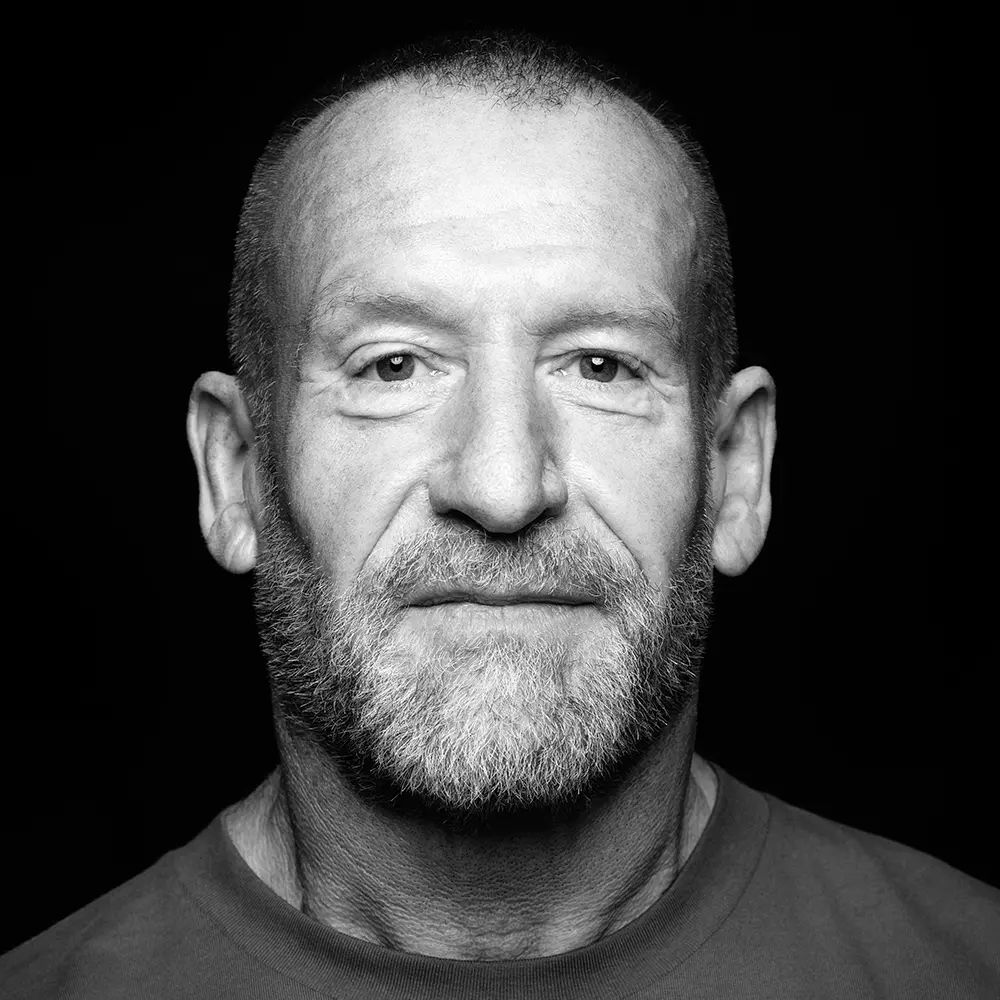
About this Guest
Dorian Yates
Dorian Yates is a former professional bodybuilder, six-time Mr. Olympia winner and a pioneer of high-intensity, low-volume training for building muscle size and strength.
This transcript is currently under human review and may contain errors. The fully reviewed version will be posted as soon as it is available.
Dorian Yates:
When people come to train with me, I said our objective is to get an exercise and go to real muscular failure. You got to give it more than it's used to. The body does not want to change. It wants to keep status quo. So you got to give it a bloody good reason, as we would say in England, to change, right? So you got to put more stress on the body than it's used to, and then you need to recover from that. That's the idea, to do enough to stimulate, but not more than that, because this is an overload that you got to recover from. And the number one thing that I hear from people is, "I don't really have time for that. I have a business. I have a family." I said, "If you could give me 45 minutes twice a week, that's all you need to do." And it's not theory, because I've done it. You change your life, literally, with that and a good diet. So the whole time thing excuse is not relevant. I'm not listening. You don't need a lot of time.
Andrew Huberman:
Welcome to the Huberman Lab podcast, where we discuss science and science-based tools for everyday life. I'm Andrew Huberman, and I'm a professor of neurobiology and ophthalmology at Stanford School of Medicine. My guest today is Dorian Yates. Dorian Yates is a legendary six-time Mr. Olympia winner, who is also considered one of the greatest pioneers of training methods for bodybuilding, health, and fitness. He is known for using and recommending low-volume, high-intensity workouts, meaning very few sets done with maximal focus, perfect form, and directed muscle engagement, taken to muscular failure and beyond. Today, Dorian teaches us how the typical person who is not interested in competitive bodybuilding should train for health and fitness and overall best results. We cover muscle building, fat loss, mobility, what forms of cardio are best, when to do them, and much more. The advice Dorian provides today is immensely valuable and applicable to everyone, men, women, young, and old. He explains how, for most people, the best muscle building and strength results will be achieved by training no more than three, and in some cases, only two days per week. Dorian also shares valuable insights on how to mentally frame and navigate your life and goals, how to use your hardships as fuel. He has a lot to say about that based on his own experience. But also how to recognize and lean into your natural strengths, how to be practical in choosing what dreams you chase, and how to know when to pivot from one endeavor to another. We also discuss cannabis. In fact, even though I, of course, knew he was, Dorian and I first connected because of an episode that I did about cannabis, both the potential benefits of cannabis as well as the very serious risks that may exist for certain people. Dorian's experience and read of the data on cannabis contrasted with mine, and that led us to an ongoing discussion that we continue today on the podcast, and that has me now reading into some newer studies. And I promise that I'll update everyone on my take of those studies once I get through them. Oh, yes, and Dorian also took me through a Yates-style high-intensity workout at Gold's Gym Venice. We trained back, we filmed it, and it's posted to our Clips channel. So you can check that out. It's linked in the show note caption. Before we begin, I'd like to emphasize that this podcast is separate from my teaching and research roles at Stanford. It is, however, part of my desire and effort to bring zero cost to consumer information about science and science-related tools to the general public. In keeping with that theme, today's episode does include sponsors. And now for my discussion with Dorian Yates. The Dorian Yates. Welcome.
Dorian Yates:
Apparently, yeah.
Andrew Huberman:
Yeah. Certainly. Big fan for many years. Thanks to you and thanks to Mike Mentzer and a few, at the time, real iconoclasts. I trained differently than everyone around me told me to. And while I never became a competitive athlete at anywhere near the level that you did, certainly, it got me the results I wanted so much faster. I feel super healthy and great at 50, and I really want to talk about this high-intensity, low-ish volume training that really can be credited to you. Because for those that don't know the community that you come from, there have been people who have been big proponents of long sessions, many hours in the gym. At the opposite extreme, there's been people, such as Mike Mentzer, who have been proponents of very brief, very high intensity, even one set to failure, and that's it. And you brought things into some sense of moderation.
Dorian Yates:
It was almost like a hybrid-
Andrew Huberman:
Yeah
Dorian Yates:
... I guess.
Andrew Huberman:
Yeah, exactly.
Dorian Yates:
Between the purest-
Andrew Huberman:
Mm-hmm
Dorian Yates:
... HIT, which I didn't come up with the idea. The guy that really initiated the whole thing was Arthur Jones, who was the guy that made the Nautilus machines, and then he passed it on, right? And Mike Mentzer made it more popular because Mike Mentzer was American champion, Mr. Universe, and he was in the magazines. And I read Arthur Jones's books, and I think I'm a logical thinker, so it made sense to me.
Andrew Huberman:
Mm-hmm.
Dorian Yates:
But if it made sense to me and it didn't work out practically, who cares? So like yourself, I was kind of training like that, and everyone was telling me, "This is not the way to do it. You need to train more often, do more sets," and so on. So I tried it. And the whole thing with my career, it's a bit like a science experiment in a way, that I documented everything. So I've got every workout. The first time I stepped in the gym and said, "Seriously, okay, I'm going to train, and I want to be a competitive bodybuilder, and this is how I'm going to change my life, and maybe I'm going to go to gym or something like that." That was about it at the time. But I said, "Okay." So I'm tracking everything. My progress is going really well. I'm training three times a week for maybe 45 minutes, an hour. But I'm working as well. I'm doing construction. I'm doing some heavy jobs. So this is taking energy. Going well, going well. Okay, then let me try it. Let me jack it up. I'm training four times a week. Could do a little bit more. What happened? Nothing. That's what happened. Everything stopped For three or four weeks, I cut it back, started growing again. So I didn't really need to learn that lesson too many times. And I got to be British champion. I got to be pro, turn pro. And I read everything that Mike Mentzer wrote in the magazines and everything like that, and got to meet him when I came out here. And we discussed training, and so, "Okay, what are you doing?" "I'm warming up, whatever it takes, couple of sets. I'm doing a set to failure, and then I'm resting two or three minutes, dropping it down 10%, maybe, and going to failure again." So I'm hitting that nail in twice just to make sure it's in there. So Mike said, "Why don't you try cutting back to one set to failure?" So I started that around '91, '92, and I feel like I got another level of growth from that. So people say, "Oh, Dorian doesn't do HIT." I don't know what category we want to put it in, but it's probably somewhere between conventional bodybuilding and the extreme of HIT that Mike Mentzer was doing and Arthur Jones, which would be perfect for the average person. Arthur Jones was doing a whole body workout couple of times a week. That was his initial recommendation. And I agree, for the average person, that's great, because you want to build a certain level of muscle mass for your health. But I was a competitive bodybuilder, so you've got to be concerned with a little bit, like side delts, rear delts. Average person could do one shoulder exercise, that would be enough. So you need to do a little bit more as a competitive bodybuilder. So somebody came up with the moniker Blood and Guts. They saw my training. They said, "That looks like blood and guts." So that's what we called it. So it's high-intensity training, a lot less than the other guys were doing probably. But maybe the HIT purists will say, "Oh, it's not." But it is what it is, and it's all-- I've got every workout written down so people can see what I did, and call it what you will, but it was briefer than everyone else I was competing against. And it had an effect, although not everyone followed what I was doing. But prior to myself being successful, it was six times a week. Some people were doing twice a day. Not very often, to be honest. This is a lot in the magazines. Arnold promoted that a lot, right? But if you look at Arnold, he was probably a full size when he was 21, 22. He was huge. How did he get there? He was bench pressing 500. He was doing deadlifts. He was doing squats, whatever. He built the foundation. And I believe competitive bodybuilders back then, they used the weights as a calorie burner as well. So they've got the muscle mass, then they're doing more volume and more sets and more reps, and obviously this is helping to maintain the muscle, while at the same time burn a lot of calories. So I said, "Wouldn't it be better to do the weight training just to build muscle and maintain muscle and do some cardio exercise to burn extra calories, so then you'll be able to recover properly?" So that was my approach. So it probably falls somewhere in between the two camps-
Andrew Huberman:
Mm-hmm
Dorian Yates:
... to be honest.
Andrew Huberman:
Yeah, I remember trying the one set to failure, a couple warm-ups, one set to failure.
Dorian Yates:
Yeah.
Andrew Huberman:
You pre-exhaust, leg extensions into leg press. And it occurred to me after about a year or two that I needed to do a little bit more. I mention that because I think I'm like most people in the sense that, and let me frame this right, I could get certain movements to really thrash the muscle that I needed to with one or two sets. But if there isn't really good mind-muscle connection and fiber recruitment, you might need a bit more.
Dorian Yates:
It's possible, yeah.
Andrew Huberman:
Yeah. And it-
Dorian Yates:
None of this is written in stone.
Andrew Huberman:
Mm-hmm.
Dorian Yates:
When people come to train with me, I said our objective is to get an exercise and go to real muscular failure. We'll need to get there safely, so we'll do a couple of sets to warm up. But if somehow you don't feel or I don't feel you nailed it in that set, let's do another one. There's no law we can't do a little bit more. So you are correct in saying that somebody that's very experienced, they get that mind-muscle connection where you can just link in, and you can fully destroy it. So it depends on the person. But the idea is to not do more than is necessary.
Andrew Huberman:
Mm-hmm.
Dorian Yates:
Because then you're going to find it harder to recover. And the process is stimulate, right? So you got to train, you got to overload, and during this process, you're not growing. You're creating damage, stress to the muscle that then has to recover and then overcompensate. So two things need to be in place. Need to be sufficient intensity or overload, or there'll be no reaction, and then you need to recover from that. And let's just put it straight out there, man. There's a big difference between somebody using anabolic steroids than somebody that's not. So somebody that's using can recover from that process more quickly than someone that isn't. So I feel I should always say this because when you're looking at a champion bodybuilder and how he trains and you're a young guy trying to build up, that's probably not appropriate for you right now. That guy has already got the size and is refining for a competition or something. So that's the idea. To do enough to stimulate, but not more than that, because this is an overload that you got to recover from. So you got to recover before you grow as well. So you don't want to go back to the gym before that whole process has taken place. So I use some simple analogies sometimes when people are training with me. Like we're going in now, we're knocking a wall down, right? We're rehabbing your house, we're knocking a wall down, and the guys need to come now with the bricks. So they need materials-
Andrew Huberman:
Mm-hmm
Dorian Yates:
... and they need to do it, but they're halfway through building that wall, and you come and knock it down again. We're not getting anywhere. So that's the process-
Andrew Huberman:
Mm-hmm
Dorian Yates:
... that you have to understand.
Andrew Huberman:
I'd like to take a quick break and acknowledge one of our sponsors, David. David makes a protein bar unlike any other. It has 28 grams of protein, only 150 calories, and zero grams of sugar. That's right, 28 grams of protein, and 75% of its calories come from protein. That's 50% higher than the next closest protein bar. These bars from David also taste amazing. Right now, my favorite flavor is the new cinnamon roll flavor, but I also like the chocolate chip cookie dough flavor, and I also like the salted peanut butter flavor. Basically, I like all the flavors. They're all delicious. Also, big news, David bars are now back in stock. They were sold out for several months because they are that popular, but they are now back in stock. By eating a David bar, I'm able to get 28 grams of protein in the calories of a snack, which makes it very easy for me to meet my protein goals of one gram of protein per pound of body weight per day, and to do so without eating excess calories. I generally eat a David bar most afternoons, and I always keep them with me when I'm away from home or traveling because they're incredibly convenient to get enough protein. As I mentioned, they're incredibly delicious, and given that 28 grams of protein, they're pretty filling for just 150 calories, so they're great between meals as well. If you'd like to try David, you can go to davidprotein.com/huberman. Again, that's davidprotein.com/huberman. Today's episode is also brought to us by Joovv. Joovv makes medical-grade red light therapy devices. Now, if there's one thing that I have consistently emphasized on this podcast, it is the incredible impact that light can have on our biology. Now, in addition to sunlight, red light and near-infrared light sources have been shown to have positive effects on improving numerous aspects of cellular and organ health, including faster muscle recovery, improved skin health and wound healing, improvements in acne, reduced pain and inflammation, even mitochondrial function, and improving vision itself. What sets Joovv lights apart and why they're my preferred red light therapy device is that they use clinically proven wavelengths, meaning specific wavelengths of red light and near-infrared light in combination to trigger the optimal cellular adaptations. Personally, I use the Joovv whole body panel about three to four times a week, and I use the Joovv handheld light both at home and when I travel. If you'd like to try Joovv, you can go to Joovv, spelled J-O-O-V-V, .com/huberman. Joovv is offering an exclusive discount to all Huberman Lab listeners with up to $400 off Joovv products. Again, that's Joovv, spelled J-O-O-V-V, .com/huberman to get up to $400 off. One of the really kind of unfortunate things about resistance training is that it fills the muscle with blood temporarily.
Dorian Yates:
Yeah.
Andrew Huberman:
In part because of some quotes that came from Arnold in "Pumping Iron." The so-called pump, it's an illusion. It's transient, and while it can be helpful in letting you know that you targeted a given-
Dorian Yates:
Yeah
Andrew Huberman:
... muscle correctly, I think people get addicted to that feeling, but they're not realizing that the damage to the muscle tissue that then is allowed to recover is what makes the muscle actually larger-
Dorian Yates:
Absolutely
Andrew Huberman:
... when you're outside of the gym.
Dorian Yates:
A pump is just a temporary extra blood flow to the area. That feels good. You're pumped up, you feel tight, but you could get a lightweight and get a great pump. It's not going to stimulate any growth. So don't be fooled by the pump. It's nice, and it's part of the process, but you've got to overload the muscle. You've got to give it more than it's used to.
Andrew Huberman:
Mm-hmm.
Dorian Yates:
The body does not want to change. It wants to keep status quo. So you've got to give it a bloody good reason, as we would say in England, to change. So you've got to put more stress on the body than it's used to. Otherwise, you won't adapt. So even if it's half a pound more or one rep more, it's got to be something more that the body says, "Hey, this stress, I can't handle it. I need to reinforce myself and adapt to this stress, so next time it won't be so stressful." That's basically the process. And it can't be linear forever. Maybe in your first year of training, first 18 months, you're just going-- Like I put 20, 25 pounds on in the first 18 months that I was training, and natural as well. So it becomes a case of diminishing returns, though.
Andrew Huberman:
Mm-hmm.
Dorian Yates:
And at some point, you can't just keep going up like this. So I tell people, train real hard for five or six weeks, and then come down for two weeks, maybe sub-maximal.
Andrew Huberman:
Yeah. So you'll sort of sawtooth it like that. Hard for five, six weeks-
Dorian Yates:
Yeah
Andrew Huberman:
... then back off. And during that two weeks, are you telling people to stay out of the gym entirely?
Dorian Yates:
No.
Andrew Huberman:
No.
Dorian Yates:
I'm telling them you can go in and do some lightweight.
Andrew Huberman:
Okay.
Dorian Yates:
But nowhere near failure. Blood flow, keep the maintenance. If you want to take a week off, I think it's good a couple of times a year.
Andrew Huberman:
Okay.
Dorian Yates:
A lot of guys, when I had a gym, the guys, "I'm stuck on this and that." I said, "Okay, take a week off."
Andrew Huberman:
Mm-hmm.
Dorian Yates:
"Wow, no. What do you mean?" I said, "Man, just take a week off, yeah. Come back in a week and tell me how you feel." "Wow, and I came back and I was stronger." I was like, "Yeah, no shit, man."
Andrew Huberman:
So-
Dorian Yates:
Because you've rested.
Andrew Huberman:
Yeah.
Dorian Yates:
You let your body rest and rebuild. So let me listen to you.
Andrew Huberman:
So if I could travel back in time, I wouldn't have called the movie "Pumping Iron." I would've called it "Stress and Adapt."
Dorian Yates:
Yeah, exactly.
Andrew Huberman:
"Stress, Recover, Adapt."
Dorian Yates:
Not quite so sexy.
Andrew Huberman:
Exactly.
Dorian Yates:
Like, I feel like I'm coming-
Andrew Huberman:
Exactly
Dorian Yates:
... all the time.
Andrew Huberman:
But that whole notion of the pump, plus this idea that many hours in the gym is what's required, I think it kept a lot of the general public out of resistance training.
Dorian Yates:
Yeah.
Andrew Huberman:
I think now that's changed. And fortunately, because I think it is very beneficial. If we could get a little granular about training and recovery, I think it'd be helpful for people. I realize that you laid out the top contour really nicely. So for a person who's natural, not taking hormone replacement therapy-
Dorian Yates:
Yeah
Andrew Huberman:
... or anabolics, you think two, maybe three whole-body sessions to start out to learn the movements. Is that doing one or two sets to failure? What does that look like for the raw beginner?
Dorian Yates:
A raw beginner, first of all, you need to learn how to do the movements correctly before let's thinking about going to failure. So it'll be a certain period of time learning to do the exercise correctly. Put in some kind of idea in their head of what's going on.
Andrew Huberman:
Mm-hmm.
Dorian Yates:
What do the pecs do? Bring your arms down and across the body. What do your lats do? They bring your upper arm down and back. So you'd be amazed, even if you have to pro bodybuilders, some of them don't know why they're doing what they're doing. What's the mechanics involved? And I get them to do light sets, very perfect. Do you feel that? Do you feel how it contracts when your lats and you squeeze and you contract the... Yeah, I feel it. I feel it. Okay. Now you've got it, but you've got to try to maintain that-
Andrew Huberman:
Mm
Dorian Yates:
... when it gets really hard, because we're going against the natural mechanics of the body here, right? Because as I say we're doing chest, yeah? We're trying to isolate the pecs. There's some delts involved and triceps, and work that, or we're working legs, we're working back. The body normally doesn't work like that. It works as a unit, right? If you throw something, you don't do that from your tricep, right? It'll be from your foot through the hips, through the shoulder, whole body thing. So when the exercise gets really hard, your brain is going to try to recruit or change the exercise to make it easier. So I got to get people to override that instinct.
Andrew Huberman:
Mm.
Dorian Yates:
Just stick with the form until we get to the point where you can't do anymore and understand. That's why I get them to do light stuff at first to really feel it, understand, I explain what's going on. Couple of weeks after that, we can start pushing to failure. Actually, I had a guy recently that we had a business meeting, and he told me he was diabetic and he had liver problems, and he was overweight and this and that. I gave him a challenge. I said, "You train with me for a month, I'll fix all that shit." "Oh, but my doctor this and that." I said, "Listen, you train with me three times a week for about 45 minutes." After one month, obviously, I changed his diet as well, basically for a short period of time, very low carbs. After one month, he was not in a diabetic zone. He was out of the pre-diabetic zone. He was in the normal range.
Andrew Huberman:
Great.
Dorian Yates:
And his liver function, that was three times the normal amount, liver enzymes, was back to normal. I told him, "Check it out, you got a fatty liver." So, "Yeah, I had a fatty liver." I said, "I know." He said, "My doctor told me not to eat fat." I'm like, "Man, do you know how long," at least I don't know here, but in England, how long an MD, a doctor spends studying nutrition?
Andrew Huberman:
Yeah. It's trivial in most places.
Dorian Yates:
One afternoon.
Andrew Huberman:
Mm.
Dorian Yates:
One afternoon, two or three hours. You can learn nothing. So the doctor was telling him he's got a fatty liver, so stop eating fat. I said, "That's absolutely the worst advice you could get."
Andrew Huberman:
It's an insulin-
Dorian Yates:
Because the reason you've got fatty liver is because uncontrolled blood sugar.
Andrew Huberman:
Mm.
Dorian Yates:
So we get your blood sugar down.
Andrew Huberman:
Mm.
Dorian Yates:
One month, his liver was normal, his blood sugar was normal. He lost five, six kilos of body fat just in a month, and we're doing three times a week.
Andrew Huberman:
Whole body?
Dorian Yates:
We split it up, actually-
Andrew Huberman:
Mm-hmm
Dorian Yates:
... into three workouts. So he's hitting everything once a week.
Andrew Huberman:
When our mutual friend, you knew him better than I did. The now deceased, unfortunately, Mike Mentzer, told me to train each body part once per week.
Dorian Yates:
Yeah.
Andrew Huberman:
At first, I thought he was crazy. So legs once a week, calves once a week, maybe twice for some people with the calves. But, shoulders and arms and chest and back on three-
Dorian Yates:
Yeah
Andrew Huberman:
... separate days. Legs, chest, back, shoulders, and arms.
Dorian Yates:
Great.
Andrew Huberman:
I thought he was crazy, but then, I thought about it, and the chest and back workout, you're indirectly targeting the arms.
Dorian Yates:
Yep.
Andrew Huberman:
Legs is a, if you do them right, is a whole body experience.
Dorian Yates:
And a lot of stress on your nervous system-
Andrew Huberman:
Mm
Dorian Yates:
... which has to recover independently of the whatever muscle group you're training. If you do legs, really to failure-
Andrew Huberman:
Mm-hmm
Dorian Yates:
... there's a lot of stress on your nervous system as well. So that also has to recover. That's why I say after six weeks. I've just noticed with myself and many people, it seems to like you hit a plateau there.
Andrew Huberman:
Mm-hmm.
Dorian Yates:
So in trying to push through it, come down and I take a rest and go again later.
Andrew Huberman:
So I know that your opinion on real world results versus laboratory studies, but these days, let me just put something out there.
Dorian Yates:
Yeah.
Andrew Huberman:
I'd like to see your response. These days, people will talk a lot about, okay, the studies or muscle biopsies show you train a muscle and stimulate hypertrophy growth, and then muscle protein synthesis peaks 48 hours later, which means that you can hit the muscle again, ideally three days later or two days later.
Dorian Yates:
Okay.
Andrew Huberman:
I tried that because I thought, hey, listen, I'm a scientist, I'll try it. And I immediately started going backwards with my progress. This was a few years ago. And went back to training each thing directly once per week. And where there's indirect stuff, arms getting hit once indirectly because of a chest and back workout on a separate day, found I went right back to progress again. And so, I'm a scientist trained to do science. So how do you think about something where in a laboratory you can see something like protein synthesis peaks 48 hours later, therefore train every 72 hours, versus the real world phenomena?
Dorian Yates:
It's all very interesting, but if it doesn't work in practicality, what's it worth? I hear this a lot now about this science-based training, but I actually don't know what science they're talking about. Some meta studies, I think. But how were those studies carried out? With whom and so on and so on. I don't know. I know the Casey Viator study where he put on 65 pounds of muscle verified in a month-
Andrew Huberman:
Mm-hmm
Dorian Yates:
... by training less than about an hour a week, I think.
Andrew Huberman:
It was your whole body-
Dorian Yates:
I think it was whole body stuff
Andrew Huberman:
... super slow sets to failure in this case
Dorian Yates:
And yes, he was very underweight because he wasn't on anything.
Andrew Huberman:
Mm-hmm.
Dorian Yates:
And then he got sick, so he was underweight.
Andrew Huberman:
Mm-hmm.
Dorian Yates:
So he's building back muscle, but he wouldn't build it back without much stimulus.
Andrew Huberman:
Mm-hmm.
Dorian Yates:
So 65 pound of muscle, although it was muscle memory, let's say. He had been that big before, but he put it on-
Andrew Huberman:
Mm-hmm
Dorian Yates:
... in a month, and you compare that with Arnold, that Dieted down to 210, I think, to do this film, "Stay Hungry." Then he went back up to 230 for the Mr. Olympia, but that took him three months. So you can compare the two. So when the people talk about these science-based studies, and you shouldn't train to failure, it's better to keep reps in reserve, I don't know which studies they're talking about. I'm not saying they're not out there, but I'm not familiar with them. I'm not familiar with how they carried out the studies. But if it doesn't work in practicality, does it really matter?
Andrew Huberman:
Mm-hmm.
Dorian Yates:
It doesn't matter.
Andrew Huberman:
Well, often, I've spent some time with these, and you might not be surprised to learn that a lot of times it's, we got some college students, they're doing leg extensions. We're looking at biopsies of the quadriceps, this kind of thing. Rarely is it the kind of compound movements, multi-joint movements. Sometimes, but not always. Well, look, my experience with the HIT, high intensity, low-ish volume training has been, I'll say it's not just about gaining muscle. I'm now 50. I know you're almost 64.
Dorian Yates:
Yep. Coming up.
Andrew Huberman:
Looking amazing. You'll tell us more about longevity stuff in a bit. But I have to say, part of it is also that if one trains the way that you're describing, each muscle once per week, focusing on intensity, not volume, and so forth, six weeks or so, then backing off for two weeks-
Dorian Yates:
Yeah
Andrew Huberman:
... you also find that in your peer group, you're not the one always complaining about pain, and you have energy for other things, which we'll get back to. Unless you're a competitive bodybuilder, most people, including myself, need energy to tend to life and want to be able to enjoy, not be... It's not the soreness, it's the constant aches and pains that come from over-training, I think, that most people don't have to live with but think they do.
Dorian Yates:
It depends on your goals, yeah?
Andrew Huberman:
Mm-hmm.
Dorian Yates:
But I really believe the average person, yeah, that wants to get health benefits from bodybuilding, weight training, resistance, whatever you want to call it, right? They have a guy that's 40 or 50 or 60, guy or a lady, whatever. The idea is, if you could, because you've lost muscle mass slowly, since maybe 1% a year since you're 40, right? And this is affecting your health, your metabolism, your ability to process sugar. Many, many things, yeah? Bone strength. And the number one thing that I hear from people is, "I don't really have time for that. I have a business. I have a family." I said, "If you could give me 45 minutes twice a week, that's all you need to do." Okay, you need to eat properly and everything like that. But that's all you need to do for the average person. If you took eight to 10 exercises that covered your whole body and you did it twice a week, that would be enough for the average person. One for chest, one or two for back, one or two for legs. Hey, if you want to do some bicep curls and some triceps, you can do it, but you're doing pressing anyway. So for the average person, that would actually be enough. And it's not theory, because I've done it with people. Like I'm saying, this gentleman that came along, we put 45 minutes in, nearly an hour, three times a week, because I had him doing cardio as well.
Andrew Huberman:
Mm-hmm.
Dorian Yates:
Well, guess how long the cardio was? Six minutes. Six minutes.
Andrew Huberman:
Yeah, but pedal hard.
Dorian Yates:
We're doing sprints.
Andrew Huberman:
Mm-hmm.
Dorian Yates:
Like on an AirBike.
Andrew Huberman:
Mm-hmm.
Dorian Yates:
It's my favorite-
Andrew Huberman:
Mm-hmm
Dorian Yates:
... because it engages every muscle. Push, pull, legs. If you do a 20-second all out-
Andrew Huberman:
Mm-hmm
Dorian Yates:
... and you can see how you got on the side of the thing, you can see how much watts you're generating.
Andrew Huberman:
Mm-hmm.
Dorian Yates:
So now you have a target-
Andrew Huberman:
Right
Dorian Yates:
... to hit or exceed every time. So do a minute, minute and a half warm up, whatever. Feel warm, all out, balls out like the devil's chasing you, for 20 seconds. First one's tough, but eh, it's okay. Go down slowly for a minute. Do the second one all out. The second one's really tough, yeah? The third one is, I've never met anybody that wants to do one after the third one, yeah? Because literally you can't breathe. And the benefits from that, again, I think there's a book called "The One Minute Cardio." It's a bit tricky because it's not really one minute. It's one minute of sprints-
Andrew Huberman:
Mm-hmm
Dorian Yates:
... but it's six minutes in total, and they compared that to 45 minutes of steady cardio on a treadmill or whatever it is.
Andrew Huberman:
Mm-hmm.
Dorian Yates:
And the results are more or less the same.
Andrew Huberman:
Mm-hmm.
Dorian Yates:
So, what do you want to do? Do you want to spend six minutes or do you want to spend 45 minutes? I'd rather do the six minutes. I do a bit of long cardio as well myself, because I like biking in the mountains and stuff. But if you did that twice a week, along with some weight training, that would be amazing. You change your life, literally, with that and a good diet. So, the whole time thing, excuses, it's not relevant. I'm not listening. You don't need a lot of time.
Andrew Huberman:
Well, what I love about you is that you've done things at the ultra-elite level within bodybuilding, but the advice that you're giving right now is very practical for the everyday person. And I'm not a psychologist, but I'm going to venture a hypothesis here, which is that some of that has to do with the fact that you grew up blue-collar background, from Birmingham, working full time while building out your bodybuilding career. You didn't come to it with a briefcase full of cash and-
Dorian Yates:
No
Andrew Huberman:
... have the opportunity to just say, "Oh, how much training can you do? Well, let's figure it out." You had to be very practical. And my guess is that you had to be very practical about recovery and nutrition as well. You probably, I'm guessing there was a point in your life where you couldn't afford grass-fed meat shipped in from-
Dorian Yates:
No
Andrew Huberman:
... south of France, and this guy. I'm not saying you do that now, but-
Dorian Yates:
Let me tell you a story, man. When I was British Champion, that was a big thing back then, British Champion, right? 3,000 people in the audience, packed out. We had buses coming from my gym, all this stuff, air horns. British bodybuilding crowds are not like, they're pretty rowdy, they're not-
Andrew Huberman:
I think the Brits around any sport-
Dorian Yates:
They're too quiet over here
Andrew Huberman:
... get pretty rowdy.
Dorian Yates:
They're pretty rowdy.
Andrew Huberman:
Yeah.
Dorian Yates:
If you see boxing in Vegas and there's a British fighter, they take over the whole place.
Andrew Huberman:
Oh, yeah.
Dorian Yates:
So anyway, this great accolade, I'm British Champion now. And I went home. I got no car. I'm living in a council estate. It's like projects. Council estate. I got no carpet in my bedroom. I don't even have a proper bed. I just got a mattress. Yeah. I got a TV that barely works, and I got a trophy. I'm like, "Wow, look, I'm British Champion," but nobody gives a fuck really. I do, and the people that's in the bodybuilding community, but this hasn't translated into anything yet. It took me about five years of really 100% dedication for me to turn pro. And the ironic thing is, I guess, when you're starting and you got nothing, nobody's very interested and nobody wants to help you. When you become successful, then people want to help you because they want to help themselves, which is fair enough. It's a transaction. But until then, no. So, I got my first car when I was 25. All my friends were driving 18, 19. But the funny thing is, I didn't feel like I was missing out on anything. I knew I was on this mission, and this in itself was so powerful. Nobody else had that. I had this mission that I was doing, which was to change my life, basically, and bodybuilding was the vehicle. And I think something that really helped me is I'm an avid reader. I have been since I was about 10 years old, and I can take in a lot of information on a subject if I'm very interested. I'll almost get obsessed with it for a while, and then I might just say, "Oh, forget about that," and go interested in something else. So, all the guys that I was training with, they were just watching videos and listening to other guys in the gym. I was reading Mike Mentzer, I was reading Arthur Jones. I was trying to figure it out for myself, which means you need a very independent kind of personality. So, yeah, let me try do a bit more. Doesn't work, finished.
Andrew Huberman:
Mm-hmm.
Dorian Yates:
And the fact that I've got all this, every single workout from 1983 to 1997 written down, all the diets. Later on when I'm using anabolics, what I'm using and how long and all this stuff so I could analyze it.
Andrew Huberman:
Mm-hmm.
Dorian Yates:
See what's working and what's not working. A lot of guys were shooting in the dark, hoping they're going to hit something, but they don't. And I didn't have time to waste. This was a mission. I didn't have skills, I didn't have a family, all this stuff. So, bodybuilding was my road to change my life. Where it was going at first, I didn't know, but I knew it was going somewhere. I knew I could be very good at it.
Andrew Huberman:
Did you have the sense, even before all this, that perhaps you were different or that you were destined to pursue something?
Dorian Yates:
100%.
Andrew Huberman:
From the-
Dorian Yates:
I always knew.
Andrew Huberman:
What was your earliest recollection of knowing that you were going to aspire to some very high peak?
Dorian Yates:
Well, the first thing I was into was Bruce Lee, right? So, Bruce Lee, and even I was impressed with his physique then. But now I look, compared to a bodybuilder, it's very lean, but the abs and everything. I had that poster on the wall, with the cuts down there and everything. So, I was doing push-ups. Just at my last year at school, I started getting bodybuilding magazines and doing a bit of weight training. So, there was that then. I left home at 16, and I just didn't have the lifestyle to pursue it. And for some reason, I'm not doing this. I said, "I'm not doing this until I can do it properly." And I always knew I was different, I guess. But I didn't know why, and I didn't know where it was going, but I knew it was going somewhere. And it's a strange feeling through my whole process. I feel like I've done it before, almost.
Andrew Huberman:
Mm.
Dorian Yates:
Like it was destined, like it wasn't a surprise.
Andrew Huberman:
Mm-hmm.
Dorian Yates:
And the earlier years, it's like I just knew I got to just put everything into this. I got to put everything into this, and I can't let anything distract me. 100% into this. So yeah, I knew I was destined for something, and when I started doing bodybuilding, I was like, "Ah, so this is it." Yeah. I don't know if you heard the story, but I got in a little bit of trouble. It wasn't... Just rowdy guys, really. We got picked up on the street at the wrong time because there were some street riots in Birmingham, which we weren't involved with, but wrong place, wrong time.
Andrew Huberman:
Mm-hmm.
Dorian Yates:
Got sent to a detention center, and in there they had weights, and there was 300 guys, and I was nearly the strongest guy in there. The only guy who was stronger than me was like 50, 60 pounds heavier, and I was really lean. I had abs and everything. Everyone was like, "Wow, the physique." Even the prison officers in there were like, "You should do something with this." I said, "Don't worry, I'm going to." So, that was another one, like, "Hey-
Andrew Huberman:
Mm
Dorian Yates:
... you've got something here." There was a crossroads here, and I was like, "I never want to be in a place like this again and lose my freedom." But you literally become a number, and you're told when to get up and when to do this, and-
Andrew Huberman:
Yeah. Those places suck.
Dorian Yates:
And I saw people in there that I knew they were destined to, this is their life. Even if they didn't care. "Yeah, I know, but I don't give a fuck. I might be in jail, but this is just the life I've chosen." Well, good luck with that, man. It's not for me. So, that again, was like, "Hey, you need to do something with this." And, when I left there, I didn't start training. I was like, "I got to get a job. I got to get an apartment. I got to get stability." And when I did, I was like, "Right. I'll start my bodybuilding journey, write it down today, the date." I still got it, man.
Andrew Huberman:
What's in those notebooks? Everything from what you did for a warmup, how you felt going into there?
Dorian Yates:
All the sets and reps, warmup, how I was feeling that day. Some days, I was feeling overtrained and tired. Even though I was training three days a week, sometimes I had to back off the intensity because of work and stuff like that. But how I was feeling and it's interesting if I look at my books over the years, the first ones are quite childish, got these little, "Go for it," "Mass and power."
Andrew Huberman:
Kind of cool, too.
Dorian Yates:
Yeah.
Andrew Huberman:
I'm glad actually you mentioned that. I've kept training logs inspired by you and by Mike for many years, and Getting to read that kind of stuff, the kind of silly stuff-
Dorian Yates:
Yeah
Andrew Huberman:
... it captures the spirit of it at the time.
Dorian Yates:
Not only that, I would forget half of the stuff that I did if I hadn't documented it. Even now, my guys on social media was like, "When were you doing this exercise? And when did you change to this one?" I'm like, "I don't know, man. I'll have to go back and look." And sometimes it's not as I thought it was when I go back. It was a little bit different. So it's great that I got all that written down and documented. And I used to have every month a review-
Andrew Huberman:
Mm-hmm
Dorian Yates:
... where I'm at, and the goals for the next month. Try to make them realistic, but have goals in mind for the next month. So-
Andrew Huberman:
Super methodical
Dorian Yates:
Very methodical-
Andrew Huberman:
Mm
Dorian Yates:
... analytical, logic.
Andrew Huberman:
Do you get that from one of your parents or to go in the opposite direction of your parents? What's the-
Dorian Yates:
Well, my mother was actually quite very educated.
Andrew Huberman:
Mm-hmm.
Dorian Yates:
She was private school and everything, but my dad was very working class, car mechanic and everything. But he managed to-
Andrew Huberman:
Perfect combo
Dorian Yates:
Yeah, he managed to... I was young. I lost my father at 13 from a heart attack. But he was a working-class guy that managed to buy a small farm. He managed to learn to fly an airplane. I went out with my dad when I was four or five years old. He was flying little four-seat Cessnas and everything like that. So, he must have been a smart guy and very driven to be able to do that as a working-class guy. Imagine back in the 1970s flying airplanes, and you work as a maintenance engineer at the Rover plant or something.
Andrew Huberman:
Yeah, I think for Americans, they don't realize how stratified the class system in England-
Dorian Yates:
Oh, yeah
Andrew Huberman:
... was in that time.
Dorian Yates:
Yeah.
Andrew Huberman:
It's very different. Very, very different.
Dorian Yates:
Absolutely. A working-class guy flying an airplane.
Andrew Huberman:
Mm-hmm.
Dorian Yates:
There was nobody else doing that. So he must have been a guy above average intelligence, and my mom was as well. So I probably got the logical stuff from my dad, I would say. My mom's more female, more emotional.
Andrew Huberman:
Mm-hmm.
Dorian Yates:
My dad was probably very logical in his ways and an engineer. Engineering's about numbers and everything. So, a lot of people ask me, "What happened if you did not lose your father when you were 13?" Dorian Yates, the bodybuilder, probably wouldn't exist.
Andrew Huberman:
Mm.
Dorian Yates:
Because if life's comfortable, you won't put yourself through this shit, man.
Andrew Huberman:
Yeah, amen to that.
Dorian Yates:
It's a lot of work, a lot of dedication, a lot of sacrifice, and over many, many years. It's not a short-term thing. To get from starting bodybuilding to be a pro bodybuilder took me seven years, and that was quick. That was relatively quick. So seven years of absolute, "This is my main focus of life. This is what I'm doing for seven years to get to be a pro." And then it was seven years as a pro as well.
Andrew Huberman:
By now, I'm sure that many of you have heard me say that I've been taking AG1 for more than a decade, and indeed, that's true. The reason I started taking AG1 way back in 2012, and the reason why I still continue to take it every single day, is because AG1 is, to my knowledge, the highest quality and most comprehensive of the foundational nutritional supplements on the market. What that means is that it contains not just vitamins and minerals, but also probiotics, prebiotics, and adaptogens to cover any gaps that you might have in your diet while also providing support for a demanding life. Given the probiotics and prebiotics in AG1, it also helps support a healthy gut microbiome. The gut microbiome consists of trillions of little microorganisms that line your digestive tract and impact things such as your immune status, your metabolic health, your hormone health, and much more. Taking AG1 consistently helps my digestion, keeps my immune system strong, and it ensures that my mood and mental focus are always at their best. AG1 is now available in three new flavors: berry, citrus, and tropical. And while I've always loved the AG1 original flavor, especially with a bit of lemon juice added, I'm really enjoying the new berry flavor in particular. It tastes great, but then again, I do love all the flavors. If you'd like to try AG1 and try these new flavors, you can go to drinkag1.com/huberman to claim a special offer. Right now, AG1 is giving away six free sample packs of AGZ, which is AG1's new sleep formula, which, by the way, is fantastic. It's the only sleep supplement I take. It eliminates the need for all these pills, and my sleep has never been better. The special offer gives you six free samples of that AGZ, as well as three AG1 travel packs and a bottle of vitamin D3 K2 with your first subscription. Just go to drinkag1.com/huberman to get started. Today's episode is also brought to us by Our Place. Our Place makes my favorite pots, pans, and other cookware. Surprisingly, toxic compounds such as PFAS or forever chemicals are still found in 80% of non-stick pans, as well as utensils, appliances, and countless other kitchen products. As I've discussed before on this podcast, these PFAS or forever chemicals like Teflon, have been linked to major health issues such as hormone disruption, gut microbiome disruption, fertility issues, and many other health problems. So it's very important to avoid them. This is why I'm a huge fan of Our Place. Our Place products are made with the highest quality materials and are all PFAS and toxin-free. I particularly love their Titanium Always Pan Pro. It's the first non-stick pan made with zero chemicals and zero coating. Instead, it uses pure titanium. This means it has no harmful forever chemicals and does not degrade or lose its non-stick effect over time. It's also beautiful to look at. I cook eggs in my Titanium Always Pan Pro almost every morning. The design allows for the eggs to cook perfectly without sticking to the pan. I also cook burgers and steaks in it, and it always puts a really nice sear on the meat. But again, nothing sticks to it, so it's really easy to clean, and it's even dishwasher safe. I love it, and I use it constantly. Our Place now has a full line of Titanium Pro cookware that uses the first of its kind titanium non-stick technology. So if you're looking for non-toxic, long-lasting pots and pans, go to fromourplace.com/huberman and use the code Huberman. With a 100-day risk-free trial, free shipping, and free returns, you can try Our Place with zero risk, and you can see why more than one million people have made the switch to Our Place kitchenware. I have two questions, one practical, one more related to your personal story. The practical one is one, nowadays, there's an almost obsession online of young guys, teens, 20s, 30s, who immediately think they should be on testosterone enhancement, TRT, going beyond TRT, getting on gear. How long-- Gear, for the folks that don't know, is verbiage for steroids.
Dorian Yates:
Yeah.
Andrew Huberman:
TRT, testosterone replacement therapy, lower dosages designed to bring things into upper normal range, in some cases, a little higher. From the time you picked up a weight, maybe in this youth detention-
Dorian Yates:
Yeah
Andrew Huberman:
... center, until the first time you went on gear, how long was that, and how much did you achieve doing the sorts of training you were talking about before?
Dorian Yates:
Okay.
Andrew Huberman:
I want to separate this out from the competitive-
Dorian Yates:
Yeah
Andrew Huberman:
... phase. In part because, frankly, I think, and I've been very open, I'm on low dose TRT. I started when I was 45, about 125 milligrams a week. Okay.
Dorian Yates:
Yeah. We're-
Andrew Huberman:
Same as you
Dorian Yates:
... on point with that. The same. We discussed that.
Andrew Huberman:
Yeah, same as you. But I always tell people, they really, really, really should wait, if do it at all. How long did you have without anything? Where it's-
Dorian Yates:
Okay
Andrew Huberman:
... food, training, sleep, maybe some supplements like some creatine, some protein powder.
Dorian Yates:
Right. So I started in '83, earlier in the year. I was 180, 185, but very lean. You can see some pictures of me after six months training.
Andrew Huberman:
Yeah. Well, you have those thick joints. You have an athletic-
Dorian Yates:
Yeah. I got very low body fat as well, naturally. My son and my daughter, they both had abs when they were 11 years old. Very lean, pale skin, low body fat, thin skin type of thing. So you wouldn't say, "Wow, look at that guy, he's big," but you would say, "Wow, he's really cut, this guy." That's how I started, 180. So, after six months, I think I was 195, and the gym owner put on a contest in Birmingham, local gym thing, and he was like, "Come on, go in a contest." And I'm like, "Ah, I don't know." Okay. So I went in, no diet, no steroids, nothing. It was the first time as contest. I still got the pictures, but the two guys that I was competing against, they came second and third, I won. But both these guys were already on stuff. So I was able to beat them not using anything, right? Because genetically, I'm better, I guess. I'm not saying in six months, I overtook them. I probably started ahead of them. So that was with nothing. I got up to 210.
Andrew Huberman:
Mm-hmm.
Dorian Yates:
So I'm just looking back, because we did some social media posts with my early training, yeah. So I'm benching three plates a side for like three or four reps, and I want to go now into the IFBB and compete. Which I know everybody's using, right? So I was 210 when I decided I'm going to do this competition, and I did some DBOL, 20 milligrams a day for about six weeks, and I switched to Anavar for the contest. So I went from 180 to 210, so that's 30 pounds I put on in a year and a half training or something. Then I decided to do the competition. So in six weeks, I think, on 20 milligrams of DBOL, I went to like 230. It was a big boost in six weeks, but I already put on 30 pounds without anything. And for me, it was always like, I'm going to do competitive bodybuilding, and I intend to make a career out of it, so I just want to be on the same playing field as everybody else. So I won the novice competition in the IFBB, and everyone was freaking out. The guy who was the head of the federation, who's also a judge at the Mr. Olympia, and some other guys came backstage and said, "Where the hell have you come from? And why are you in the novice competition?" I said, "Well, I'm from Birmingham, and it's my first competition in the federation, so I start at the bottom and work." "You're probably better than our best heavyweight." I'm like, "No, come on." And they were laughing like, "This kid is like... We want you to join the British team in two weeks' time at the World Games," which is world championship. So I went from a novice, two weeks later, to competing in the World Games against Berry DeMay, who became a top Olympian, Matt Mendenhall, who was the best amateur in USA at the time, and I got seventh place there. And I remember, I basically spent out all my funds to get ready for this contest. I had nothing left. I had to buy a tracksuit, tanning lotion. I was earning very little money, so this took all my money and I'm broke. And I had to ask my brother-in-law, "Can you lend me 20 pounds because I need to do this and get a taxi to the team selection?"
Andrew Huberman:
Mm-hmm.
Dorian Yates:
Right? So I went to the team selection. I got picked, but I was amongst all these guys, and I'm thinking, "I just borrowed some money to get here." But they picked me for the World Games team. So I went quite uniquely, I think, from a novice competition to a world championship in two weeks. So that's-
Andrew Huberman:
Mm-hmm
Dorian Yates:
... the level I was at when I first started competing.
Andrew Huberman:
I don't want to put words into your mouth, but do you think it's fair to say that for people who are not going to pursue competitive bodybuilding, that it's probably best to explore how far they can go with their training and good nutrition, and perhaps even without hormone replacement until they really need it or later? To me, it seems like given the health risks, unless there's-- It's sort of like boxing.
Dorian Yates:
Yeah.
Andrew Huberman:
Boxing's fun. I've done some boxing, done some sparring, but at some point you realize, wait, if I'm not going to make money doing this, if this isn't my career, getting hit in the head is just not worth it.
Dorian Yates:
Absolutely.
Andrew Huberman:
Especially for my job. I'm not asking you to be a public health advisor, but- You've been in this sport. A lot of young guys and gals are interested in looking better, feeling better, and going immediately to, "What peptides can I take? Should I be on HRT? Should I take Anavar?" And I've got my opinions, but you're the expert here.
Dorian Yates:
Well, it's my opinion, and the way I looked at it was like, I'm going to do this as a sport, right? So I justified it because everyone else was doing it, and I did it as a professional. And 1990, so I was two times British Champion, overall British Champion in 1988. I got my pro card, and my first pro contest was Night of Champions, which was probably second or third below the Mr. Olympia. Because for those of you who don't know, you can't just go into Mr. Olympia, right? You have to win a pro show or place in the top three as it used to be then. I'm not sure. Now they seem to give out so many pro cards, it's kind of lost its value. But then it was tough to get a pro card. So I said, "Look, I've been doing all this, yeah? I'm taking steroids, which may have some negative effects on my health later on. May do. So I'm going to go to Night of Champions. If I don't get in the top five, I'm not good enough." So at that point, if that's the case, no longer justified to take the steroids, right? Or compete, because I've gone as far as my genetics will allow me. As I observed the history of bodybuilding, the guys that were great champions, they were great out the gate. They didn't get, I don't know, 12th place in Mr. Olympia and then next year win it, right? You got it or you don't have it, right? That's what I thought. I'm going to be brutally honest with myself. I have a gym. I'm making okay money now. If I don't compete, I could open more gyms, put more time into that. I have a young son. There's kind of making a sacrifice of time and energy and everything because I'm putting everything into this. So if I don't get in the top five in the Night of Champions, competitive career is over, steroids are over. Do something else within the sport. Open more gyms or something like that. Anyway, the story is I got second, so I continued to do what I got to do as a professional, and I feel it was justified because I was earning a lot of money, more money than anyone else I knew, ever earned. But what's my advice? If you're a 20-year-old guy and you were speaking to me and I'm giving you advice, get as far as you can naturally, yeah? And then look at it. But whatever gains you make by taking anabolics is a temporary situation. You will lose it when you get off, right? So it's a merry-go-round. Once you get on the merry-go-round, you don't really want to get off, because when you do get off, you start to lose all those gains. You start to feel mentally depressed because now your hormones are on the floor. So what you going to do? Jump right back on again. And it becomes this merry-go-round. As far as I'm concerned, everybody should make their own choices in life and be able to do what they want to do. But keep that in mind. Is it worth it? Because possible negative effects, physically, and also is not talked about a lot mentally. I believe there's a lot of people in the sport with mental health problems, especially women now, because they're in the high doses now, where before they really weren't. And we're in this age of instant gratification. Everybody wants everything now, right? And I see it a bit like this, maybe from the guy's point of view. Well, listen, women are having breast implants, right? They're having lip fillers and Botox and all this shit, so why can't we take some anabolics just to look good and have abs on the beach? Why not? Because of that. And ask yourself if it's worth it, because this is a reality. You can't keep those gains, so you're probably going to be forced to continually do this over a long period of time, and that might be bad for your health. I seem to be in very good health. But I've changed my lifestyle and done a lot of different things to recover from the stress that I put on my body in a professional career. And I'm here today, and I'm healthy, and I'm successful, and my business is good, and I'm happy. But it could've been different. It was different for a lot of guys that I used to compete against.
Andrew Huberman:
Yeah, a lot of them are dead.
Dorian Yates:
Yeah. So is it worth the risk? That's their question to answer, but I would say it's not, but hey, that's just my opinion.
Andrew Huberman:
Mm-hmm. Well, I'm struck again by how rational you were. If I place in the top five, et cetera, I'll move forward. If not-
Dorian Yates:
Very calculated, really
Andrew Huberman:
... very grounded. Yeah. So that was the first question, and we will return to some training things. But the second question relates to this thing that you mentioned about your dad had he not passed away young. A friend of mine, we were talking recently about having daughters versus sons. I won't provide the context for this, and he said to me, he's got three daughters.
Dorian Yates:
Yeah.
Andrew Huberman:
And he's very happy with his three daughters. And he said, "The one thing about sons is they feel," I think he was talking about himself, "they feel like they have to fill their father's shoes."
Dorian Yates:
Yeah.
Andrew Huberman:
"There's going to be a phase where they're competing with their dad no matter what."
Dorian Yates:
Yeah.
Andrew Huberman:
And my reflexive response was, "Nah." And then I realized, listen, I went through all that stuff.
Dorian Yates:
Right.
Andrew Huberman:
All that stuff. And in many ways, my dad and I are on good terms now, but we had some choppy years in there, for sure, but now we're good. But the friction, that grew me a lot, too.
Dorian Yates:
Yeah.
Andrew Huberman:
It forced me to work harder. There were probably some long nights that I wasn't consciously tying it to like, oh, I'm trying to outdo him, but I pushed myself to become somebody that was at least as successful in certain ways and ideally more. And so do you think this is a real thing?
Dorian Yates:
I think every situation can go two ways, right?
Andrew Huberman:
Mm-hmm. You have a son now, so how do you think about this with him?
Dorian Yates:
I think he found it tough.
Andrew Huberman:
Mm-hmm.
Dorian Yates:
He confides with my wife a little bit that he found it tough. But I'm like: "Don't try to compete with me in what I do, but take the principles of discipline and hard work, and you can apply that really to anything." But yeah, I think, my son did some bodybuilding. He was playing with the idea of competing, which he probably could have done quite well at. But I said: "Look, you're a sensitive guy, yeah? Much more sensitive than me. I got thick skin. But let me tell you what will happen if you compete. You win, ah." Of course, he won, it's Dorian's son. "You lose." How can he lose? He's Dorian's son. I said: "Either way, be prepared for, that's going to be the reaction. So, if you want to do it, I'll support you." But he decided not to get into the competitive side of things.
Andrew Huberman:
Mm-hmm.
Dorian Yates:
Well, he trains people and stuff, so, both of my kids are in the fitness world, let's say.
Andrew Huberman:
Mm-hmm.
Dorian Yates:
But competitive world is a different thing, and there's very few people that can get to the top and make it work for them. You know?
Andrew Huberman:
Mm-hmm.
Dorian Yates:
More people now, because before you had to compete, and you had to win, and you had to be in the magazines. Now, a lot of people can make money online coaching or whatever it is. So there's more avenues now that you can go into to make money-
Andrew Huberman:
Mm-hmm
Dorian Yates:
... in the what's called now the fitness industry. It's so much bigger than when I was competing, but I would say purest bodybuilding is less people doing it. More people going to the gym and doing fitness in general. But I think bodybuilding per se was more popular in the '80s and '90s because it was all new, and there was no CrossFit, there was no MMA. Things have changed since then. There was no Fitness Mr. Olympia. I don't know, they've got so many classes now. So there's many more things for people to do than, maybe they figure it's not worth it to be a competitive bodybuilder if you can earn an income online and not put yourself online in competition. So things have changed a lot since then.
Andrew Huberman:
Yeah, and the bodies that are in movies have changed tremendously.
Dorian Yates:
Yeah.
Andrew Huberman:
The average size of a male or female, the shape is so much more bodybuilder-esque now.
Dorian Yates:
Yeah, because everyone-
Andrew Huberman:
It's like action figures
Dorian Yates:
... 's using juice, right? It's mainstream now. When I started bodybuilding in the 1980s, I don't think the general public really knew about steroids. They got a little inkling when Ben Johnson got a positive. Now everybody's, it's mainstream, right? Everybody knows about steroids, and I think it's seen by males as a cosmetic enhancement, just like females putting blushments in, or Botox, and whatever they put in their lips and everything, to make that change. So it's mainstream. You got rappers, you got movie stars, like they want to get in shape for a movie. Come on, man. It's not happening in two months, that transformation, without some chemical help. Which, they're earning millions in the movie-
Andrew Huberman:
Sure
Dorian Yates:
... so maybe it's worth it for them, of course.
Andrew Huberman:
Mm-hmm. You mentioned you have a thick skin. One of the things that got me to learn about you early on, because frankly, I was involved in other things, a little bit of martial arts, some soccer, some things, and bodybuilding, to me, wasn't something I really wanted to pursue as a sport, but I wanted to put on muscle. I was-
Dorian Yates:
Yeah
Andrew Huberman:
... a tall, skinny kid. That's what led me to Menser and how I learned about your training, discovered what you were doing, and then really learned to extract the, what I think is the best of bodybuilding for somebody who doesn't want to do it. Like, how are they training? How are they eating? What are they doing that's separate from the drugs that I can benefit from? This kind of thing.
Dorian Yates:
Yeah, absolutely.
Andrew Huberman:
And to be fair, TRT can be very useful to treat depression and other things for men and, in some cases, even women. We'll get back to that, but I want to just frame this in a certain way. However, one of the things that I think drew me to what you were doing at the time is that you had this mellow, or I would say quiet, thick-skinned stance. We also have commonalities through our music tastes.
Dorian Yates:
Yeah.
Andrew Huberman:
So I saw that, and I recognized certain things.
Dorian Yates:
Still got that punk inside me, man.
Andrew Huberman:
And the tattoos, the punk rock thing. Yeah, Oi! music and that kind of thing. And so you go, "Oh, here's somebody who's kind of different than the rest of this community." But when people see the videos of you training, we'll put some links to those. It's so striking because you're like this, but then in the moment of a set, it's like, intensity doesn't quite explain it. And I'm curious because people can see those videos. What was going on in your head? Going into the set, through the set, were you thinking about, I'm just guessing, your dad, how you were an underdog?
Dorian Yates:
Yeah.
Andrew Huberman:
Were you just thinking about the muscle? What were you using besides listening to loud music? And, intensity doesn't come from nowhere. It comes from someplace. What's your internal narrative at those times?
Dorian Yates:
Well, I always prepared myself before I went to the gym. Just walk through the doors casually. I'd review my training before I went there. This is what I did last week. This is what I want to do today. And I would sit and do a visualization. So I'd have specific clothes for the day and, like OCD maybe. And I used to have this thing, which seems strange to me now, yeah? I used to iron my clothes before I went to the gym, right? They had to be ironed. They had to be a thing. And I just read a study how ironing clothes really lowers your cortisol by about 40%. I didn't know that. I was just doing it. I trained with my friend in New York. He said: "What the fuck you doing, man? Just put your T-shirt on." "No, no, no, I got to iron it." There was a whole game preparation going on to get me in the- Maybe OCD, maybe too much, but it worked for me, yeah? So I review, go to the gym, and have my targets, and I use a special type of motivation. It's called fuck you motivation. Huh? Fuck you to all the teachers at school that said you couldn't get anywhere. Fuck you. Fuck anyone. So I'm going to show you. Fuck you. So fuck you motivation is a great one, yeah? Whatever you got inside you, anger, negative emotions, use it all. Use it all like fire. And then when I go home, I'm like, "Ah, I'm chilled." I've slayed dragons in the gym. I've hacked people up with my sword. And it's like a form of mastery over one's self, mastery over... The whole thing with the dieting as well for competitions, maybe I went a little bit overboard with it and came down a little bit too much because then it was like mastery over my instincts to want to eat and do that. No. I'm deciding here. I'm in control. And maybe this worked against me a bit as well, because I would be going to the work, "I don't care if I feel a little argh, I'm going through it." So, yeah, I used all this anger, negative emotions, whatever it is. I'll show you. I'm going to make it. I'm going to do this. So whatever works for you, but for me, that worked. Anything negative, turn it into something positive.
Andrew Huberman:
Mm-hmm.
Dorian Yates:
It's transforming the negative energy, which could be destructive to myself or maybe other people around me, taking it, alchemy. Changing it into something else. So I used all that negative feeling, negative emotions, and I stayed in Birmingham as well while I was Mr. Olympia for six years. More opportunities here and everything, but more distractions as well. So I wanted to stay in the same gym, try to keep that same attitude, even though I got more money in the bank and I'm driving a Mercedes instead of jumping on the bus, right? But I wanted to keep that. That's why I didn't move over here. A lot of people asked me why I didn't go to the States, because the industry's there. But by the time I got to be Mr. Olympia, I could kind of dictate things. So I did what I wanted to do, which was keep my head down and keep that hunger going.
Andrew Huberman:
I love the transmutation of anger, and everyone's got their stories of the... Man, I can remember in the third grade, someone said something about the jacket that my mom gave me that day to wear.
Dorian Yates:
Yeah.
Andrew Huberman:
These little things, they don't bother me anymore.
Dorian Yates:
Yeah.
Andrew Huberman:
But there were times when we can layer in that stuff.
Dorian Yates:
It's fuel, man. Use it for fuel.
Andrew Huberman:
It's fuel, yeah.
Dorian Yates:
Yeah. Take that anger, the negative thing, whatever, change it into something positive. And we were discussing earlier, do we know any elite level athletes that came from a very comfortable, wealthy family? I don't know any. I'm not saying there isn't, but I don't know any.
Andrew Huberman:
Maybe in golf or something, yeah.
Dorian Yates:
You need that motivation. You want to make something. You want to make something of your life. You want to prove to yourself and everybody else, that you've got something. And when I was young, I looked at life around me. I said, "What is this? I'm going to get a mate, have some children, go to work, come back." For a lot of people, this is great. Maybe the love of the family and everything like that, but I didn't have that. Even when I had a family, it wasn't a family. My mom and dad were kind of together because it was the '60s, but I get the idea that was because of me, maybe.
Andrew Huberman:
Mm-hmm.
Dorian Yates:
So we never sat down and had a meal as a family. Never. So Mom and Dad were married, but they were leading kind of separate lives, and I was in the middle somewhere, I guess. Yeah, so if I didn't have that motivation, maybe my dad would've taught me to be a car engineer or something. I don't know. It would be a whole different story, I'm sure.
Andrew Huberman:
I have this theory that barring accident or injury, that we kind of have an unconscious sense of how long we're going to live. I started thinking about this when I read the biography of Steve Jobs, who-
Dorian Yates:
Yeah
Andrew Huberman:
... he was really on a mission early on and kind of an odd guy. He was in the area I grew up in, and this whole thing with LSD, but also scream therapy, but also he thought that objects had personality and things like that. He was quite different. And-
Dorian Yates:
He was doing something different.
Andrew Huberman:
He was doing something different. He saw the world very differently, and he changed the world. Like him or hate him-
Dorian Yates:
Yeah
Andrew Huberman:
... he absolutely changed the world. If you learn about him, you realize that he had some sense that he might not live a very long time.
Dorian Yates:
Yeah.
Andrew Huberman:
And he died quite young, pancreatic cancer.
Dorian Yates:
Is it a sense or is it a premonition? Is it-
Andrew Huberman:
Yeah
Dorian Yates:
... you know? And you can edit these thoughts, I think. Because I always had this bit of a fatalistic thing, maybe because my dad died so young.
Andrew Huberman:
Mm-hmm.
Dorian Yates:
So my dad died at 42. My mom quickly met another guy that she wanted to marry, and he also died at 44. So I saw two guys. Okay, they both smoke 40 cigarettes a day, which was usual at that time, and don't exercise and drink alcohol and-
Andrew Huberman:
Not much sunlight up there
Dorian Yates:
... not get enough sleep and no sunlight.
Andrew Huberman:
Yeah.
Dorian Yates:
All these things. But I've changed this over the years, because now I'm 63, going on 64, and appear to be very healthy. I feel great, and I'm looking forward to the future. And I don't know. None of us know, right? I'm just trying to live the best life that I can live day by day, and be the best version of myself and have a good quality of life, and appreciate every day at a time. This is what we learn from dogs. They don't live in the future. They don't live in the past. They're just there all the time. They're there as a reminder We're both dog lovers, so we were talking about that earlier on. So we don't know how long we're going to live. Just make the most of it every day. And I said I read a lot, so there's this book by a lady that works in end care. So she interviewed all these people that they know they're dying, they're on the way out, and what they regret and all this stuff. Mostly it was not doing the things they love.
Andrew Huberman:
Mm-hmm.
Dorian Yates:
Not telling the people that they love that they love them enough. Not one fucking person said, "I wish I worked harder" or anything like that. So I think we have to just make the most of the moment, make the most of each day and appreciate it. Because it's going to end. We're going to move on.
Andrew Huberman:
Mm-hmm.
Dorian Yates:
I don't believe we stop. We just move on.
Andrew Huberman:
Yeah. I think we continue on in some form.
Dorian Yates:
We're already there. We're already everywhere at the same time, and that's what I think. We're just aware of this. We're on this channel right now. We're on this radio wave.
Andrew Huberman:
I certainly subscribe to that. And I want to get into your exploration of psychedelics and consciousness, and then moving on from it, which not everyone is aware of.
Dorian Yates:
Yeah.
Andrew Huberman:
But before we do that, despite the living for the day, by the day, you had this sense that you're going to put everything you have into something, and you went for it. In this, I'm realizing now very logical, like if this, then that. If that, then not this.
Dorian Yates:
Yeah. I always try to weigh stuff up.
Andrew Huberman:
It wasn't do or die. It was maybe do or die during the training.
Dorian Yates:
Yeah.
Andrew Huberman:
But it was when the feedback signal was, there's a real opportunity here, you put everything in.
Dorian Yates:
Exactly.
Andrew Huberman:
But you weren't foolish with your life resource.
Dorian Yates:
No, I did it step by step. And anabolics that I took when I was amateur was fairly low. So I don't think there was that much risk there. When I was becoming Mr. Olympia, it went up another level. And growth hormone was not available early 80s, so that came in later 80s into the 90s and so on. But I don't think there's much danger in that. There's danger is in the body weight, high blood pressure, inflammation.
Andrew Huberman:
Diuretics.
Dorian Yates:
Diuretics, I mean, that's an instant death sentence if you overdo that, and it has happened. It hit me, the guy that I got second to at my first Night of Champions, Mohamed Benaziza. I don't know if you remember him.
Andrew Huberman:
I do, yeah.
Dorian Yates:
He was a short guy, but amazing. Lot of muscle. And he passed away on a tour because he was doing extreme things with water and diuretics. And they actually did introduce testing for diuretics 1996 in the Mr. Olympia because people were concerned about this. There was a few guys that died just trying to get dehydrated and get in condition. But I think somebody failed the test and challenged it legally, and it didn't stand up. So then they just dropped it. They did steroid testing, interestingly, in 1990. Remember that?
Andrew Huberman:
How'd that go? Sorry.
Dorian Yates:
Take a look online.
Andrew Huberman:
It's funny. It used to be a big deal to try and figure out is somebody taking stuff or not. There's just these telltale signs. A certain leanness, a certain protrusion of some vasculature in the neck.
Dorian Yates:
Yeah.
Andrew Huberman:
You can tell when people are on and when they're not. And although there are a couple genetic freaks out there like yourself when you were younger, or my friend Naseema, who works with Mark Bell, who's just got really long muscle bellies, he's naturally lean, and he's a real athlete. And according to him, I think as of last time we spoke, he hasn't touched anything and people would die to have his kind of musculature. And, but he trains hard.
Dorian Yates:
Yeah.
Andrew Huberman:
He does everything. But it's kind of scary to think what happens when guys like that would go on. I think those are the genetic-
Dorian Yates:
You could look at my 1990 Mr. Olympia.
Andrew Huberman:
Mm-hmm.
Dorian Yates:
I don't know because they didn't publish the weights. But Lee Haney still won it. He was maybe a bit lucky to beat Lee Labrada. But I'd say Haney was probably 20 pounds down.
Andrew Huberman:
Mm-hmm.
Dorian Yates:
The fans were like, "Fuck this. We don't want to pay a couple hundred dollars to see guys that are a lot less than before. We want to see the same or more." Nobody wants to see a guy run 100 meters in 11 seconds when they've seen under 10 seconds. So I think the people that control the sport, they realize this is not going to fly. So they dropped it.
Andrew Huberman:
It's so interesting because bodybuilding's an unusual sport. But for that matter, so is free solo rock climbing. We had Alex Honnold on here. He climbed El Cap, probably the most dangerous athletic feat of all time. One slip and fall and you're dead.
Dorian Yates:
Yeah.
Andrew Huberman:
He said you can make mistakes, but not slip and fall mistakes. Things like that, things like bodybuilding, things like what we see from the Red Bull athletes. I do think that serves an important role in getting us, as the rest of us, to think about what's possible with the human body, technology, and pharmacology. And I do think that from each extreme sport, even skateboarding, a sport I was involved in early on. By the way, street skateboarders putting themselves at extreme risk. Only one guy wears a helmet.
Dorian Yates:
Yeah.
Andrew Huberman:
One.
Dorian Yates:
Okay.
Andrew Huberman:
On vert, they wear helmets. But on the street, they don't do it. Why? Because it's not part of the culture. It would like asking professional bodybuilders to stop taking gear. It's not going to happen. It's embedded in the culture to see how far you can take something in a certain dimension. I think these things provide a useful role in getting ... the rest of humans to understand what's possible. And there's usually, excuse me, valuable takeaways, like resistance training.
Dorian Yates:
Absolutely.
Andrew Huberman:
Nutrition. The new nutrition guidelines for the US just came out today. They basically inverted the food pyramid, limited amount of grains, fruits, vegetables-
Dorian Yates:
Oh, great
Andrew Huberman:
... meat, eggs. It's funny. It's basically what has been talked about in the fitness bodybuilding community for a very long time. Insulin management, low sugar. It's so funny because now everyone's like, "Oh, this is so outrageous." But that was pulled from the sport that you're describing.
Dorian Yates:
Yeah.
Andrew Huberman:
So for people who might not be familiar with the names, because our listenership is broad, I think it's important for people to understand how something like fitness or health progresses. It pulls these things from the pioneers that were willing to, frankly, go pioneer-
Dorian Yates:
Outlaws, yeah
Andrew Huberman:
... how it's done. It doesn't come from university studies, and I say that as a university professor. It comes from the real world, and then back through again.
Dorian Yates:
We're probably 20 years ahead. I don't know about the US, but I went to a conference in London.
Andrew Huberman:
Mm-hmm.
Dorian Yates:
And it was a national health service.
Andrew Huberman:
Mm-hmm.
Dorian Yates:
How they're now going to study more nutrition. Because in their five or six years, they do two hours study on nutrition, which is like, you can't even get high school level understanding in two hours, right? So I was pleased to hear that now they're going to look at nutrition as part of the health thing. But it was funny because they were promoting a plant-based diet. But unfortunately, it's going to lack this and this and this, so we need to reinforce it with supplements. It's all in the animal-based diet, but that raises cholesterol, so that's bad. But we'll have a very deficient diet and have to supplement it. I felt like, wouldn't it be better just to take the diet that has the nutrients in it in the first place?
Andrew Huberman:
Mm-hmm.
Dorian Yates:
So I see competitive bodybuilding is like the peak of an iceberg.
Andrew Huberman:
Mm-hmm.
Dorian Yates:
It's an extreme. It's right at the top, yeah? But the basic things that we learn can apply to somebody that wants to improve their health.
Andrew Huberman:
Mm-hmm.
Dorian Yates:
So at an extreme level, we could say maybe it's unhealthy, but if you take the basic principles, it can be very healthy. Having your hormones in the correct place, building muscle mass. There's incredible things that you can do for your health, and you won't be needing to rely on medications to control your blood sugar and your blood pressure and whatever else. Your body can do it itself.
Andrew Huberman:
I'd like to take a quick break and acknowledge one of our sponsors, LMNT. LMNT is an electrolyte drink that has everything you need and nothing you don't. That means the electrolytes, sodium, magnesium, and potassium, all in the correct ratios, but no sugar. Proper hydration is critical for brain and body function. Even a slight degree of dehydration can diminish your cognitive and physical performance. It's also important that you get adequate electrolytes. The electrolytes, sodium, magnesium, and potassium, are vital for the functioning of all cells in your body, especially your neurons or your nerve cells. Drinking LMNT makes it very easy to ensure that you're getting adequate hydration and adequate electrolytes. My days tend to start really fast, meaning I have to jump right into work or right into exercise. So to make sure that I'm hydrated and I have sufficient electrolytes, when I first wake up in the morning, I drink 16 to 32 ounces of water with an LMNT packet dissolved in it. I also drink LMNT dissolved in water during any kind of physical exercise that I'm doing, especially on hot days when I'm sweating a lot and losing water and electrolytes. LMNT has a bunch of great-tasting flavors. In fact, I love them all. I love the watermelon, the raspberry, the citrus, and I really love the lemonade flavor. So if you'd like to try LMNT, you can go to drinklmnt.com/huberman to claim a free LMNT sample pack with any purchase. Again, that's drinklmnt.com/huberman to claim a free sample pack. This is perhaps a good moment to tell a brief story about our mutual friend, Mike Mentzer.
Dorian Yates:
Yeah.
Andrew Huberman:
I'll keep it really brief.
Dorian Yates:
Yeah.
Andrew Huberman:
I paid for an online consult with Mike. It was like 100 bucks I had to wire it to him, which was a fortune for me. It was like all my money. I was in high school, right?
Dorian Yates:
Yeah.
Andrew Huberman:
I was working at this little skateboard shop, selling shoes. Maybe it wasn't all my money, but it was significant. I had to wire it to him. He calls, and my mother was like, "Why is this grown man calling?" Or, "Who's this grown man calling the house?" He laid down the program. He barked when he spoke.
Dorian Yates:
Yeah.
Andrew Huberman:
I don't think people realize. He literally barked-
Dorian Yates:
Yeah
Andrew Huberman:
... when he spoke each word. But there was a real kindness way back somewhere in that bark, and the methods worked. But he gave me some-- We stayed in touch, and for a couple reasons. First of all, he emphasized on that call, but in subsequent calls, stay away from anabolics. I didn't ask.
Dorian Yates:
Yeah.
Andrew Huberman:
He just said it.
Dorian Yates:
Yeah.
Andrew Huberman:
And he said, "Learn to enjoy training really fucking hard." Those are his words.
Dorian Yates:
Train yourself, man. It's a beautiful thing when you push yourself.
Andrew Huberman:
And I was like, "All right." I was coming from skateboarding, so I'm used to getting hurt. But he's like, "Learn to enjoy training really fucking hard." His words. And then he also encouraged me to read. He was obsessed with philosophy. He was obsessed with-
Dorian Yates:
Yeah
Andrew Huberman:
... Ayn Rand, objectivist epistemology. A lot of that stuff I found to be somewhat interesting, but he was super dedicated to that, but he also embedded in me. He said, "You seem like you like learning. Maybe you should focus on school." I was like, "All right." And at the time, I was kind of rebellious against my dad. And I took his advice because it was coming from him. And then when I got to school, we stayed in touch. I was in Santa Barbara, and he said, "Just remember" -- I'll never forget this. He said, "Just remember, 90% of what you're learning is completely wrong, and the worst part is they don't realize they're wrong." And I said, "90%?" And he said, "90%," he said, "but the 10% that's right-
Dorian Yates:
Yeah
Andrew Huberman:
... those are the gems that you build off of." And I thought Man, and now, more than 30 years later, as a professional scientist and now podcaster, I can tell you, having spent a lot of time running studies, writing grants, reviewing grants, I've been deeply in that community, he's exactly right.
Dorian Yates:
Yeah.
Andrew Huberman:
And so he was wrong about a great many things, but he had some real gems embedded in that barking of a voice. You remember?
Dorian Yates:
Tell you you're going to take the punches, right?
Andrew Huberman:
He'd yell at you, basically.
Dorian Yates:
Yeah.
Andrew Huberman:
So anyway, I'm grateful to him. And then he also said, ah, you'll love this. He also said, "And also, you're not Dorian Yates, so don't try to be." He said a lot of guys right now. This is when the grainy photos of you-
Dorian Yates:
Yeah
Andrew Huberman:
... we'll put a link to this. When that transformation happened, when those photos came out, I think people saw that, and it sparked this aspirational thing in millions of people, like, "Holy shit, that's possible?" But he said, "Listen, you're not that, but it doesn't mean you shouldn't enjoy training hard."
Dorian Yates:
Yeah.
Andrew Huberman:
"You're not that, but you could do these other things."
Dorian Yates:
Take the benefits from it.
Andrew Huberman:
Yes. That's a really good coach. The last thing I needed was somebody to tell me, "Hey, listen, do this," because he needed someone around to talk to or something like that.
Dorian Yates:
Yeah.
Andrew Huberman:
Anyway, that's Mike. Let's talk about those photos, because I think, and we'll put them up, we'll put a link to them. What happened in that one year, and why do you think that that sort of transformation is so much different than somebody getting big, just big, or somebody getting real strong? Something happened in that one year, the before and afters, that-
Dorian Yates:
Well, actually
Andrew Huberman:
... changed the way people think about-
Dorian Yates:
Yeah
Andrew Huberman:
... fitness in general. Not just the sport of bodybuilding, but fitness, like what the human body can do.
Dorian Yates:
Yeah, it was a breakthrough level for the sport, as people say. Before Dorian and after Dorian, the sport changed. And my approach was unique as well. And Joe Weider, you know he had his way of doing things, right?
Andrew Huberman:
This is the guy, by the way, folks, that ran Muscle and Fitness and a bunch of other magazines.
Dorian Yates:
Yeah.
Andrew Huberman:
He basically took the sport of bodybuilding and popularized it into what is now the health and fitness industry.
Dorian Yates:
He was a brilliant marketer. Joe Weider, trainer of the champions, he didn't know nothing about training, but he knew about marketing. Here's the thing. 1992, Mr. Olympia, and then '93. So people think that between '92 and '93, on stage, 17 pounds of muscle I put on in one year. It is not really true. In '92, six weeks out from the Mr. Olympia, I was probably five pounds, six pounds less than the next year. But I knew Lee Haney wasn't going to be there. I knew that the guys I was competing against were smaller than me. So I said, "I don't mind sacrificing some size to get super shredded, as shredded as the smaller guy." So I was coming down, thinking I'd get more shredded. Maybe I did a little bit, but I realized, analyzing, because we don't have no iPhone or nothing, but I used to take pictures every week, take the camera roll and wait for them to develop it and all that, and then look, "Oh, how do they look?" And I looked in '92, six weeks out, and I said, "I'm pretty much contest ready then." But I just kept dieting. So I sacrificed a lot in '92, and I determined that I wouldn't do that in '93. I still did a little bit because I tend to overdo things. So '93, I would say I put on six or seven pounds of muscle. As a Mr. Olympia, this is outstanding, because you're already at a high level. But I didn't sacrifice 10 pounds of muscle that I wasted the year before. So it appeared that I put on 17 pounds of pure muscle in a year. I didn't. I just simply didn't sacrifice as much as I did the year before. So it was a great year of progress, and the pictures that were taken in '92 were taken a week after the contest. So I had lost that muscle. So if you compare that one to that one, it looks like, wow, it's night and day. It wasn't really. I got pictures from '92 where I'm almost as big as '93, but nobody saw those pictures. And the pictures that I took in '93 was my friend with a camera. I said, "Hey, would it be good if you come up and did those pictures that we did last year in the same spot in the gym?" "Yeah, let's do that." And when he showed me afterwards, even I was freaked out. I was like, "What?" And he's like, "I'm sending these to the magazines." They were not meant to be. They were meant to be just for my record, and he had a better camera than me, so that's what I wanted them for. That's why I got my underwear on and my socks. Because I never think these photos are going to be published, but he sent them to Weider. And the editor at the Weider magazines was Peter Magoff. He was English, so we were friends. So he sent them to Peter Magoff, and Peter said, "All the guys are coming to the office, and they know that I'm friends with you, so they're looking for something. So, how's it going?" He said, "Oh, I got these..." Very casually, "I've got these pictures. Would you like to see them?" He said, "I put them on the desk." He said they went white. They just went And just stood there shaking their head like, "Okay. It's on for second then." Six weeks out, everyone gave up when they saw those pictures, more or less.
Andrew Huberman:
How did it feel to be, at one point, an underdog, and then you're the winner
Dorian Yates:
Well, hold on.
Andrew Huberman:
Mm-hmm.
Dorian Yates:
Before I was a winner-
Andrew Huberman:
Mm
Dorian Yates:
... very difficult because I had this underdog thing. I'm from the streets, and nobody thinks I can do this, and I'm from England, and they're all American, and this and this and this. That's against me, yeah? Theoretically. So I thrived on that. Fuck you, motivation. As I said, "I'm going to show you." So I got second to Lee Haney, but then he retired. So now the title's open, and logically I'm the favorite. And actually, I struggled with that for a while. First of all, it was like, "I'm the favorite now. I don't have that underdog thing. I don't know what to do now." And then I was like, "So I'm probably going to be Mr. Olympia." When I went against Haney, I wanted to try to win, but I was a new guy and, "Wow. So I can be Mr. Olympia?" And then I just kind of turned it around in my head. Yeah, but why not, man? Somebody's got to be Mr. Olympia. And do you know anybody that's dedicated themself to the craft the way you have? Absolutely not. So yeah, goddammit, I deserve it. And this took about a week to change this whole point of view, where I was comfortable going in as the favorite. Because yeah, I'm going to win, so I should be the favorite. But I struggled with it, man.
Andrew Huberman:
Mm-hmm.
Dorian Yates:
Because the whole time I was the underdog, even when I was in England. I'm not social, so I didn't talk to the judges or socialize or do anything. It was like, "Who is this guy? Why is he like that? Just comes here and disappears." Because I wasn't interested in socializing or talking or trying to get favors. I'm just doing my thing here.
Andrew Huberman:
Well, dopamine is all about the pleasure of pursuit-
Dorian Yates:
Yes
Andrew Huberman:
... not the pursuit of pleasure. And the problem with reaching a goal line is, for many people, they don't know what to do at that point. In fact, one of the coaches for the Boston Celtics, who used to be a former chess prodigy, Josh Waitzkin, was on here, and he said, "It's very different when you're defending a championship. You're now the defending champion."
Dorian Yates:
You're on the top.
Andrew Huberman:
As opposed to-
Dorian Yates:
You've been climbing up.
Andrew Huberman:
Exactly.
Dorian Yates:
I'm going to get that bastard up there.
Andrew Huberman:
Exactly.
Dorian Yates:
I'm going to knock him off.
Andrew Huberman:
Yeah.
Dorian Yates:
Oh, now you're there. Now everyone's trying to knock you off.
Andrew Huberman:
Once you hit the peak, the reason I'm asking is I think this is important for many people who are on the climb, want to be on the climb, want the peak. Once you're at the peak, sounds like you did a very good job of rotating your mindset to, "No one's going to take this away from me."
Dorian Yates:
Yeah.
Andrew Huberman:
Like a bulldog.
Dorian Yates:
And don't get comfortable.
Andrew Huberman:
Hmm.
Dorian Yates:
Don't get comfortable.
Andrew Huberman:
So how do you hear that?
Dorian Yates:
Like "The Rocky movie." You remember "The Rocky movie?" When he gets comfortable, he got the big house and everything, and he gets Mr. T coming along, the badass from the ghetto, kicking his ass because he got too comfortable. So I always remember that. I'm just going to stay here, train in the gym with the same guys I train with. They don't fucking treat me like a superstar or nothing. They know I'm the man, but we're friends. We've been friends for years. They know me. Keep my feet on the ground. If I came here, I potentially could have made more income, but it probably would have lasted shorter. So, in the long run, I probably would have made less because-
Andrew Huberman:
Mm
Dorian Yates:
... just too many distractions. I wanted to keep away from everything. And it's different days then. Everything is the magazines. So with the magazines, I would come here, do the Mr. Olympia, do one week of intensive photograph sessions, video, everything for the magazines, so they have enough material for a year. Then I simply disappear and go home, and nobody would see me. There's no social media. You don't need to keep up the constant flow of attention in order to earn income. I earn my prize money. I got my contracts. I go home and start work again. And I loved it. I loved having that mission. But I can tell you something, it's very difficult to find a picture of me smiling because I was so intense in this tunnel, and at the end, there was no joy in it. The last year, '97, I remember getting ready for the contest. I'm like, "Wow, this feels like Groundhog Day. I've done this process so many times." And I started to think, "This is starting to feel like a job." It was, but it was a passion more. It was a bit of both, right? But now it's starting to feel like a job, and I start to think about what am I going to do after this. Because I don't want to feel like that.
Andrew Huberman:
Sounds like I'm just jocking you, but I'm telling you, that's a very wise perspective because a lot of people don't want to let go.
Dorian Yates:
Yeah.
Andrew Huberman:
They don't see themselves in anything else, and therefore they don't know what to do. Also, when you reach a certain level in anything, it becomes easier to just make a little bit more money over here.
Dorian Yates:
Yeah.
Andrew Huberman:
Get a little, I mean-
Dorian Yates:
Plus, you're the king there, man
Andrew Huberman:
... people will just pay you to be in the room.
Dorian Yates:
You're the king there.
Andrew Huberman:
Yeah.
Dorian Yates:
You're the king, right?
Andrew Huberman:
Yeah.
Dorian Yates:
So maybe you don't want to give that up. So yeah, it was tough, and I observed a lot of athletes from different sports, how they really struggle.
Andrew Huberman:
Mm-hmm.
Dorian Yates:
Because yes, you can still go to the gym and lift weights, but why are you doing it now? That absolute tunnel that you put yourself in, like you go in a battle every day for this goal, that in itself is a high. The dopamine, as you say, as the chase. A competition is once a year. For me, at least, it was once a year. So it's the whole year that you-
Andrew Huberman:
It's that notebook
Dorian Yates:
... you're aiming on that target. I can see that day.
Andrew Huberman:
Yeah.
Dorian Yates:
The whole year, I'm thinking about that day like I'm in a tunnel. Or probably my best friend is like, "It's great to hang out with you now because you're in the room." He said, "I'd be with you before, but I'm well aware that your mind was not there." Now you're like, "Here, now I'm enjoying life." Then I couldn't afford to really enjoy it. I'm on a mission here. I'm in a war or whatever I had in my head. But it's a huge part of my life. Without that, I wouldn't be sitting here talking to you now. I wouldn't have met my wife. She's a competitor as well. So many things. So I knew I had to do it, and now it's obvious why. And I think, I've had people coming up to me with tears in their eyes, many people saying, "Bro, I know you don't know me, but you saved my life. Just something you said or you did, or inspire me," and this is like fucking, this is worth more than the Mr. Olympia trophy. So I did it for myself. It was a selfish pursuit. It's bodybuilding, it's all about you. But now it's changed into something else where I can use my position, my influence, and at my age, my life experience, to help and inspire many people. And maybe that's the whole point of the thing-
Andrew Huberman:
Hmm
Dorian Yates:
... ultimately.
Andrew Huberman:
There was a plan you weren't aware of.
Dorian Yates:
Yeah.
Andrew Huberman:
Yeah.
Dorian Yates:
Absolutely. I just know I had to do it.
Andrew Huberman:
Mm-hmm.
Dorian Yates:
Not I want to.
Andrew Huberman:
Mm-hmm.
Dorian Yates:
I have to, my life depends on this.
Andrew Huberman:
Mm-hmm.
Dorian Yates:
That was my mentality.
Andrew Huberman:
Well, I certainly get that feeling, and I can say for myself and many others that you have really inspired me. I had, as I said, no aspirations of becoming a bodybuilder, but the idea that I could strengthen my body and most importantly, do things differently than everyone else said, and know that it works. I think that as much as the titles that you've achieved and your backstory is super impressive and all of that stands forever, right? You're on the Rushmore of bodybuilding, that's for sure. This notion in that you went about it differently, right? Like you said, you weren't out in California.
Dorian Yates:
Yeah.
Andrew Huberman:
They called you The Shadow because you disappear and then come back. The way you trained, the low volume, high intensity training, I don't think people realize just how opposite that was to everything that was being thrown at people. And so what it told me was that one should trust experience-
Dorian Yates:
Yeah
Andrew Huberman:
... and try things at the margins safely, because oftentimes there's real pearls there. And when there is, you have to discard of everything else you hear. And I hear I'm talking about fitness, but I've seen this in my science career-
Dorian Yates:
Anything
Andrew Huberman:
... in media and podcasting. The number of people that told me, "Don't do a podcast." Close family members and scientists told me-
Dorian Yates:
Yeah
Andrew Huberman:
... "What are you doing?" And it's like now they're coming to me asking, "Hey, do you have a job? Because I want to get out of this science thing."
Dorian Yates:
Yeah. It's funny, isn't it?
Andrew Huberman:
It's a grind. Oh, you know it. And like you said, you catch so much friction early on. There must be something that pulls iconoclasts forward. It's like you said, "I have to do it."
Dorian Yates:
Yes, have to do it.
Andrew Huberman:
Despite everything else that's happening.
Dorian Yates:
Doesn't matter what's happening, man. I had to do it. And day by day, I was very conscious, I need to do my best today, every day. And in that tunnel. And, also, post-career, I talk about my experiences then and depression and so on. This can affect anybody, and actually it affects a lot of athletes from that extreme. You're in the extreme tunnel, stress, goals-
Andrew Huberman:
Yeah
Dorian Yates:
... and then it's suddenly gone. So you don't have this goal that was, in a way, giving you a lot of dopamine. You can go to the gym, but there's no purpose now, really.
Andrew Huberman:
I know someone whose child just went off to university.
Dorian Yates:
Yeah.
Andrew Huberman:
And they were so committed as a single parent that they're in a little bit of an existential crisis right now.
Dorian Yates:
Yeah, they don't have that thing now.
Andrew Huberman:
Who am I without that role?
Dorian Yates:
Yeah.
Andrew Huberman:
And they'll figure it out, but I think it's athletes-
Dorian Yates:
Takes time
Andrew Huberman:
... I think it's this identity thing. So where's that boundary between you need to identify with something as it being you and you are it in order to really go to great heights-
Dorian Yates:
Yeah
Andrew Huberman:
... in anything, but then you also have to be able to dissociate from that identity piece.
Dorian Yates:
Well, that's the question. Who am I?
Andrew Huberman:
Mm-hmm.
Dorian Yates:
That was the question, who am I now? What am I going to do with life? What am I supposed to do? I was only 35, and I've retired. It's like when a guy retires at 60, even if he's just been working in a bank or whatever, it's very often that they get depressed because they're going to work every day, and they don't have this, it's not a mission, but they don't have this routine anymore. They don't know what they're supposed to do with their time. Imagine the intensity of an athlete, and then that's not there anymore. So it took me time to change the mindset from, "Oh, look what I've lost, and I don't know who I am anymore because I was the king and now I'm not," or whatever, to like, yeah, but there was a lot of things I couldn't do then. My life was so restricted then. I wouldn't even go out if I'm going to get back after 10:30 because I got to be in bed at 11:00. This was all year. It wasn't just for competition. Now I'm doing fairly well financially. I don't have to do anything that I don't want to do, and I can go and I've always been in love with animals and wildlife, and I used to sponsor mountain gorillas in Rwanda and Uganda because there was only 600 of them in the world. So I used to sponsor them. So one of the first things I did was went on a safari out to Uganda, gorilla trekking in the mountains, and I couldn't do that before. Maybe I could, but in my mind I couldn't. I didn't want to take the time off. So it started to open up more possibilities slowly, but it probably took me a couple of years to start to come to terms with it. I had a business.
Andrew Huberman:
You had kids, too, right?
Dorian Yates:
I had a son.
Andrew Huberman:
Mm-hmm.
Dorian Yates:
Yeah, at that point, who was coming to end of school age. I had a business, but it's like- And it's not that exciting. There's not that passion. So I decided I can do lots of other things, and slowly, I started to get comfortable with it. And I'm whatever I want to be. I'm not Mr. Olympia. You're not a scientist. It's what you do. It's not who you are, right? It's what you're doing at the point of time. So, it was a whole journey of exploration, and I've always been very good at why. I was 21 years old, I started bodybuilding. Why? Why is that the best way to train? Just because everyone's doing it? Am I sure? Tried it out. No. It's better to train more briefly. I get better results. So fortunately, I always had that independence of thought, even though the guys at the gym saying I'm wrong. I'm like, "Okay. You're right. Thank you."
Andrew Huberman:
It's really interesting because we've created this little backdrop, this kind of ghost of Mike Mentzer. And for those of you-
Dorian Yates:
Yeah
Andrew Huberman:
... who don't know him, he barked when he spoke. He was a real iconoclast. He carried this bitterness for never having become Mr. Olympia. And-
Dorian Yates:
I think Mike was too rigid-
Andrew Huberman:
Mm
Dorian Yates:
... in his thoughts.
Andrew Huberman:
Mm-hmm.
Dorian Yates:
You got to be a little bit flexible. Yes, mostly he was right, but maybe for this guy is-- You got to be a little bit flexible. And I think he was a bit too extreme in the end, like training once every 10 or 12 days and so on. But-
Andrew Huberman:
And he became unhealthy, right? He smoked. He-
Dorian Yates:
Yeah, this-
Andrew Huberman:
He was open about him-
Dorian Yates:
... I didn't understand.
Andrew Huberman:
Yeah.
Dorian Yates:
This-
Andrew Huberman:
Amphetamine use and this kind of thing. Yeah
Dorian Yates:
... I still don't understand it. I still don't understand. I understand ex-bodybuilders or athletes that don't want to maintain their peak. Of course, it's ridiculous. You can't as you get older. But I didn't understand somebody that was in health, fitness, bodybuilding that suddenly didn't want to exercise and got overweight and smoked cigarettes and so on. I didn't really understand that. That was one thing I didn't get with Mike. He was very pissed off about the Mr. Olympia, the Arnold one in 1980, and got disillusioned with the sport, and he carried it around with him. It was one of the first conversations we had. When we first met, he told me Arnold is not going to like me, and I said, "Well, not that I really care, but why do you think that?" And he's like, "Because you're better than him." Well, it's debatable, but let's say if I was, why would Arnold give a fuck? He's making movies, 20 mil a movie. I wouldn't give a shit if I was him. He's like, "You don't understand Arnold." So, he was carrying this still around with him, which it wasn't healthy, I guess.
Andrew Huberman:
I don't know, and I'm not a psychologist, but I'm going to venture that he wanted to be a winner, the winner, more than he probably loved the fitness piece and the training piece.
Dorian Yates:
Yeah.
Andrew Huberman:
And I say that because it sounds like I'm name-dropping here, but I'm fortunate to be very good friends with the great Rick Rubin, right? And Rick has worked with so many amazing artists, and he'll tell me stories sometimes about people who really didn't make music or do comedy because they loved music and comedy.
Dorian Yates:
Yeah.
Andrew Huberman:
They wanted to be loved.
Dorian Yates:
Okay.
Andrew Huberman:
When they got maybe attacked about a song not being as good as their last song, it crushed them. And he would say, "Just go back and make music."
Dorian Yates:
Yeah. Do what you want.
Andrew Huberman:
And this is one of the things that makes Rick so brilliant. But then he eventually, he would share these stories, in private, of course, that some people aren't doing the thing for the thing. It's about they weren't loved as a kid, or they need the adoration.
Dorian Yates:
Yeah.
Andrew Huberman:
And so it's not Rick-- Maybe Mike could, we're speculating here, but could smoke cigarettes and let himself be out of shape because it wasn't really about bodybuilding. He just maybe needed to be a champion so he could validate something. We don't know, right? But-
Dorian Yates:
I always got the impression with Mike that it wasn't really anything to do with health. It's not at competitive level, let's say.
Andrew Huberman:
Sure.
Dorian Yates:
Maybe it could be-
Andrew Huberman:
But you can be healthy with it
Dorian Yates:
... unhealthy. But I love to train, man.
Andrew Huberman:
Mm-hmm.
Dorian Yates:
It doesn't matter what it is. I could hike, I could ride a bike, could do Pilates, I could do yoga. Done boxing, done loads of things. But I just like to exercise, and I like to feel good, and it's nothing competitive anymore. It's like, this is my vehicle that I've got to experience life in a physical reality. This is it. If this isn't working well, I'm not going to have much fun. I'm not going to have a good quality of life. And what do I want for the next however long? I want to be functional. I want to be able to do these things that I love to do, and I want to be around and be healthy for my kids. And I just love to exercise, man. I do something every day, different things, not lifting weights. I do that maybe couple of times a week, moderate weights, because I don't want to. I've got injuries. I've got a torn bicep on this side, a torn tricep tendon, and some shoulder issues. I don't have any pain or anything, but it's just mechanically, my right side is stronger than my left, so I have to-
Andrew Huberman:
You look awesome
Dorian Yates:
... compensate a little bit.
Andrew Huberman:
You look lean and strong.
Dorian Yates:
Yeah. I'm lean. I'm strong. I don't push too much with the weights.
Andrew Huberman:
And you've kept your height. A lot of people who don't train-
Dorian Yates:
It's interesting, man
Andrew Huberman:
... start to shrink.
Dorian Yates:
I didn't keep my height.
Andrew Huberman:
Really?
Dorian Yates:
I got taller.
Andrew Huberman:
Did you really?
Dorian Yates:
No, I saw that I posted about a month ago, six weeks on my page, just teasing people.
Andrew Huberman:
Uh-huh.
Dorian Yates:
Because I went to get some orthotics in my shoes-
Andrew Huberman:
Yeah
Dorian Yates:
... to balance out. And the guy's got the measuring thing. So I just stood on it, and it said, "You're 183." Like, 180? I've never been more than 180 before.
Andrew Huberman:
Metric system, folks. Yeah.
Dorian Yates:
Yeah.
Andrew Huberman:
Yeah.
Dorian Yates:
Right? It's like six foot, right? I was 5'10" and a half, 5'11" maybe. So did I physically grow bone? No.
Andrew Huberman:
That's what I thought, because I'm 6'1". I heard you're 5'10".
Dorian Yates:
Yeah.
Andrew Huberman:
Walked in thinking maybe. People usually lose a little bit of height unless they train real hard, and they make sure to take very care of themselves. And then I walk in, and yeah, you're about six feet.
Dorian Yates:
Yeah.
Andrew Huberman:
Okay.
Dorian Yates:
But the thing is Why? Because I've been doing Pilates and functional training and resetting the shoulders back. My posture is much better.
Andrew Huberman:
Mm.
Dorian Yates:
So I'm standing straighter, which gives me an extra inch of height. So I've actually got taller. No, I haven't taken huge amounts of growth hormone and suddenly grew when I was 60 years old. It's just my posture and the way I stand. There's less curvature of the shoulder there.
Andrew Huberman:
Mm-hmm.
Dorian Yates:
So you lose a bit of height because when you lift and your pecs get bigger and your lats, your shoulders rotate forward, you're trying to hunch forward, so you're sitting a little bit lower. I didn't even know. I was like measuring myself, like wow, that's just because I'm standing straighter and my shoulders are back. Thus that cervical arch-
Andrew Huberman:
Mm-hmm
Dorian Yates:
... it's straighter now. And-
Andrew Huberman:
What we call the text neck-
Dorian Yates:
Yeah
Andrew Huberman:
... for the kids.
Dorian Yates:
Yeah.
Andrew Huberman:
These poor kids with the-
Dorian Yates:
Head forward, shoulders forward.
Andrew Huberman:
Yeah.
Dorian Yates:
You know, a lot of boxers have it because they're always forward with their shoulders. So I've just got my posture really good. I've done yoga for seven years. I've done Pilates, do some functional training. So it's all about getting this thing into the best shape. I don't have any pain, joint pains. I had hip replacement 14 months ago-
Andrew Huberman:
Mm-hmm
Dorian Yates:
... which is great.
Andrew Huberman:
And you're just on the logos-
Dorian Yates:
So I train for what I need.
Andrew Huberman:
Mm-hmm.
Dorian Yates:
What do I need right now? I need some good cardio, but not excessive, so I do some sprints and some bikes outside. I do a little weight training in order to maintain, not trying to build nothing, just trying to maintain.
Andrew Huberman:
What's the split? People are going to want to know.
Dorian Yates:
I don't even have a split, man. I go in, I generally do some upper body once a week and some lower body once a week.
Andrew Huberman:
Some pushing, pulling, some-
Dorian Yates:
Yeah
Andrew Huberman:
... yeah
Dorian Yates:
I do things that I can do. With chest and shoulders, it's very light because of the pushing.
Andrew Huberman:
Mm-hmm.
Dorian Yates:
So I do some dumbbell press.
Andrew Huberman:
Any compound movements for your lower body?
Dorian Yates:
At this point, no, because my legs are really big.
Andrew Huberman:
Mm-hmm.
Dorian Yates:
Because I didn't have any injuries on the lower body-
Andrew Huberman:
Mm-hmm
Dorian Yates:
... I think I've maintained a lot more muscle mass here. So I do bike. I do some, what's it called, Bulgarian squats with light weights, so I can do one side at a time.
Andrew Huberman:
Mm-hmm.
Dorian Yates:
But heavy leg presses and things like that, why?
Andrew Huberman:
Well-
Dorian Yates:
Why would I do it?
Andrew Huberman:
Yeah.
Dorian Yates:
It's because potentially-
Andrew Huberman:
Mm-hmm
Dorian Yates:
... risking an injury, and yeah, you can leg press a ton of weight, but you can't touch your toes. What's the point?
Andrew Huberman:
Well, and you're also maintaining some muscle that you've laid down for many decades prior.
Dorian Yates:
Absolutely. It's not going to go anywhere-
Andrew Huberman:
Yeah
Dorian Yates:
... as long as it gets a little bit of stimulation.
Andrew Huberman:
I'd like to take a quick break and acknowledge one of our sponsors, Function. Last year, I became a Function member after searching for the most comprehensive approach to lab testing. Function provides over 100 advanced lab tests that give you a key snapshot of your entire bodily health. This snapshot offers you with insights on your heart health, hormone health, immune functioning, nutrient levels, and much more. They've also recently added tests for toxins, such as BPA exposure from harmful plastics, and tests for PFAS, or forever chemicals. Function not only provides testing of over 100 biomarkers key to your physical and mental health, but it also analyzes these results and provides insights from top doctors who are expert in the relevant areas. For example, in one of my first tests with Function, I learned that I had elevated levels of mercury in my blood. Function not only helped me detect that but offered insights into how best to reduce my mercury levels, which included limiting my tuna consumption, I'd been eating a lot of tuna, while also making an effort to eat more leafy greens and supplementing with NAC, N-acetylcysteine, both of which can support glutathione production and detoxification. And I should say, by taking a second Function test, that approach worked. Comprehensive blood testing is vitally important. There are so many things related to your mental and physical health that can only be detected in a blood test. The problem is blood testing has always been very expensive and complicated. In contrast, I've been super impressed by Function's simplicity and at the level of cost. It is very affordable. As a consequence, I decided to join their scientific advisory board, and I'm thrilled that they're sponsoring the podcast. If you'd like to try Function, you can go to functionhealth.com/huberman. Function currently has a wait list of over 250,000 people. But they're offering early access to Huberman podcast listeners. Again, that's functionhealth.com/huberman to get early access to Function. For people that are interested in longevity who are maybe a little bit, quote unquote, "lighter boned," do you think they should emphasize cardio more and strength less, or the opposite?
Dorian Yates:
No.
Andrew Huberman:
Whereas you are able to get away with doing quite a lot of cardio, Pilates, and yoga, but you don't need much resistance training. And we don't talk about this anymore. It used to be endomorph, ectomorph, and mesomorph.
Dorian Yates:
Yeah.
Andrew Huberman:
Nobody talks like that anymore.
Dorian Yates:
I had excessive amounts of muscle mass-
Andrew Huberman:
Mm-hmm
Dorian Yates:
... actually. I was, a few years ago, still at 250. Just on TRT and some training. And I went for a checkup. My blood pressure was a bit high, and it just triggered something in me. I've been eating still like a bodybuilder. Frequent meals, chicken breast and rice. I don't know, it's just habit, so I kept doing it. I said, "I'm going to go on a lower protein diet, more plant-based, and lose some weight," right? But which weight I'm going to lose? I'm not fat, so I guess I'm going to lose muscle mass. But it was interesting exercise in that I dedicated my whole earlier life to building muscle mass. Now I'm actively trying to lose it, for health reasons, but also I wanted to check my ego. You know? I think everyone else was more concerned than me about, oh, he's looking skinny now and everything. I don't care. I don't care. I'm just doing what I think is best for my health. I'm losing some weight because I think if you're carrying a lot of weight when you get older, even if it's muscle, I don't think it's ideal, right? So I brought my weight down from 250 to 230 and At that point, I put more protein and fat. So right now I eat probably twice a day in between 12:00 and 10:00 and might have a shake or something like that. So it's more higher protein and fats, a bit less carbs, intermittent fasting, and I feel great on it. I go in the morning, get up, do my things. And speaking about breathing, I came a lot more conscious about that through doing yoga practices. At one point, I really got into yoga and the breathing, different breathing techniques or different things. You can do breathing to produce DMT and you can really shift yourself just with breathing. It's amazing what you can do. So I went through all that and became much more conscious about breathing and trying to breathe through the nose. Where in the gym you're naturally got your mouth open and trying to gulp in as much oxygen as I can. So, breathing's definitely important and when I'm doing yoga, try to breathe through the nose and become more conscious about breathing and I feel like I can speak to my whole body. Like anywhere I want to go, speak to my cells, contact my organs and check in with them and make sure everything's all right. I had exterior muscle consciousness, but nothing else. Now I'm whole body conscious and health has a lot to do with the mind. Maybe more than we even realize. I think unresolved traumas leads to a lot of disease, so it's good to explore yourself and your mind and how you look at things, and maybe change the way you look at things and don't carry this weight around. I have a friend that practices different kinds of medicines and he had three cancers and is convinced that it's trauma-based.
Andrew Huberman:
Well, certainly there are data and there are a lot of real-life examples where when people hold in their pain and in particular shame-
Dorian Yates:
Yeah
Andrew Huberman:
... it causes disease. We've had a couple guests that have talked about this. But it's kind of interesting, the original naming of the Type A personality was all around people who were prone to heart attack-
Dorian Yates:
Yeah
Andrew Huberman:
... because they didn't actually let out what was going on for them. And it's been a ride for the psychology science world to try and figure this out. I think we'd be remiss if we don't talk a little bit about psychedelics and your experience with those.
Dorian Yates:
Yeah.
Andrew Huberman:
But I want to preface that with saying that my understanding is that right now you're not a psychonaut, but you-
Dorian Yates:
No
Andrew Huberman:
... did explore, which I find really interesting because people think if you start something, you got to do it forever. With the exception of maybe fitness and sleep-
Dorian Yates:
Yeah
Andrew Huberman:
... and all the basic health stuff. What's so striking is it seems like you're able to go into something deep, get the best of it, and then get out.
Dorian Yates:
Yeah, that's what I did with psychedelics. I wouldn't say I'll never do psychedelics again-
Andrew Huberman:
Sure
Dorian Yates:
... because I may be in a different space and may feel the need to do it. But I went through that whole experience and it was amazing. It gives you a totally different perspective on life.
Andrew Huberman:
You said '97 was the last Olympia.
Dorian Yates:
Yeah.
Andrew Huberman:
You realize you're done. '98 through 2000, you're kind of going through a reframe?
Dorian Yates:
Yeah. A whole lot of things happened as well in my personal life. My nephew passed away at 15 years old in my house, and there was no explanation.
Andrew Huberman:
Oh, man.
Dorian Yates:
It was very close.
Andrew Huberman:
Oh, so sorry.
Dorian Yates:
My marriage was... Everything was falling apart. Everything was falling apart in my life, but maybe it had to, to get reorganized. And, I think where I went through a period, like I just want to have fun here and just, I don't want to really go too deeply into stuff because it was, I kind of get into it, and it was too heavy, so I'm like, "I'm just going to have fun." And, later on a friend of mine was like, "You should try DMT." He was over in California, and he had some pharma-grade stuff, and I read-
Andrew Huberman:
Only in California.
Dorian Yates:
Yeah, I read this book when I was living in Amsterdam for a couple of years.
Andrew Huberman:
Oh, man.
Dorian Yates:
There was no internet, so I read this book, "DMT: The Spirit Molecule."
Andrew Huberman:
Mm-hmm.
Dorian Yates:
You can get that all about DMT. So I'd heard about it. I'm like, "Yeah, I heard about that stuff." So we got the powder, and I smoked it, and I saw the behind-reality, if you like, the construction, the numbers and the geometry, and everything's connected. And everything's one thing, and we're having an experience. And we can choose to experience good, bad, whatever in this reality. And it's a temporary experience, and everything is forever. There's no time. And all these things, woof, came in. But DMT is a very short experience, like 10 seconds or something. So then I got invited on this podcast in England called "London Real."
Andrew Huberman:
Yeah.
Dorian Yates:
Yeah. And it was very early, small podcast at the time. They invited me down. I said, "It sounds interesting," because I like to talk. I can talk about different subjects if you want, whatever. So we're back, before we do the podcast, we're talking away and, I don't know, it came in a conversation. "Yeah, DMT." "Oh, yeah, I've done that." "What? You've done it all?" "Yeah, yeah." "Would you be willing to talk about it on the podcast?" I says, "'London Real' or 'London Bullshit'? What's the name of the podcast, man?" And, I talked about the psychedelics and my experience, and it went absolutely huge, because this was, I think it was like 2012.
Andrew Huberman:
That's early.
Dorian Yates:
But ah, people were stopping me on the street, and they weren't stopping me because, "You're that guy on... Oh, it's fascinating what you talked about." And because I was on that show- Then this camp from Costa Rica, they got in touch with me, and we're an ayahuasca camp. I did it once in Spain, ayahuasca. It was a great experience. And then these guys got in touch with me, and they said: "How do you feel about coming to Costa Rica and being like a headliner?" I said, "I don't know about that, man, because it's very private. I just want to do my own thing." Like in Spain, nobody knows who I am, so I did it once there and I'm just doing my thing, man. I don't want to be, "Hey, yo, Dorian." I'm just here for my personal experience. And they're like, "Well, when it's the ceremonies, that's the shaman and the facilitators, and you're just another guy once you go in there. But during the day, can you look after the guys?" I said, "I don't know. Okay, let me give it a try." And people from the fitness industry or the gym or whatever were coming, and I said, "Why are you here?" "Because I was kind of interested. I was kind of curious, but I didn't know. I didn't know if it's for me. Maybe it's a hippie thing. I don't know. But when I saw that you were doing it, I said, 'Oh, it's cool if Dorian's doing it. Let's go.'" So we did three camps there with like 20 people ahead. In one week, you do four sessions. So I've probably done like 20-something ayahuasca ceremonies. And each time was different. Each time I learned something. But I got to the stage where I'm like, "What more can I learn?" I'm not coming here to be a psychedelic tourist. They call them people that keep going back. Well, if it was helping you, why do you keep going back? Once you've learned. I can't remember who it was, but they said, "Once you pick up the receiver and you get the message, put it down," right? So it was over a period of time, and I was like, "Wow, I don't feel like I need to do it anymore, or I want to do it anymore." It may change. But I feel like I learned what I needed to learn.
Andrew Huberman:
Mm-hmm.
Dorian Yates:
And I helped other people on their journey as well. So I got the message. What more do I need to know?
Andrew Huberman:
If I would've sat down with you prior to your psychedelic work-
Dorian Yates:
Mm-hmm
Andrew Huberman:
... like right here, right now, would you feel different, be different?
Dorian Yates:
I believe so, yeah. It's hard to describe the whole experience.
Andrew Huberman:
Sure.
Dorian Yates:
People like, "How is it?" It's like, wow. Well, it's different for everybody.
Andrew Huberman:
But in terms of the takeaways, were some related to your-
Dorian Yates:
The biggest takeaway-
Andrew Huberman:
Mm-hmm
Dorian Yates:
... is everything. Everything is one thing. We are one thing. We're not a drop from the ocean. We're the ocean in a drop, that's a Rumi saying, right? But I get it. I was saying that before I even read that. I said, "Imagine an ocean, yeah, that's everything. But there's a spray that's come out, like a little drop." And he thinks, "Oh, I'm just a little drop. Oh, poor me, I'm little." No. You're the ocean as well. You'll drop back into the ocean when you pssh, boom. So everything is one thing. We're all connected. We're the same thing, having separate experiences. That's what I got, and we're all connected. And the whole experience we're having is mental. Nothing exists without observation. So this is all created by us. Everything. It's our imagination that doesn't really exist. If that makes sense. I mean, it might not-
Andrew Huberman:
No, no
Dorian Yates:
... because you've got to experience it.
Andrew Huberman:
Listen, I'm very open. As a neuroscientist, I understand for certain that our brains are very good at extracting certain kinds of information. That's red, that's blue.
Dorian Yates:
Yeah.
Andrew Huberman:
I can hear your voice. That's Dorian. I'm me. But that's through a certain set of filters. And-
Dorian Yates:
Yeah, you're a machine with a computer, and it's limited
Andrew Huberman:
... you've got certain filters. It's like someone described it. I forget who it was, that if you were in a house and the windows were open out onto a yard, you would hear certain things and see certain things, and that's your conception of a yard. But if you were outside in the field on the other side of the yard, you'd get a very different picture, a very different experience of it. And-
Dorian Yates:
Let me give you another analogy like that.
Andrew Huberman:
Mm-hmm.
Dorian Yates:
I don't know where this one came from, but I used it one time, because there's so many different levels to a psychedelic experience. But I said it like this. Imagine you're in a room, whatever shape, square room, and you're in this room, and that's all that exists. You can see it, you can touch it. There's nothing more, because you're not aware of it, right? How about if I brought a little trampoline in here, and you bounced up on the trampoline, and you happen to see over the wall, and you see there's a whole fucking other world out there that you didn't know about, but now you've seen it. You can't forget, right? So you'll come back to this room with a different perspective, knowing that this is not it, really. So it gives you a totally new perspective on life, I think.
Andrew Huberman:
I'm totally on board. I will say, I do think there are certain people with predisposition to psychosis that should be cautious about psychedelics.
Dorian Yates:
Oh, the camp I went to in Costa Rica-
Andrew Huberman:
Yeah
Dorian Yates:
... is like, they do a full review. They got doctors on board and everything like that.
Andrew Huberman:
Mm-hmm.
Dorian Yates:
So they do vet people before and get their medical history and all that stuff. So, I'm sure there's some exceptions where maybe it might not be beneficial, but I'm not an expert on that. But if it's a real camp, and that is the thing. A lot of them are not. Or they just get as many people in there to get as much money, and they don't get the attention and everything like that. So, if you're going to do it, do your bit of research on who's doing it and how are they qualified and what the facility's like and everything like that.
Andrew Huberman:
Mm-hmm.
Dorian Yates:
I did it in Spain, where it's kind of Wild West. They don't really tell you too much. But I can handle that. Not everyone else can, so better to go to a place where they do it really professionally. And with a shaman, a proper traditional, not a guy. I could say I'm a shaman and put camps on if, but I'm not. These guys, it's passed down through the family, and they do maybe a decade of training before they're going in there and actually administering the ceremonies. So I think that's important.
Andrew Huberman:
Yeah, I think the data on psilocybin for depression, MDMA, not recreationally, but therapeutically for PTSD, Ibogaine for PTSD and for alcohol and other substance abuse disorders is very intriguing. And I'm not trying to hedge here and play-
Dorian Yates:
Yeah
Andrew Huberman:
... but I think it's very interesting. I think people forget. This is one of these things where I almost forgot to say this. Whether or not it's therapy, working out, a pill, or psychedelics, ultimately what we're after is this thing of brain plasticity, right? They're all aimed at the same endpoint.
Dorian Yates:
Yeah.
Andrew Huberman:
But the psychedelics are particularly interesting because the experience of them, not just the effects they have long term, but both the experience of being in the psychedelic journey as well as the long-term outcomes, seem to create something that, done correctly, brings people more peace.
Dorian Yates:
Well, there's a guy in England that's now funded and has been doing the experiments, and he got brain activity-
Andrew Huberman:
Mm-hmm
Dorian Yates:
... before and afterwards. I don't know what basis it's on, but let's say their brain activity that they can see is maybe 30% lit up, 100%.
Andrew Huberman:
Yeah. It's certainly-
Dorian Yates:
So it's activating parts of your brain that's-
Andrew Huberman:
Sure
Dorian Yates:
... kind of sleeping, I guess.
Andrew Huberman:
Yeah. It's revealing a bunch of lateral connections in what we call the default mode network. Basically, more brain areas are talking to one another-
Dorian Yates:
Yeah
Andrew Huberman:
... in the psychedelic state.
Dorian Yates:
Which change your perspective.
Andrew Huberman:
That's right.
Dorian Yates:
And the way you think, which-
Andrew Huberman:
Yeah. It change your perception. That's right
Dorian Yates:
... affects everything.
Andrew Huberman:
That's right.
Dorian Yates:
There was a guy, funnily enough, he used to work for the government in UK. So they had him do a report on drugs and recreational drugs and what his conclusions were, and he said, "People that take ecstasy, MDMA, on the weekend, statistically, they're much safer than somebody that does horse riding." This is a scientific... And they fired him. And a lot of scientists that work for the UK, they retired, they're like, "We're scientists. You can't dictate to us what the conclusion must be. We're scientists. We just look and give you the conclusion." Anyway, Professor Nutt now is working independently and funded and in London, and he's doing a lot of these studies on different psychedelics and brain activity and depression and so on. So a lot of people that came to the camps are struggling with depression and different issues. And some of the experiences might have been unpleasant at the time.
Andrew Huberman:
Mm-hmm.
Dorian Yates:
But everybody at the end of the week is like, "Wow, this is the most important thing I've done in my life. This is life-changing." I heard that so many times, literally from everybody that's done it. So, it's worth looking into, definitely. And, no, beyond whatever you might feel at the time, there's no side effects afterwards or anything like that. And another thing after doing these camps, you're restricted with your diet and before you go, they give you a specific diet and things to cut out, like alcohol and any other kind of drugs and so on. And I feel like if my brain was a computer, like at the end of the week, all the junk files are gone out, and it's just I'm having so many ideas and inspiration and ideas for business, and it's on fire. And eventually it settles down to a more normal pace, but you feel like your computer's just been upgraded.
Andrew Huberman:
Yeah. Defragged, as they say.
Dorian Yates:
Yeah.
Andrew Huberman:
We mentioned schizophrenia a couple of minutes ago. Reminds me, there are these very interesting findings. There are a few exceptions to what I'm about to say, but I know that your wife is from Brazil.
Dorian Yates:
Yeah.
Andrew Huberman:
And we were talking about the value of sunlight, you being from the UK.
Dorian Yates:
Mm-hmm.
Andrew Huberman:
You don't find schizophrenia near the equator.
Dorian Yates:
Because of the light.
Andrew Huberman:
I'm not going to say schizophrenia is one thing, and I'm not going to say it's caused by one thing, but there's some very interesting hypotheses about certain types of winter infections make people more prone to them. Now, why would those winter infections only occur closer to the poles? It may be that, this is a theory, that some of the long wavelength light from the sun, the reds and orange and yellows and so forth, provide a protective function on the mitochondria and at certain stages of pregnancy, because there is a genetic component to schizophrenia.
Dorian Yates:
Yeah.
Andrew Huberman:
But there's also an environmental component. Identical twins don't always both have it. Sunlight seems protective. The amount of sunlight seems protective in a way that is not trivial, that statistically is very impressive. So, it's interesting, right? Sunlight-
Dorian Yates:
I think overall health, the sun is essential. I've talked about it before to friends and everything. I was like-- And I was in the club. Isn't it a ridiculous joke how we've been told to be scared of the sun when it's the giver of all life on the planet, somehow it can be bad for us? That's just ridiculous, yeah? If you go in the sun and you start to get burnt, get out of the sun.
Andrew Huberman:
Or throw on a layer of clothing.
Dorian Yates:
That's it.
Andrew Huberman:
Yeah, and put on a hat. Yeah.
Dorian Yates:
Listen, man, I'm as white as they come naturally. I'm like a bottle of milk, man. But I went to Spain, and I guess my nutrition improved. Much better fruits and vegetables there, so that might be something. But I slowly introduced myself to the sun And now I can stay out all day. I might get a bit reddish because I'm pale skin, but I don't get burnt or nothing, man. I can stay in the sun all day. And yeah, I just feel much better in the sun. Everybody does. People come from England to live in Spain because of that fact. And if we look between the UK and Spain, there's about six, seven-year difference in the life expectancy. Yeah. Maybe the food's a bit better, but the sun is the key, I believe.
Andrew Huberman:
I won't launch into a whole scientific lecture on this, but it's very interesting and not a coincidence at all that dopamine and the synthesis of dopamine in the body, it's L-tyrosine, but there's an enzyme called tyrosinase, and it's the rate-limiting enzyme for dopamine production. Dopamine makes you feel good-
Dorian Yates:
Yeah
Andrew Huberman:
... motivated, et cetera. It's correlated with the sex hormones. We know all this stuff. Certainly, you do. It's also responsible for pigmentation of the skin, which is why-
Dorian Yates:
Okay
Andrew Huberman:
... for instance, an arctic fox, which is white in the winter-
Dorian Yates:
Yeah
Andrew Huberman:
... becomes brown in the summer through the dopamine pathway. So the feeling good in the sun is not a trivial thing. It's through the dopamine pathway and the melanin pathway. The other thing that's really interesting is that there's been a study recently where they gave people a glucose tolerance test, how well they manage blood sugar, insulin, et cetera. And in sunlight, or even with some sunlight just landing on their back, their metabolism goes up by about, I believe it's 29%, and their blood glucose regulation is far better. And it's because the sunlight actually gets through the body, charges the mitochondria, and-
Dorian Yates:
So it actually reaches the mitochondria in the cell?
Andrew Huberman:
The long wavelength light will go all the way through your body and charge your mitochondria on the way. And this is not hearsay.
Dorian Yates:
Yeah.
Andrew Huberman:
This is documented in beautiful studies. Glenn Jeffrey at University College London, another formerly pasty pale Brit-
Dorian Yates:
Yeah
Andrew Huberman:
... who I've known for many decades, came here, sat there, and said, "The more time you get in the sun, the longer your life. The more time you get in the sun, the better your blood glucose regulation. The more time you get in the sun..." and on and on. And the opposite is also true. Too much time under just LED lights and not enough sunlight-
Dorian Yates:
Yeah
Andrew Huberman:
... is damaging to mitochondria, and it's a very big effect. I think this is going to be one of the biggest health issues.
Dorian Yates:
So this is beyond vitamin D production and so on.
Andrew Huberman:
It includes vitamin D production-
Dorian Yates:
Yeah
Andrew Huberman:
... but actually, vitamin D comes from the UV, the stuff they say is bad.
Dorian Yates:
Yeah.
Andrew Huberman:
The UV light is what triggers vitamin D production. So look, you don't want to get a sunburn, and I'm glad you mentioned that.
Dorian Yates:
Yeah.
Andrew Huberman:
But we have been sold a bill of goods about the sun, and I think in the next 10 years, it's going to go the same direction as lifting weights turns to fat. No one believes that because it's not true.
Dorian Yates:
Yeah.
Andrew Huberman:
But we were told that for decades.
Dorian Yates:
Oh, they used to believe it. When I started back in the '80s, very few women wanted to lift weights because they were scared they would get too big. And yeah, it was funny, people would come down the gym when I was British champion or something. "Yeah. I don't want to get too big. Something like you, that would be great." I'm like, "Don't worry. It's not going to happen by accident."
Andrew Huberman:
Yeah, exactly.
Dorian Yates:
"Don't worry."
Andrew Huberman:
Yeah. I always tell people, especially if women want to train, the pump you get in the gym, that's as big as you're ever going to get-
Dorian Yates:
Yeah
Andrew Huberman:
... within a couple of months.
Dorian Yates:
Yeah.
Andrew Huberman:
So if you ever see yourself in the mirror at the gym and go, "Oh my God, that's far too big," go ahead, quit for two weeks.
Dorian Yates:
Exactly.
Andrew Huberman:
But exactly. People think they're going to go to sleep and wake up huge.
Dorian Yates:
But it's interesting though, because I went in Spain, yeah?
Andrew Huberman:
Mm-hmm.
Dorian Yates:
And we live right by the beach, me and Gal. A lot on the beach. We're outside a lot. I had my vitamin D tested, and it was only 35.
Andrew Huberman:
Mm-hmm.
Dorian Yates:
I thought just from the sun.
Andrew Huberman:
Some people just don't convert vitamin D that well, or produce vitamin D that well and need to supplement it, and it does seem to have some genetic component. Which makes sense.
Dorian Yates:
Yeah.
Andrew Huberman:
Speaking of which, I would be remiss if I didn't ask you about cannabis, because I think one of our early correspondences-
Dorian Yates:
Yeah, I was like, "Hey, man"
Andrew Huberman:
... by Instagram is I did an episode about cannabis, and I said, "Listen, I'm worried about psychotic risk" but I said, "Listen, there could be medical uses."
Dorian Yates:
Yeah.
Andrew Huberman:
And I've done a couple different episodes.
Dorian Yates:
Also had Peter Attia on here, right?
Andrew Huberman:
I had Attia on. Yeah.
Dorian Yates:
Yeah, I had him on my podcast, but we didn't-
Andrew Huberman:
You didn't touch on it?
Dorian Yates:
... broach the subject.
Andrew Huberman:
Okay. No, I think that I want to be clear. My stance is one where I've seen people benefit. I've seen data that for people with a predisposition to psychosis, the high THC can be problematic. This is just what I've seen.
Dorian Yates:
Yeah.
Andrew Huberman:
But you sent me a note saying that first of all, that your experience with it has been good, so I want to give you the opportunity to share that, and then some of the things that you speculate about, because I'm an open book.
Dorian Yates:
Well, to give you some background, yeah, I guess cannabis is a bit cultural. In Birmingham where I grew up, we have a lot of Jamaicans. So Jamaicans, they smoke cannabis, they make tea. It's just a cultural thing. It's normal for them. So it was about, I had a couple of friends that their dads were Jamaican. So I was smoking it anyway, but I wasn't smoking it because I thought there was any particular health benefits. I was just smoking it and drinking alcohol, hanging out. But my friends' dads, who were Jamaican, were like, "Oh, this protects against this, and we drink tea for this, and the women take it for menstrual pain, PM that." So I kind of heard that, but I'm, "Yeah, okay. Whatever." And I would smoke occasionally when I was training. And when I went to live in Amsterdam for a little bit, as I said, I did a lot of reading, started reading about it. I started searching for studies, and I found there was massive health benefits from THC and different cannabinoids. Some of it really counterintuitive, I guess, for people. You had Peter Attia on here, right?
Andrew Huberman:
Mm-hmm.
Dorian Yates:
So you asked Peter, I think What about smoking cannabis? How does that affect your lungs? And I think he was pretty much, "It's probably like the same as nicotine. Tobacco, right?" I think that's what he said. But he's probably not aware of a 25-year-long massive study that was done at UCLA. Dr. Donald Taskin, I think his name is. So they put these people into groups, cigarette smokers, cannabis smokers, and a control group that didn't smoke anything. So after 25 years, what did they find? Cigarette group, we already know, right? Loss of lung function, increased cancers, blah, blah, blah. In the cannabis group, and heavy daily smoking, 25 years. I'll agree, because I've been heavily smoking every day for 30 years. So what was the effect on the lungs? Some negative, yes, because of the heat and the tar and everything like that. It could irritate the airways. It reduced somewhat the antioxidant layer on your airways. So statistically, you would be more susceptible to an infection, maybe bronchitis or something like that. Although, of all my friends, I don't know anyone that got it, but statistically, you would be more likely to get it. Lung function, interesting. Twenty-five years of cannabis smoking, compared to the non-smokers, there was a slight increase in lung capacity in the cannabis smokers.
Andrew Huberman:
I'll have to check out this study.
Dorian Yates:
Yeah.
Andrew Huberman:
Yeah.
Dorian Yates:
No cancers. Other groups got cancers, but this one don't after 25 years. So that's the lung cancer. So maybe Peter was not privy to this information.
Andrew Huberman:
Well, I'll check out the study.
Dorian Yates:
Yeah.
Andrew Huberman:
I'm not familiar with it, but I appreciate you raising it. I wonder if it's the THC and whether or not edible forms of THC would have the same effect, or whether or not it's-
Dorian Yates:
Absolutely
Andrew Huberman:
... the smoking of cannabis. So if it's the THC-
Dorian Yates:
Do you know Rick Simpson?
Andrew Huberman:
I know of Rick Simpson.
Dorian Yates:
RSO?
Andrew Huberman:
Mm-hmm.
Dorian Yates:
Rick Simpson, anyway, he made a concentrated oil from cannabis. Now they sell it in all the-
Andrew Huberman:
Mm-hmm
Dorian Yates:
... pharmacies, called RSO. Although I spoke to Rick, it's nothing to do with him, because he's the guy that originally did it in Canada, and he cured hundreds of people with cancers. He made a documentary called "Run from the Cure."
Andrew Huberman:
Mm.
Dorian Yates:
So the guy was growing cannabis on his farm in Canada, making the oil from it, because he discovered by mistake. He had some skin cancer, and he discovered by mistake that the oil got rid of it, and he started to... Anyway, he was persecuted by the authorities in Canada, because he wasn't selling it. He was literally putting his money into it, growing plants, and giving it away for free. Watch the documentary. It explains it all. And he was persecuted there, and he lives in Europe now. And there's a lady at the University of Madrid, Dr. Sanchez. She has proven in a lab setting, THC, you can even get the video, the speeded-up video, literally eating the cancer cells.
Andrew Huberman:
Oh yeah, I've seen this. I think we're finally, in 2026, breaking into new ground where people are looking at psychedelics, looking at other compounds, nutrition, et cetera. I do think we're-- I'm an optimist. I like to think that, in part because of discussions like this-
Dorian Yates:
Yeah
Andrew Huberman:
... and an open-mindedness that has not existed before, that we're starting to break new ground in at least exploring things, being willing to explore things. You won't be shocked to hear, but many people might be shocked to hear that the initial group that was exploring different types of breathing to achieve different brain-body states-
Dorian Yates:
Yeah
Andrew Huberman:
... people like Stan Grof and all those people, a lot of them were run out of universities. Somehow, it was looked at as too counterculture. Now, my lab, I'm not running a lab right now, but I still teach, but my lab has published clinical studies, federally-- well, in that case, privately funded, but peer-reviewed studies on breathwork for anxiety control-
Dorian Yates:
Yeah
Andrew Huberman:
... breathwork for sleep augmentation. And so to us now, breathwork sounds like the kind of like, "Oh, of course." But 20 years ago, if you said breathwork-
Dorian Yates:
Yeah
Andrew Huberman:
... people are like, "Okay, where's your magic carpet? And there's the door, and let's lock you out."
Dorian Yates:
You can manipulate your brain and your body with breathwork.
Andrew Huberman:
Sure.
Dorian Yates:
Yeah. For sure.
Andrew Huberman:
Yeah, you can really shift your state.
Dorian Yates:
And the thing with the cannabis, I've also seen it in my life. I've seen it with real people, and there's thousands of people out on the internet if you search.
Andrew Huberman:
Yeah, well certainly for glaucoma, a field that I was involved in for a long time-
Dorian Yates:
Yeah
Andrew Huberman:
... eye pressure, cannabis is a well-utilized tool to relieve eye pressure. And the major cause of blindness, second to cataract only, is glaucoma due to elevated eye pressure in cannabis, it reduces that.
Dorian Yates:
Yeah, you get a lot of relief with that.
Andrew Huberman:
That's well-established. So in the ophthalmology community-
Dorian Yates:
Yeah
Andrew Huberman:
... they've really embraced it. I do have one question that I think is in the back of many people's minds, or should be. You were clearly, and still are, a very driven guy, although now you have this kind of additional-
Dorian Yates:
I'm balanced. I try to be balanced now
Andrew Huberman:
... Yeah, you have an on/off switch right now.
Dorian Yates:
Yeah.
Andrew Huberman:
Where maybe it was all gas pedal before. Many people that I know who smoked a lot of weed-
Dorian Yates:
Yeah
Andrew Huberman:
... some of them became very amotivated. They like-
Dorian Yates:
I'll do it tomorrow.
Andrew Huberman:
Yeah, exactly. So you are a unique specimen in the sense that-
Dorian Yates:
Yes
Andrew Huberman:
... you're super driven. And so I had this dime store psychologist theory for a long time with my friends, which was, "Hey, if you're really driven, maybe you should do some things to relax."
Dorian Yates:
Yeah.
Andrew Huberman:
"Maybe cannabis is right for you a little bit. But if you're lazy, I don't know if that's the right drug for you."
Dorian Yates:
If you're lazy, you're lazy, right? Maybe it just amplifies it.
Andrew Huberman:
Yeah.
Dorian Yates:
There's a test you can do now. I don't know if it's here, but I did it in Spain. So we have an endocannabinoid system.
Andrew Huberman:
Mm-hmm.
Dorian Yates:
Inside your body.
Andrew Huberman:
Mm-hmm.
Dorian Yates:
But it varies
Andrew Huberman:
Mm-hmm.
Dorian Yates:
So there's a swab you can do, and it gives you a report on your endocannabinoid system. And one of them is the likelihood of negative effects from one to 10. So the lady did my thing, and I was just kidding around with her. I said, "What does it say there? Do I need THC for life?" Just messing about. She said, "Well, you're not far off." She said, "Look at this. The likelihood of you having negative effects from cannabis, you're on one out of 10." So for instance, my wife, we've been married 12, 13 years now. Sorry, gal, if I made a mistake. She don't go anywhere near it. She feels totally paranoid if she has a little bit of cannabis. So I'm well aware of different endocannabinoid systems maybe, or different personalities. So for some people, they will get a lot of negative effects. So you have to find out for yourself. But it's interesting that they got this test now that actually proves that your endocannabinoid system might be slightly different from mine. So I might benefit more from THC. Maybe you benefit more from CBD or a balance. So it's interesting now that we're-
Andrew Huberman:
Mm-hmm
Dorian Yates:
... able to get this information. And I'm very driven and I'm very disciplined. And my wife thinks I'm hyperactive. I'm kind of quietly. I look very relaxed, but I'm constantly thinking and moving. So probably for me, it's beneficial at this stage. And I'm having this discussion with my friend. "Oh, it's not good," and, "It's only for losers." I said, "You like to watch that American football, don't you, on Saturday?" He's like, "Yeah." I said, "You know they did a survey with the NFL players and NBA players? How many of them use cannabis on a daily basis? In between 70% and 80%." So we're talking about the most elite athletes in the world, highest-paid athletes. They wouldn't be doing that if it wasn't benefiting them, and they're saying it's benefiting them. But more to the point, how about the owners of these clubs? If they thought this was having a negative effect on them, they would stamp it out right away. But they don't. And the basketball players are saying they smoke blunts before they go on the court, and they play better, and they recover better and so on. And it makes sense.
Andrew Huberman:
So I would say it's good to hear you say that it probably varies by person.
Dorian Yates:
Yes.
Andrew Huberman:
Your wife, it's not for her. It's clearly for you. And it probably varies by profession and natural drive. But maybe other things, too. I know some artist musicians who need to drink and smoke-
Dorian Yates:
Creative, yeah
Andrew Huberman:
... and others who don't. And now nicotine's made a big comeback-
Dorian Yates:
Yeah
Andrew Huberman:
... in the oral forms of nicotine. I feel like just like with dogs, there's tremendous variation in body size, temperament.
Dorian Yates:
Absolutely. Even food.
Andrew Huberman:
Humans are different. Yeah.
Dorian Yates:
Some food for some people, they're allergic to it, or it gives them a bad effect, and somebody else not. So there's no rule that applies to everybody 100%. But cannabis has a very negative image, let's say-
Andrew Huberman:
Mm-hmm
Dorian Yates:
... because of over 100 years of propaganda. It was a medicine. You could get it on the shelves in America in 1900. It was for many things. Queen Victoria, the famous longest queen, she used to use cannabis for period pains and this and that. So it was used as a medicine for a long time until the pharmaceutical industry came along, and then all of a sudden they're making movies. If a white woman smokes cannabis, she's going to sleep with Black men, and all kind of crazy stuff. There was one called "Reefer Madness."
Andrew Huberman:
Yeah, I've seen that.
Dorian Yates:
Smoking. Ah. Going to send you crazy.
Andrew Huberman:
Yeah.
Dorian Yates:
This is in people's minds. It's a bad thing. It's a drug. It's not. It's a plant medicine, and it grows from the ground like that. It's stronger now. It's higher in THC-
Andrew Huberman:
Sure
Dorian Yates:
... because it's been cross-bred. Like a dog. You want a dog with a long nose. It's the same thing with plants. So people want to get more bang for their buck, so the breeders are trying to breed more THC into it. And sometimes this is not good for people because the CBD is kind of calmed down and balanced with the THC. Now the CBD is down, and the THC is up there. So that's why it's more likely to make you feel a little edgy now, because the THC is kind of active.
Andrew Huberman:
I had a guest on here named Chris McCurdy. He's a scientist out in Florida, and he taught me three things I think that you'll find interesting in light of what we're talking about. One, that every pharmaceutical company has what are called bioprospectors that send people quietly-
Dorian Yates:
Yeah
Andrew Huberman:
... to the jungle, to other places, and not just the jungle, to find plants that are used locally and then to find specific molecules and develop highly potent extracts to grab-
Dorian Yates:
Yes
Andrew Huberman:
... just one effect. The second thing is we were talking about kratom. I think the proper pronunciation is kratom.
Dorian Yates:
Yes.
Andrew Huberman:
And he was talking about how the kratom plant and even the cocoa plant, chewing on the leaves is known to give people a kind of balanced, in both cases, kind of stimulant-relaxation effect.
Dorian Yates:
Yeah. I did that in Peru when we went to Machu Picchu.
Andrew Huberman:
Interesting.
Dorian Yates:
Yeah. I feel like maybe I had a coffee or something.
Andrew Huberman:
Okay.
Dorian Yates:
That's about it.
Andrew Huberman:
Well, it's interesting because what happens is people take the plant, find the molecule that produces the real dopamine-
Dorian Yates:
Yeah
Andrew Huberman:
... high in the case of cocaine-
Dorian Yates:
Yeah
Andrew Huberman:
... or kratom, and they then develop kratom isolates or kratom-like synthetics or THC-like synthetics. And so especially in the United States, there's this tendency to take a plant which is very balanced in its chemistry-
Dorian Yates:
Yeah
Andrew Huberman:
... and then to extract the thing that gives you an amplified effect, which is most habit-forming and addictive-
Dorian Yates:
Also in the-
Andrew Huberman:
... and then drive that to market. But then we demonize the whole plant.
Dorian Yates:
But in its natural form-
Andrew Huberman:
Mm-hmm
Dorian Yates:
... you can't patent it.
Andrew Huberman:
Right.
Dorian Yates:
So you can't make a lot of money.
Andrew Huberman:
Right.
Dorian Yates:
So you need to- Change it a little bit or extract something out of there. Cannabis grows from the ground. Yes, it's stronger than it used to be back in the '60s because the growers have bred it like that. But it's not synthetic, it's just a plant crossed with a plant. It's a natural process. That's why farmers can't make money from it. They have to change it from its natural form balance, but when they do that, it doesn't work so well.
Andrew Huberman:
Well, the internet has caused a great many problems, instant gratification, this kind of thing. But I also think it's solved a great number of problems, and one of the things that it's solved is that the discussions about plants versus isolates-
Dorian Yates:
Yeah
Andrew Huberman:
... about cannabis for one person, maybe not for another. Psychedelics, TRT versus steroids. I like to think that we are in a whole new era now where people hopefully are starting to search for information differently. It's not like it was-
Dorian Yates:
You can find it now at your fingertips, man.
Andrew Huberman:
Yeah. It's great. I mean, I think it's great.
Dorian Yates:
When I first was starting to get interested in psychedelics and cannabis, as I said, I was in Amsterdam. So there's stores there with books in that I wouldn't normally find even in England. So that's when I had to... When I started bodybuilding, I had to go out and buy magazines or get a book. It wasn't so easy. Now at your fingertips, you can do anything. Don't listen to me. Go check out that study if you want. I didn't make it, but I can tell you after 30 years of daily smoking, I went for a fitness evaluation. Was in Brazil a couple of years ago. They said the test biology, I should be 38.
Andrew Huberman:
Okay.
Dorian Yates:
And my breathing and my heart rate recovery from exercise is excellent.
Andrew Huberman:
Well, no one's doubting your vigor. I promise you that.
Dorian Yates:
Bruce Lee.
Andrew Huberman:
I'm similar to your wife in that it's not for me.
Dorian Yates:
Yeah.
Andrew Huberman:
But to each their own, right? I have the things that work for me, and the things that don't, and I'm open-minded. I have a couple more questions. One is about your wife vis-à-vis training for women. Early on, we were talking about training-
Dorian Yates:
Yeah
Andrew Huberman:
... and I'll point people to some other references that you've put out there about training. But you made it very clear what the beginner versus more advanced stuff is. I want to make sure that we touch on, she's quite the athlete. Do you think women who want to get stronger, maybe just a bit more size here and there, but not overall size, do you think they should train differently? And if so, how?
Dorian Yates:
Differently from men?
Andrew Huberman:
Yes.
Dorian Yates:
I don't think so. I mean, they're the same muscles in the same place. Same rules apply. The muscles are not going to grow unless you overload them.
Andrew Huberman:
Mm-hmm.
Dorian Yates:
It's just going to be limited by the fact that you're female and you don't produce a lot of testosterone, which makes it much more difficult to build muscle. So we used to have this nonsense word. I say it's a nonsense word. "No, I don't want to get bigger. I want to get toned." All right, but there is no such thing as toned. What you mean is you want to look firmer, right? Yes. It's called building muscle and losing body fat. So your arms might be the same size, but it's a different composition now. It looks leaner. It looks more shapely. It's the same thing. It's bodybuilding. You're building muscle and losing body fat. That's the only way you can change your shape. You can do yoga. You can do Pilates, all these things. It's great for your mobility, your internal musculature. But the only way to really change your physical appearance is resistance training, weight training, whatever you want to call it. Maybe they don't want to call it bodybuilding. Oh, no. Resistance training. That sounds better, but it's the same bloody thing. You need to build muscle and lose body fat, then you'll look leaner. And don't worry about building too much muscle. Unless you're a genetic outlier that's genetically very muscular and maybe higher testosterone levels. The girls that you see in competition, they're all using steroids. All of them. Even the bikini competition. They had this bikini class for women they introduced years ago because the idea is that women are getting too big now in the other classes. So we'll make this bikini class, which is a fit young girl that's been training a little bit, bikini on the beach. They started doing juice and got bigger, and I'm like, "What are they going to do next? Bikini light?" Unfortunately, when it gets competitive, people start using products. So all those girls you see doing competitions, they're all using steroids. So you're not going to get like that by mistake. You need to build some muscle mass. You change your appearance and be healthier. Resistance training, just the same as a man. Maybe you want to do extra work on your glutes or something because that's a big thing for women. Maybe you do a bit another exercise there that the man doesn't do, but the same thing applies, right? Stress, adaptation, recovery adaptation. It's the same principle. It's not voodoo. There's a whole industry now, right, online, and simple, easy facts don't sound sexy. So everybody tries to make everything very complicated in order to make the client perceive more value. Oh, you got to change the... I was talking to a guy once who's a top trainer. I said, "Why have you got to train your client's routine every random four weeks, six weeks, whatever it is you do?" I said, "It's nonsense. People should do the same exercises that work, right? Don't keep changing it around. You can't even track it." "Yeah, I know, but they want it. They like to change it around." I'm like, maybe it's a good business strategy, but I'm like, just tell people the truth, and it is what it is.
Andrew Huberman:
It's much harder to package and sell drive.
Dorian Yates:
Yeah. It's hard work. Sweat. Push yourself. But there's a beauty in that. There's a beauty in pushing yourself. And once you overcome something Then you feel more confident and stronger to overcome something again, right? And this bleeds into everything. Into your life. The gym is a microcosm of your life. If you're going to pussy about in a gym and not push yourself when it gets tough, you're going to, "Oh, no. Screw that. Put it down." Probably going to do the same thing in life when things come along that are tough. So it's not just a physical thing, it's the mental thing that controls everything. If you become a more resilient, more confident, stronger person, that goes into everything in your life. So there's more to bodybuilding than big muscles and competitions.
Andrew Huberman:
And iron your shirts.
Dorian Yates:
Yeah, iron your shirts. Lowering your cortisol.
Andrew Huberman:
Yeah. I like that.
Dorian Yates:
I don't even know why I was doing it. I was just doing it.
Andrew Huberman:
Man, it's so cool. I'm imagining that now. I'm going to start ironing my own shirts. Tell me about DY Nutrition. I'm not getting paid to ask this, I'm just really curious. Where is it? What is it?
Dorian Yates:
When I was bodybuilding, I was competing. I was contracted to work with the Weider company. Be their guy in the magazines and hold the product and everything. But I was interested in supplements. I was always reading nutrition, supplements, anything to do with my craft. And I spoke to Joe Weider and I said, "Listen, can I work with the guys?" "No. Just be the guy." So I was interested in getting involved then because I thought the Weider supplements definitely could be better. But he didn't want me involved in that. So through various businesses over the years, I built DY Nutrition, which is my own brand. I was just doing it myself, me and a partner, and doing it ourselves. And over the years then I found some good partners. And we got to the point now where we have our own pharmaceutical facility in Europe, and we've been hitting the bodybuilding market all over Europe and Middle East. And now we're shifting. We're still going to maintain that, but we're shifting into health, wellness, all the things that we're talking about, and making some real kickass product for that market as well. So there's almost like two Dorians. Dorian the bodybuilder, and Dorian now, who's in his 60s, and being concerned about my own health, and longevity, and quality of life, and what supplements can you take to help in that area. So we're developing that whole kind of new area, that I'm really interested and really involved in the development of the products and everything like that. And we are, after many years of demand, coming to the US pretty soon. So that's one of the reasons I'm over here, meeting with some people and everything. So look out for us. We'll be in the US soon as well.
Andrew Huberman:
Great. So I imagine it's the quote unquote conventional stuff like whey protein, creatine-
Dorian Yates:
Yeah
Andrew Huberman:
... glutamine, but some additional things as well. Is that-
Dorian Yates:
Yeah, we got pre-workout creatine. Pre-workout's called Blood and Guts, and that's the first product we're going to be bringing here to the US.
Andrew Huberman:
There'll be a lot more shouting in gyms.
Dorian Yates:
Yeah.
Andrew Huberman:
Everybody.
Dorian Yates:
I'm working on something special. I don't want to say what it is yet.
Andrew Huberman:
Mm-hmm.
Dorian Yates:
But something special with the Blood and Guts product, so you'll get a bit more than a product from myself. We'll wait till that's ready to go.
Andrew Huberman:
Cool. Yeah, let us know.
Dorian Yates:
Yeah.
Andrew Huberman:
Let us know. Final question, and it's arguably a big one, but feel free to handle it however you want. You've had a very unusual life relative to most humans on the planet.
Dorian Yates:
Yeah.
Andrew Huberman:
Past or present.
Dorian Yates:
It's been interesting.
Andrew Huberman:
It's been a wild ride.
Dorian Yates:
Yeah.
Andrew Huberman:
And again, I'm struck by your internal sense that you were destined for something different and great. You're really leaning into it in such a logical way, and also knowing when to rack that and go to the next thing, keeping the best of what was and grabbing the best of what's next and so forth. As well as maintaining your health. So here's my question.
Dorian Yates:
Yeah.
Andrew Huberman:
Because you did all that. You're doing it now, it's not over. And you also have this experience of psychedelics and consciousness, and you're a thinker. You're thinking guy.
Dorian Yates:
That's one of the reasons I like to smoke cannabis, because I just go into think and it breaks all the boxes. You can think outside the box.
Andrew Huberman:
Man, you and Rogan can do that, talk about it that way.
Dorian Yates:
Yeah. We do.
Andrew Huberman:
And for the rest of us, we end up in a little ball, scared that the lint-
Dorian Yates:
Oh
Andrew Huberman:
... the lint is going to put your kidneys through.
Dorian Yates:
No worries. Happens to a lot of people I wanted to smoke with.
Andrew Huberman:
Oh, man.
Dorian Yates:
My wife says when they're like... She's like, "Don't do it."
Andrew Huberman:
Well, I don't enter marital disputes, but so what do you think this is all about, man?
Dorian Yates:
About what?
Andrew Huberman:
Not just for you, but for everyone. A lot of people look up to you. They look to your story, but it's your insight and your experience that I think is what's so intriguing. What do you think this is all about? Why are we here?
Dorian Yates:
We're God playing hide and seek with itself. We're consciousness, having an experience, being in a physical reality. And we're all the same thing. We appear to be different and separate, and we are. We're having an individual experience. But ultimately, we're the same thing, having all these experiences at the same time. If you want to call that God. It's just everything. That's what I got from psychedelics, and we're all on our own journeys in this reality. Maybe to learn things or maybe to explore what it's like to be in this reality because Consciousness is not physical, it's just consciousness. And I believe it's in everything. In the plants, in the animals, in us. It's all the same thing, having kind of different experiences. And it doesn't end. It's like we got the TV on, right? TV's on there, we're watching it, we turn it off, or the TV blows up or whatever, but the energy that was going into the TV is still there somewhere, right? So we are still somewhere, even after this experience finishes. This much I'm pretty sure about. Yeah. That's what I got. And live life to its fullest. You're going to come here and have this opportunity and just stay here and go from here to here and do this, and I never wanted to do that. I knew, I felt there's more to life, and there still is. I want adventure, I want experiences, and it's been up and down, and I feel like now, I'm the most balanced and the most peaceful that I've been. I know my place and try to enjoy every day and spread love, because that's where we come from. We've forgotten. Yeah, but it's all creation is the same as love. It's the same frequency. That's what I get from my experience, and I look forward to every day and being somewhat of a mentor and a teacher, I guess, at this point. I do these camps once or twice a year, just like six people or something, where I take them through my training methods and in the gym, and we do the theory, and they become certified at the end of the week. So we call it DYHIT training certification. But I said to the guys, I said, "I think I'm going to change the name of this thing to the DY Experience," because the training is part of it, but it almost becomes something else by the end of the week, spending so much time together and talking and training together and I see the people when they're under stress in the gym. I see things about them that I could maybe share and to be helpful. So I feel all the things I've been through is giving me the experience to be able to do that and help and inspire other people and, yeah, my own kids and anyone that's around me can benefit from my experiences. I think at this point, that's probably the reason I did it all in the first place. I wanted to be this guy. I wanted to be Mr. Olympia. I wanted to have these trophies. I wanted to make the money and be famous and all that stuff, I suppose, but what was the point of all that? I think I get it now more than ever, yeah. So I'm feeling in a good place. I feel peaceful. I feel balanced. And that's my role now, I think, just to inspire and help other people from my experiences and my knowledge. I think that's where I'm at now, yeah.
Andrew Huberman:
Well, you have certainly inspired me and millions of other people, and you're going to continue to, by virtue of your accomplishments, what you've said here today, and everything going forward. I can't express enough gratitude to you. You've really been a leader without realizing it in domains of life that you don't realize for a guy who was plugging away in the lab-
Dorian Yates:
Yeah
Andrew Huberman:
... who also liked working out, who didn't become an athlete or a bodybuilder, but really loved fitness. I'm just one example of millions of people who have been truly inspired by you. You've shaped and changed the millions of lives.
Dorian Yates:
That's really powerful, man, and I-
Andrew Huberman:
Yeah
Dorian Yates:
... really appreciate that-
Andrew Huberman:
Yeah. Well, it's real
Dorian Yates:
... when people come up to me.
Andrew Huberman:
It's real. And when I saw that you were into some of the same music and that you like Blondie and Bulldogs and-
Dorian Yates:
I met her.
Andrew Huberman:
Did you really?
Dorian Yates:
Oh, yeah. It was 1990 in New York. I met her in the gym there. And man, I didn't have a fucking camera.
Andrew Huberman:
Man, she's amazing. I remember as a kid, and I was like, man, some guys like the swimsuit models. I'm like-
Dorian Yates:
No, she was punk rock.
Andrew Huberman:
I'm like, "Blondie is it." And so just, there are these points of convergence that one feels, and again, I'm saying this for me, but millions of people feel it. They go, "Oh, Bulldog or Blondie" or whatever it is. How that you like the hack squat, not the-
Dorian Yates:
Yeah
Andrew Huberman:
... Smith rack at a certain stage of your career. I guess you liked both. But these things matter in ways that most people will never get the opportunity to say directly to you and thank you. So on behalf of all of them-
Dorian Yates:
Thanks. Really appreciate that, man
Andrew Huberman:
... thank you. And also just on behalf of myself-
Dorian Yates:
Thanks for having me on the show
Andrew Huberman:
... this has been awesome and-
Dorian Yates:
And getting it out there
Andrew Huberman:
... I'm super grateful that we did it, and I'm excited to train tomorrow.
Dorian Yates:
Oh.
Andrew Huberman:
Yeah.
Dorian Yates:
You're going to get your ass kicked tomorrow, man.
Andrew Huberman:
Nice. Yeah. I'll admit I'm 1% scared but 99% fired up.
Dorian Yates:
Don't worry, you'll be alive.
Andrew Huberman:
Yeah. I still got some fucks given.
Dorian Yates:
I told a guy once in a... They were filming me, so it came out. I was like, "Just fucking get on this leg press and do this and bring it down under control and press it up and just fucking do that till I tell you to stop, yeah?" I said, "Listen, you're not going to die, but if you do, you won't know about it, so don't worry, man. Just go."
Andrew Huberman:
Let's go. Awesome.
Dorian Yates:
All right, man. Let's see you at Gold's tomorrow.
Andrew Huberman:
See you at Gold's tomorrow. Thank you for joining me for today's discussion with Dorian Yates. To learn more about Dorian and what he's doing now, please see the links in the show note captions. Also linked in the show note caption is the video of the high-intensity, low volume workout that Dorian took me and my producer Rob through at Gold's Gym Venice. We trained back, it was brutal, and it was awesome. If you're learning from and/or enjoying this podcast, please subscribe to our YouTube channel. That's a terrific zero-cost way to support us. In addition, please follow the podcast by clicking the follow button on both Spotify and Apple. And on both Spotify and Apple, you can leave us up to a five-star review, and you can now leave us comments at both Spotify and Apple. Please also check out the sponsors mentioned at the beginning and throughout today's episode. That's the best way to support this podcast. If you have questions for me or comments about the podcast or guests or topics that you'd like me to consider for the Huberman Lab Podcast, please put those in the comments section on YouTube. I do read all the comments. For those of you that haven't heard, I have a new book coming out. It's my very first book. It's entitled "Protocols: An Operating Manual for the Human Body." This is a book that I've been working on for more than five years, and that's based on more than 30 years of research and experience. And it covers protocols for everything from sleep to exercise to stress control, protocols related to focus and motivation, and of course, I provide the scientific substantiation for the protocols that are included. The book is now available by presale at protocolsbook.com. There you can find links to various vendors. You can pick the one that you like best. Again, the book is called "Protocols: An Operating Manual for the Human Body." And if you're not already following me on social media, I am Huberman Lab on all social media platforms. So that's Instagram, X, Threads, Facebook, and LinkedIn. And on all those platforms, I discuss science and science-related tools, some of which overlaps with the content of the Huberman Lab Podcast, but much of which is distinct from the information on the Huberman Lab Podcast. Again, it's Huberman Lab on all social media platforms. And if you haven't already subscribed to our Neural Network Newsletter, the Neural Network Newsletter is a zero-cost monthly newsletter that includes podcast summaries as well as what we call protocols in the form of one to three-page PDFs that cover everything from how to optimize your sleep, how to optimize dopamine, deliberate cold exposure. We have a foundational fitness protocol that covers cardiovascular training and resistance training. All of that is available completely zero cost. You simply go to hubermanlab.com, go to the menu tab in the top right corner, scroll down to Newsletter, and enter your email. And I should emphasize that we do not share your email with anybody. Thank you once again for joining me for today's discussion with Dorian Yates. And last but certainly not least, thank you for your interest in science.
Speaker 3:
Saying how you feel out loud is terrifying, but that's what Hinge's new free audiobook, "No Ordinary Love," is all about. It's a collection of real love stories about five couples that met on Hinge. The stories are written and read by Tembi Locklear, Nicola Dinan, Curtis Garner, Raven Smith, and Rufi Thorpe. I, Hunter Harris, wrote and read the foreword. The audiobook's out now. Give it a listen.
Become a Huberman Lab Premium member to access full episode transcripts & more
Members also get to submit questions for AMA episodes, plus access to exclusive bonus content. A significant portion of proceeds are donated to fund human scientific research.
Become a Memberor sign in to Huberman Lab Premium
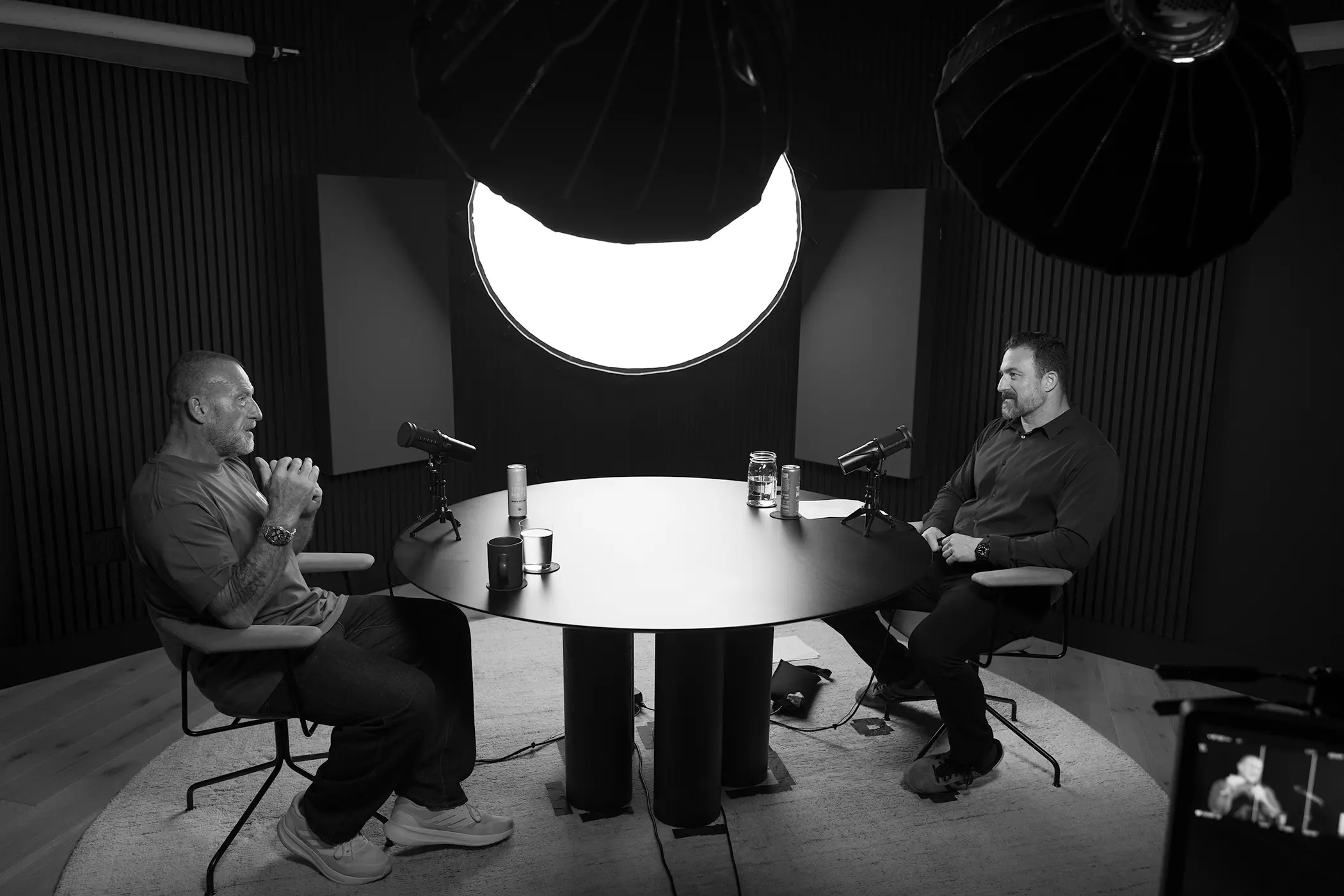
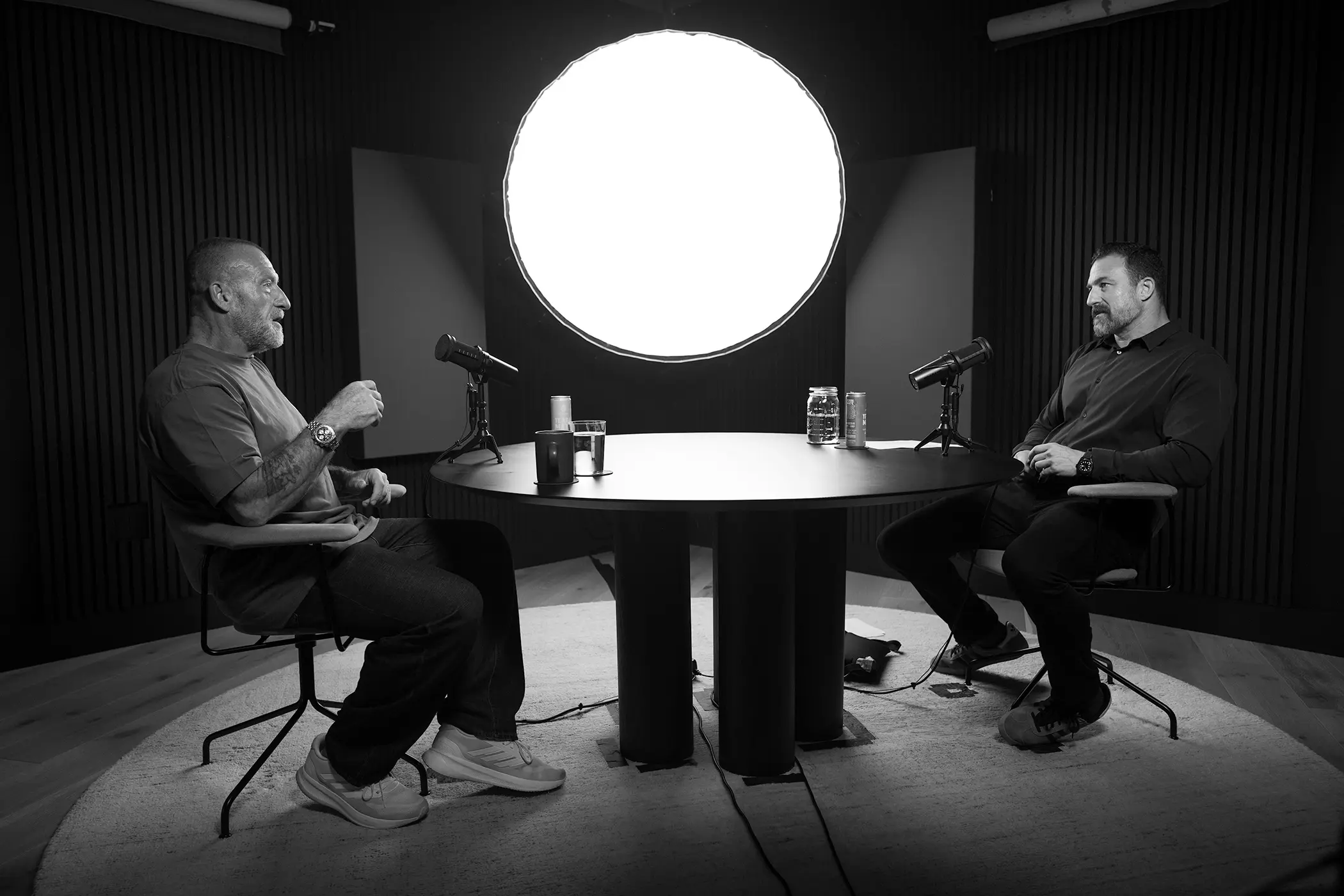

Huberman Lab Essentials are short episodes focused on essential science and protocol takeaways from past full-length Huberman Lab episodes.
Join 1M+ subscribers to get regular emails on neuroscience, health, and science-related tools from Dr. Andrew Huberman.
You'll also get Andrew's exclusive Daily Blueprint. In it, Andrew shares his daily routine. He also shares practical tools and protocols that you can use to stay productive and maximize your health.


